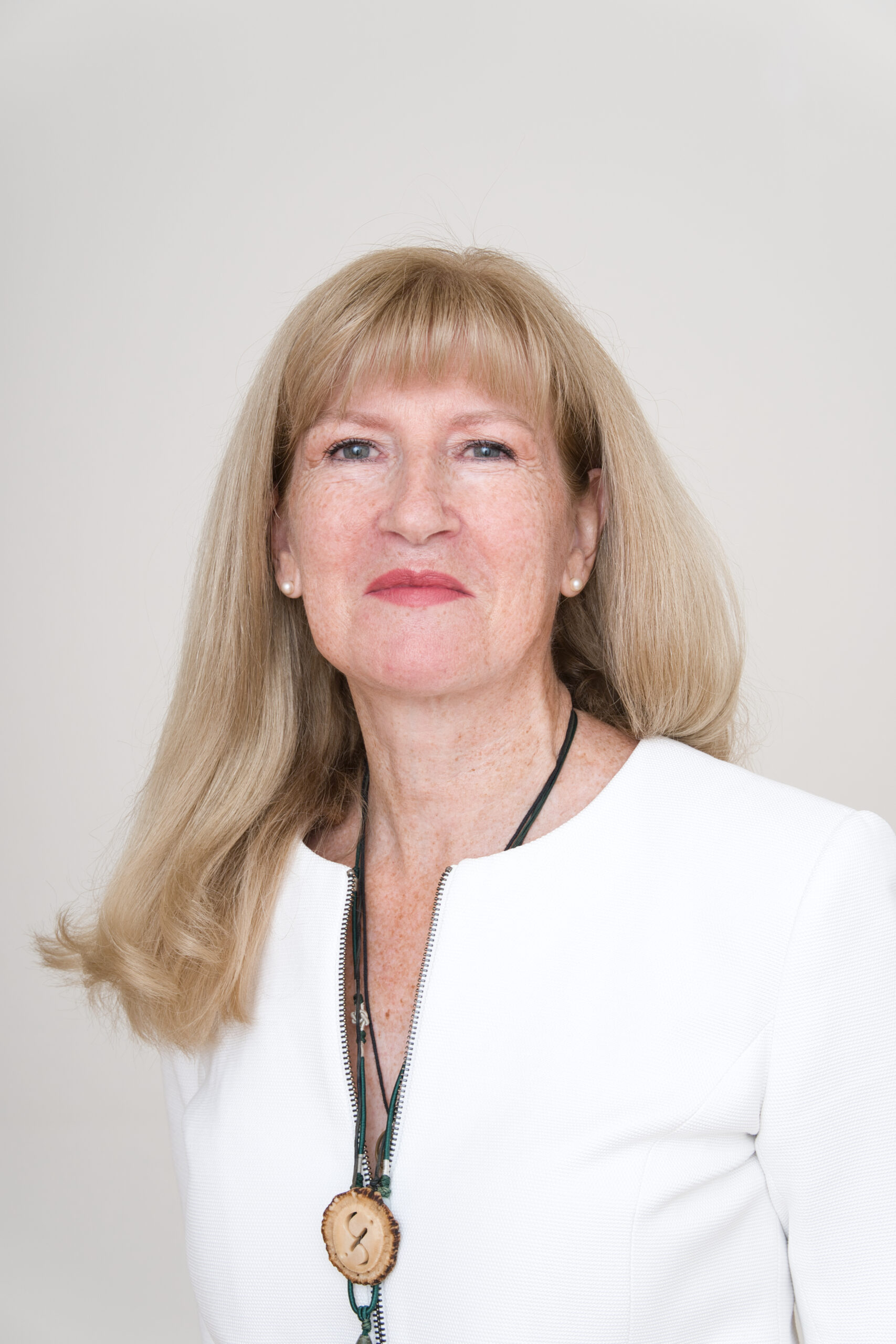
Meet Jennifer
Jennifer Lundman is the Founder and CEO of the Institute for Behavior Change, based in Bend, Oregon. Her work sits at the intersection of social work, coaching, healthcare, education, workforce development, and systems change, where she is helping reshape how professionals and organizations understand the human side of care.
Rather than viewing change as a matter of individual effort alone, Jennifer’s work focuses on the relationships, learning environments, professional standards, and systems that make growth possible. At the center of her vision is a belief that well-being is not created in isolation, but through dignity, connection, skillful support, and more humane systems of care.
Building a Field Around the Human Side of Change
While some careers unfold in a straight line, for Jennifer, that really has not been the case.
Her path has been shaped by work in places where human change is rarely simple: alongside young people in transition, families and communities navigating stress, professionals trying to support others, and systems struggling to respond with enough humanity and care.
Across those experiences, a deeper pattern began to emerge. Jennifer became less interested in change as something that happens in isolation, and more interested in the conditions that allow it to take root. Again and again, her work brought her back to a set of questions that now sit at the center of what she is building:
- What helps people feel safe enough to trust?
- What helps professionals practice with skill and integrity?
- What helps organizations move beyond good intentions into structures that actually support well-being?
Those questions have become central to the work Jennifer leads today. They have shaped her understanding that behavior change is never just about motivation, willpower, or personal responsibility but rather is shaped by trust, dignity, relationships, culture, access, skill, systems, and the environments in which people live and work.
That understanding now guides the work she leads through the Institute for Behavior Change, the Academy for Behavior Change, and the Foundation for Behavior Change. Together, these initiatives represent more than a collection of programs. They are part of a larger effort to strengthen the field of behavior change itself.
Through this work, Jennifer is helping define what ethical, evidence-informed, human-centered behavior change practice can look like across healthcare, human services, coaching, education, community settings, and organizational life. Her focus includes certification design, professional education, competency development, workforce strategy, and systems-level integration.
But the deeper purpose is not simply to build programs or credentials. It is to create the foundation professionals and organizations need to support change responsibly, with standards that protect integrity, education that deepens practice, and systems that make humane care more possible.
For Jennifer, this is where the many parts of her path come together. Change requires more than a willing individual. It requires prepared professionals, responsive organizations, and environments where people are met with dignity rather than judgment. Through the Institute, Academy, and Foundation, she is helping build a field where behavior change is understood not as a quick intervention, but as a sustained practice of care, skill, and systems-level responsibility.
A Career Guided by Curiosity and Heart
Jennifer often describes herself as a social worker at heart. Before she became a founder and executive leader, she was drawn to people’s stories and to the forces that shape them: family, community, opportunity, hardship, identity, institutions, and the quiet messages people receive about what is possible for their lives.
That curiosity led her into work where change was never theoretical. In wilderness therapy, juvenile justice, education, and social work, Jennifer encountered people at moments of uncertainty, transition, resilience, and need. She saw young people trying to find direction, families carrying stress, communities navigating disconnection, and professionals working hard to support others within systems that were often stretched or fragmented.
Those experiences deepened her respect for the complexity of human lives. They also made something clear: people are often asked to change without being given the conditions that make change possible. They may lack safety, trust, language, support, or access. Professionals may be expected to help without enough preparation or structure behind them. Organizations may want to care well, but struggle to build systems that make that care consistent, ethical, and sustainable.
This led to Jennifer beginning to see her path not as a series of separate fields, but as a steady accumulation of insight. Wilderness therapy showed her the role of environment, experience, and resilience. Juvenile justice deepened her awareness of equity, accountability, and the consequences of systems that do not reach people early enough. Education helped her see how learning environments can either open possibility or quietly limit it. Social work grounded her in dignity, advocacy, and the belief that people must be understood within the full context of their lives.
Together, these experiences shaped the foundation for the work she leads today. They taught her that behavior change is not a single method, moment, or intervention. It is a practice that requires relationships that restore dignity, practices grounded in skill, and systems designed to support people over time.
She says, “I have always thought of myself as a social worker at heart, someone who is drawn to understanding people’s stories, building trust, and helping create conditions where individuals and communities can thrive.”
That belief has become more than a personal philosophy. It has become the throughline of Jennifer’s work: a commitment to changing not only how people are supported in moments of transition, but how professionals are prepared, how organizations practice care, and how systems create the conditions for dignity, agency, and well-being.
How Coaching Deepened the Work
As Jennifer’s path evolved, coaching brought another dimension into focus. Social work had grounded her in justice, advocacy, dignity, and the systems that shape people’s lives. Coaching helped her look more closely at what happens within the moment of change itself: the pause, the question, the reflection, and the gradual return to one’s own sense of agency.
Through coaching, Jennifer saw how meaningful it can be when people are not simply given advice or direction, but invited to listen more closely to themselves. She witnessed people clarify what mattered, recognize strengths they had lost sight of, and begin to move toward change in ways that felt connected to their own values and lived experience.
Coaching did not replace her social work lens. It expanded it.
It helped Jennifer understand that ethical change work requires a balance of structure and humility. People need support, but not control. They need guidance, but not shame. They need evidence-informed practices, but also room for their own wisdom, culture, context, and voice.
That understanding became especially important as Jennifer began thinking more deeply about the professionals who support change. If practitioners are expected to help people navigate health, well-being, recovery, leadership, and life transitions, then good intentions are not enough. They need training, competencies, reflective practice, ethical grounding, and systems that support the kind of care they are being asked to provide.
This became one of the important bridges in Jennifer’s work: from supporting individual growth to asking what a stronger, more ethical field of practice might require.
From Personal Growth to Field-Building
As Jennifer’s career evolved, her focus widened. She remained deeply committed to individual healing and growth, but she became increasingly aware that personal transformation is difficult to sustain when the systems around people are not equipped to support it.
The work was no longer only about helping individuals move forward. It was also about preparing the people, organizations, and systems around them to support change with greater skill, integrity, and humanity.
This is one of the defining features of Jennifer’s current work. She is not only interested in helping people change. She is interested in helping the field of behavior change mature.
Through the Institute for Behavior Change, she is helping advance a more rigorous and humane understanding of behavior change practice. This includes developing professional standards, designing certification pathways, supporting competency-based learning, and helping organizations integrate behavior change more effectively into care, service delivery, and workforce development.
Through the Academy for Behavior Change, that vision extends into education and professional training. The Academy reflects Jennifer’s belief that learning should be practical, reflective, ethical, and connected to real-world practice. Professionals need more than concepts. They need to understand how behavior change works in lived contexts, especially when people are navigating complexity, stress, inequity, health challenges, or systems that have not fully supported them.
Then, through the Foundation for Behavior Change, Jennifer’s work reaches toward access, equity, community impact, and broader systems transformation. The Foundation reflects her belief that meaningful behavior change support should not be limited to those with the most resources or the easiest access to care. It should be part of a more inclusive and responsive approach to well-being, one that honors the diverse realities of individuals and communities and works toward systems where support, dignity, and the possibility of thriving are available to all.
Together, the Institute, Academy, and Foundation create a layered approach. One part focused on standards and systems, one part focused on education and workforce development, and one part focused on access and community impact.
Yet, all three are connected by the same belief: behavior change is too important to be treated casually, narrowly, or transactionally. It must be supported by a field strong enough to uphold ethical practice, inclusive enough to meet people in the realities of their lives, and humane enough to keep dignity and well-being at the center.
Leading Through Human-Centered Systems
Today, Jennifer’s work sits at an important intersection. Healthcare systems are increasingly aware that behavior change is central to prevention, chronic disease management, well-being, and long-term outcomes. Organizations are recognizing that change cannot be sustained through information alone. Communities are seeking more accessible and compassionate forms of support. Professionals across fields are being asked to help people navigate complexity,often without the training, structures, or systems needed to do that work well.
Jennifer’s leadership responds to that gap.
She believes behavior change must be understood as both a human process and a professional discipline. It requires science, skill, ethics, and accountability. It also requires compassion, trust, humility, and respect for lived experience.
Her work challenges the idea that behavior change can be reduced to compliance, performance, or personal responsibility alone. Instead, she advocates for approaches that recognize the whole person and the conditions surrounding them. What people do is shaped by what they have access to, what they have experienced, what they believe is possible, how they are treated, and whether the systems around them support or undermine their efforts.
This perspective is especially important in care systems that can feel rushed, transactional, or disconnected from the realities of people’s lives. Jennifer’s work calls for a different approach: one that honors measurable outcomes without losing sight of human experience, and one that prepares professionals and organizations to support change with both rigor and care.
She brings a systems lens to deeply personal work. She also brings a deeply personal lens to systems work. That combination is part of what distinguishes her leadership.
It is what allows her work to move between the intimate realities of individual change and the broader structures needed to make care more ethical, inclusive, and sustainable. It allows her to hold both the human and structural dimensions of change, building approaches to care that support dignity, belonging, and wellbeing at every level.
Redefining Professional Practice
This is where Jennifer’s work becomes especially urgent. Across healthcare, coaching, education, human services, and organizational life, professionals are often expected to support change without being fully prepared for the complexity of that work.
And behavior change is frequently treated as something secondary: a communication skill, a motivational technique, or an expected outcome of care.
Yet, it is much more than that.
It is a professional practice that requires ethical grounding, relational skill, cultural awareness, and a deep understanding of the conditions that shape human behavior.
If professionals are asked to help people navigate health behaviors, life transitions, resilience, recovery, well-being, or new patterns of growth, they need more than a desire to help. They need to understand motivation, readiness, trauma, identity, social context, access, communication, accountability, and the systems that either support or undermine change. They also need to know how to work with people without shame, coercion, or oversimplification.
That is why certification design, competency development, and professional education have become central to Jennifer’s current work. For her, standards are not about gatekeeping. They are about clarifying what responsible practice requires and helping organizations recognize the value of trained behavior change practitioners.
Her vision for professional learning follows the same principle. Education should do more than deliver information. It should shape how professionals think, listen, respond, and lead, especially when working with people whose lives are shaped by stress, inequity, health challenges, trauma, or systems that have not fully supported them.
In that sense, Jennifer is not simply developing programs. She is helping strengthen a field where professionals are prepared to support change with judgment, ethics, skill, and humanity.
Building With Care and Conviction
Jennifer does not approach leadership as a matter of status or visibility. For her, leadership is a responsibility: to build carefully, to stay rooted in purpose, and to make sure the structures being created reflect the values they are meant to carry.
That responsibility requires both vision and discipline.
The work Jennifer is building asks for imagination, but also standards. It asks for compassion, but also clarity. It asks for the ability to honor complexity while still creating pathways that professionals, organizations, and communities can use in real and practical ways.
For Jennifer, success is not measured only by growth, recognition, or reach. It is measured by whether the work remains aligned as it expands. Do the systems being built protect dignity? Do they support ethical practice? Do they strengthen human-centered care? Do they make well-being more possible for the people and communities they are meant to serve?
That kind of leadership requires self-awareness and endurance. Jennifer understands the emotional weight of work centered on change, care, and systems transformation. She knows that people in helping professions often carry the complexity of others’ lives while also working within institutions that can be strained, fragmented, or under-resourced.
Part of her commitment is to build models that support not only clients and communities, but also the professionals doing the work. Because humane care cannot depend only on individual compassion. It must be sustained by systems that care for the people asked to provide it.
Toward More Humane Systems of Care
Looking ahead, Jennifer’s vision is not simply about growth. It is about building carefully enough that the work remains connected to its purpose as it expands.
She wants to continue strengthening the field of behavior change in ways that are grounded in compassion, ethics, evidence, and social responsibility. That means helping create a future where behavior change is recognized not as a narrow technique, but as an essential part of healthcare, human services, education, prevention, leadership, and community well-being.
In that future, professionals are better prepared for the complexity of the work. Organizations are more responsive to the realities of the people they serve. Communities have greater access to meaningful support. And care systems are designed not only to address problems, but to honor dignity, strengthen agency, and make well-being more possible.
Jennifer is especially focused on advancing models of care that do not reduce people to diagnoses, behaviors, barriers, or outcomes. Her work points toward systems that listen more carefully, honor lived experience, and recognize that human change is shaped by context, relationship, opportunity, and trust.
For Jennifer, the future of behavior change depends on whether the field can hold both rigor and humanity. It must be strong enough to influence systems, ethical enough to protect the people it serves, and humble enough to remain centered on real human lives. At its best, this work is not only about helping people change. It is about building the conditions where people, professionals, organizations, and communities can truly thrive, and do so all together.
Courage to Build What Is Needed
Jennifer Lundman’s story is not simply about moving from one professional chapter to another. It is about learning, again and again, that care cannot depend on compassion alone. It needs structure. It needs skill. It needs standards, access, accountability, and systems that make dignity possible in practice.
The social worker, the coach, the educator, the advocate, the systems thinker, and the founder are all present in the work she is building today. Each part of her path has shaped the same larger commitment: to understand what people need in order to grow, and what professionals, organizations, and communities need in order to support that growth well.
Over time, Jennifer’s central question has expanded. It is no longer only about how one person heals, changes, or reconnects with possibility. It is about how practitioners are prepared, how organizations define responsible care, how communities gain access to meaningful support, and how systems can become more responsive to the real conditions of people’s lives.
Through the Institute for Behavior Change, the Academy for Behavior Change, and the Foundation for Behavior Change, Jennifer is helping build that foundation. Her work is creating pathways, standards, and learning environments where behavior change can be practiced with greater clarity, integrity, and humanity.
At its deepest level, this work is about making care more capable of meeting people where they are. It is about building a field strong enough to influence systems, humble enough to honor lived experience, and inclusive enough to keep wellbeing within reach for more people.
That is the work Jennifer is leading. Not change as a quick fix or an individual burden, but change as something made possible through dignity, relationship, skilled practice, and systems built to support long-term human well-being.
For More Features
Be Featured in The Real Edit!
Every story has the power to shape how we see innovation, leadership, and purpose. If you’re a founder, creator, executive, or changemaker with a journey worth telling , we’d be honored to help you share it.
To inquire about being featured:
Email us at: info@realedit.site
Follow The Real Edit