Meet Jenn
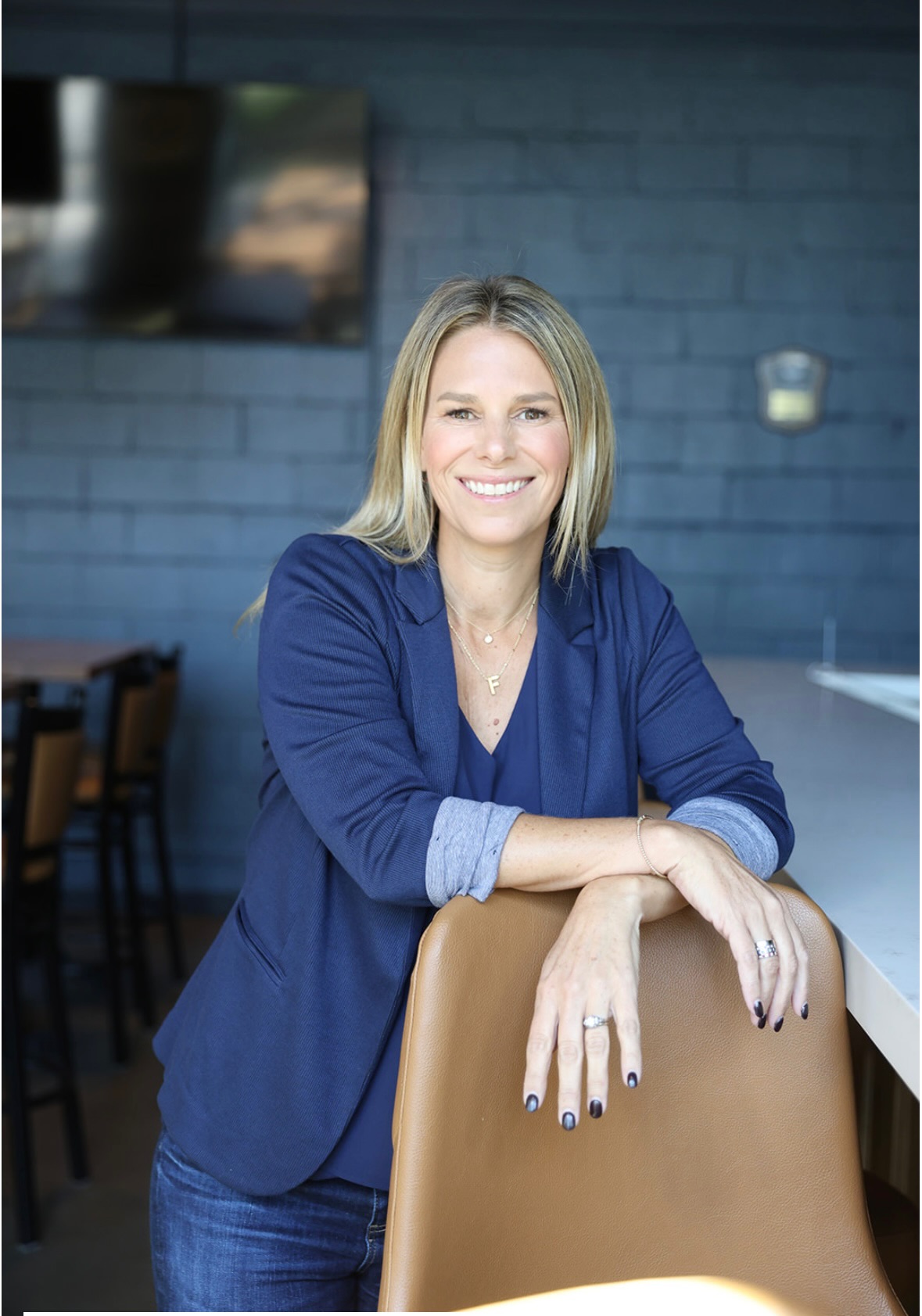
Jenn Whitmer is an expert in Joyosity™: the Business of Joy at Work. She’s an international speaker, award-winning author, and workplace culture strategist based in St. Louis.
As the founder of Joyosity Works, Jenn helps organizations create healthier, more connected workplaces through communication, emotional intelligence, and leadership development. Her work centers on a research-backed belief: joy at work is not separate from meaningful performance, it strengthens productivity, collaboration, and engagement.
The Couch That Changed Everything
Nine years ago, Jenn Whitmer found herself sitting on a white couch across from her leader and an outside consultant when she heard the sentence that would alter the direction of her life.
Her position was being eliminated.
The decision was not about economics or restructuring. It was deeply personal, shaped by workplace politics and power. After decades spent in education and leadership, Jenn suddenly found herself in unfamiliar emotional territory. The certainty she had built her professional identity around collapsed in a single conversation.
What came afterward was quieter and far more difficult.
She describes that season now as the “Summer of Crying on Couches,” a period marked by exhaustion, emotional isolation, and the slow realization that she could no longer survive inside environments that demanded constant depletion. For years, she had normalized unhealthy dynamics. Gossip had become routine. Communication had become fractured. The work that once gave her meaning had turned into something heavy and joyless.
Eventually, she found herself sitting alone on a gray couch, overwhelmed and emotionally hollowed out.
“I cannot keep this up. I’m dying.”
That moment became the beginning of everything that followed.
There are stories people tell after hardship that sound polished in hindsight. Jenn’s story is not one of sudden reinvention or overnight clarity. It is a story about recovery. About learning that endurance is not the same thing as wellness. About understanding that professional success can quietly come at the expense of health, identity, relationships, and peace.
Instead of immediately trying to rebuild her career, Jenn chose to understand what had happened to her.
She returned to graduate school and immersed herself in the study of communication, team dynamics, adult education, and the Enneagram. She wanted to understand how workplaces that begin with purpose can slowly drift into dysfunction. More importantly, she wanted to know whether healthier cultures could actually be built intentionally and sustained over time.
What she discovered reshaped her understanding of leadership entirely.
Information alone does not transform people.
Knowledge mattered, but it was not enough. Healing mattered too.
That realization became the foundation for the work she would eventually create.
Learning to Name What Was Missing
Long before she became known for keynote speaking or organizational culture work, Jenn had always been fascinated by people. She was the person in the room trying to understand why individuals behaved the way they did, why conflict escalated in some spaces and dissolved in others, and why certain leaders inspired trust while others created fear.
The Enneagram gave structure to that curiosity. Leadership gave it practical application.
As she worked with teams and organizations over the years, she noticed something powerful. When leaders understood themselves more honestly and learned how to understand the people around them, communication changed. Retention improved. Productivity increased naturally because people no longer spent all their emotional energy surviving dysfunctional environments.
She realized that culture was not created through slogans or mission statements. It was built through daily emotional experiences.
At the same time, Jenn understood something else from personal experience. Many leadership models ignored the emotional reality of middle management. She refers to these individuals as “smooshed leaders,” people caught between executive expectations and frontline realities, carrying pressure from every direction while trying not to lose themselves in the process.
Jenn knew that position intimately because she had lived it herself.
The experience shaped the way she now teaches leadership. Rather than presenting leadership as polished confidence or constant motivation, she speaks about the tension of holding responsibility while remaining human. She speaks about exhaustion without romanticizing burnout. She speaks about courage without turning it into performance.
Her work carries weight because it was not developed in abstraction. It emerged from lived experience.
Building Joyosity From the Ground Up
The framework that eventually became Joyosity™ did not arrive all at once. It developed slowly through observation, reflection, study, and countless conversations with leaders who were struggling silently inside their organizations.
For Jenn, the concept of joy was often misunderstood in professional spaces. Too many people associated joy with softness or unrealistic optimism. She saw something entirely different.
Joy, in her view, is strategic.
It affects communication, retention, collaboration, creativity, and trust. It shapes how people show up at work and how they return home to their families afterward. When workplaces become toxic, the damage rarely stays inside office walls. It follows people into their relationships, health, and sense of self.
Jenn wanted to create language for that reality.
Developing the Joyosity™ framework became one of the defining turning points of her professional life because it finally gave structure to ideas she had been living and teaching for years. Writing her award-winning book, Joyosity: How to Cultivate Intense Happiness in Work & Life (Even If Things Are What They Are), forced her to examine every belief she held about leadership, culture, and emotional sustainability.
She often found herself confronting the very lessons she was trying to teach.
“Joy is not the reward you get after you’ve ground yourself down far enough or made enough dollars or put in enough hours.”
That perspective now sits at the center of her work.
Today, Jenn is an international speaker whose work has reached audiences through TEDx and SXSW stages, where she speaks about workplace culture, leadership, emotional sustainability, and what she calls the Business of Joy. Her message resonates because it blends research, lived experience, and practical workplace strategies into conversations leaders can immediately apply.
Today, through Joyosity Works, Jenn works with companies, nonprofits, and government organizations including Chick-fil-A, Mozilla, Mayo Clinic, and the U.S. State Department, helping leaders rethink how workplace culture is built and sustained.
Her approach is practical rather than performative. She speaks openly about conflict resolution, emotional intelligence, communication breakdowns, and burnout because those are the realities leaders face every day. Yet beneath the strategy is something deeper. She wants people to believe that meaningful work and personal wholeness do not have to exist in opposition to each other.
That belief feels increasingly urgent in a culture where exhaustion is often treated as evidence of commitment.
The Quiet Courage Behind Her Work
One of the most revealing parts of Jenn’s story is not found in a stage appearance or professional milestone. It lives in the story of her great grandmother.
At the end of a world war, her great grandmother left Italy carrying a child, a husband, and a single trunk. There was no certainty waiting for her in America. No guarantee that the sacrifice would lead to stability. Only the belief that something better might exist on the other side of immense uncertainty.
Jenn often returns to that image when thinking about courage.
Not dramatic courage. Not loud ambition. But the quieter form of valor that allows people to leave what is harming them and move toward something unknown with honesty and hope.
That idea deeply influences the atmosphere she tries to create in the rooms where she works with leaders. She does not ask people to become fearless. She asks them to become willing. Willing to confront unhealthy dynamics. Willing to have difficult conversations. Willing to stop sacrificing themselves in environments that reward depletion.
For Jenn, joy is not denial of hardship. It is the refusal to believe hardship is the only possible way to live or lead.
This perspective also shapes how she defines success personally.
She does not speak about balance as a perfectly managed system. In fact, she rejects the idea entirely. Life, she believes, cannot be reduced to evenly distributed categories or flawless productivity systems. Instead, Jenn focuses on what she calls the “Joy Ratio,” a research-backed framework designed to help organizations create healthier, higher-performing workplace cultures. Rather than treating joy as a soft or abstract idea, the Joy Ratio connects emotional wellbeing to measurable workplace outcomes including productivity, collaboration, engagement, and retention. It acknowledges that people perform best when they are supported rather than depleted.
It is a deeply human approach to sustainability because it acknowledges that seasons shift. Some periods require endurance. Others require rest. The goal is not perfection but awareness.
That honesty has become part of why her message resonates with so many leaders. People recognize themselves in it.
The Ripple Effect of Joy
Jenn’s work ultimately extends far beyond conference stages or organizational workshops. At its core, it is about human relationships.
She believes workplace culture does not stay contained within office walls. The emotional environment people experience at work shapes how they speak to their children, how they show up in partnerships, how they treat their communities, and how they understand their own worth.
When workplaces normalize fear, exhaustion, or emotional disconnection, the consequences ripple outward. But healthier cultures ripple outward too.
This is why she continues to focus especially on the overlooked middle layers of leadership. These leaders often carry enormous cultural influence while receiving very little support themselves. When they are overwhelmed or emotionally depleted, entire teams feel the impact. When they begin leading with clarity, connection, and emotional honesty, the effect spreads quickly.
Jenn’s goal is not simply to inspire leaders temporarily. She wants transformation that lasts long after the keynote ends. Shared language matters to her because it creates continuity. It allows teams to keep practicing healthier communication long after the excitement of an event fades.
Her long term vision reflects that same depth.
She keeps a napkin clipped to her desk lamp with a handwritten reminder: to speak to arenas full of leaders about Joyosity and the Business of Joy. Not because she is chasing visibility for its own sake, but because she believes people everywhere are carrying invisible exhaustion and quietly settling for lives that feel smaller than they should.
She wants leaders to understand that another way of working is possible.
More books and larger stages may come. But for Jenn, the deeper mission remains unchanged. She wants organizations to become places where people can contribute meaningful work without abandoning themselves in the process.
A Different Story Is Possible
There is a sentence that quietly runs through Jenn Whitmer’s entire story. It appears beneath the leadership frameworks, the keynote stages, the organizational strategies, and the conversations about culture.
It doesn’t have to be this way.
That belief was born during one of the hardest periods of her life, when she sat emotionally exhausted on a gray couch convinced she could not continue living the way she had been living. Instead of accepting burnout as inevitable, she chose to question the systems and stories that had convinced so many people to disconnect from themselves in the name of success.
The work she does today grows directly from that decision.
Jenn is not trying to sell joy as a simple solution or a polished performance. She speaks about it as something more demanding and more honest. Joy requires courage. It requires boundaries, reflection, healing, and the willingness to imagine healthier ways of leading and living.
But she believes it is possible.
And after everything she has lived through, that belief no longer sounds theoretical. It sounds earned.
For More Features
Be Featured in The Real Edit!
Every story has the power to shape how we see innovation, leadership, and purpose. If you’re a founder, creator, executive, or changemaker with a journey worth telling , we’d be honored to help you share it.
To inquire about being featured:
Email us at: info@realedit.site
Follow The Real Edit