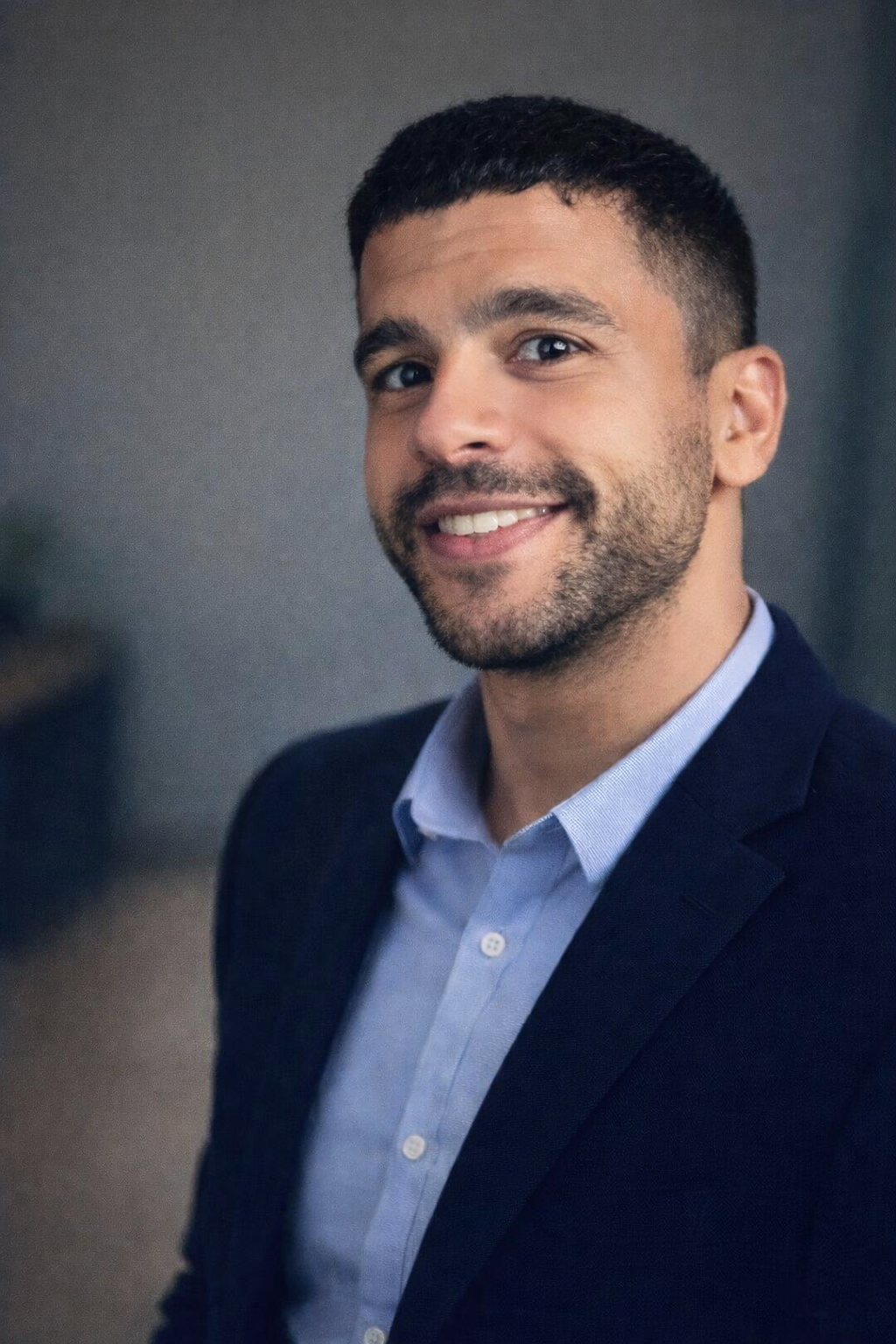
Meet Bryan
Bryan Dumpe is the founder of Mickys Cabs, a creative company working across digital campaigns, brand experiences, advertising, and cultural projects. Based in London, he has spent years building a business that sits somewhere between technology, storytelling, and art, while trying to hold on to a sense of freedom and honesty along the way.
A Life That Never Fit Into One Box
Some people build careers with sharp plans and carefully measured steps. Bryan Dumpe never really moved through life that way. His story feels less like a straight road and more like a collection of instincts, curiosities, conversations, and unexpected turns that somehow connected over time.
There was no grand vision in the beginning. No carefully crafted entrepreneurial dream. After dropping out of university in 2006, he spent years trying to work out who he was and where he fit. Those years were filled with tennis matches, nights at music shows, long stretches of uncertainty, and the quiet pressure that comes when everyone around you keeps asking what you are doing with your life.
At some point, saying he was starting a business simply felt easier than admitting he was still figuring things out.
What began as small freelance projects slowly evolved into something larger. Websites for local businesses. Video editing. Flyers. Setting up routers. The kind of work many people overlook but that quietly keeps modern life functioning. Bryan approached those projects with patience and curiosity, and people responded to that more than anything else. Before long, the work became too much for one person to handle, so he began bringing in friends, freelancers, and people he trusted. That loose network eventually became Micky’s Cabs.
Looking back now, even he admits the story sounds more intentional than it felt at the time.
Growing Up Between Systems and Stories
Long before the company existed, Bryan was already caught between two worlds. He loved numbers and structure, yet he was equally drawn toward painting, music, cinema, and writing. He describes it as a constant tension between logic and creativity, though not in the romanticised way people often frame it. For him, it simply reflected how his mind worked.
As a child, certain moments stayed with him deeply. He remembers leaving the cinema after an afternoon film and suddenly realising it was dark outside. Time had passed without him noticing. Something emotional and invisible had shifted while he sat in the theatre. The world outside looked slightly different afterward.
That feeling stayed with him into adulthood.
Books, articles, theatre, podcasts, conversations with strangers, all of them became small reference points along the way. Not because they handed him answers, but because they slowly changed how he saw things. He learned that ideas rarely arrive in dramatic moments. More often, they settle quietly in the background until years later when you realise they shaped your thinking.
Technology entered his life in a similar way. Bryan studied computers before the digital world carried the cultural weight it has now. At the time, it was simply interesting. But he could sense that technology was beginning to weave itself into everyday life and into art, music, communication, and culture itself.
He witnessed the internet, computers, and later artificial intelligence shift from novelty to infrastructure. Looking back, he sees that transition almost historically. People living through massive change rarely understand the scale of it in the moment. Only years later does it become obvious that an entire society was reshaping itself around something new.
For Bryan, the fascinating part was never technology alone. It was always what people did with it.
Building Something Without Losing Yourself
One of the most defining moments in Bryan’s life was not a financial breakthrough or a major business win. It was the quieter realisation that he could make a living doing work he genuinely enjoyed.
He never believed he was the most talented person in the room. What he discovered instead was an ability to recognise other people’s strengths and connect them to the right problems. Over time, that became one of the foundations of how he operated as a founder and creative leader.
“A lot of it was about spotting other people’s skills and matching them to a need. If I had a talent, it was probably framing the problem honestly and finding the right solution for it.”
As the company grew, the emotional reality of leadership changed. In the beginning, the risks belonged mostly to him. Later, those risks carried the weight of employees, collaborators, friends, and families who depended on the business continuing to survive.
That pressure forced him to think differently about responsibility.
Bryan speaks about leadership in deeply human terms rather than corporate ones. He does not romanticise hustle or glorify stress. Instead, he talks about the importance of honesty, psychological safety, and allowing people to fail without fear. He believes the most interesting work usually comes from giving people room to think differently rather than forcing them into rigid structures.
That mindset shaped the culture at Micky’s Cabs. Even as the company expanded into larger campaigns and global projects, Bryan tried to protect a sense of openness inside the work. He wanted people to feel like participants rather than replaceable employees.
He also refused to build success at the expense of his values. That decision was not always easy. There were moments when clients disappeared unexpectedly, when finances felt uncertain, and when survival instincts tempted compromise. Yet he remained deeply cautious about becoming disconnected from himself simply to maintain status or financial comfort.
That fear of emotional detachment appears throughout his reflections. He has watched people slowly lose their sense of identity under the weight of careers, mortgages, expectations, and external validation. Success, when handled carelessly, can quietly hollow someone out.
Bryan seems aware of that danger in a way that keeps him grounded.
The Quiet Weight of Creative Work
There is an unusual honesty in the way Bryan talks about his role inside the company. Many founders position themselves as visionaries or dominant personalities. Bryan does the opposite. He openly admits to uncertainty, self doubt, and relying heavily on the people around him.
“I am not the best boss someone could have. I am not the worst either. That much I do know.”
That sentence captures much of who he is. There is no performance attached to it. No attempt to appear larger than life. Just a person trying to navigate responsibility while remaining human inside it.
The work itself has expanded significantly over the years. Micky’s Cabs now operates across brand strategy, film, advertising, digital experiences, and cultural storytelling. The company has worked with major brands and participated in large scale creative projects in both the United Kingdom and the United States.
Yet Bryan rarely speaks about scale with excitement.
What matters to him are the moments where something genuinely unexpected happens. A campaign that pushes beyond formula. A project that creates connection rather than just visibility. A cultural idea that opens a door for people who previously felt excluded from the conversation.
Some of the projects he remembers most fondly involved communities, schools, young artists, and underrepresented voices. Those experiences connect back to the same feeling he had leaving the cinema as a child. The sense that art and storytelling can shift the way someone sees the world, even briefly.
That pursuit of emotional movement still guides much of his thinking today.
He is also fascinated by systems and structures beneath the surface. Bryan talks about dismantling old motorbikes, guitar amplifiers, computers, contracts, and processes simply to understand how they function. That instinct extends into business as well. He is constantly looking for ways to reduce friction, simplify complexity, and challenge assumptions that people blindly accept.
Even some of his more ambitious ideas reflect that mindset. He has explored questions around the art market, music industry structures, and open source systems that might allow creators to retain more ownership over their work. Not because he wants disruption for its own sake, but because he remains interested in fairness, accessibility, and creative freedom.
Perspective as a Form of Stability
For all the complexity in Bryan’s work, many of his guiding principles are surprisingly simple.
He believes in honesty, even in uncomfortable moments. He dislikes small lies in professional environments because he sees how quickly they become normalised. To him, trust is built through straightforward communication rather than polished excuses.
He also believes deeply in perspective.
At one point, he created something he called the “perspective dial,” built from simple materials including an old doorknob. The idea behind it was to remind himself where he actually stood in relation to real hardship. Were basic needs secure? Was survival under threat? Or was stress coming from ambition, ego, or temporary discomfort?
The exercise helped him recognise that many of the pressures he experienced existed far from genuine crisis. That awareness prevented him from sinking too deeply into anxiety or self pity.
His outlook toward people reflects similar generosity. Bryan understands that most individuals carry invisible pressures beneath the surface. Clients under stress may react poorly. Employees may struggle privately. Friends may be carrying burdens no one else can see. He tries not to interpret every difficult interaction personally.
There is maturity in that perspective, but also softness.
Interestingly, Bryan says he has never been particularly drawn to idolising public figures or mentors. Instead, he finds himself more inspired by children and by ordinary moments of honesty, curiosity, and imagination. That tendency aligns closely with the rest of his worldview. He seems far more interested in authenticity than authority.
Chasing Meaning Without Chasing Scale
The future, for Bryan, still feels intentionally open ended.
He has never been obsessed with growth for the sake of appearance. Micky’s Cabs continues to evolve organically, guided more by instinct than rigid expansion plans. If a direction feels meaningful, the company follows it. If it does not, they move elsewhere.
That flexibility has allowed Bryan to protect something many founders eventually lose: lightness.
Today, after years of building businesses, managing teams, and navigating industries that constantly reinvent themselves, he finds himself returning to many of the things that grounded him earlier in life. Tennis. Art shows. Music. Long conversations. The simple experiences that remind him there is still life outside productivity.
At the same time, his curiosity remains active. He continues questioning systems inside art, music, and technology. He continues exploring how creative work can foster community rather than just consumption. And he continues looking for ideas that make people feel more connected to themselves and each other.
There is no grand manifesto attached to any of it. Just a steady belief that work should leave room for humanity.
Holding On to the Part That Feels Real
Bryan Dumpe’s story is not really about entrepreneurship in the traditional sense. It is about learning how to build something without becoming trapped inside it. It is about navigating ambition while holding onto honesty, humour, curiosity, and perspective.
In a culture that often rewards performance over sincerity, his reflections feel unusually grounded. He speaks openly about uncertainty, about relying on others, about trying to remain emotionally intact inside systems that often encourage detachment.
Perhaps that is why his work continues to resonate. Beneath the campaigns, strategies, and creative projects is someone still chasing the same feeling he experienced as a child walking out of the cinema into the dark evening air. The sense that something meaningful has shifted inside you, even slightly, and that the world somehow looks different afterward.
For More Features
Be Featured in The Real Edit!
Every story has the power to shape how we see innovation, leadership, and purpose. If you’re a founder, creator, executive, or changemaker with a journey worth telling , we’d be honored to help you share it.
To inquire about being featured:
Email us at: info@realedit.site
Follow The Real Edit