Meet Sheerah
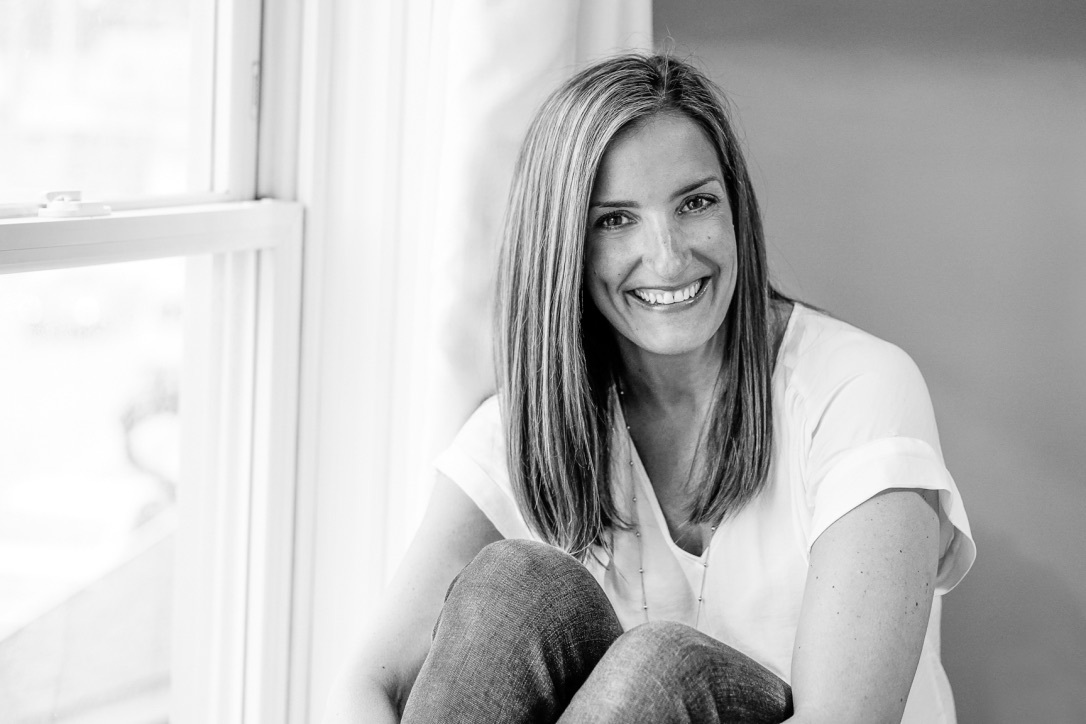
Sheerah Ethier is a leadership advisor and founder of Shifts in Perspective. Currently based in Bolivia while traveling, she works with leaders and organizations to explore how internal state shapes perception, decision making, and leadership outcomes.
The Quiet Work Behind Visible Leadership
There is a kind of leadership that does not announce itself loudly. It does not rely on frameworks alone or chase visibility. It moves more quietly, rooted in awareness, shaped by how a person meets pressure when no one is watching. This is the space where Sheerah Ethier does her work.
Her approach does not begin with strategy or performance metrics. It begins with something less visible and far more influential. The internal state of a leader. The way perception forms. The subtle shifts that determine whether a decision comes from clarity or from reaction.
Sheerah’s work invites a different kind of attention. Not outward first, but inward. Not to withdraw from responsibility, but to meet it with greater precision. In her world, leadership is not only about what is done. It is about the place from which it is done.
Where Performance First Took Shape
Her journey began in a space that appears, at first glance, far removed from leadership advisory work. Physical training and performance. It was here that she developed a close relationship with discipline, adaptation, and the body’s ability to respond under pressure.
There is a clarity that comes from working with the body. Progress is tangible. Effort translates into measurable change. Strength builds through repetition and focus. For a time, this was enough. It offered structure and a sense of direction.
Yet even in those early years, questions began to form beneath the surface. She noticed something that did not align with the logic of performance alone. Two individuals could follow the same training plan, apply the same techniques, and still arrive at very different outcomes.
It was not a question of effort. Nor was it simply about skill. Something else was influencing the result. Something less obvious.
That observation stayed with her. It did not demand immediate answers, but it quietly redirected her attention. What shapes performance before it becomes visible? What determines the decisions people make in moments of pressure?
Moving Beneath the Surface
This curiosity led her into the study of psychology. It offered language and structure to understand behavior. Patterns began to make more sense. Decision making could be examined through cognition, belief systems, and learned responses.
There was value in this work. It expanded her understanding and gave her tools to interpret human behavior more clearly. Yet even as her knowledge grew, something remained unresolved.
The explanations felt incomplete.
She began to sense that cognition alone could not fully explain what she was observing. There were moments when people understood what to do, yet could not do it. There were instances where awareness existed, but change did not follow.
It was not a lack of information. It was something deeper.
This realization marked a subtle but significant shift. Instead of focusing only on what people think, she began to explore how they experience. How the body responds. How internal states shape perception before thought even forms.
The Turning Point That Changed the Lens
The most defining shift in her journey came when she entered the world of somatic work and nervous system awareness. This was not simply a new area of study. It was a different way of seeing.
Here, the missing pieces began to align.
She started to understand how internal state influences perception in real time. How pressure, uncertainty, and relational tension can alter the way situations are interpreted. How these shifts in perception quietly shape decisions, behavior, and leadership outcomes.
It was not that strategy was irrelevant. It was that strategy alone could not account for what happens under pressure.
She reflects on this turning point with clarity.
“The most significant shift came when I moved into somatic work and nervous system awareness. That’s where the pieces came together. I began to understand how internal state shapes perception, and how that, in turn, drives decision making, behavior, and leadership dynamics.”
This understanding did not remain theoretical. It reshaped how she approached her work and how she understood leadership itself.
The question was no longer only what should be done. It became how a leader perceives what is happening, and from what internal state they respond.
Learning to Work With What Is Unseen
Like many meaningful shifts, this transformation was not without challenge. It required her to move beyond intellectual understanding and into lived experience.
She began to notice patterns within herself and in others that could not be explained by logic alone. Reactions that seemed disproportionate. Decisions that felt misaligned. Moments where clarity narrowed under pressure.
Rather than attempting to override these patterns, she chose a different approach. She began to work with them.
This meant paying attention to the body. To signals that often go unnoticed. To the subtle ways internal states influence perception and response. It required patience and a willingness to sit with complexity rather than simplify it too quickly.
Over time, what once felt confusing became informative.
Patterns were no longer obstacles to eliminate. They became signals to understand. Indicators of how a person relates to pressure, uncertainty, and decision making.
She describes this shift in a way that reflects both its simplicity and its depth.
“Rather than trying to override those patterns, I learned to work with them, to understand what they were signaling and how they influenced decision making, relationships, and performance.”
This approach became foundational to her work. It allowed her to engage with leadership challenges at a level that is often overlooked, especially in environments where speed and outcomes are prioritized.
Building a Practice Rooted in Clarity
Today, through Shifts in Perspective, Sheerah works with leaders and organizations to bring visibility to the internal dynamics shaping leadership.
Her work is not about adding more strategies or frameworks. It is about refining the conditions from which those strategies are applied.
She helps leaders recognize how their internal state influences perception. How perception shapes decisions. How those decisions ripple through teams, relationships, and organizational systems.
This process is often subtle. It does not always produce immediate visible change. Yet its impact is far reaching.
When leaders begin to see clearly, their decisions change. Reactivity decreases. Stability increases. There is a greater capacity to navigate complexity without becoming overwhelmed by it.
In practical terms, this means leaders are better able to remain steady under pressure. To recognize relational dynamics within teams. To make decisions that are aligned rather than reactive.
Her work also extends beyond the individual. As leaders shift how they perceive and respond, the systems around them begin to change as well. Team dynamics evolve. Communication becomes more grounded. The way pressure is held within an organization begins to shift.
What starts as an internal adjustment gradually becomes a collective transformation.
Redefining Success From the Inside Out
One of the most distinctive aspects of Sheerah’s perspective is how she defines success. It is not centered on external outcomes alone, though those outcomes matter. It is grounded in the quality of her internal state.
Clarity. Coherence. Presence.
These are not abstract ideals. They are practical conditions that influence how decisions are made and how work is carried out. When these qualities are present, action becomes more precise. Impact becomes more meaningful.
This orientation shapes not only how she works, but how she measures progress. It allows her to stay aligned with what feels true, rather than being driven by external expectations.
It also reflects in the environments she creates for others. Spaces where leaders can see themselves more clearly. Where they can engage with challenges without immediately reacting to them. Where decisions emerge from understanding rather than urgency.
A Broader Shift in Leadership
Looking ahead, Sheerah’s vision extends beyond individual leaders. She sees her work as part of a broader shift in how leadership is understood and practiced.
For a long time, leadership has been defined primarily by action. Strategy, execution, and outcomes have been the primary focus. While these elements remain important, they do not fully capture what drives leadership in real time.
There is an internal dimension that often goes unexamined.
Her work aims to bring this dimension into focus. To integrate internal awareness with external strategy. To create a more complete understanding of what leadership requires.
She is also expanding the reach of her work through speaking and media, creating space for these ideas to reach a wider audience. Not as a trend, but as a necessary evolution.
Because the challenges leaders face today are not only strategic. They are relational. They are perceptual. They require a different level of awareness.
Returning to What Is Foundational
In moments of challenge, her approach remains consistent with her work. She returns to the body.
Breath. Grounding. Creating space between stimulus and response.
These are simple practices, yet they hold significant power. They allow for a pause. A moment where perception can settle before action is taken.
From that space, clarity becomes possible.
It is a reminder that leadership is not only about moving forward. It is also about knowing when to pause. When to observe. When to recalibrate.
Closing Reflection
There is a quiet depth to Sheerah Ethier’s work that resists simplification. It does not offer quick fixes or definitive answers. Instead, it invites a different relationship with leadership.
One that begins within.
In a world that often prioritizes speed and visibility, her perspective offers something steadier. A reminder that the quality of what we create is shaped by the quality of how we see.
And that before leadership becomes visible in action, it is formed in perception.
For More Features
Be Featured in The Real Edit!
Every story has the power to shape how we see innovation, leadership, and purpose. If you’re a founder, creator, executive, or changemaker with a journey worth telling , we’d be honored to help you share it.
To inquire about being featured:
Email us at: info@realedit.site
Follow The Real Edit