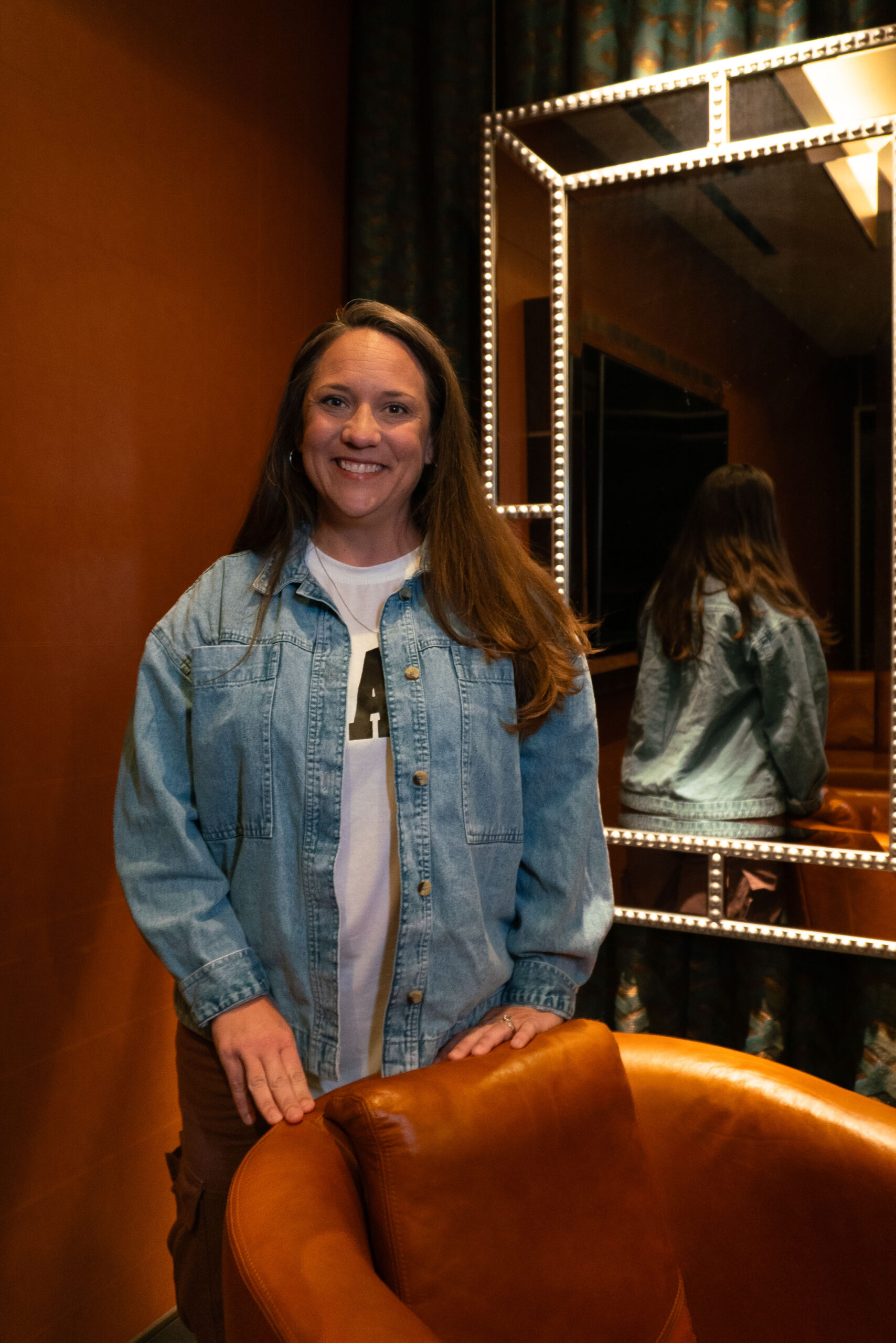
Meet Jarmese
Dr. Jarmese Sherrod is an educator, humanitarian leader, mentor, and nonprofit founder based in Chicago. For more than two decades, she has worked across education, youth development, women’s empowerment, and global service initiatives, impacting communities throughout the United States and internationally through mentorship, leadership training, and advocacy.
The Work Began Long Before the Recognition
Long before awards, international partnerships, and leadership conferences, Dr. Jarmese Sherrod’s work began inside her family home.
At just twelve years old, she stepped into responsibility in a way most children never experience. Under the guidance of her mother, Mrs. Mary E. Sherrod, and grandmother, Mrs. Katie M. Williams, she helped lead her mother’s in home after school daycare program. What may have seemed like a small family responsibility at the time quietly became the foundation for the rest of her life.
The work taught her how to care for people before she understood leadership in formal terms. It taught her patience, structure, accountability, and compassion. More importantly, it showed her what happens when children feel seen and supported.
Years later, while tutoring and mentoring student athletes at a university campus, that same instinct resurfaced with even greater clarity. She began recognizing patterns in the young people around her. Many were talented. Many were capable. But too many lacked consistent support systems, encouragement, or someone willing to walk beside them through difficult moments.
That realization stayed with her.
Eventually, one idea formed on the couch in her Chicago living room became Sherrod’s Independent Mentoring Program, later known as S.I.M.P. What started with intention and limited resources slowly expanded across Chicago neighborhoods, eventually reaching multiple locations and later extending internationally, including work in Germany.
Looking back, Dr. Sherrod still speaks about that growth with disbelief and gratitude. “Can you believe that one idea formed from my childhood, started on my couch in my living room with a plan, and taken to the streets of Chicago with 3 locations before spreading to Germany for 2 years with a now global platform?”
The scale of the work matters, but what matters more is what has remained unchanged throughout the journey. The mission has never centered on visibility or status. It has always been about people.
Learning to Build More Than Programs
As Dr. Sherrod continued working in schools, nonprofits, and community organizations, she became increasingly aware of the gaps that existed within many support systems. Programs often focused on short term outcomes while overlooking the deeper emotional and developmental needs of young people.
She wanted something different.
She wanted mentorship that felt consistent rather than temporary. She wanted students to feel genuinely supported rather than processed through systems. She wanted young people to understand that someone believed in their future long before they could fully believe in themselves.
Student by student, she created individualized instruction, mentorship approaches, and leadership development opportunities designed to meet people where they were. Her approach blended education with humanity. Young people were not treated as statistics or projects. They were treated as individuals with stories, potential, fears, and dreams.
Over time, the work expanded far beyond youth mentorship.
Dr. Sherrod became an educator with more than two decades of experience teaching English, communications, and media studies. She worked with colleges, universities, military personnel, and international learners. She developed training programs for executives, educators, community leaders, and nonprofit teams. She helped design mentorship systems, leadership programs, and educational frameworks that could create long term impact rather than temporary engagement.
Yet the growth also brought difficult lessons.
One of the greatest challenges she faced was learning how to sustain meaningful work while navigating systems that were often underfunded, fragmented, or resistant to change. Passion alone was not enough. She had to become strategic. She had to learn how to build partnerships, manage teams, secure collaboration, and create measurable outcomes that institutions could support.
At the same time, she was balancing multiple identities. She was an educator, organizational founder, mentor, community advocate, mother, and leader all at once. Carrying those responsibilities required discipline and emotional resilience.
Eventually, she realized something important. Strong leadership was not about doing everything alone. It was about building systems and empowering others to lead alongside you.
That shift changed her approach permanently.
Choosing Integrity Over Comfort
Among the many professional experiences that shaped her, one of the most painful involved walking away from a leadership opportunity that no longer aligned with her values.
Dr. Sherrod describes the experience candidly. She encountered persistent microaggressions and behavior that compromised her sense of dignity and integrity. The decision to leave was not easy, particularly because of her deep commitment to the youth she served.
What made the moment especially difficult was explaining the situation to the young leaders who looked up to her.
She remembers having to sit with her youth executive team and explain why self worth mattered enough to walk away, even when leaving carried uncertainty. It became one of the hardest conversations of her life.
What happened next reaffirmed everything she believed about honest leadership.
The students chose to remain under her leadership because they trusted her transparency and her care for them. That moment reminded her that leadership is not built through perfection or authority. It is built through truth, consistency, and integrity.
The experience also taught her the importance of leaving environments that compromise peace and values. Instead of allowing bitterness to define the experience, she chose forgiveness and growth.
From that season came a deeper understanding of what empowerment truly means, especially among women navigating difficult spaces. It strengthened her commitment to helping others recognize their worth before systems or institutions attempt to diminish it.
A Leadership Philosophy Rooted in Service
Today, Dr. Sherrod’s work spans education, global humanitarianism, youth leadership, women’s empowerment, restorative justice, and international advocacy.
Through S.I.M.P. and SheWill Legacy NFP, she has impacted tens of thousands of people across communities in the United States, Africa, the Caribbean, and Europe. Her initiatives include mentorship programs, leadership conferences, academic advising, women’s reentry support, civic engagement projects, violence prevention initiatives, and global volunteer efforts.
Yet despite the scale of her work, her philosophy remains deeply personal.
She often returns to one central belief: access should never determine potential.
Throughout her career, she has watched young people transform when they are given consistent mentorship, leadership exposure, and opportunities to grow. Confidence changes. Vision changes. Possibilities begin to expand.
“What drives my work and leadership today is a responsibility to turn experience into impact that lasts beyond any one program, classroom, or initiative.”
That mindset shapes the way she approaches leadership development. For her, leadership is not a one time event or title. It is a continuous process that requires exposure, accountability, reflection, support, and opportunity over time.
Her work also focuses heavily on collaboration. Rather than operating in isolation, she has spent years building partnerships between schools, nonprofits, civic organizations, government agencies, and community leaders. She understands that sustainable change rarely happens through individual effort alone.
This collaborative spirit has helped her create more than one hundred annual partnerships while supporting initiatives connected to education equity, women’s empowerment, youth leadership, restorative justice, and the United Nations Sustainable Development Goals.
Still, the work remains deeply human at its core.
She mentors incarcerated women rebuilding their lives after release. She guides doctoral students pursuing advanced education. She works with youth leaders learning how to use their voices confidently. She supports veterans, military families, seniors, and underserved communities through programming rooted in dignity and opportunity.
For Dr. Sherrod, impact is not measured by applause or visibility. It is measured by transformation.
Motherhood, Faith, and the Quiet Center of Her Life
Despite her many professional accomplishments, Dr. Sherrod speaks most tenderly when discussing family.
She considers motherhood her greatest achievement. Her children, Janese and Jajuan, remain central to her sense of purpose and grounding. She also speaks proudly about her sister, Jameka Sherrod, a longtime Chicago Police Department detective whose own path reflects commitment to service.
Away from public work, Dr. Sherrod values peace, faith, and intentional living. She describes herself as a private person who finds restoration through prayer, music, reading, travel, horseback riding, skating, cooking, and time spent with loved ones.
Faith remains at the center of everything she does.
Her understanding of success is not rooted in material achievement, titles, or recognition. Instead, it is tied to purpose and spiritual accountability.
She explains that her life is guided by Colossians 3:23 and by a desire to serve faithfully rather than seek approval from people. The legacy she hopes to leave behind is simple and deeply personal: a woman with a heart for service who followed God’s plan for her life.
That clarity gives her leadership a different kind of steadiness. In a world often driven by visibility and performance, Dr. Sherrod remains focused on alignment between values and action.
Expanding a Local Vision Into a Global One
What began in Chicago has now become global in scope.
Dr. Sherrod’s work has taken her across multiple countries through humanitarian initiatives, educational partnerships, mentorship programs, and leadership development efforts. She has participated in projects connected to the United Nations, global women’s leadership initiatives, and youth empowerment efforts designed to create cross cultural understanding and sustainable impact.
She recently reflected on reaching her twentieth country while continuing to mentor organizations throughout Africa and other regions of the world.
For her, global leadership is not about prestige or travel alone. It is about understanding how communities across the world share many of the same needs: dignity, opportunity, education, support, and hope.
Her long term vision is to continue expanding her programs and curriculum globally while developing future leaders who think beyond borders and lead with compassion.
She wants leadership development to become a pipeline that continuously produces individuals prepared to serve their communities with confidence and clarity. She wants institutions and communities to collaborate more intentionally. She wants young people to believe that their voices matter.
Most importantly, she wants the people she serves to understand that their lives carry purpose.
Whether she is mentoring students in Chicago, supporting women in correctional facilities, working with global organizations, or speaking with youth leaders abroad, the message remains consistent: every person has the ability to create meaningful impact in the lives of others.
The Legacy She Is Quietly Building
There is a certain kind of leadership that does not need to announce itself loudly. It reveals itself slowly through consistency, trust, and years of showing up for people long after recognition fades.
That is the kind of leadership Dr. Jarmese Sherrod embodies.
Her story is not simply about professional achievement. It is about choosing service repeatedly, even when the work is difficult. It is about protecting integrity in environments that challenge it. It is about helping people recognize possibilities within themselves they may never have seen alone.
For more than twenty years, she has continued building spaces where people feel supported, empowered, and capable of leading meaningful lives.
And perhaps that is what makes her work endure. Beneath every title, award, and accomplishment is the same twelve year old girl who first learned, inside her family home, that caring for people can change the course of a life.
For More Features
Be Featured in The Real Edit!
Every story has the power to shape how we see innovation, leadership, and purpose. If you’re a founder, creator, executive, or changemaker with a journey worth telling , we’d be honored to help you share it.
To inquire about being featured:
Email us at: info@realedit.site
Follow The Real Edit