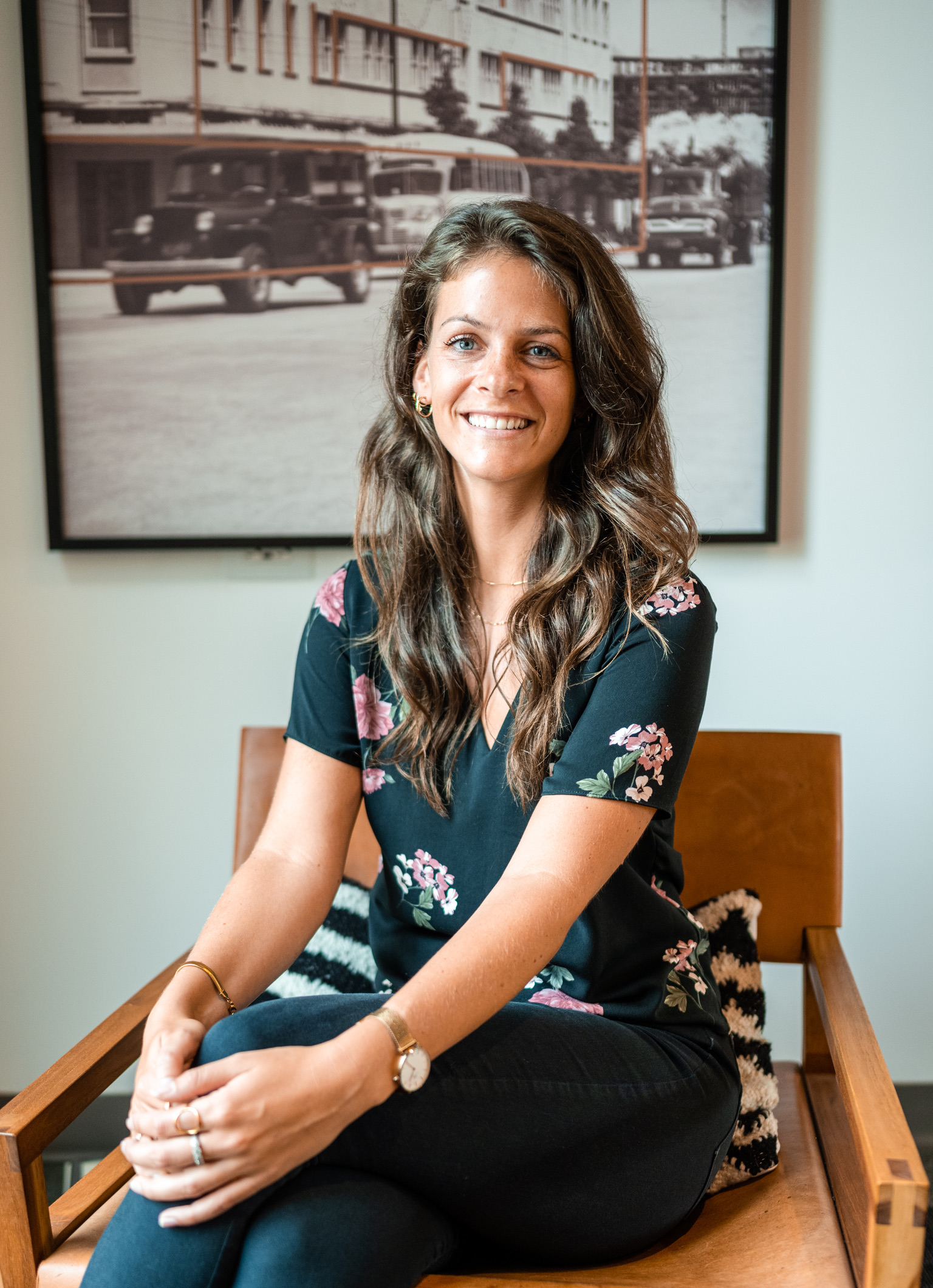
Meet Borana
Borana Resulaj is an international finance consultant for nonprofit organisations and the founder of NGO Finance Hub. She works with NGOs in Europe, the US, and Africa to strengthen financial systems, improve transparency, and support long-term sustainability.
A Life Lived Between Doubt and Determination
There is a quiet honesty in the way Borana Resulaj speaks about her journey. Nothing is polished or overstated. It is not a story of certainty or early clarity. Instead, it is shaped by hesitation, persistence, and a deep commitment to doing meaningful work, even when she did not feel ready for it.
At the heart of everything she does is a simple belief that work, no matter how technical, should remain human. Finance, in her world, is not just about numbers or compliance. It is about trust, responsibility, and the invisible structures that allow organisations to serve others with dignity. That perspective did not come from textbooks or titles. It was built slowly, through lived experience, through moments of doubt, and through the decision to keep moving forward despite them.
When “Not Enough” Becomes the Starting Point
Borana’s professional story begins in a place many people recognise but rarely admit out loud. She was a recent graduate in Albania, stepping into a job market that felt uncertain and intimidating. On paper, she had everything she needed. She had completed her Master of Science in Accounting and Auditing with exceptional results. Yet internally, she carried a different narrative.
“I was a 22 year old graduate, ready to start my professional journey, frightened and insecure, almost certain that my job searching journey would be long. There is always that voice in your head telling you it is still not enough.”
That voice shaped her early decisions. When the opportunity came to join Tirana Legal Aid Society as a Finance Officer, she did not immediately see herself as someone who belonged there. The organisation felt too established. The role felt too significant. Around her, expectations were pointing in another direction, towards banking or large corporate firms. Still, she stepped into the role.
What followed were six formative years that would define her professional identity. It was not just about learning finance. It was about understanding the role finance plays in organisations that exist to serve others. In that environment, numbers were never abstract. They were connected to real people, real needs, and real consequences.
Those years also introduced her to a kind of leadership that would stay with her long after she moved on. Her first manager, a woman known for both her intellect and her humility, showed her that professionalism and humanity are not opposing forces. They are, in fact, deeply connected. Watching someone lead with both competence and compassion left a lasting impression on Borana’s understanding of what it means to do meaningful work.
Choosing a Path That Chose Her
There is a certain clarity that people often expect in career stories, a sense that everything was intentional from the beginning. Borana’s path does not follow that narrative. She is open about the fact that she did not consciously choose her field.
“I never chose this career path. It was a coincidence, and it turned out to be the best one for me.”
What might have started as chance slowly became something more intentional. Over time, her work in nonprofit finance began to feel less like a job and more like a place where her skills and values aligned. The sector, with all its challenges and imperfections, offered something she did not feel elsewhere. It allowed her to contribute to work that had visible impact.
After her years at Tirana Legal Aid Society, she moved into a role with an international organisation, fulfilling a long held aspiration. It was, by many standards, a step forward. The environment was global, the people were experienced, and the work carried a certain prestige. Yet something felt missing.
The pace, the structure, and the distance from the immediate realities of local organisations created a sense of disconnect. She found herself drawn back to the energy and urgency of national nonprofits, where the work felt closer to the communities it aimed to support. Leaving that role was not easy, but it marked an important moment of self awareness.
Her career then expanded across borders. She began working with organisations in the Netherlands, France, Belgium, and the United Kingdom. With each new engagement, she noticed a recurring pattern. The organisations were doing important work, often creating meaningful change in their fields. Yet many struggled with financial systems that were not strong enough to support their mission.
That realisation would later shape the direction of her work in a profound way.
The Weight of Holding Everything Together
As her career progressed, so did the expectations she placed on herself. She became an international finance consultant at a relatively young age, earning recognition and financial stability. From the outside, it appeared as though everything was aligning.
Internally, the reality was more complex.
At the same time, she was navigating one of the most transformative experiences of her life. Becoming a mother brought a new dimension to her identity, one that reshaped her understanding of strength and capacity.
Motherhood did not slow her down in the way she had once feared. If anything, it revealed a resilience she did not know she had. Balancing professional responsibilities with the physical and emotional demands of caring for a newborn required a level of endurance that cannot be easily explained. It was a period marked by exhaustion, constant adjustment, and quiet perseverance.
Yet even as she continued to grow professionally, something else was happening beneath the surface. The balance she was trying to maintain began to slip. She found herself taking on more than was sustainable, driven by ambition and a desire to prove herself.
“I was a mother trying to be present, but not truly present. My mind was constantly occupied with numbers, emails, and responsibilities. I was juggling three roles at once, working sixteen hours a day. I burned out.”
Burnout does not arrive suddenly. It builds gradually, often unnoticed by the person experiencing it. For Borana, it culminated in a moment that forced her to stop. One of her contracts ended in a way that felt deeply discouraging, leaving her questioning her sense of self and her place in her profession.
What followed was not a quick recovery. It was a period of rebuilding, supported by therapy, by the people around her, and by a willingness to confront difficult emotions. It required her to step back and reconsider not only how she worked, but why she worked the way she did.
That period, though painful, became a turning point. It shifted her relationship with ambition, with success, and with herself.
Rebuilding with Intention and Humanity
Emerging from burnout did not mean returning to the same patterns with more discipline. It meant redefining what success looked like and how it should feel. For Borana, this meant placing greater emphasis on balance, even if that balance remained imperfect.
She began to approach her work with a renewed sense of intention. Passion remained central, but it was no longer allowed to come at the expense of her well being or her relationships. She recognised that meaningful work must be sustainable, not only for organisations but also for the individuals behind it.
This shift in perspective also influenced how she defined professional success. It was no longer tied solely to titles, income, or recognition. Instead, it became something quieter and more relational.
For her, success is reflected in the trust she builds. It is seen in the way clients return, in the recommendations that happen without her presence, and in the confidence others place in her work. It is a form of validation that cannot be measured easily, but carries significant weight.
At the same time, she continued to invest in her own growth. Becoming a member of the Association of Chartered Certified Accountants marked an important milestone, not just as an achievement, but as a reflection of her persistence. Being one of the youngest people in professional spaces did not feel like a disadvantage. It became a reminder of how far she had come.
Creating Space for Others to Thrive
The idea for NGO Finance Hub did not emerge from a single moment of inspiration. It grew gradually, shaped by years of observation and experience. Borana had seen firsthand how many nonprofit organisations struggled with financial management, not because they lacked commitment or intelligence, but because they lacked access to practical, relevant support.
She wanted to create something that addressed that gap.
NGO Finance Hub became a space where she could bring together everything she had learned and offer it in a way that felt accessible and grounded. It was not about imposing rigid systems or overwhelming organisations with technical language. It was about meeting them where they were and helping them build structures that made sense in their context.
Her work focuses on bringing clarity to financial processes, but its impact goes beyond numbers. When organisations understand their finances, they are better equipped to make decisions, to build trust with donors, and to sustain their work over time.
In this way, her contribution extends beyond individual organisations. By strengthening the financial foundations of nonprofits, she indirectly supports the communities they serve. It is a form of impact that operates behind the scenes, but is essential to the effectiveness of the sector.
What makes her approach distinct is the emphasis on humanity. She believes that professionalism does not require detachment. In fact, she sees empathy and understanding as essential components of effective work, especially in the nonprofit space.
Holding Ambition and Humanity Together
Looking ahead, Borana’s vision is both focused and expansive. She wants to continue growing NGO Finance Hub, reaching more organisations and making financial management less intimidating and more practical. At the same time, she remains committed to direct engagement, to working closely with teams and maintaining the human connection that she values deeply.
Her approach to the future is not driven by urgency or pressure. It is shaped by a steady commitment to growth, both personal and professional. She understands that balance is not something that can be achieved once and maintained effortlessly. It requires ongoing attention and adjustment.
There are days when it feels easier, and days when it does not. What matters is the willingness to keep trying, to pause when necessary, and to begin again without judgment.
She also carries with her a message for those who are at the beginning of their journeys or standing at uncertain crossroads. It is not a message of certainty or reassurance. It is an invitation to move forward despite doubt.
The feeling of readiness, she believes, may never fully arrive. Waiting for it can become a way of staying still. Instead, growth happens in motion, in the decision to start even when the outcome is unclear.
A Different Measure of Strength
There is a quiet strength in the way Borana Resulaj has shaped her path. It is not defined by constant achievement or uninterrupted progress. It is defined by resilience, by the ability to face moments of doubt, exhaustion, and uncertainty, and still continue.
Her story is not about overcoming every challenge perfectly. It is about learning to live with imperfection, to work through it, and to build something meaningful along the way.
In a field often associated with precision and control, she brings something less tangible but equally important. She brings a sense of humanity. She reminds us that behind every system, every report, and every organisation, there are people navigating their own complexities.
And perhaps that is where her work finds its deepest purpose. Not in the numbers themselves, but in the trust, clarity, and possibility they help create for others.
For More Features
Be Featured in The Real Edit!
Every story has the power to shape how we see innovation, leadership, and purpose. If you’re a founder, creator, executive, or changemaker with a journey worth telling , we’d be honored to help you share it.
To inquire about being featured:
Email us at: info@realedit.site
Follow The Real Edit