Meet Winnie
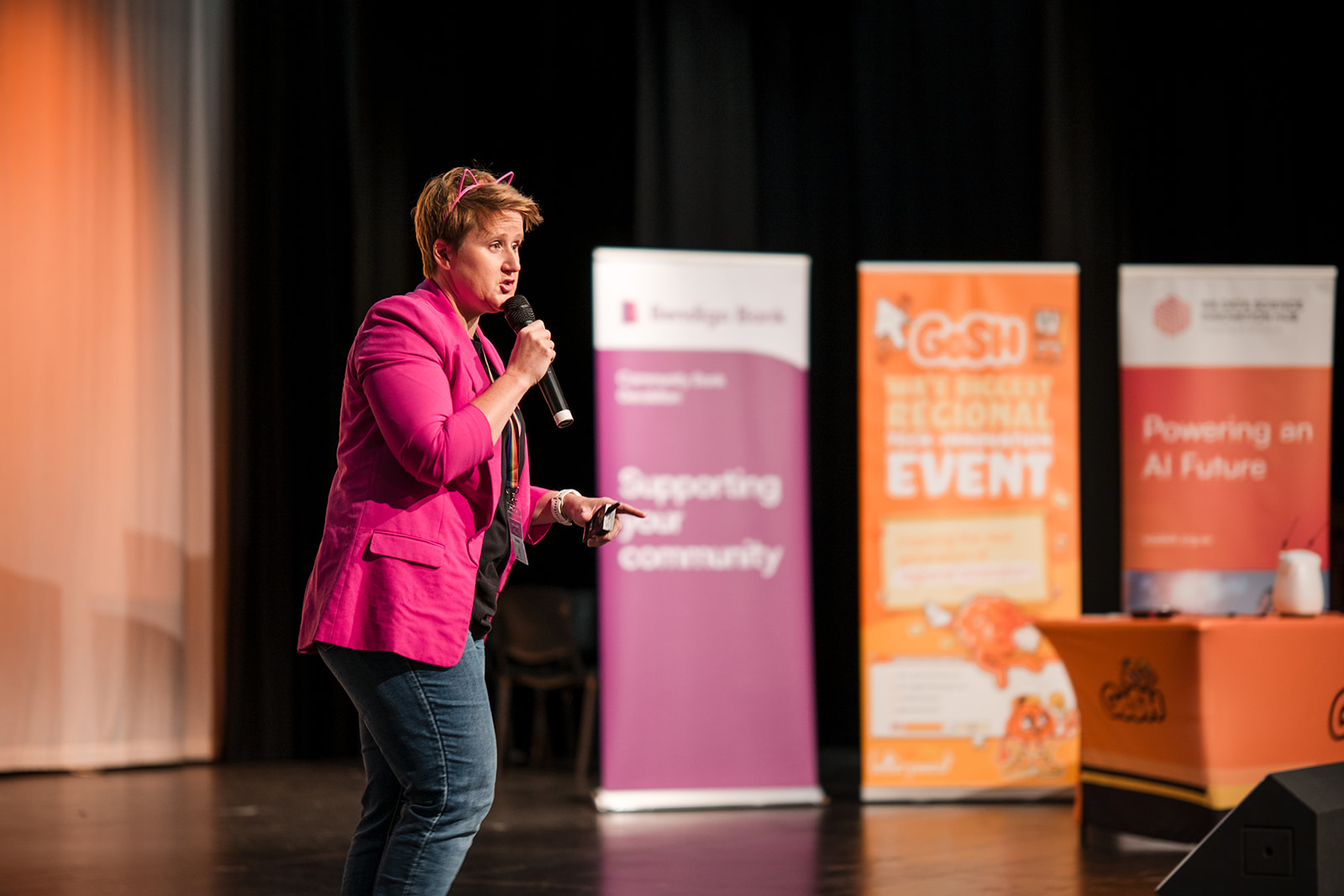
Winnie Nguyen is the Founder and CEO of Prism Platform, a talent technology company focused on making hiring fairer, faster and more human. She is also the founder of Collab MTM, a consulting firm shaped by her fifteen years in managed services and technology transformation. Based in Melbourne, Australia, she brings together experience in corporate leadership, technology, mentoring and entrepreneurship with a deeply personal belief in building work that leaves something meaningful behind.
When Curiosity Became a Compass
At eighteen, Winnie Nguyen thought she knew where life was taking her. She was firmly on the science track and expected that an optometry clinic would eventually become part of her professional world. It was a sensible plan, shaped by an interest in science and a clear idea of what a conventional career might look like.
Then she took a part time call centre job at Telstra to help pay the bills.
It was not supposed to be a defining moment. Yet that experience introduced her to something she had not expected to enjoy so much: understanding how businesses work from the inside. She became interested in people, problems and the systems that connected them. More than anything, she became curious about why some processes made life easier while others created unnecessary friction.
That curiosity eventually pulled her away from the path she had imagined as a teenager. What followed was fifteen years of professional growth through managed services and technology transformation. She climbed the corporate ladder, took on greater responsibility and learned how organisations operate at scale.
There was a great deal to learn, and she valued the experience. But over time, another feeling became harder to ignore. Professional progress did not necessarily translate into personal fulfilment.
Within a company, Winnie found that there were natural boundaries to what she could change. She could influence her responsibilities, her team and her department, but there was always a larger structure around her. Eventually, she began to wonder what might happen if she stepped outside it.
Leaving the security of employment was not the end of her career. It was the beginning of a different relationship with work.
The Restlessness Beneath the Success
Winnie is candid about what initially pushed her forward. It was not always some perfectly formed sense of purpose. Sometimes, quite simply, she was restless.
For years, the desire to keep learning and take on another challenge kept her moving. She did not want to stand still, and she was uncomfortable with the idea of becoming too settled. That restlessness helped her build a substantial corporate career, but eventually it also became clear that movement alone was not enough.
She wanted work that felt more whole.
That realisation led her to leave corporate life and build businesses of her own. Today, those businesses are Collab MTM and Prism, two ventures that reflect different parts of the experience she has gathered along the way.
Collab MTM allows her to draw on her knowledge of consulting, technology and organisational transformation. Prism represents something more personal. Its origins can be traced to an experience that changed how she viewed the world of work and the systems surrounding it.
That experience was redundancy.
Being made redundant can be deeply unsettling. There is the financial uncertainty, of course, but there is also the emotional impact of being reduced to a process. For someone who had spent years working within technology and transformation, Winnie found herself confronted by a question that stayed with her: with all the technology available, why was the experience of finding and matching people with work still so deeply flawed?
She did not want to simply accept that the process was broken.
Instead, she began thinking about what a better version could look like.
Prism emerged from that question. It was not born from an abstract market opportunity alone. It came from a professional experience that had affected her personally and made her question an established way of doing things.
That distinction matters. Winnie is not trying to build technology simply because technology is available. She is interested in technology when it can remove unnecessary friction, create better outcomes and give people a fairer experience.
Her father’s death deepened that perspective.
Grief has a way of changing the scale by which a person measures a life. The things that once seem urgent can suddenly appear much smaller. Titles, targets and professional milestones can lose some of their power when placed against the finite nature of life.
For Winnie, losing her father became a profound moment of reassessment. His influence left her thinking more seriously about legacy and what it means to spend a life in a way that matters.
The question became less about what she could achieve and more about what she could leave behind.
That shift continues to shape her decisions today.
Building the Answer to a Difficult Experience
Prism sits at the centre of Winnie’s current work, but the company represents more than a technology platform. At its heart is an attempt to make the relationship between people and work more thoughtful.
The platform focuses on matching professionals with suitable roles in a matter of days rather than leaving candidates waiting through lengthy hiring processes. It also places skills ahead of pedigree, with the intention of reducing some of the bias that can enter traditional shortlisting.
For candidates, that means having a better opportunity to be recognised for what they can actually do. For businesses, it means receiving more relevant shortlists without completely handing decision making over to an automated system.
That last point is particularly important to Winnie.
At a time when many businesses are looking for ways to put artificial intelligence at the centre of their operations, she has chosen a different balance. Prism uses AI to handle administrative work, while human beings remain responsible for judgement.
It is a decision that reflects something deeper in her philosophy. Technology can improve a process, but it does not automatically understand the human consequences of a decision.
For Winnie, responsible innovation means knowing where technology is useful and where human judgement should remain.
Her own definition of success is equally grounded. She does not measure the value of Prism solely through growth figures or public recognition. One of the moments that matters most to her is hearing from a user who discovers the platform and wonders why it did not exist sooner.
That kind of response tells her that the problem she experienced herself is shared by others.
There are also quieter measures of success. Building Prism alongside her life partner, who is also her co founder, has given the journey a deeply personal dimension. So has hearing her children talk about the kind of person they want to become.
For Winnie, those moments carry more weight than anything that might appear on a professional biography.
Her career has included recognitions such as being awarded a top performer at Telstra and speaking to hundreds of CFOs about adopting AI responsibly and at scale. She is grateful for those experiences, but they are not the centre of her story.
The deeper achievement is creating something she believes should exist and watching it begin to help real people.
A Fairer Relationship Between People and Work
The first chapter of Prism is focused on hiring. The longer story, however, is about what happens after someone gets the job.
Winnie sees an opportunity to address a problem that receives far less attention than recruitment itself: retention.
Businesses spend significant time trying to find the right people, but the consequences of a poor match can extend well beyond the hiring process. When someone leaves because a role, workplace or organisation was not the right fit, the cost is felt by both sides.
The individual has to begin the search again. The employer has to repeat the recruitment process. Teams lose continuity. Time is lost. Knowledge leaves with the person who walks out the door.
Winnie wants Prism to explore whether better matching at the beginning can help reduce that cycle.
Her ambition is therefore larger than helping companies fill vacancies quickly. She wants to understand whether skills based matching can contribute to people staying in roles where they can genuinely thrive.
That makes retention a natural extension of the company’s purpose.
The immediate goal is concrete. Prism entered beta on August 15, a date Winnie deliberately chose because it is also her mother’s birthday. That choice reflects how closely her family history is connected to the meaning she has attached to the business.
Her mother spent her life helping others without seeking recognition for it. Winnie sees Prism, in part, as a way of carrying that spirit forward through something that could eventually help people at a much larger scale.
The company’s first major milestone is to match 500 professionals with genuinely suitable work by the end of 2027.
But even that number is not the final destination.
For Winnie, the more interesting question comes afterward. Can Prism demonstrate that a better match is not simply a faster hire, but a lasting one?
That is where her larger vision begins.
The Discipline of Building Outward
Much of Winnie’s approach to entrepreneurship can be traced back to something her parents taught her growing up.
First help yourself. Then help your family. Then help your community. Then go help the world.
It is a simple philosophy, but she has carried it into her professional life with surprising consistency.
The idea is not about putting ambition aside. It is about understanding that meaningful contribution begins with a solid foundation. Looking after yourself creates the capacity to support others. Supporting family creates stability. From there, contribution can widen into community and eventually into something larger.
That principle influences how Winnie thinks about her companies, her relationships and the people she chooses to mentor.
It also shapes her understanding of leadership.
She does not believe that leadership means surrounding yourself with people who think exactly as you do. Instead, she values teams that share a common mission while bringing different skills, experiences and perspectives to the table.
For her, balance is created through complementary strengths rather than uniform thinking.
She also relies on a personal sense of direction. Winnie describes her purpose as a compass, something she can return to when circumstances become noisy or uncertain. A clear mission does not remove difficult decisions, but it can make those decisions easier to navigate.
And then there is a much smaller object that carries enormous emotional weight.
When she needs perspective, she reaches for her parents’ wedding ring. It is a thin gold band that her parents could afford during the war years in Vietnam.
The ring reminds her of what previous generations endured and places her own challenges into a different context.
The problems of building a company can be difficult. They can involve uncertainty, pressure and moments of doubt. But they are generally solvable.
Her parents faced circumstances that were much closer to questions of survival.
That perspective helps Winnie keep professional difficulty in proportion.
Making Herself Unnecessary
For someone building a company, the idea of eventually becoming unnecessary can sound counterintuitive.
For Winnie, it is the goal.
She does not want to create a business that depends permanently on her presence. She wants to build something strong enough to function without her being at the centre of every decision.
Even something as ordinary as taking a holiday without feeling guilty has become part of her definition of progress.
There is freedom in knowing that a company can operate without its founder constantly stepping into the engine room. More importantly, there is evidence of maturity in recognising that the long term health of an organisation cannot depend on one person’s ability to keep everything moving.
Winnie wants Prism to reach a point where she is no longer indispensable.
If the company eventually grows beyond the limits of her own skills and requires a leader who can take it further than she personally could, she would consider that a success.
That perspective returns her to the idea of legacy that became so important after her father’s death.
The point of building something is not necessarily to remain attached to it forever.
Sometimes the greatest evidence that something has been built well is that it can continue without you.
The People Who Keep Her Grounded
Winnie’s parents remain the strongest influence on her life, but inspiration does not come from a single source.
Her mentors provide strategic perspective when she needs clarity. Her team brings different strengths and viewpoints. Her children offer another kind of wisdom, often through simple questions or observations that can make a complicated adult problem feel much smaller.
That balance matters because entrepreneurship rarely follows a predictable route.
There are decisions that can be solved through experience, others that benefit from advice and some that require stepping back long enough to see what actually matters.
Winnie has learned not to expect one person to have all the answers.
Instead, she has built a network of perspective around herself.
That may be one of the quieter lessons from her journey. Independence does not mean doing everything alone. It can mean knowing when to draw on other people’s experience while still taking responsibility for the direction you choose.
A Future Bigger Than the Founder
Prism is still young, but Winnie is already thinking beyond its first chapter.
The immediate work is practical: improve matching, reduce bias, help businesses find suitable professionals and give candidates a fairer opportunity to be seen.
The longer ambition is more difficult.
She wants to understand whether better technology can contribute to healthier, longer lasting relationships between people and their work.
If Prism can move from solving the first problem of hiring to addressing the deeper problem of retention, the company will have travelled beyond recruitment. It will be exploring whether the quality of a match can influence the quality and longevity of a working relationship.
That is a much bigger question than simply filling vacancies.
It also explains why Winnie is comfortable imagining a future in which Prism becomes much larger than she is.
She does not appear interested in building a monument to herself. She wants to create something useful enough to continue evolving after her own role changes.
Her ambition is not to remain at the centre of the story.
It is to make the story bigger than herself.
What Remains When the Titles Fall Away
Looking back, Winnie’s career can appear to have followed a clear progression from science, to telecommunications, to corporate transformation, to consulting and finally entrepreneurship.
In reality, it was far less orderly.
A part time job changed her interests. Fifteen years in corporate life gave her experience but also exposed the limits of what she could change from within. Difficult managers showed her the kind of leader she did not want to become. Redundancy gave her a firsthand experience of a broken process. Losing her father changed how she understood time, achievement and legacy.
None of those moments existed in isolation.
Together, they formed a direction.
Winnie did not begin with a detailed blueprint for building Prism. She followed curiosity, paid attention to discomfort and allowed difficult experiences to teach her something.
Her story suggests that purpose does not always arrive fully formed. Sometimes it develops slowly through the things that frustrate us, the people who influence us, the losses that change us and the questions we cannot stop asking.
Today, she is building toward a future where Prism can help people find work that fits them better and help organisations build stronger relationships with the people they employ.
But beneath the technology, the business plans and the milestones is a more personal ambition.
To build something useful.
To help people along the way.
To honour what her parents gave her.
And eventually, to leave behind something that can stand without her.
For Winnie, that is what success looks like. Not simply reaching the next milestone, but creating something with enough purpose and strength to outlast the person who started it.
For More Features
Be Featured in The Real Edit!
Every story has the power to shape how we see innovation, leadership, and purpose. If you’re a founder, creator, executive, or changemaker with a journey worth telling , we’d be honored to help you share it.
To inquire about being featured:
Email us at: info@realedit.site
Follow The Real Edit