Meet Sisekelo
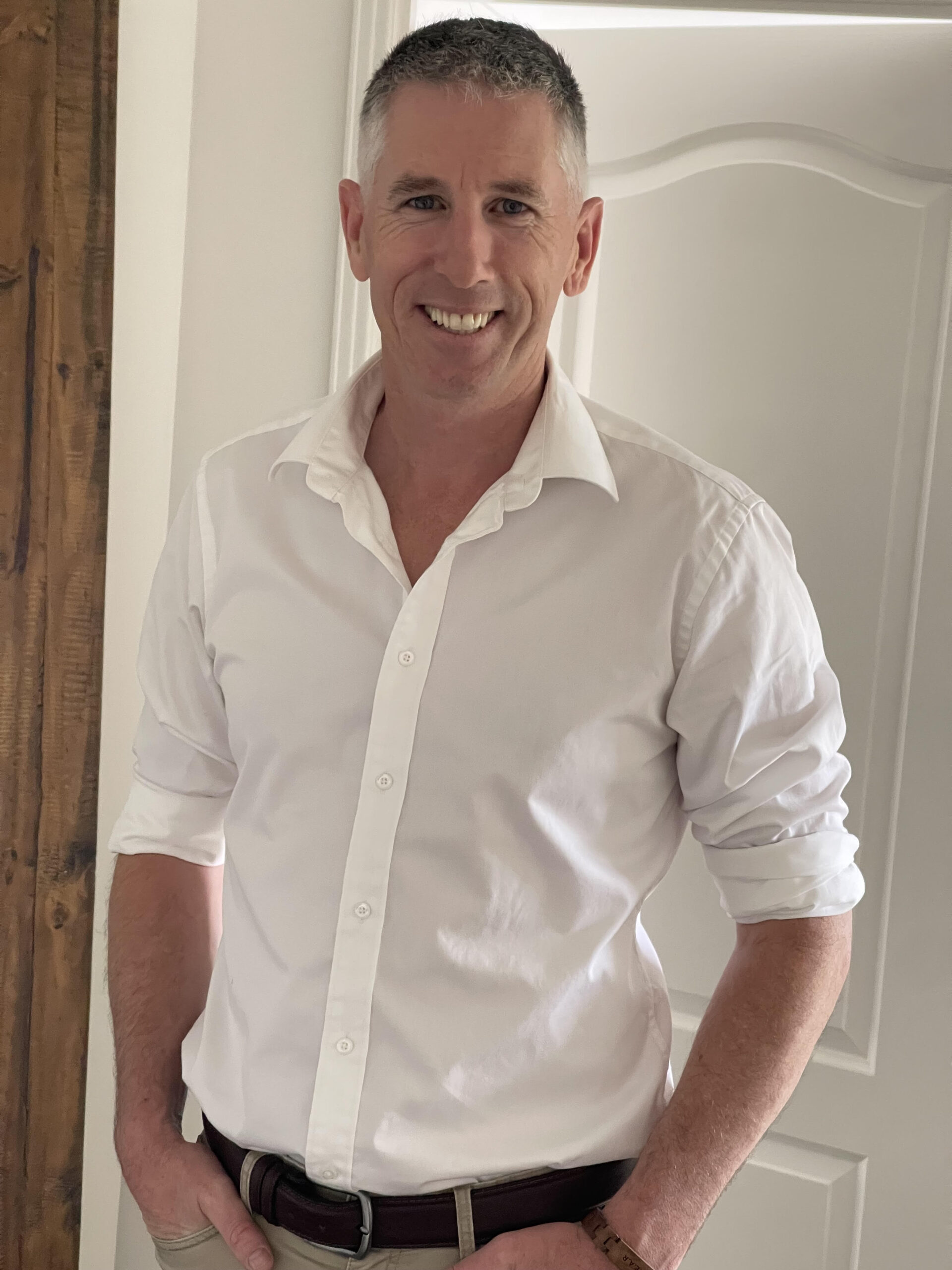
Sisekelo Bonginkosi Dlamini is the founder of The Systems Office, a company focused on helping growing businesses develop the organizational capability to support their ambitions. Based in Manzini, Eswatini, his work sits at the intersection of business growth, systems thinking, technology, and founder development.
When Success Starts Creating New Problems
Sisekelo Dlamini became interested in business by asking a question that many founders eventually encounter, although often only after their companies have begun to grow: why can a business become harder to run precisely when it is becoming more successful?
His interest in that question did not begin with years of executive experience or a carefully planned entrepreneurial path. It began in college, while studying Finance and Accounting and trying to understand how businesses actually functioned beyond textbooks and financial statements.
He was curious about the numbers, but curiosity gradually took him somewhere broader. He wanted to understand how decisions were made, how problems emerged, how teams operated, and why organizations sometimes struggled to deliver despite having capable people and strong opportunities.
That curiosity became more meaningful during his final year of college, when his academic performance and initiative opened the door to an opportunity that would change the direction of his professional life. He began working closely with the founder and executive director of his institution, an experienced executive who also led one of Eswatini’s largest customer experience consultancies.
For Sisekelo, the value of the experience was not simply being close to senior leadership. It was being close to real problems.
He was exposed to executive decision making, client engagements, business operations, and the often complicated process of figuring out what was actually going wrong inside an organization. Instead of learning only from a distance, he was given opportunities to observe problems firsthand and contribute to solving them.
One particular client engagement would become the foundation for a much bigger idea.
The Problem Was Not Always the People
The company he was observing was successful. Demand was increasing, its market position was strong, and the founder had built a reputation that had brought the business to an important stage of growth.
Yet something was not working.
Service delivery was falling short of what the founder expected. The initial diagnosis appeared straightforward. The employees were assumed to be part of the problem, and the organization had already introduced training and standard operating procedures in an attempt to improve performance.
The changes, however, were not solving the underlying issue.
Sisekelo was sent into the field to observe what was really happening.
What he found forced him to reconsider the original diagnosis. The employees were not indifferent. They were not simply unwilling to perform. They understood that something was wrong, recognized the consequences, and genuinely wanted the organization to improve.
The experience changed the way he looked at organizational problems.
He began to understand that visible problems are not always caused by the people closest to them. Sometimes, the deeper issue lies in the structures surrounding those people: unclear processes, broken information flows, poorly defined responsibilities, inconsistent decision making, or systems that have not evolved alongside the business.
The realization stayed with him.
“What appears to be a people problem can sometimes be a systems problem underneath.”
That distinction became increasingly important as he thought about what happens when businesses grow. A small company can often depend heavily on the founder because information is concentrated in one person. Decisions can be made quickly because everyone knows where to turn. Processes may exist informally because the team is small enough to remember how things work.
Growth changes that equation.
More customers create more complexity. More employees create more communication challenges. More decisions create greater demands on leadership. Eventually, the habits and structures that helped a business reach one stage can become insufficient for the next.
Sisekelo became interested in that transition.
He began deliberately expanding his knowledge beyond finance into business development, customer experience, digital marketing, artificial intelligence, and systems thinking. He was no longer interested only in understanding what a business had achieved. He wanted to understand what allowed an organization to keep performing as its demands increased.
From Understanding Numbers to Understanding Organizations
By the time Sisekelo graduated at the top of his class in Finance and Accounting, his professional interests had changed considerably.
Finance had taught him to understand the numbers behind a business. His practical exposure had taught him that numbers were only one part of a much larger picture.
He had begun thinking about the organizational machinery that sits behind business performance.
He was offered a full time position at the institution after graduating. It would have been a natural continuation of the path he had started. Instead, he chose to spend time exploring the question that had become difficult to ignore.
Why do businesses with genuine opportunity sometimes become increasingly dependent on the people who started them?
He studied growth, organizational capability, and founder dependency. He continued learning about systems and technology. More importantly, he began turning his observations into a point of view about what growing businesses need when the structures that once worked are no longer enough.
That exploration eventually became The Systems Office.
The company was not born from a desire to simply become an entrepreneur. It emerged from an unresolved question and a real problem he had witnessed.
That distinction matters to Sisekelo.
He is still early in the journey, and he does not measure the significance of what he has built by the size of the company today. What matters to him is that an observation became a question, the question became an area of study, and the study eventually became an organization intended to help others.
There was another important transition along the way.
His first client said yes.
Until then, much of his development had taken place through study, observation, mentorship, and experimentation. Having someone trust him with a real business problem introduced a different level of responsibility. The work now had consequences beyond his own learning.
It required him to take what he had been developing and apply it where it mattered.
That experience marked a shift from preparing to create value to being accountable for creating it.
Learning to Carry an Ambition Before Feeling Ready
Building The Systems Office has also required Sisekelo to confront something more personal.
His ambition has often moved faster than his experience.
From the beginning of his career, he repeatedly placed himself in environments that demanded more from him than he already knew. Starting a company intensified that experience. He was now expected to help solve real problems while still developing the depth of experience needed to handle them.
There have been moments when he questioned whether he was ready for the responsibility.
But rather than treating uncertainty as a reason to stop, he has tried to understand what it is asking of him.
Sometimes the answer is more learning. Sometimes it is better perspective. Sometimes it is simply more time spent doing difficult work.
His response has been to keep developing.
He reads, studies, seeks different perspectives, refines his thinking, and deliberately places himself in situations that stretch his capabilities. He has come to see persistence not as blindly continuing, but as staying engaged long enough to become more capable.
That mindset has shaped his understanding of difficult periods.
A difficult season does not necessarily mean that a person has chosen the wrong path. It may reveal a skill that has not yet been developed, a gap in knowledge, or the natural cost of attempting something before becoming fully prepared for it.
That perspective gives him room to keep moving without pretending that the journey is easy.
Instead of asking only why something is happening, he tries to ask what the situation is asking him to learn or change.
It is a subtle shift, but an important one. It turns difficulty from a verdict into information.
Building Organizations That Can Carry Their Founders’ Ambitions
Today, Sisekelo’s work at The Systems Office is centered on a particular stage of the entrepreneurial journey.
It is the point when the ambition of a founder begins to demand more from the organization that has grown around it.
He works with founders who may sense that something is limiting their business but need greater clarity about what is happening beneath the surface. His role is to help them examine the organization more closely, understand the forces creating friction, and identify what needs to change.
At the heart of his approach is a simple idea: growth requires more than increased demand.
An organization must also develop the capability to carry that demand.
That can involve processes, information, decision making, roles, technology, communication, and the relationship between leadership and the rest of the organization. The objective is not to create complexity for its own sake. It is to create enough structure for a business to function effectively without making every decision dependent on its founder.
For Sisekelo, that work ultimately connects back to freedom.
“When founders can build without being permanently constrained by the organizations they have created, businesses can grow, people can access more opportunities, and the wider economy benefits.”
His perspective extends beyond individual companies.
A stronger business can create jobs. It can develop people, serve customers more effectively, introduce new solutions, and contribute to the communities around it. If more businesses can grow without being permanently held back by organizational limitations, the effects can reach well beyond the founder.
This is particularly meaningful to him in Eswatini.
Eswatini is where he is building, learning, and testing his ideas against the realities of businesses on the ground. He sees significant entrepreneurial potential in the country and believes that strengthening the organizations behind those businesses can create a wider effect.
His ambition is not to separate himself from that environment as he grows. It is to build from it.
A Larger Question About African Possibility
Technology is becoming another important part of Sisekelo’s thinking.
He is increasingly interested in artificial intelligence, not simply because of what the technology can accomplish, but because of the gap between technological possibility and meaningful adoption.
For him, the important question is not whether a technology is impressive. It is whether it can solve a real problem in a way that makes sense for the people and environments it is intended to serve.
That interest has opened a broader area of exploration at the intersection of business, systems thinking, technology, and African problem solving.
He wants to understand how advanced tools can be adapted to local realities rather than assuming that solutions developed elsewhere will automatically fit.
Over time, he hopes to contribute to that conversation through more than direct client work. Writing, speaking, and teaching are becoming part of his longer term vision. He wants to make complex business and technology questions easier to understand and easier to act on.
In that sense, his ambition is gradually moving from building a company to building a body of work.
He is inspired by people who have created ideas and organizations that extend beyond themselves. Steve Jobs, Alex and Leila Hormozi, and Vusi Thembekwayo have each influenced different aspects of how he thinks about business, communication, possibility, and impact.
What connects those influences for him is not simply their visibility. It is the idea that a person’s work can continue to reach people beyond their immediate environment.
That is the kind of possibility he hopes to pursue in his own way.
Becoming Capable of Carrying the Vision
Sisekelo does not define success simply by accumulation.
For him, it is closely connected to what he can build, who he becomes while building it, and what greater freedom that work can create for others.
Professionally, he wants The Systems Office to become an organization that genuinely helps ambitious businesses develop the capability to sustain their growth. He wants that work to have meaning in Eswatini and, eventually, across African markets.
Personally, his definition is more inward.
He wants to become a better thinker, communicator, leader, and builder as his responsibilities increase. He recognizes that the scale of his ambitions will often exceed his current abilities, and he sees that gap not as something to hide but as a reason to continue developing.
That approach is reflected in the values he carries into his work: curiosity, belief, continuous development, persistence, and integrity.
Curiosity sits at the center.
He wants to understand things deeply, question assumptions, and look beneath obvious explanations. It was curiosity that first led him to investigate the gap between employee behavior and organizational performance. It was curiosity that pushed him beyond finance. It is curiosity that continues to draw him toward systems and artificial intelligence.
But curiosity alone does not build anything.
It needs to be accompanied by belief, discipline, persistence, and character.
Sisekelo understands that not every period will provide immediate evidence that an idea is working. Some seasons require patience. Others require adaptation. The ability to remain engaged while learning from uncertainty has become part of how he approaches both business and life.
A Future Built Around More Than One Company
The immediate task ahead is clear: deepen The Systems Office, learn from more businesses, and develop a practical understanding of organizational capability, systems, and sustainable growth.
But the longer vision is broader.
Sisekelo wants to contribute to an environment where African entrepreneurs are able to pursue ambitious ideas without being permanently limited by the organizations they create.
That means thinking about companies, but also about people, technology, knowledge, and the ecosystems that allow businesses to develop.
His work is still taking shape.
There is no finished blueprint yet, and he does not pretend otherwise. Part of his journey is continuing to learn while building, allowing experience to refine the ideas that first brought him here.
That may ultimately be one of the defining qualities of his story.
He is not building from a position of having everything figured out. He is building while becoming more capable of building.
His advice to aspiring professionals reflects that same philosophy. A person does not need to wait until they feel completely ready before pursuing meaningful work. Ambition will often arrive before experience, and that gap can become a reason to learn more quickly, seek better environments, and accept opportunities that stretch existing capabilities.
The important thing is to keep becoming.
The Work of Becoming
Sisekelo Dlamini’s journey began with numbers, but it did not remain there.
Finance gave him one way of understanding business. Mentorship gave him proximity to real decisions. A difficult client engagement gave him a question worth pursuing. His first client gave him responsibility. Building The Systems Office has given that question a place to live.
Today, he is working toward a simple but expansive idea: businesses should be capable of carrying the ambitions of the people who build them.
For Sisekelo, that is not only a question of operational efficiency. It is a question of freedom, possibility, and what becomes available when people are no longer trapped by the limitations of their own structures.
His story is still being written, and perhaps that is precisely the point. He is not waiting for certainty before moving forward. He is learning, building, questioning, and developing himself alongside the company.
The deeper work, then, is not simply building The Systems Office.
It is becoming the person capable of carrying the vision behind it.
For More Features
Be Featured in The Real Edit!
Every story has the power to shape how we see innovation, leadership, and purpose. If you’re a founder, creator, executive, or changemaker with a journey worth telling , we’d be honored to help you share it.
To inquire about being featured:
Email us at: info@realedit.site
Follow The Real Edit