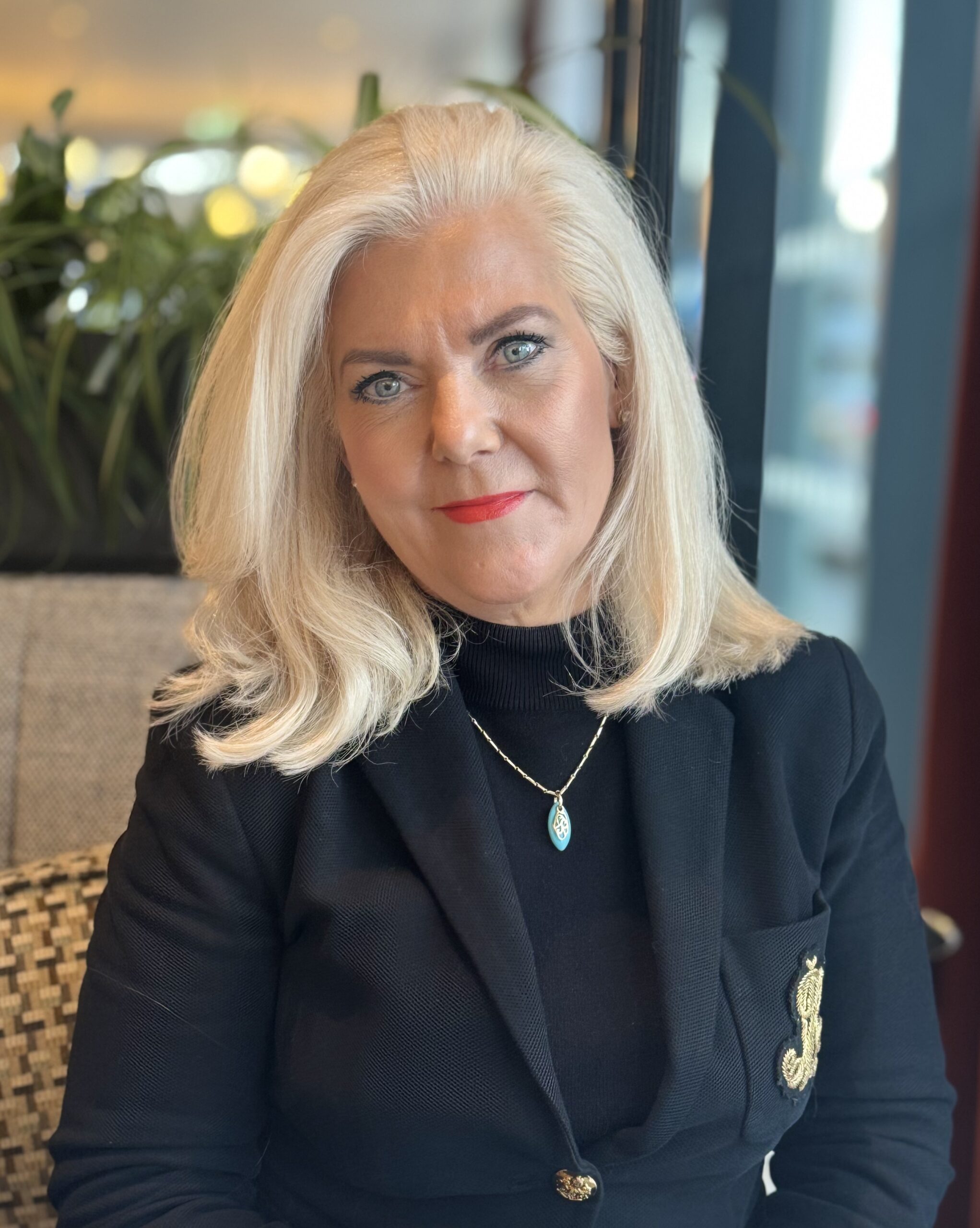
Meet Nora
Nora Rodden is the CEO and Founder of Nervana, a health technology company focused on making research backed mind body education and recovery tools more accessible to people living with chronic pain and other persistent symptoms. Her work grew from a personal experience with long term illness and a desire to make complex scientific knowledge easier for people to understand and use in everyday life.
When the Answers Did Not Come Easily
For Nora Rodden, the path to founding a health technology company did not begin with a business plan. It began with a body she no longer understood.
During her senior year at Cornell, Nora was hit by a car. The accident was followed by chronic back pain, then gastrointestinal issues and insomnia. She sought help from specialists, tried different treatments, and continued to look for an explanation that would bring the pieces together. Yet despite doing what she had been advised to do, her symptoms persisted.
At the same time, her professional life was developing in another direction. Nora spent more than seven years working in biotech strategy and operations, building experience at the intersection of science, healthcare, and business. She understood healthcare from a professional perspective, but her own experience as a patient exposed a different side of the system. Knowing how healthcare organizations worked did not necessarily make it easier to understand what was happening inside her own body.
That tension became increasingly important as she continued her education at Harvard, where she earned an MS in Biotechnology and an MBA. During that period, she encountered research exploring the relationship between the brain, nervous system, emotions, and persistent physical symptoms. For the first time, she found a framework that helped connect experiences she had previously treated as unrelated.
The knowledge did not simply add another theory to her search. It changed how she understood her symptoms and, eventually, how she understood her future.
A Different Way of Understanding the Body
Nora’s recovery became the defining turning point in her career. Applying what she had learned about the nervous system and persistent symptoms helped her recover fully. The experience was deeply personal, but its implications extended beyond her own life.
She began thinking about the years she had spent searching for answers and how difficult it had been to find information that was both credible and practical. Research existed, but finding it was one challenge. Understanding it was another. Knowing how to apply it consistently in everyday life was harder still.
That realization stayed with her.
“I founded Nervana to help close that gap.”
The idea was not to suggest that every person with chronic pain has the same cause or needs the same solution. Nora is careful about that distinction, particularly because her own experience taught her how complicated persistent symptoms can be. Her goal was instead to create another informed path for people who feel stuck, while respecting the role of appropriate medical care.
That sense of responsibility has remained central to the way she approaches her work. Personal recovery can offer insight, but it cannot automatically become a universal prescription. For Nora, turning her experience into something useful for others means remaining open about the limits of what is known, listening to experts and users, and testing assumptions rather than treating personal experience as proof.
In many ways, this careful approach reflects the lessons of her earlier career. Science requires curiosity, but it also requires discipline. Healthcare requires compassion, but it also requires responsibility. Entrepreneurship requires the courage to move forward, but it also requires the humility to recognize when something needs to change.
Nervana sits at that intersection.
Turning Research Into Something People Can Use
Today, Nervana focuses on bringing research backed mind body education and practical recovery tools into a format people can engage with in daily life. The app includes bite sized education, guided reflection, voice coaching, and personalized action steps intended to help people better understand persistent symptoms and become more active participants in their recovery.
For Nora, accessibility is not simply about making information available. It is about making information understandable and usable.
Scientific research can remain distant from everyday life when it is confined to academic papers, specialist settings, or programs that are difficult for many people to access. Translating that knowledge into practical guidance requires a different kind of work. It means considering what a person needs when they are tired, frustrated, uncertain, or overwhelmed by years of symptoms.
Nora understands those circumstances personally.
She remembers what it was like to move between specialists and treatments while becoming increasingly uncertain about her own body. That memory continues to shape the purpose behind Nervana. She wants people who feel they have exhausted their options to encounter credible information without being made to feel that their symptoms are imaginary or that they have somehow failed to recover.
At the same time, she believes hope in healthcare needs to be handled carefully. There is a meaningful difference between giving someone another possibility to explore and promising an outcome that the evidence cannot guarantee.
That distinction matters deeply to her.
Nora describes intellectual honesty, empathy, accessibility, and responsibility as important principles in her work. She wants the company to communicate clearly about what research supports, what comes from lived experience, and what remains uncertain. The goal is not to offer one explanation for every persistent symptom, but to encourage a broader understanding of the many factors that can influence how people experience pain and other ongoing health concerns.
Building With Care
Creating Nervana has asked Nora to become more than a healthcare strategist. She has had to learn product development, technology, entrepreneurship, and the realities of building a company while remaining attentive to the responsibilities that come with working in health.
That responsibility has influenced her definition of success.
For Nora, growth and sustainability matter because they allow Nervana to reach more people, but numbers alone cannot define whether the company is succeeding. The more meaningful measure is whether the work is genuinely useful to the people who rely on it.
She wants users to leave with a better understanding of their symptoms, greater confidence in their ability to participate in their recovery, and practical tools that can fit into ordinary life.
She also wants to build a team that approaches health with care and curiosity. That means being willing to ask difficult questions, challenge assumptions, and resist the temptation to prioritize speed over trust.
Her own experience has made her particularly aware of how vulnerable people can feel when they are looking for help. A health product is not simply another consumer product. People may encounter it when they are frightened, exhausted, confused, or disappointed by previous attempts to feel better.
For Nora, that changes the standard a company should hold itself to.
“If you work in health or another field that affects people during vulnerable moments, remember that trust is part of the product.”
The idea captures much of her approach to leadership. Trust is not something added through branding or communication after the fact. It has to be built into the decisions behind the product, the evidence supporting its claims, the way information is presented, and the way users are treated.
Learning Not to Carry Everything at Once
The experience that led Nora into entrepreneurship also taught her something about balance.
Living with persistent symptoms while studying, working, and searching for answers had forced her to confront the cost of constant stress. Entrepreneurship brought a new version of that pressure. When every problem feels urgent, it can become easy to lose perspective and treat exhaustion as part of the job.
Nora is still learning how to resist that pattern.
During difficult periods, she focuses on the next decision she can control rather than attempting to solve everything simultaneously. She makes space for rest, movement, relationships, and time away from work. Those moments are not separate from her ability to lead. They help her return to difficult questions with greater clarity.
Her definition of personal success reflects that understanding. She wants to do work that reflects her values while also protecting her health, relationships, and curiosity. Building something meaningful does not require abandoning the parts of life that make the work meaningful in the first place.
This perspective also shapes how she thinks about ambition. Nora wants Nervana to grow, but she does not see scale as the final destination. Revenue and reach are tools that can help the company serve more people. They are not the whole measure of its worth.
A Bridge Between Science and Everyday Life
Looking ahead, Nora wants to make Nervana more useful and accessible while continuing to strengthen its educational and recovery tools. Working with clinicians and researchers is an important part of that process because she wants the platform to remain grounded in evolving evidence.
Her larger ambition reaches beyond the app itself.
She hopes to contribute to a stronger connection between scientific research and everyday life. Promising ideas can take years to move from academic literature into accessible resources. In the meantime, people living with persistent symptoms are often left trying to navigate complicated information on their own.
Nora sees an opportunity to narrow that distance.
A more complete conversation about chronic symptoms can acknowledge the interaction between physical health, the brain, the nervous system, emotions, behavior, and a person’s environment without reducing symptoms to any one factor. For her, recognizing those connections does not make pain less real. Instead, it can offer additional ways of understanding what may be contributing to someone’s experience.
That broader view is part of the future she wants to help build: one where people can access trustworthy information, understand it without needing a scientific background, and use appropriate tools alongside medical and mental health care.
Letting an Unexpected Path Become Meaningful
Nora never planned to work in chronic pain. She did not begin her career intending to become a founder, and the experience that ultimately redirected her life was one she would never have chosen.
Yet the path that emerged from it has given her a particular kind of perspective.
She knows what it feels like to be the person searching for an explanation. She knows the frustration of following conventional advice without finding relief. She also knows the importance of remaining curious when an established explanation does not seem to account for everything.
That combination of personal experience and scientific training has become central to her leadership.
Her story is not about turning adversity into a neat success story. The years of uncertainty were difficult, and the lessons they produced continue to shape her. What makes the journey meaningful is the decision to use what she learned with care rather than assuming that her experience can speak for everyone.
Nora’s work ultimately reflects a quieter idea of entrepreneurship. Sometimes the most meaningful company begins with a question that refuses to go away. Sometimes a professional path changes because a personal experience reveals a problem that others are still struggling to solve.
For Nora, that question began with her own search for answers. Today, it continues through Nervana and its effort to make credible knowledge more understandable, practical, and accessible. Her path suggests that meaningful work does not always come from knowing exactly where you are going. Sometimes it comes from paying close attention to what life has taught you, remaining willing to learn, and building something useful from what you find.
For More Features
Be Featured in The Real Edit!
Every story has the power to shape how we see innovation, leadership, and purpose. If you’re a founder, creator, executive, or changemaker with a journey worth telling , we’d be honored to help you share it.
To inquire about being featured:
Email us at: info@realedit.site
Follow The Real Edit