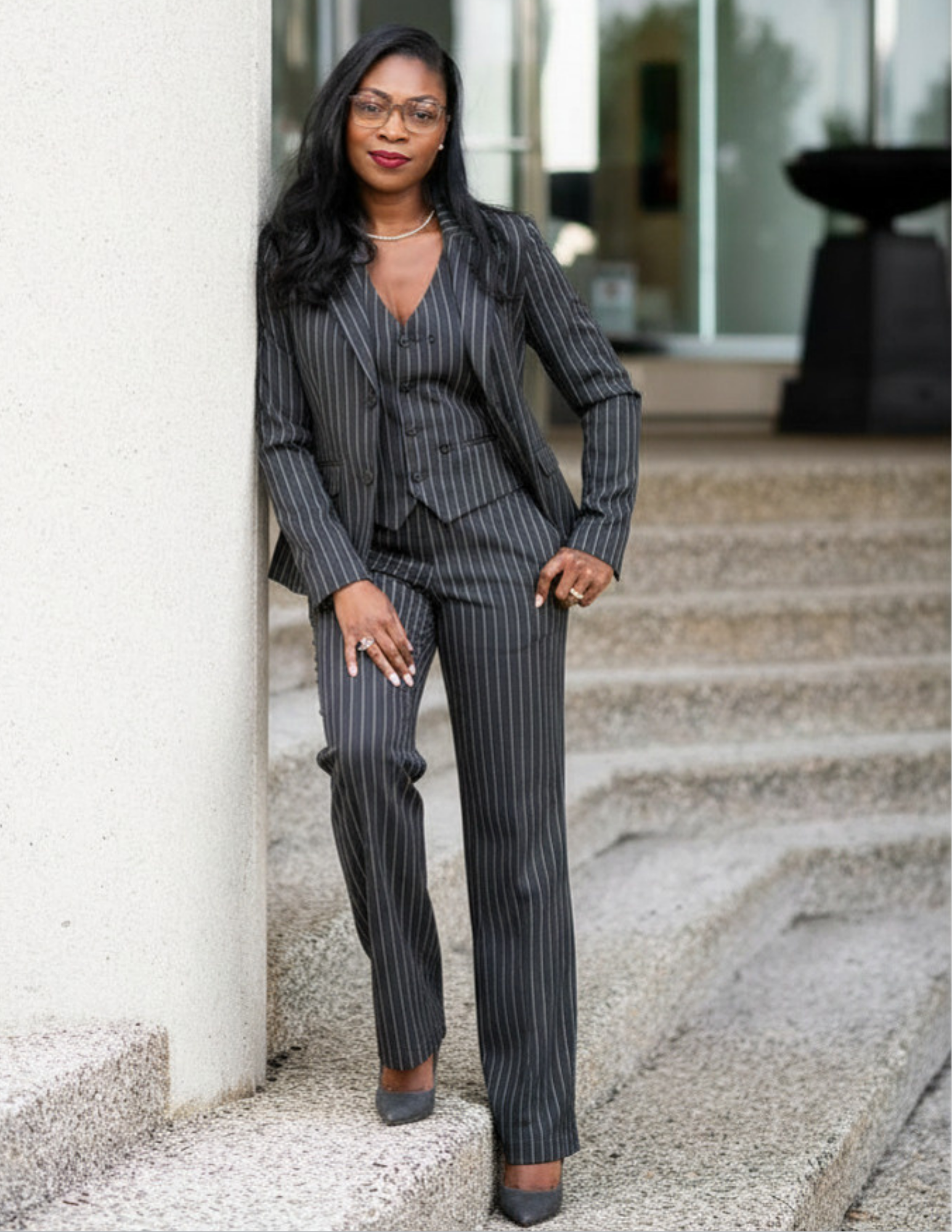
Meet Michelle
Michelle Cox is the founder of PAC Collaborative, based in Phoenix, where she works with domestic violence professionals to develop ethical, trauma informed approaches that center both accountability and dignity. Her work focuses on training facilitators, building practical frameworks, and supporting meaningful behavior change within individuals and systems.
Where Accountability Meets Humanity
There is a certain kind of work that cannot be separated from the life that shaped it. For Michelle Cox, the line between personal experience and professional purpose is not something she tries to draw. It is something she carries, something that informs how she sees people, how she listens, and how she chooses to lead.
Her work sits in a space many people avoid. It asks difficult questions about harm, responsibility, and the possibility of change. It requires holding two truths at once, that harm must be named clearly and that the people who cause it are still capable of choosing differently. This tension is not something Michelle resolves. It is something she works within every day.
What grounds her is not theory alone but lived understanding. She has seen what violence does to families, to identity, to the sense of safety that most people take for granted. She has also seen what happens when someone pauses long enough to recognize their own behavior and chooses a different path. That moment, quiet and often unseen, is where her work begins.
The Early Shape of Understanding
Michelle’s professional journey began in social services, working as an advocate in a women’s domestic violence shelter. It was a role that demanded both presence and resilience. Day after day, she witnessed the realities survivors faced, the complexity of leaving, the systems that were meant to help and the ways they sometimes fell short.
That experience gave her more than professional skills. It shaped how she understood violence, not as a single event but as a pattern that exists within relationships, systems, and histories. It also introduced her to the emotional weight of this work, the responsibility of holding someone’s story with care while navigating the urgency of crisis response.
As she moved into leadership roles within the shelter system, her perspective widened. She began to see not only individual experiences but also the structures that influenced them. Program operations, collaboration between agencies, and the realities of crisis management became part of her daily work.
Her academic path followed a similar direction. After earning her Master of Science in Addiction Counseling, she transitioned into behavioral health, working with individuals experiencing serious mental illness and later with at risk youth. Each role added another layer of understanding, another perspective on how behavior is shaped and how it can shift.
It was during her graduate internship that she was first introduced to working with individuals who had caused harm in the context of domestic violence. That experience did not align with the assumptions she had carried into the field. Instead, it opened a more complicated and more honest view of the dynamics involved.
The Moment That Reframed Everything
There are moments in a career that feel less like progression and more like a quiet reorientation. For Michelle, one of those moments came when she began leading a domestic violence offender treatment program.
At the time, many approaches in the field were rooted in compliance. The expectation was that individuals would follow structured requirements, attend sessions, and complete programs designed to address behavior. While these models served a purpose, Michelle began to question whether they were creating the kind of change that truly reduces harm.
She made a decision that required both clarity and risk. She shifted away from purely compliance driven models and began integrating approaches grounded in motivational interviewing, trauma informed care, and real time behavioral awareness. This was not a surface level adjustment. It was a fundamental change in how the work was approached.
“I chose to move beyond compliance driven models and instead center the work in motivational interviewing, trauma informed practices, and real time behavioral observation.”
This shift was not about lowering expectations. It was about raising them in a different way. It required individuals to engage more honestly with their own behavior, to recognize patterns, and to understand the impact of their actions. It also required facilitators to develop a deeper level of skill, one that balanced structure with empathy and accountability with respect.
The defining moments that followed were not found in reports or outcomes alone. They appeared in conversations, in small but significant changes. A person recognizing their own escalation in real time. Someone naming the harm they had caused without deflection. A pause where there had once been reaction.
These were not dramatic transformations. They were internal shifts, often subtle but deeply meaningful. They represented a different kind of accountability, one that was chosen rather than enforced.
When the Work Becomes Personal
For Michelle, the work has never been separate from her own life. The understanding she brings to it is rooted in lived experience, not only as a professional but as someone who has moved through the realities she now addresses.
She witnessed domestic violence in her home as a child. Later, she found herself within those same patterns as an adult. These experiences were not abstract. They were personal, immediate, and at times overwhelming.
There was a period in her life when the impact of that reality became impossible to ignore. She found herself homeless with three children, navigating a situation where stability was uncertain and the future unclear.
In that space, there was no easy resolution. What existed instead was a decision, one that would shape everything that followed. She chose to rebuild. She returned to school. She committed to creating a different path, not only for herself but for the work she would eventually lead.
“I witnessed domestic violence in my home as a child and later found myself in those same patterns as an adult.”
What defines this part of her story is not the hardship alone but the way she chose to engage with it. She did not distance herself from those experiences. She examined them, learned from them, and allowed them to inform how she sees others.
This perspective shows up in her leadership. It is present in the way she approaches accountability, not as punishment but as a necessary step toward change. It is also present in her belief that dignity must remain intact, even in the most difficult conversations.
Building Work That Changes Behavior
Today, through PAC Collaborative, Michelle focuses on training, consultation, and curriculum development within the domestic violence field. Her work is designed to support facilitators, the individuals who guide conversations that are often complex, emotional, and high stakes.
At the core of her approach is a belief that meaningful change requires more than compliance. It requires understanding. It requires tools that people can use in real time, not only within structured programs but in their daily lives.
This is where her frameworks come into focus. The IPI Model, which stands for Intent, Pattern, Impact, helps individuals break down their behavior in a way that makes it visible and understandable. It creates a structure for recognizing patterns and taking ownership of their effects on others.
The PAC framework, Pause, Acknowledge, Choose, is designed to be used in moments that matter. It offers a simple but powerful way for individuals to slow down, recognize what is happening internally, and make a different decision.
These tools are not theoretical. They are practical, designed to be applied in real situations where behavior has consequences. When individuals begin to use them outside of sessions, in conversations, in moments of conflict, that is where the impact becomes clear.
Michelle’s work also extends to supporting professionals in the field. Facilitators often carry the weight of navigating difficult conversations while maintaining structure and safety. Providing them with clear, usable tools is a central part of her mission.
Her approach challenges a common assumption within the field, that accountability and dignity are separate or even opposing ideas. Instead, she holds that they must exist together.
A Wider Vision for the Field
Looking ahead, Michelle’s focus is not limited to individual programs. She is working toward a broader shift in how domestic violence intervention is understood and practiced.
She is currently pursuing her doctorate, a step that reflects her commitment to influencing the field at a systemic level. Her goal is to contribute to the development of approaches that are both effective and grounded in respect for human complexity.
She is also co authoring a book focused on domestic violence curriculum, with the intention of creating tools that facilitators can use immediately. The emphasis remains the same, clarity, practicality, and a commitment to meaningful change.
Her vision is not about rapid transformation or simple solutions. It is about building work that lasts, work that addresses the root of behavior rather than its surface. It is about creating consistency in how accountability is approached while maintaining space for individual understanding.
The Quiet Work of Change
There is a tendency to look for clear markers of success, titles, recognition, measurable outcomes. Michelle defines it differently. For her, success is found in moments that often go unnoticed.
It is in the pause before a reaction. It is in the recognition of a pattern that had previously gone unseen. It is in the decision to choose a different response, even when it is difficult.
These moments do not always appear significant from the outside. But they represent a shift that can alter relationships, families, and communities over time.
Michelle’s work continues to be guided by a simple but demanding belief. People must be held accountable for the harm they cause, and they must also be seen as capable of change. Holding both truths at once is not easy. It requires consistency, clarity, and a willingness to engage with complexity.
In a field where the stakes are deeply human, that balance is not just a philosophy. It is the work itself.
For More Features
Be Featured in The Real Edit!
Every story has the power to shape how we see innovation, leadership, and purpose. If you’re a founder, creator, executive, or changemaker with a journey worth telling , we’d be honored to help you share it.
To inquire about being featured:
Email us at: info@realedit.site
Follow The Real Edit