Meet Leah
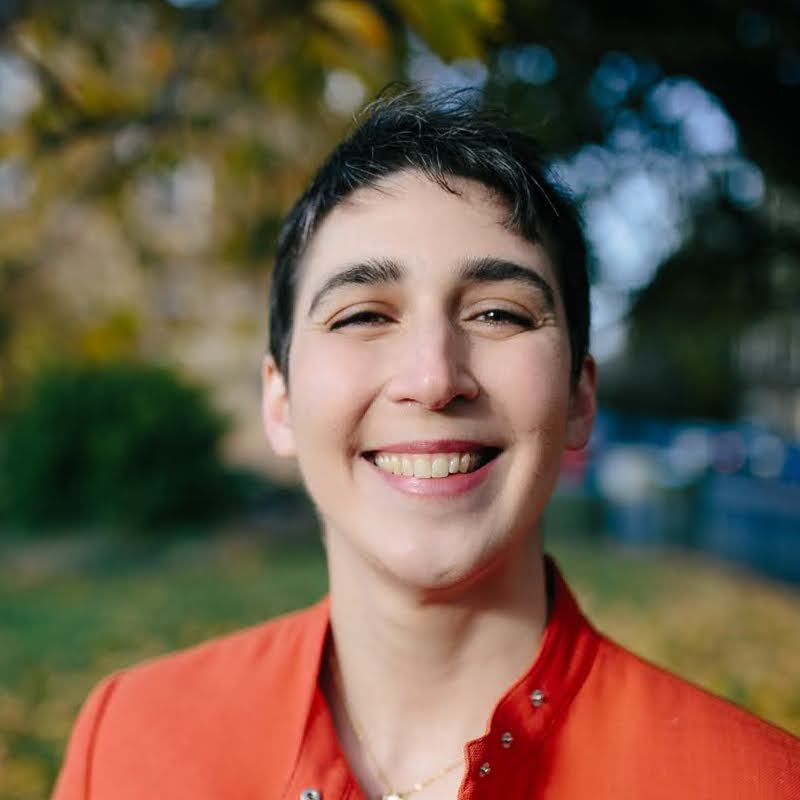
Leah Hartstein ForsterN is a CEO, entrepreneur, author, and advocate whose career grew out of a deeply personal reinvention. After leaving the ultra-Orthodox Hasidic community in which she was raised, she built a new professional life in business, eventually turning her attention toward home care, disability rights, ethical leadership, and the complicated work of creating a life that feels fully her own.
The Life That Began Behind Closed Doors
Leah’s early life was shaped by a world with clearly defined expectations. Born and raised in ultra-Orthodox Hasidic Brooklyn, she spent the first decade of her adult life in an arranged marriage and teaching at an ultra-religious all-girls school. It was a life structured around community, tradition, and belonging.
Then everything changed.
Leaving ultra-Orthodoxy came at an enormous personal cost. Leah was excommunicated from her family and community, a rupture that forced her to rebuild nearly every part of her life. The experience was painful, but it also gave her something she would carry into every chapter that followed: a willingness to question systems that no longer made sense to her.
She eventually entered a new career and spent two decades helping upscale businesses grow. The professional world offered a very different kind of education. After years of having her choices defined by others, she was learning how to make decisions for herself and how to use her voice.
When One Closed Door Became an Opening
Leah describes one particular lesson in simple terms:
“One door slammed in my face, so I kicked open the home care space and made some big changes in how our government treats this space.”
That sentence captures much of what has defined her second act. Rather than accepting rejection as a final answer, she began looking for the door that could be opened instead.
Her advocacy has taken several forms. She petitioned for,and won a change that lowered the age limit for parents caring for adult disabled children. She challenged discriminatory policies at a kosher restaurant and succeeded in getting its practices changed. Alongside that work, she developed a public voice through humor and storytelling, selling out shows and building an Instagram following of several hundred thousand people.
But beneath the visibility is a deeper personal history.
“Being rejected by my entire community and overcoming religious abuse molded me into the corporate baddie I am today,” Leah says.
There is humor in the way she describes herself, but there is also steel. Her confidence was not handed to her. It was built through having to start again, repeatedly, and learning that losing a place within one community did not mean losing her ability to create a meaningful place in the world.
Making Care More Human
Today, Leah’s work sits at the intersection of business, advocacy, humor, and care. Part of her focus is helping older adults and people with disabilities have greater choice in their healthcare. For her, that question of choice is personal: people deserve to have agency over their own lives, particularly when systems can make them feel powerless.
Her other work is more unexpected but no less intentional. Humor has become part of her way of connecting with people and making difficult subjects easier to approach.
“Laughter is the literal balm of the earth,” she says.
That belief helps explain why Leah’s public presence does not fit neatly into one category. She can move between serious advocacy and comedy, between business and personal storytelling. She seems less interested in maintaining a polished professional persona than in making room for all the parts of herself that have emerged along the way.
And perhaps that is what makes her approach to leadership different. She is not simply interested in succeeding inside existing systems. She wants to understand them, challenge them when necessary, and leave them more humane than she found them.
The Work Has to Be Worth the Life
After years of building businesses and pushing for change, Leah’s ambitions have begun to shift. Success, for her, is no longer measured only by what happens during working hours.
“FINALLY having a balance and making sure that the work is WORTH the life I want,” is how she describes the goal now.
It is a striking evolution for someone whose story has been so defined by reinvention. There was a time when rebuilding her career was about survival and proving that she could create a life outside the boundaries she had been given. Now, the question is more nuanced: What kind of life does she actually want to live?
Her answer involves creating a world outside her career that can replenish her rather than simply waiting for work to end. Yoga is one of the ways she centers herself. She also draws inspiration from mothers who manage to build meaningful careers while raising families. “Moms. Good Moms who also have a career. WOW,” she says.
The admiration is telling. Leah’s idea of ambition has matured into something broader than professional achievement. It includes presence, relationships, rest, laughter, and the ability to sleep peacefully at night.
Finding Her Way Back
Perhaps the most vulnerable part of Leah’s current journey is also one of the quietest.
She is finding her way back toward her Jewish roots and values—not necessarily by returning to the life she once knew, but by reclaiming the parts of that tradition that still speak to her.
For Leah, those values include strengthening character and doing ethical work. After spending so much of her life confronting systems and expectations, this chapter appears less about rejecting the past and more about deciding what is worth carrying forward.
Her measure of success has become remarkably simple: Can she go to sleep knowing she did her best? Can she believe she deserves a good and abundant life?
Those questions have little to do with titles or numbers. They are questions of conscience.
A Future That Leaves Room for Living
Leah’s future still contains plenty of ambition. She wants to publish a second book, following her first, CLUB MILFF: Mothers Interested in Launching Financial Freedom. But the larger goal is not simply another professional milestone.
She wants people to build lives that can sustain the work they care about.
Her advice is straightforward: create a life outside your career that fuels you to do your best work. It is a philosophy that comes from experience rather than theory. After spending years pushing forward, she is learning that rest and fulfillment are not distractions from ambition. They can be what makes ambition sustainable.
The hunger to keep learning and influence different industries is still there. But now it sits alongside another desire the freedom to decide what deserves her energy.
Becoming the Author of Her Own Life
Leah’s story is ultimately about more than leaving one world and succeeding in another. It is about the gradual process of becoming the person who gets to decide what her life means.
She has built a career from disruption, turned rejection into advocacy, found humor in difficult places, and learned to question the definition of success she once inherited. Now, perhaps the most meaningful part of her next chapter is that she is no longer simply fighting for a place at someone else’s table.
She is deciding what kind of table she wants to build and making sure there is still enough life left outside of it to enjoy the meal.
For More Features
Be Featured in The Real Edit!
Every story has the power to shape how we see innovation, leadership, and purpose. If you’re a founder, creator, executive, or changemaker with a journey worth telling , we’d be honored to help you share it.
To inquire about being featured:
Email us at: info@realedit.site
Follow The Real Edit