Meet Laura
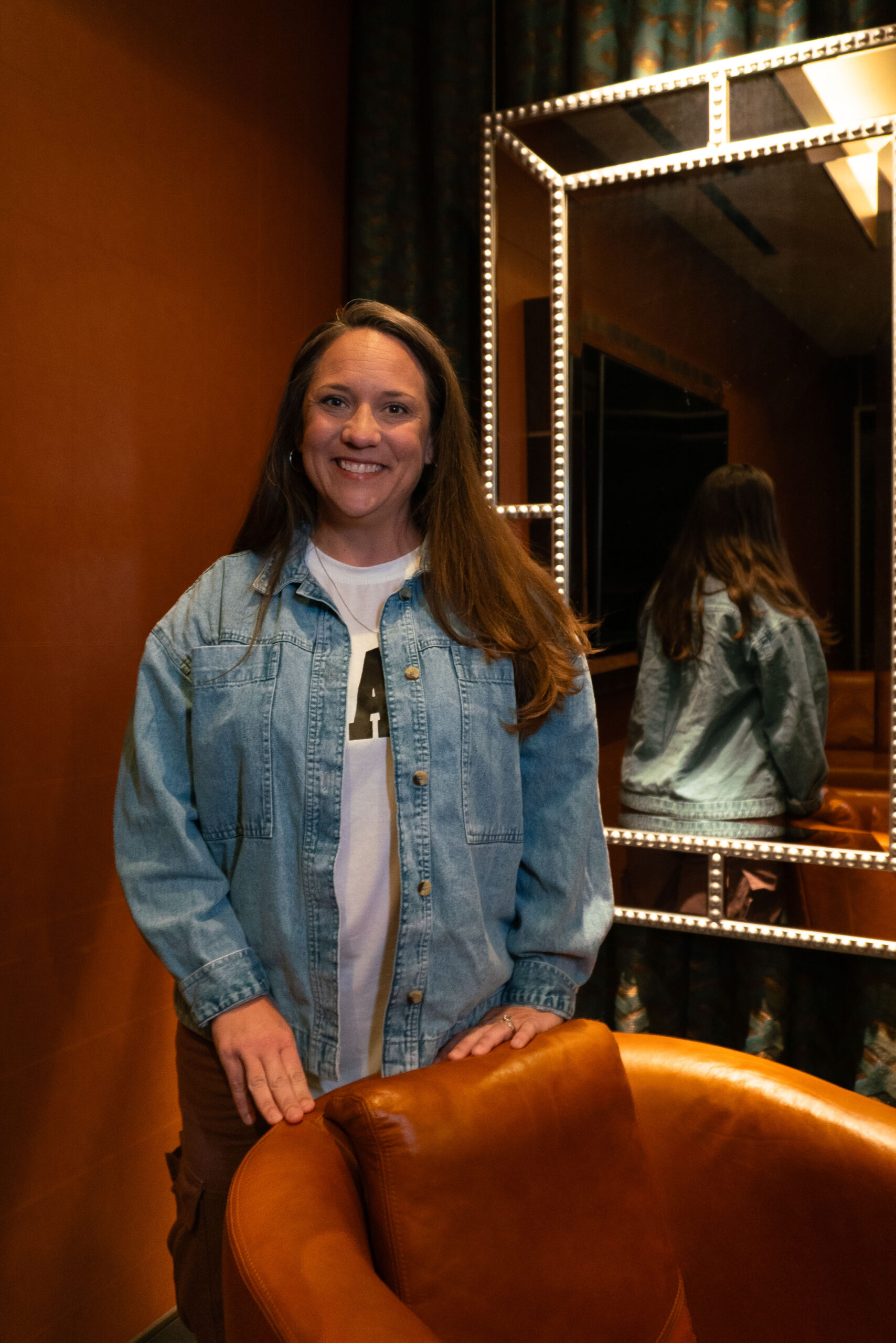
Laura Germishuys is a disability consultant, speaker, author, and podcast host based in Cape Town. As the founder of Disability Works, she focuses on accessibility, workplace accommodations, transition coaching, and inclusive systems design. Her work is rooted in lived experience, community advocacy, and a belief that meaningful inclusion begins with structural change rather than surface level awareness.
Learning to See the World Differently
There are some people who arrive at advocacy through education, and others who arrive through lived experience. For Laura Germishuys, those two paths became deeply intertwined over time. Long before disability became part of her own body and daily reality, it already shaped the world around her. She grew up with two parents with disabilities, watching ordinary tasks become negotiations with systems that were never designed with everyone in mind. Accessibility was not an abstract conversation in her household. It was practical, immediate, and deeply human.
Even as a young person, she carried a sense that her life needed to mean something beyond personal success. At university, she studied psychology and sociology because she believed understanding people and society might help her contribute to meaningful change. But academia soon felt too distant from the realities she wanted to address.
“I studied psychology and sociology but it became clear to me that academia has very little real impact on the world.”
That realization pushed her toward political work. She joined a political party and helped draft disability policy, hoping institutional change could create more equitable systems. Later, she moved into learning design and specialised in diversity, equity, and inclusion. For years, she worked within organisations trying to encourage empathy and awareness around disability and bias.
Yet over time, something continued to trouble her. The people who attended these conversations were often already receptive. The individuals most willing to engage were not necessarily the ones holding structural power. Gradually, her understanding of change evolved.
She stopped believing that awareness alone was enough.
Instead, she began asking harder questions about systems, access, hiring practices, technology, education, and the invisible structures that determine who gets to participate fully in society and who does not.
That shift in thinking would eventually shape everything that came next.
When Disability Became Personal
Although disability had always existed around her, Laura describes becoming disabled herself as an entirely different experience. Growing up with disabled parents had given her insight into the barriers people face, but living inside those realities every day brought a far deeper understanding of what accessibility, adaptation, and exclusion truly mean.
She was first diagnosed in 2006/2007, in her early twenties. Over time, a degenerative condition gradually altered the rhythm of her life. Tasks that once felt automatic became unpredictable. New diagnoses followed, including Common Variable Immune Deficiency, and adjustment became less of a single moment and more of an ongoing process of learning, grieving, adapting, and beginning again.
There is a grounded honesty in the way Laura speaks about disability. She does not frame it as a journey designed to produce inspiration or personal perfection. Instead, she speaks openly about uncertainty and the reality that adaptation is continuous when your body and circumstances keep changing.
That experience also shifted the way she understood authenticity. Like many neurodivergent people, she had spent years masking parts of herself in order to fit environments that rewarded conformity over complexity. But over time, illness changed her relationship with performance, productivity, and external expectations.
Life became too short to keep shaping herself around systems that were never designed to hold people with care.
For many years, Laura continued working across organisations, contributing to disability inclusion, learning design, and equity focused initiatives. But in 2023, being retrenched became a defining turning point. Rather than viewing it only as loss, she began reflecting more deeply on everything she herself had needed while navigating disability, work, isolation, and systems that often lacked meaningful support.
She realised how many people were carrying similar experiences silently, without language, validation, or spaces where they felt genuinely understood.
Out of that reflection, Disability Works evolved into something fully her own. No longer tied to the organisations she had previously worked within, it became an independent space rooted in accessibility, advocacy, empathy, and practical support for disabled people navigating work and life.
Rather than offering polished corporate messaging or performative inspiration, Laura wanted to create something more honest. A space where disabled people could feel seen without needing to simplify their experiences for the comfort of others.
Because for her, inclusion has never been about appearances. It has always been about belonging.
The Messages That Stay With Her
Advocacy work often happens quietly. It happens in private conversations, late night messages, community comments, shared resources, and moments that never make headlines. For Laura, some of the most meaningful milestones in her work have not been public achievements at all.
One message, in particular, has stayed with her.
“Someone messaged me and told me that a post I made gave them the strength to carry on when they had decided to give up.”
That moment reinforced the weight words can carry, especially for people navigating isolation, pain, or exclusion. It reminded her that advocacy is not always about changing entire institutions overnight. Sometimes it is about helping one person survive another day with dignity intact.
Another defining experience came while leading a team within an organisation. Laura intentionally tried to create an environment grounded in compassion and honesty. During a conversation where team members were invited to share something personal, people responded with surprising vulnerability. She did the same.
In that moment, she realised how deeply people long for spaces where they can exist fully without judgment or performance. Safety, she understood, is not created through slogans or policy statements alone. It is built through consistent empathy, openness, and trust.
That philosophy continues to shape how she approaches leadership and community building today.
Over the years, her network of disabled advocates, writers, creators, and collaborators has become another source of strength. She speaks warmly about the people who have influenced her thinking, including disability advocate Mark Webb, activist Stella Young, and inclusion strategist Amber Hikes.
But perhaps her earliest inspiration came much closer to home. She remembers watching her mother fight for accessible parking and witnessing firsthand the exhausting reality of constantly needing to advocate for basic access.
Those experiences planted seeds long before she realised how central they would become to her own life.
Building Disability Works With Honesty and Empathy
Today, through Disability Works, Laura works across accessibility, workplace accommodations, transition coaching, speaking engagements, and disability consulting. Her work exists at the intersection of technology, inclusion, education, and human dignity.
What makes her approach distinctive is its groundedness.
She does not position herself as someone with all the answers. Nor does she approach disability inclusion as a branding exercise. Instead, she focuses on practical systems that allow people to participate more fully in work and society.
She has become particularly interested in the possibilities of technology and artificial intelligence as tools for accessibility. While many conversations around technology focus on efficiency or disruption, Laura sees another potential future. She sees opportunities for disabled people to navigate education, communication, and workplaces with greater equity if these systems are designed thoughtfully.
At the same time, she remains realistic about the limitations of good intentions alone. She understands that inclusion cannot depend entirely on individual kindness. Sustainable change requires structural thinking.
Her work often involves helping organisations move beyond performative diversity efforts toward concrete accessibility practices that align with their stated values. She creates templates, standards, and resources for people who genuinely want to do better but may not know where to begin.
Importantly, her advocacy avoids toxic positivity. She does not pressure disabled people to frame suffering as inspirational or transformative. Instead, she prioritises honesty, acknowledgment, and emotional reality.
That honesty resonates deeply with the communities she serves because it creates room for people to exist without pretending.
Laura often speaks about empathy as one of her defining qualities, though she personally believes justice is the stronger force guiding her work. Years of encountering barriers, bias, and exclusion have sharpened her understanding of equity not as charity, but as fairness.
That distinction matters deeply in her approach.
Accessibility, in her view, is not about asking for special treatment. It is about building societies where people are not excluded by design.
A Future Rooted in Inclusion
Laura’s vision for the future is both ambitious and deeply personal. She is currently working on a children’s book about inclusion alongside a friend she met through writing. The project reflects her belief that empathy and accessibility should begin early, not as corrective lessons later in life, but as foundational ways of understanding one another.
Children remain central to her motivation.
She speaks often about wanting to leave behind a better world for the next generation and about the children in her own life who continue to shape her sense of responsibility and hope.
Her goals are not framed around status or scale. She is less interested in recognition than in impact, even if that impact happens quietly and person by person.
She also continues exploring how technology can support more inclusive systems in education, workplaces, and everyday life. While she keeps some future projects private for now, the thread connecting all her work remains consistent. Everything is in service of making life more accessible, more humane, and more equitable.
At the centre of this vision is a simple belief that individual actions matter.
Not because one person can fix everything alone, but because small acts accumulate. Systems are ultimately built from human choices, repeated over time.
Laura understands this intimately because she has lived both the consequences of exclusion and the power of meaningful support.
The Difference One Person Can Make
There is a sentence Laura returns to often in different forms throughout her work. She believes success does not require changing the entire world at once. If one person’s life becomes better because of something she created, shared, or advocated for, then the work already matters.
That perspective feels increasingly rare in a culture obsessed with scale, visibility, and constant achievement.
Her work is quieter than that. More patient. More human.
It lives in accessibility tools, honest conversations, supportive communities, thoughtful systems, vulnerable storytelling, and moments when another person feels seen instead of invisible.
Perhaps that is why her message resonates so deeply. She does not ask people to become perfect advocates overnight. She simply asks them to recognise the impact they already have on the world around them.
Every interaction shapes something.
Every system includes or excludes someone.
Every decision leaves a mark.
And as Laura Germishuys continues building spaces rooted in empathy, justice, and accessibility, she reminds people that meaningful change rarely begins with grand gestures. More often, it begins with one person deciding that another human being deserves to belong fully in the world they share.
For More Features
Be Featured in The Real Edit!
Every story has the power to shape how we see innovation, leadership, and purpose. If you’re a founder, creator, executive, or changemaker with a journey worth telling , we’d be honored to help you share it.
To inquire about being featured:
Email us at: info@realedit.site
Follow The Real Edit