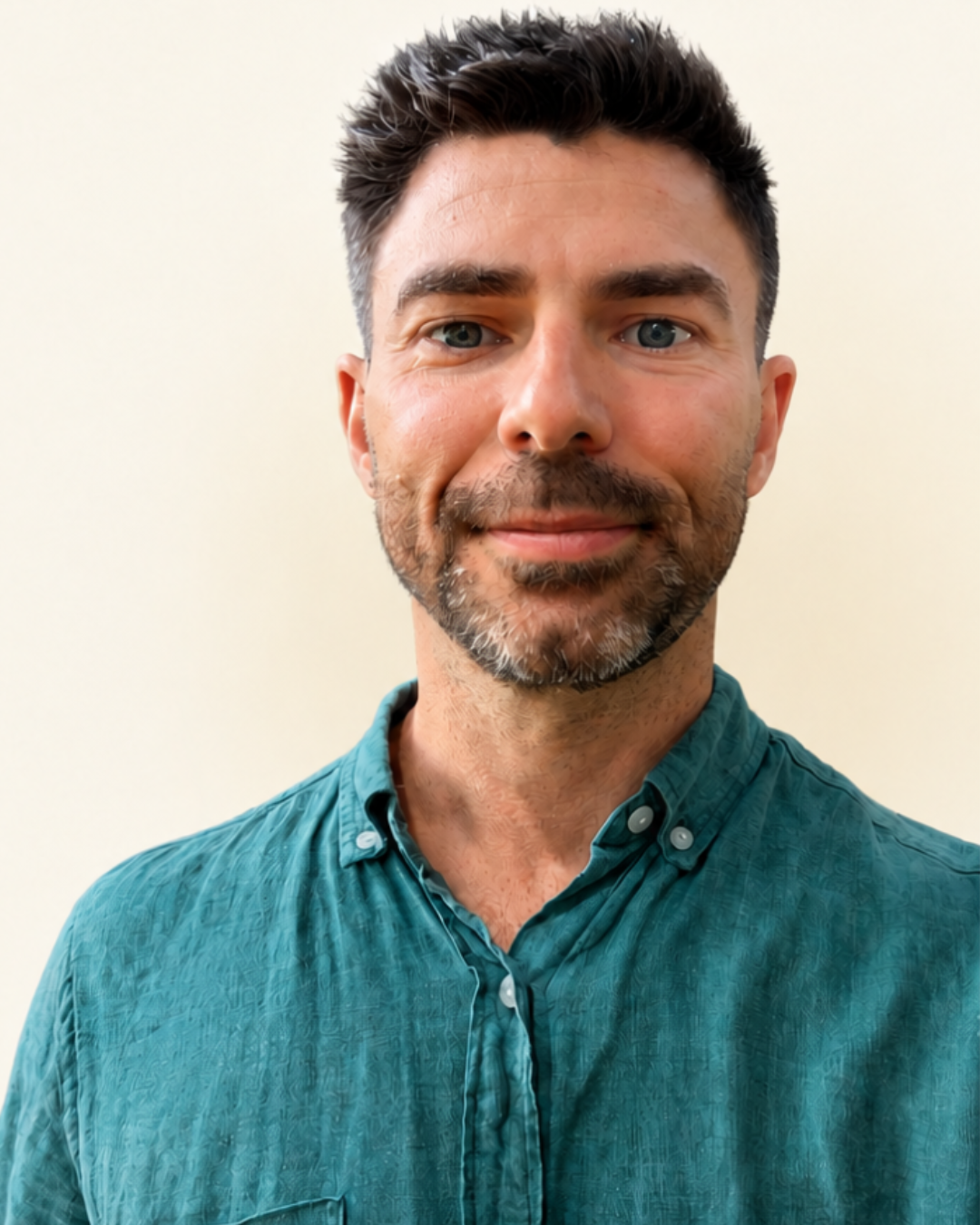
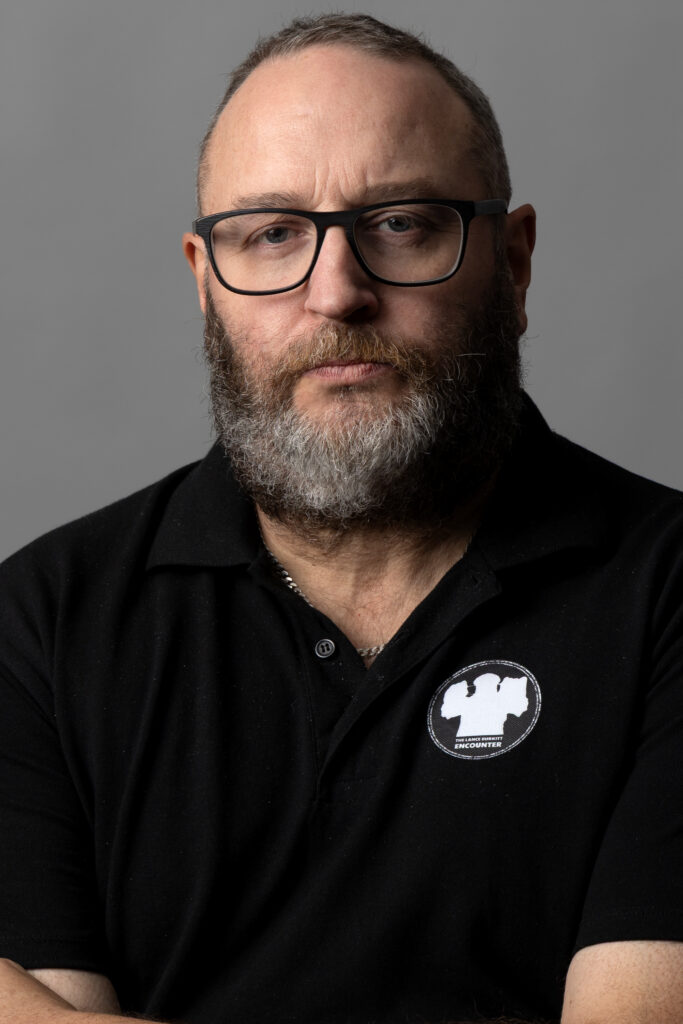
Meet Lance
Lance Burkitt is a photographer, creative, educator and leader based in Rotherham, United Kingdom. He is the Managing Director of Burkitt Studio LTD, where he brings together two decades of photographic experience with lessons learned through education, leadership, communication and working closely with people.
A Life That Kept Returning to Creativity
Lance Burkitt’s career does not follow a straight line, and that may be one of the most revealing things about it.
He has worked as a steelworks labourer, taxi driver, publican and professional musician. He later became a photographer, educator, course leader, senior leader and Head of School before returning to the creative industry with Burkitt Studio in 2026.
From the outside, those roles might appear disconnected. For Lance, they increasingly feel like different expressions of the same curiosity. Throughout them all, there has been a consistent interest in people, communication and the ways individuals express themselves.
Photography became the place where those interests could meet.
“I’m interested in character, expression, body language, atmosphere and those little moments that tell you something about somebody.”
That perspective has shaped the way Lance has approached photography for almost two decades. His work has moved across portraiture, fashion, editorial, commercial, street and documentary photography, but the subject that continues to hold his attention is not really a particular genre. It is the person in front of him.
Finding a Way Forward Through the Camera
Lance began taking photography seriously in 2006, although he believes the fascination with images and storytelling had existed long before he picked up a camera with professional intentions.
The timing carried a deeper significance than he may have understood at first.
In 2004, Lance lost both his mother and his sister to cancer. His mother was 54 and his sister was only 34. The loss had a profound effect on him, and the years that followed were difficult.
Photography became part of how he found his way through that period.
What began as a creative interest became something he could immerse himself in. He explored not only the technical side of photography, but also its history, theory, culture and psychology. He wanted to understand why some images stay with us, what makes a photograph meaningful and how an image can influence the way we perceive another person.
For Lance, becoming deeply absorbed in photography provided a form of therapy during a painful chapter of his life.
It also gave him direction.
Rather than being satisfied with simply producing technically strong images, he began asking more difficult questions about what photographs were actually saying. He became increasingly interested in the story beneath the surface and in the details that can reveal something about a person without requiring an explanation.
Around eight years after his losses, meeting his wife, Kirsty, helped him begin moving forward in a more positive way. The combination of personal healing and creative immersion gradually shaped a new chapter.
Photography was no longer simply something he enjoyed. It had become a way of looking at the world.
When Photography Became a Different Kind of Education
Photography eventually led Lance into education, initially as another strand of his professional life. What he may not have expected was just how significant that chapter would become.
His time in education lasted 13 years and took him from teaching and course leadership into management and senior leadership. He eventually became a Head of School, responsible for teams, budgets, strategy, quality and the experience of hundreds of students.
The move may have appeared to take him further away from photography, but in retrospect, it strengthened many of the qualities he would later bring back into his creative work.
Teaching taught him how people learn and develop. Leadership taught him how to listen, communicate clearly and make decisions when there was no perfect answer. Working with large teams exposed him to different personalities, motivations and ways of thinking.
Those experiences also reinforced something that had already been present in his photography: people matter.
Lance discovered that he enjoyed helping others develop ideas and find confidence in their own abilities. Whether he was working with students, colleagues or creative collaborators, he was drawn to the same underlying challenge: creating the conditions in which people could contribute something meaningful.
His MA in Photography deepened that relationship with the medium. Academic study encouraged him to question his own assumptions and look beyond the technical quality of an image.
The question became less about whether a photograph was good and more about what it was doing.
That distinction would later become important when he began thinking about how businesses communicate visually.
Learning to Watch Before Taking the Photograph
Travel has played another important role in Lance’s development as a photographer.
His personal and street photography has taken him to places including New York, Malta, Rhodes and Ireland. These experiences gave him opportunities to observe people outside the familiar environments of his everyday life.
Street and documentary photography became particularly influential because they required patience.
There is no controlled studio environment and no guarantee that the moment will repeat itself. The photographer has to pay attention before deciding when to press the shutter.
Lance learned to watch first and photograph second.
That approach eventually influenced his commercial and portrait work as well. He became less interested in making people look conventionally perfect and more interested in discovering what makes an individual distinctive.
A person’s confidence, vulnerability, movement, imperfections, expressions and small changes in body language can all reveal something. Sometimes the most meaningful image is not the most carefully posed one.
This way of seeing has remained at the centre of Lance’s practice even as photography itself has changed dramatically.
Technology has evolved. Social media has transformed the way images are consumed. Businesses have become increasingly dependent on visual communication. Yet his interest in people has remained remarkably steady.
That consistency has helped him avoid becoming overly attached to trends.
Bringing Every Chapter Into One Place
By the time Lance reached 2026, he had spent years balancing two professional identities.
Photography remained important, but education and leadership demanded much of his attention. He continued making photographs, developing personal projects, writing about the subject and maintaining his broader creative practice, even during periods when photography had to fit around a demanding leadership role.
Eventually, he reached a point where he wanted to change that balance.
He wanted creativity to sit at the centre of his working life again.
That decision led to Burkitt Studio.
The studio represents more than a return to photography. It brings together the different skills Lance has developed throughout his career. Photography remains central, but his work now also includes film, content creation and longer term creative relationships with businesses.
His experience in leadership gives him a different perspective from someone who has worked only within the creative industry. He understands strategy, communication, organisational challenges and the realities of working with teams.
At the same time, his years behind the camera have taught him how much visual communication depends on authenticity.
For Lance, the goal is not simply to produce another collection of attractive images. He wants organisations to think more carefully about how they present themselves and how people perceive them.
In a world filled with generic visual content, he believes there is value in helping businesses communicate with greater honesty and individuality.
Seeing the People Behind the Brand
The philosophy behind Burkitt Studio is closely connected to Lance’s broader understanding of leadership.
He does not see leadership as being the loudest person in a room or having every answer. Instead, he places importance on clarity, trust, communication and helping people understand that their contribution matters.
The same principle applies when he photographs someone.
He wants people to feel comfortable enough to show something genuine.
That can be particularly important in commercial photography, where businesses sometimes become so focused on their branding that the people behind the organisation disappear from view.
Lance wants to move in the opposite direction.
He sees employees, founders, leaders and customers as part of a company’s visual identity. Their experiences, personalities and relationships can communicate something that polished generic imagery cannot.
His work therefore sits at an interesting intersection between photography and organisational storytelling.
The camera is still the tool, but the deeper purpose is understanding.
For Lance, a photograph can do something surprisingly simple and powerful. It can make someone feel noticed.
That belief comes from years of working with students, colleagues, clients and strangers encountered through street photography. He has seen how a person’s confidence can change when they recognise themselves in an image.
The impact does not have to be dramatic to be meaningful.
Sometimes helping someone see themselves differently is enough.
Success Means Having a Life That Feels Like Your Own
Lance’s understanding of success has changed with age.
Earlier in his career, conventional measures mattered more. Qualifications, job titles, publications, clients and opportunities all represented progress.
Today, he places greater value on freedom, meaningful work, financial security and continued growth.
Most importantly, he wants control over how he spends his time.
That does not mean abandoning ambition. It means becoming more selective about where ambition is directed.
After years of responsibility in education, Lance has reached a point where he wants to spend more of his professional life doing work he genuinely believes in. Burkitt Studio is part of that decision, but so is his continued commitment to personal photography, writing, travel and collaboration.
His ambitions are not built around creating one enormous enterprise.
Instead, he wants to develop a sustainable creative life that gives him room to follow interesting ideas, work with good people and continue learning.
That approach reflects a maturity that has been shaped by experience rather than theory.
Lance has learned that a career can change direction without becoming a failure. A previous chapter does not have to be discarded for a new one to begin.
Sometimes it becomes the foundation for what comes next.
The People Who Continue to Shape His View
Lance draws inspiration from people who remain curious, independent and willing to reinvent themselves.
His photographic influences include David Bailey, Richard Avedon, David Hockney, Don McCullin and Eric Kim. Their different approaches to photography reflect his own broad interest in portraiture, documentary work, culture and observation.
In education, he remembers Kevin O’Hare, Principal of Keighley College, as an important influence on his approach to leadership. Lance admired his calm manner and ability to step outside an immediate problem before responding to it.
His strongest personal inspiration, however, comes from his wife, Kirsty.
As a midwife and mother to their five children, she balances professional responsibility with the demands of family life. For Lance, watching her manage that complexity has been a reminder of what resilience and commitment look like in everyday life.
It is telling that the people he values most are not described primarily through status.
What matters to him is how they behave, how they respond to difficulty and whether they remain curious about the world around them.
Building a Creative Future Without Losing the Camera
The future Lance imagines is deliberately broad.
He wants Burkitt Studio to grow into a long term creative partner for businesses, helping organisations develop stronger visual identities through photography, film and content. Rather than treating each project as an isolated commission, he wants to build relationships that allow him to understand a business more deeply.
At the same time, he has no intention of allowing commercial work to replace his personal photography.
Fashion, portraiture, street and documentary projects remain important to him. Travel will continue to play a role, including journeys with Kirsty, and he hopes to keep exploring people and places through his own work.
Mentoring and collaboration are also likely to remain part of his future.
After years spent helping students and colleagues develop, Lance sees value in offering similar encouragement to emerging photographers, models, stylists and other creatives. Sometimes what a person needs is not another qualification or another piece of advice, but someone willing to take their potential seriously.
Writing will continue too.
So will curiosity.
For someone who has already lived through several distinct professional chapters, the next stage is less about proving that he can achieve something and more about creating enough space to keep discovering what comes next.
Passing Time With Purpose
There is a phrase Lance has carried with him since 2009, borrowed from television producer and director Darren Ewing:
“Pass your time with purpose.”
It captures much of what his journey has come to mean.
His story is not really about leaving one career for another. It is about recognising that experiences remain valuable even after circumstances change.
The photographer became an educator. The educator became a leader. The leader returned to creative work carrying everything those years had taught him.
Along the way, there was grief, recovery, study, travel, responsibility, uncertainty and reinvention.
Now, through Burkitt Studio, those experiences are beginning to sit together rather than apart.
Lance does not seem interested in presenting his path as a perfectly planned journey. In fact, its value may lie precisely in the opposite. His career shows that a person can change direction, carry lessons forward and still remain true to the interests that first gave them a sense of purpose.
After 20 years with a camera, he is still looking.
Still learning.
Still interested in people.
And, perhaps most importantly, still willing to begin again.
For More Features
Be Featured in The Real Edit!
Every story has the power to shape how we see innovation, leadership, and purpose. If you’re a founder, creator, executive, or changemaker with a journey worth telling , we’d be honored to help you share it.
To inquire about being featured:
Email us at: info@realedit.site
Follow The Real Edit