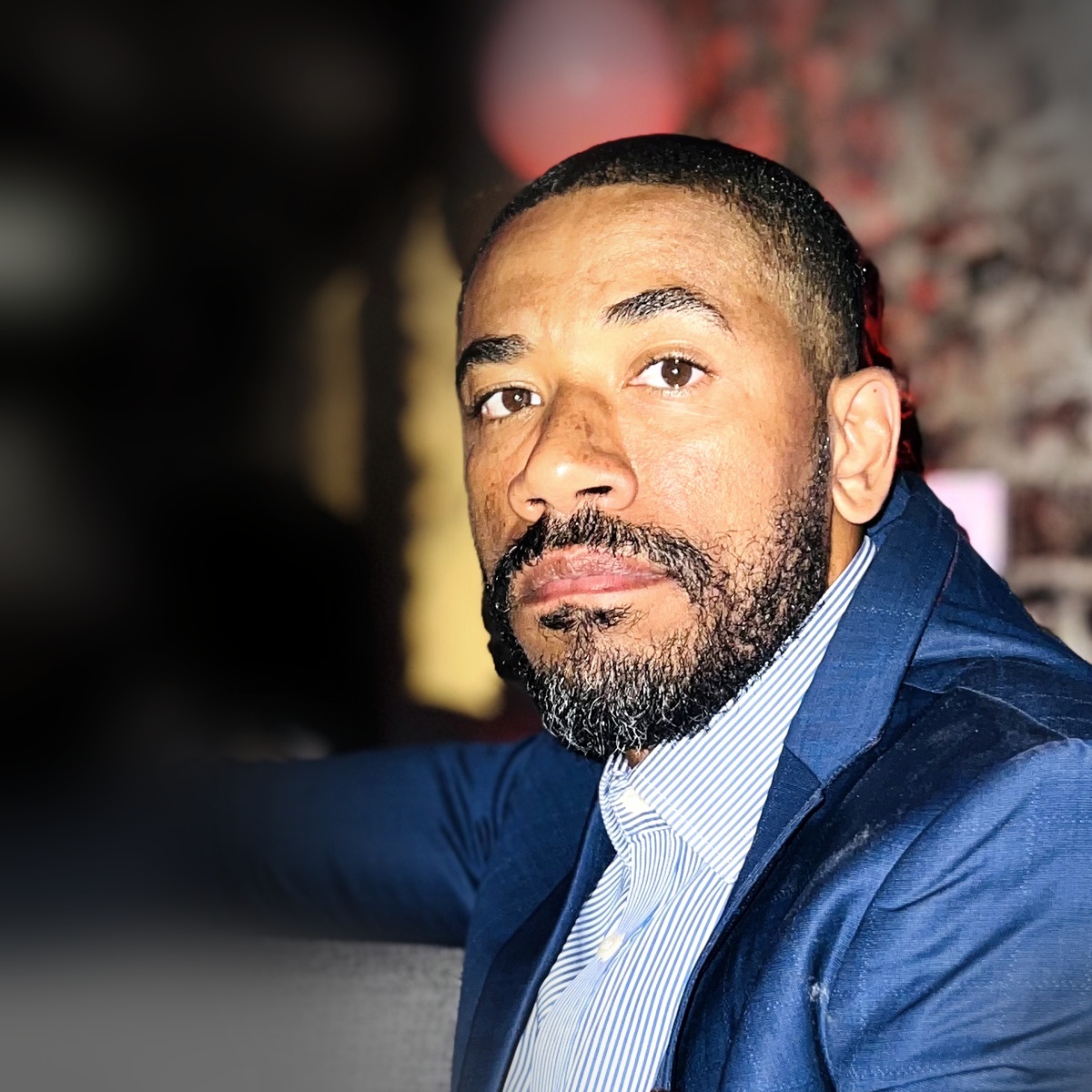
Meet Daniel Knall
Knall Daniel is a Romania born founder based in Rome, Italy, and the creator of Luxora, a technology platform focused on authentication infrastructure for independent luxury brands. With over three decades of experience in systems thinking, IT architecture, and cybersecurity, his work centers on building practical solutions to structural problems in complex industries.
Where Clarity Begins
There is a certain kind of person who does not look for easy alignment with the world as it is presented. Instead, they examine it quietly, patiently, until the underlying structure reveals itself. Knall Daniel belongs to that kind of thinking. His life has not followed a straight path. What runs through it is not an aspiration toward clarity but a discipline built from necessity, the habit, developed early and tested repeatedly, of identifying what is actually true in a situation and acting on that rather than on what would be more convenient to believe.
His work today exists in the luxury industry, a place often defined by perception and image. Yet his interest lies somewhere deeper. He is less concerned with how things appear and more focused on whether they hold. Whether they are real. Whether they can be trusted.
A Childhood Shaped by Absence and Inquiry
Daniel was born in Romania fifty seven years ago, in a life that began in circumstances where stability was not available and had to be constructed. His parents divorced early, and he was raised by his grandparents. In that environment, where certainty was limited, he found something else to rely on. Books became his structure.
At thirteen, he began collecting them with intention. Not casually, but methodically. He built his own inventory system by hand, organizing what he read with a precision that hinted at what would come later. His interests moved across disciplines, from crime novels to philosophy, from history to political theory. The subject did not matter as much as the underlying question that drove him.
He wanted to understand how things actually worked.
That question stayed with him, not as a passing curiosity but as a way of engaging with the world. It shaped how he learned, how he observed, and eventually how he built.
His grandfather played a quiet but decisive role in this early formation. A former military officer, he offered a simple piece of guidance that stayed with Daniel for life. A profession matters. It was not said as an abstract idea, but as something to be lived. Daniel took it seriously, even when his path did not offer clear direction.
Moments That Define a Standard
There are moments in a life that do not announce themselves as important when they happen, yet they remain, shaping decisions long after they pass.
One of those moments came during his military service. At eighteen, Daniel was placed in a position of responsibility, leading a platoon. When the kitchen failed and his men were left without food for an extended period, he made a decision that would define something essential about his character. He refused an order to send them to work under those conditions.
The refusal came with consequences. He was publicly demoted in front of his entire division. It was a clear message about authority and compliance. Yet Daniel chose to document his reasoning and accept what followed.
Later, the same commander who had enforced the punishment approached him privately. There was no reversal of what had happened in public, but there was recognition. It was not the outcome that mattered most. It was the principle that had been tested.
Reflecting on that experience, Daniel explains,
“Institutional consequences and being right are not the same thing. Sometimes you accept the first to preserve the second.”
This distinction became a foundation for how he would navigate both personal and professional decisions. It introduced a standard that was not dependent on approval, recognition, or immediate outcomes.
Another moment came years later, in a completely different context. In 2009, Daniel saw the structural significance of Bitcoin at a time when it was largely dismissed. He attempted to convince an investor to commit to it with a clear plan. The opportunity was declined. In hindsight, the outcome is obvious, but at the time, it required a particular kind of perception.
For Daniel, the lesson was not about regret or missed gain. It was about recognizing that seeing clearly does not always align with timing. Some things are understood before the world is ready to act on them.
Building Without Recognition
Daniel’s early experience with technology reflects the same pattern of persistence without external validation. In the early nineteen nineties, he enrolled in a Clipper programming course. At the time, he did not have access to a computer. That limitation did not stop him.
He wrote code by hand, on paper, constructing a full system for construction cost estimation for his father’s company. The process required him to manually transcribe extensive technical documentation into functional logic. It was meticulous work, built without tools that others might consider essential.
The software was eventually developed commercially by another company. Daniel had no way to prove that he had created it first. There was no recognition attached to the work.
What remained was something else. The knowledge that he could take an abstract problem and build a working system from nothing but understanding and discipline.
Loss and the Discipline of Reality
Not all turning points come through work. Some arrive through loss, and they reshape a person in ways that are not immediately visible.
Daniel’s life includes experiences that would be difficult to carry without some form of internal structure. He lost a son who lived only six months. His marriage ended abruptly under circumstances that left no room for negotiation. He walked away with almost nothing. Later, he spent years traveling between Italy and Romania as his mother battled cancer, a period that also saw the gradual loss of the business he had built.
These events are not presented by him as defining tragedies, but as moments that clarified something essential.
He explains,
“The problem in front of you is still the problem in front of you. Clarity about that, about what the actual situation is, stripped of what you wish it were, is the only reliable tool I have found.”
This way of thinking does not remove difficulty, but it changes how it is approached. It replaces reaction with observation. It reduces complexity to what is real and actionable.
Starting Again in a Foreign Country
When Daniel moved to Italy, he arrived with one hundred and fifty euros, no knowledge of the language, and no network to rely on. It was not a calculated move backed by security. It was a decision to start again.
From that point, he began building IT services from the ground up. Initially, his work focused on immigrant communities, helping people navigate access to technology and communication. Over time, this expanded into a broader network of internet points across the country.
The environments changed, but the core question did not. Where does this system break. That question guided his work across three decades, shaping his approach to infrastructure, security, and architecture.
It is also the question that eventually led to Luxora.
Seeing the Gap Others Ignore
The idea for Luxora did not come from ambition in the traditional sense. It came from friction. Daniel was attempting to source independent luxury fragrances for resale through a major e commerce platform in Romania. What he encountered was not a typical market challenge.
It was a structural contradiction.
Major brands restricted independent resellers. At the same time, grey market channels continued to operate without reliable authentication. The system allowed opacity to exist while publicly opposing it. There was no accessible infrastructure that enabled independent sellers to verify authenticity in a credible way.
For Daniel, this was not just an inconvenience. It was a clear indication of a system that did not function as it claimed to.
Instead of adapting to it, he chose to step away and build something that addressed the problem directly.
What Luxora Is Really Building
Luxora is often described in technical terms, involving cryptographic NFC seals, digital product passports, and AI assisted verification. These elements are part of the system, but they are not the essence of what Daniel is trying to create.
At its core, Luxora is about establishing verifiable truth in a space where perception has been allowed to replace it.
Independent luxury brands operate without the institutional support available to large conglomerates. They build products that carry meaning, craftsmanship, and identity. Yet once those products move through complex distribution channels, their origin becomes unclear. Authenticity becomes difficult to prove, and trust becomes fragile.
Daniel’s work is focused on restoring that connection between product and truth. Not through appearance, but through infrastructure that can withstand scrutiny.
His motivation is direct and consistent with the way he has approached every challenge in his life. He is not interested in building something that looks complete. He is interested in building something that holds under real conditions.
A Vision That Extends Beyond Launch
For Daniel, success is not defined by rapid growth or visibility. It is defined by endurance. The systems he respects are the ones that continue to function without constant intervention.
He envisions a future where authentication infrastructure is not limited to large corporations, but available to independent brands that have built their identity without external support. A future where trust is not assumed, but verified.
The immediate focus is on engaging directly with the community that faces this problem most acutely. Events like Esxence Milano represent an opportunity to connect with independent fragrance brands and understand their needs in real conditions.
Beyond that, the goal remains consistent. Build something that works, document it thoroughly, and allow it to be tested by reality.
The Quiet Discipline Behind It All
There is a simplicity to the way Daniel describes his principles, but it is not an easy simplicity. It requires a willingness to accept discomfort, to let go of convenient narratives, and to remain aligned with what is true even when it comes at a cost.
His influences reflect this orientation. Figures like Nicolae Titulescu represent a commitment to integrity under pressure. The philosophy of Sun Tzu offers a framework for understanding reality without distortion.
Yet what matters most is not the influence itself, but how it is applied. Daniel does not treat these ideas as abstract concepts. They are practical standards for thinking and decision making.
Reading remains a constant in his life, much as it was in his childhood. It provides perspective, reminding him that the problems of the present are often variations of older, deeper structures.
Nicolae Titulescu represented something specific, not just diplomatic brilliance, but the rare combination of strategic clarity and refusal to compromise under institutional pressure. Removed from all official positions by King Carol II and forced into exile, he continued to defend what he believed was right until he died in Cannes in 1941.
What Daniel found in The Art of War was not military strategy but something more fundamental, a philosophy of reality that has remained structurally accurate for over two thousand years. The discipline of seeing situations as they actually are, not as you wish them to be, and acting from that clarity rather than from assumption or emotion. That principle, encountered first through martial arts practice, became a practical standard for thinking, applicable to IT architecture, to business decisions, to every domain where the gap between perception and reality has real consequences.
Closing Reflection
There is a quiet consistency in the way Knall Daniel has lived and worked. Across different countries, industries, and personal circumstances, he has returned to the same principle. See clearly. Act honestly. Build what the situation actually requires.
In a world that often rewards speed and appearance, his approach may seem out of place. Yet it is precisely that difference that gives his work its weight.
The systems he builds are not designed to impress at first glance. They are designed to endure.
And in the end, that may be the only measure that matters.
For More Features
Be Featured in The Real Edit!
Every story has the power to shape how we see innovation, leadership, and purpose. If you’re a founder, creator, executive, or changemaker with a journey worth telling , we’d be honored to help you share it.
To inquire about being featured:
Email us at: info@realedit.site
Follow The Real Edit