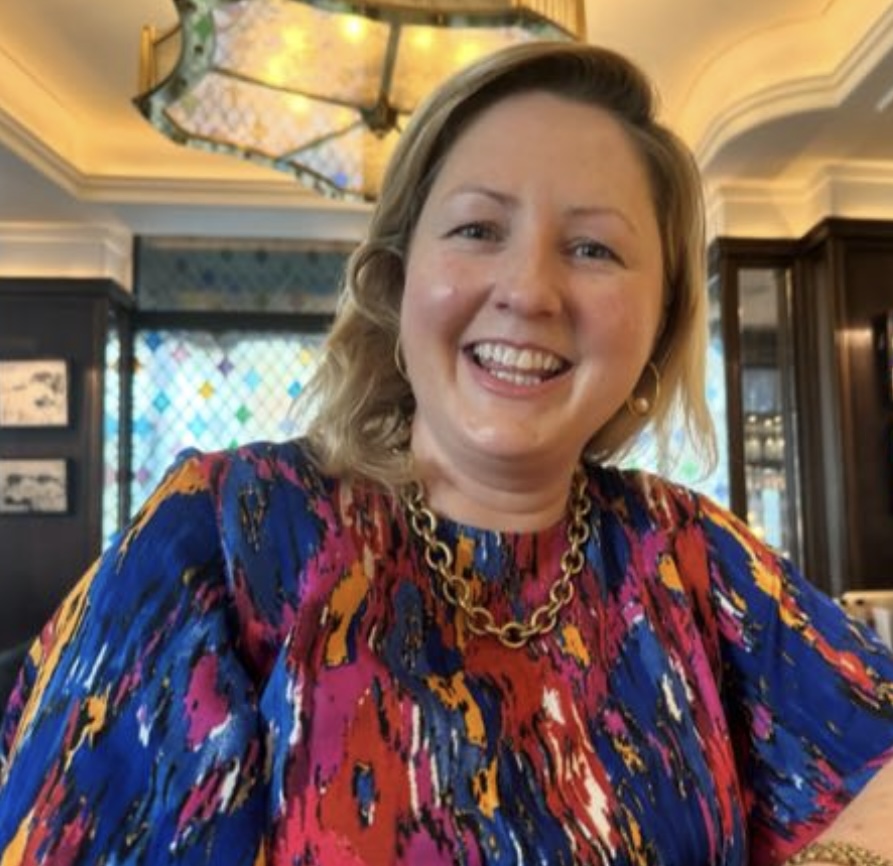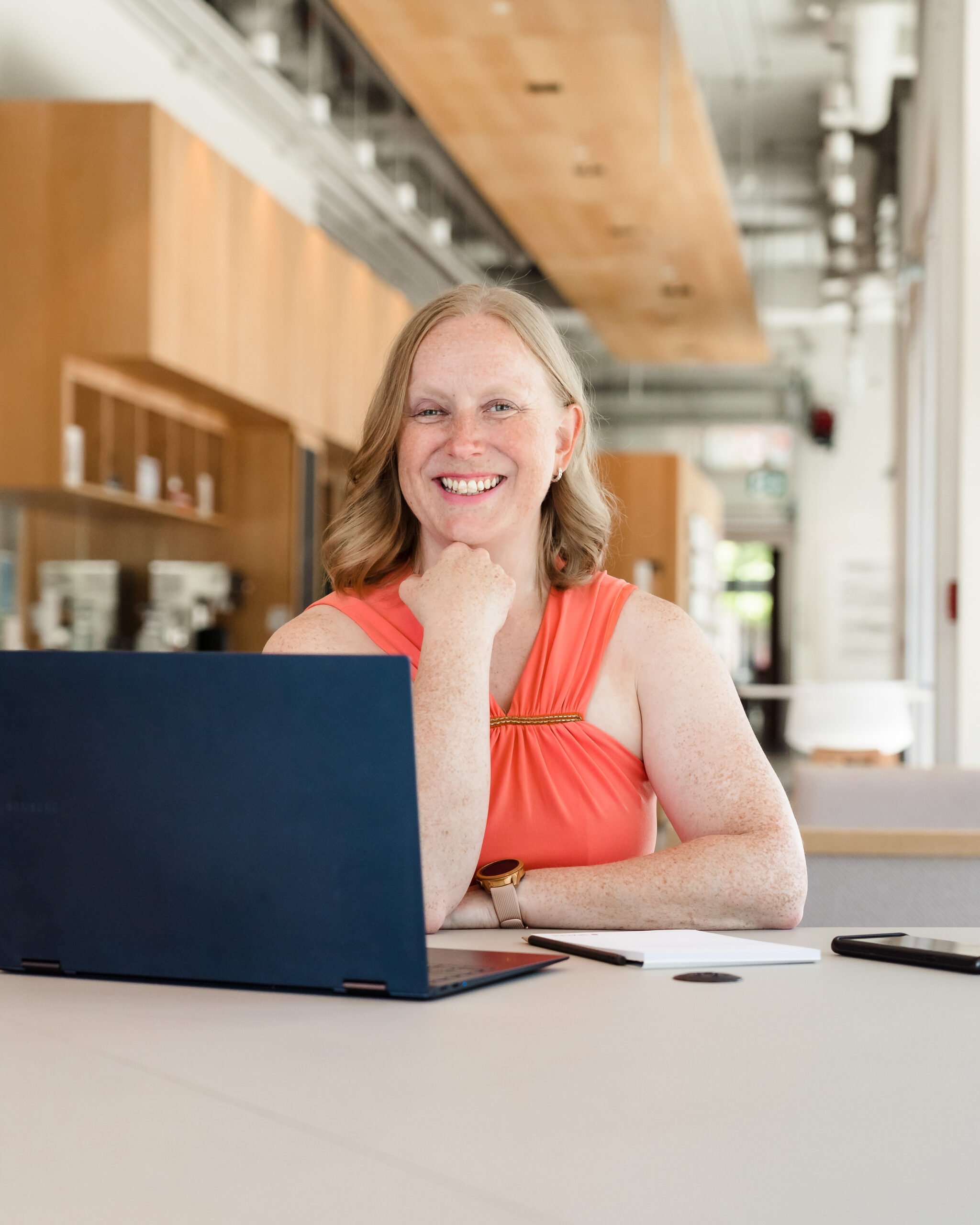
Meet Juliana
Juliana Villegas Currea is the CEO and founder of Somos Martina, a Colombian B Corp company rethinking menstrual care through fashion, sustainability, education, and social impact. Based between New York City and Bogotá, she brings together her background in Cultural Studies, gender, fashion, and business to build products and programs designed around the realities of women and girls.
When Fashion Became a Way to Ask Better Questions
For Juliana Villegas Currea, fashion was never only about clothing or appearance. Her interest began much earlier, at the intersection of culture, gender, and the ways everyday products can reflect the systems and expectations around us. She studied Cultural Studies with a focus on gender before continuing her education in business and fashion product management. Later, she completed a Master’s in Global Fashion Management at the Fashion Institute of Technology in New York.
Those experiences gave her two perspectives that would eventually meet in an unexpected place. One was an awareness of the inequalities women face in everyday life. The other was an appreciation for fashion as a powerful cultural language, one capable of influencing how people see themselves and how society talks about important subjects.
In 2019, after returning to Bogotá from Barcelona, where she had completed her studies at Istituto Europeo di Design (IED), Juliana founded Somos Martina. The original idea was centered on period underwear, but the thinking behind the company was always broader. She saw an opportunity to take something that had traditionally been treated as uncomfortable, hidden, or purely functional and approach it with a different sensibility.
Her interest in menstrual products came from recognizing that menstruation sits at the crossroads of several issues. There is the environmental cost of disposable products, the financial burden they can create, the lack of access faced by many women and girls, and the stigma that still surrounds a completely natural part of life.
For Juliana, these were not separate problems. They were connected.
That connection became the foundation for Somos Martina. Rather than asking women to simply adapt to products that had existed for decades, she wanted to create something that acknowledged their bodies, preferences, confidence, and individual experiences.
From a Product Idea to a Wider Social Question
As Somos Martina developed, Juliana began to see that the company could do more than offer an alternative to disposable menstrual products. The product itself was only one part of the conversation.
The deeper question was what could happen when a business treated menstruation as an issue of dignity, education, sustainability, and equality rather than simply as a consumer category.
This realization shaped the company’s social impact work. Somos Martina began visiting vulnerable communities to provide menstrual and sexual education while teaching women and girls how to make their own reusable menstrual pads. The approach was practical as well as educational. Instead of only providing a product, the programs give participants knowledge and a skill they can use themselves.
The work also addresses the wider consequences of limited menstrual knowledge and access. For some girls, menstruation can become a barrier to attending school comfortably and consistently. For others, a lack of education about sexual and reproductive health can contribute to circumstances that affect their education and future opportunities.
Juliana became increasingly interested in the connection between menstruation and the gender gap. If a girl does not have access to appropriate menstrual products, accurate information, or a supportive environment, something as ordinary as having a period can affect her ability to participate fully in school and community life.
That understanding led to one of Somos Martina’s most significant initiatives, Period Uniform. The project integrates period underwear into school uniforms, giving girls an option that allows them to move through their school days with greater confidence and dignity.
For Juliana, the project represents a larger idea. Menstrual care should not be treated as an issue that women and girls simply have to manage privately. It is connected to education, opportunity, health, economics, and equality.
Her own journey as an entrepreneur has also required her to confront uncertainty. Building a purpose-driven company has meant balancing ideals with the realities of financial sustainability, limited resources, growth, and constant decision making. As a woman founder, she has had to learn while moving forward rather than waiting until every answer was available.
She describes resilience not as certainty, but as the ability to continue learning. When challenges arise, she returns to the problem that first inspired the business and to the people who are affected by the work. Her team also plays an important role in keeping that sense of purpose alive.
The experience has reinforced a belief that has become central to her leadership: meaningful impact and business growth do not have to exist on opposite sides of the table.
Making Menstrual Care Feel Like It Belongs to Real Life
Today, Somos Martina sits at the meeting point of fashion, menstrual care, sustainability, education, and social impact. The company’s period underwear is designed to challenge the assumption that menstrual products need to look clinical or purely functional.
Juliana wanted the products to feel like underwear women would genuinely want to wear. The designs are seamless and available in different colors, shapes, and fits, recognizing that women have different bodies and different preferences.
That attention to design reflects something important about her approach. Empowerment, in her view, is not only about solving a practical problem. It can also mean giving women the freedom to feel comfortable and confident in their own bodies.
“I wanted to create a business that could challenge those realities while offering a beautiful, practical product.”
The environmental side of the company is equally important. Reusable period underwear can last for years, reducing the need to purchase disposable products month after month. In the seven years since Somos Martina began, the company has reached more than 40,000 clients and helped replace more than 19 million disposable tampons and pads—products that can take hundreds of years to decompose.
Behind those figures is a simple idea: sustainability becomes more meaningful when it fits naturally into everyday life.
The company also uses its social media platforms as an educational space. Juliana and her team work with gynecologists and other experts to share accessible information about menstruation and women’s health. The intention is not simply to sell a different kind of menstrual product, but to make conversations around menstruation more open and informed.
That educational dimension matters because stigma often survives through silence. When people do not have opportunities to ask questions or access reliable information, misconceptions can become part of everyday life.
Juliana wants to change that culture gradually, through products, conversations, education, and community work.
Building a Business Without Leaving the Purpose Behind
One of the strongest threads in Juliana’s story is her understanding of success. She does not see growth as meaningful if it requires a company to lose sight of why it exists.
For her, a successful business can be commercially strong while still being guided by values. It can create attractive products while addressing difficult social and environmental issues. It can grow while remaining accountable to the people it is meant to serve.
That philosophy has shaped the way she leads Somos Martina.
Empathy sits at the center of her approach. She believes listening to women is essential because no two bodies, circumstances, or experiences are exactly the same. Rather than assuming that one solution can work for everyone, she wants the company to keep learning from the people it serves.
She also places strong value on solidarity among women. Somos Martina was created partly to challenge the idea that women should quietly adapt to systems and products that were not designed around their needs. Its wider mission is to create a community in which women can feel represented, informed, and comfortable discussing their bodies.
That sense of community extends to the team behind the company. Juliana describes her colleagues as women who believe deeply in the mission. Their shared commitment provides perspective during difficult periods and creates a space where achievements and setbacks can be experienced collectively.
There is also a personal lesson within that leadership style. Juliana has learned that being an entrepreneur cannot mean becoming an entrepreneur every minute of the day. She believes that taking care of herself and allowing herself time to step back ultimately makes her a better leader.
Her approach to resilience is therefore not about constantly pushing forward. It is about knowing when to reconnect with the original purpose, recognize small victories, listen to others, and continue with greater clarity.
A Colombian Idea With a Wider Horizon
The recognition Somos Martina has received internationally has offered Juliana another meaningful perspective. The company’s work has been recognized through awards at Cannes, D&AD, and the Clio Health Awards, and Somos Martina has also become a B Corp.
Those achievements matter to her because they demonstrate that an idea developed in Colombia can speak to a much wider audience. But the recognition itself is not the heart of the story.
The more meaningful achievement is what those milestones represent. They show that a company rooted in a specific local reality can address questions that are shared by women around the world.
Juliana is now looking beyond period underwear alone. Her ambition is to establish Somos Martina as a leading Latin American brand in menstrual, intimate, and women’s health, while continuing to bring together fashion, innovation, sustainability, and education.
She also wants to expand internationally without losing the connection to the communities that helped shape the company. Scaling the business and scaling its social impact are, in her view, connected goals.
Period Uniform remains an important part of that future. Juliana hopes to bring the initiative to more schools and vulnerable communities, helping girls remain engaged with their education during menstruation while creating opportunities for broader conversations around health and equality.
Her vision is not simply for better menstrual products. It is for a broader shift in how menstrual health is understood.
Letting Purpose Grow With the Business
Juliana’s future plans are ambitious, but they remain grounded in the same question that shaped Somos Martina from the beginning: can a business make everyday life better while remaining commercially sustainable?
She believes it can.
For her, success might look like a woman feeling comfortable and confident in what she wears. It might look like a girl attending school without worrying about whether her period will prevent her from participating. It might be someone learning something important about her body because reliable information was finally made accessible.
It might also be a reduction in the enormous amount of waste created by disposable menstrual products.
These outcomes may look different from one another, but Juliana sees them as parts of the same mission.
“I believe you can build a successful career or business without compromising your values. Your purpose does not have to be separate from your ambition.”
That belief captures much of what has guided her since the creation of Somos Martina. She is not interested in treating purpose as an additional layer placed on top of a business. She wants it to be part of the business itself, reflected in the product, the education, the social programs, the team, and the choices made along the way.
Her inspiration comes from women who have challenged established expectations while creating opportunities for others. Yet some of her strongest inspiration comes from the women and girls she encounters through Somos Martina’s community programs.
Seeing a girl feel confident enough to attend school during her period, or watching a woman learn how to create her own reusable menstrual products, gives the work a human dimension that no award or business metric can fully capture.
What It Means to Build Something That Matters
Juliana’s story is ultimately about more than period underwear or fashion. It is about what happens when someone looks closely at a familiar problem and refuses to accept that the existing way is the only way.
Her background in Cultural Studies taught her to notice the relationship between products, culture, and inequality. Her education in fashion and business gave her tools to turn those observations into something tangible. Entrepreneurship then required her to learn how to keep that idea alive through uncertainty.
Along the way, Somos Martina has grown into a company with environmental goals, social programs, educational initiatives, and a growing presence beyond Colombia. Yet the central idea remains remarkably human.
Women should not have to feel ashamed of their bodies. Girls should not have their education disrupted simply because they menstruate. Sustainable choices should not require women to give up comfort or confidence. And businesses should not have to choose between creating value and creating positive change.
Juliana Villegas Currea is building her work around the possibility that all of these things can exist together.
Her journey suggests that purpose does not always begin with a grand plan. Sometimes it begins with noticing something that does not feel right, asking whether it could be different, and having the courage to build an answer.
For Juliana, that answer began with fashion and menstruation. It has since grown into a wider conversation about dignity, equality, sustainability, and the kind of businesses women deserve to build and experience.
For More Features
Be Featured in The Real Edit!
Every story has the power to shape how we see innovation, leadership, and purpose. If you’re a founder, creator, executive, or changemaker with a journey worth telling , we’d be honored to help you share it.
To inquire about being featured:
Email us at: info@realedit.site
Follow The Real Edit