Jacqueline RoseLeadership Built on Possibility
From playing hotel as a child to coaching executives, the Toronto-based founder of A Jacked Experience has spent her life studying what happens to people under different kinds of leadership.
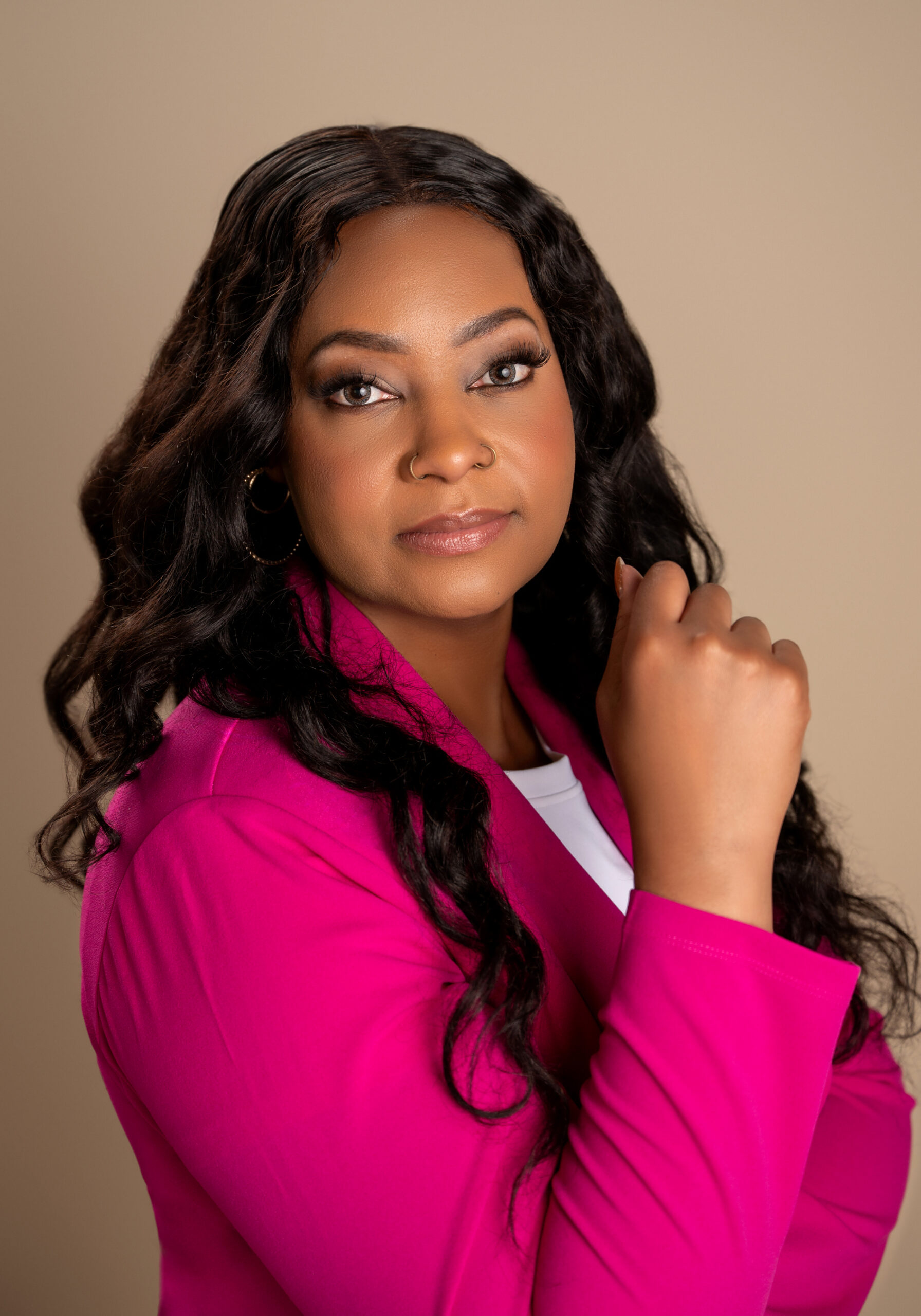
Jacqueline Rose is a Toronto-based Leadership and Executive Coach, ICF PCC Credentialed Coach, and the founder of A Jacked Experience. Her work focuses on helping leaders develop greater self-awareness, recognize their individual strengths, and create workplaces where people feel energized, valued, and able to contribute meaningfully.
She also helps leaders see what can sometimes be difficult to recognize for themselves, particularly the gap between how they intend to lead and how their leadership may actually be experienced by others.
The Child Who Played Hotel
Long before Jacqueline Rose was coaching executives and studying the relationship between leadership and human potential, she was a child playing hotel. It was a natural game for someone raised around a family connected to both hotels and airlines. What drew her in was not simply the setting. It was the people. She loved the interaction, the movement, and the feeling of creating an experience for someone else.
That instinct eventually became the beginning of her professional life. Her first job was as a bus girl in a fine dining restaurant within a hotel. She discovered something there that would stay with her for years: the contrast between what guests saw and what happened behind the scenes.
What happened behind the scenes
- Movement
- Pressure
- Noise
- Constant coordination
What guests were meant to experience
- Calm
- Attention
- Something that felt almost effortless
Jacqueline became fascinated by that relationship between preparation and experience. She learned to anticipate what people might need and to think beyond simply meeting expectations. The work was about noticing people, understanding what would make their experience better, and finding satisfaction in making that happen.
Her career continued through a variety of operational positions as a server and bartender before another opportunity quietly changed the direction of her life. While attending university, she was asked to temporarily work in a hotel sales office as a coordinator. She adjusted her schedule around her classes so she could continue working and paying for her education.
The experience opened another door. After graduating from university, she was offered a full-time sales management position in a Toronto sales office.
What followed would become much more than a career in hospitality. It would become an education in leadership.
Learning Leadership by Watching Leaders
At 23, Jacqueline was already paying unusually close attention to the people around her.
One leader she worked under became particularly influential. She admired the way this person led and later watched that leader take a leave. The person who stepped into the role afterward challenged her determination in ways she had not anticipated. The experience was difficult, but it also gave her a chance to see leadership from another angle.
Then another leader offered her an idea that would stay with her for decades. Rather than simply telling her what good leadership looked like, he encouraged her to observe her own reactions.
Notice what leaders do…
- +that makes you feel valued and motivated
- −that diminishes your energy
That advice became a personal study.
Jacqueline began watching leaders closely.
- How they communicated
- How they made decisions
- How they treated people
- How their presence affected the energy around them
She also became increasingly aware that leadership was not something that existed only in formal titles. It shaped how people experienced their work, their confidence, their potential, and sometimes even their sense of themselves.
She moved through sales management roles and eventually into leadership positions at individual properties, across multiple properties, and later into a national role above property level. With every step, her understanding became more nuanced.
- GBus girlFine dining restaurant within a hotel
- 1Server & bartenderA variety of operational positions
- 2Sales coordinatorHotel sales office, while at university
- 3Sales managerFull-time, Toronto sales office
- 4Property leadershipLeading at individual properties
- 5Multi-property leadershipAcross multiple properties
- 6National roleAbove property level
- PHCoach & founderA Jacked Experience
She was not simply studying what leaders did. She was studying what happened to people under different kinds of leadership.
Some leaders made her excited to begin the day. Others left her questioning her own potential before the morning was even half over. That contrast became one of the most important lessons of her career.
The Difference Between Energy and Depletion
For Jacqueline, one of the clearest signs of leadership is what happens inside people after they encounter it.
Under inspiring leadership
- Contribution feels meaningful
- Wanting to participate, create and learn
- Bringing more of yourself to the work
In a workplace that drains energy
- Slowly doubting your abilities
- Questioning why you are there
- Leaving work deflated and deenergized
She knows both experiences. Rather than allowing them to define her, Jacqueline began asking a different question: What could she control?
Understanding her own strengths gave her a way to move beyond the helplessness that can come from working in an environment that drains energy. She began shaping her own leadership style around a simple desire. She did not want other people to leave work feeling deflated and deenergized.
She wanted to show them another possibility.
That idea became more significant as she continued to study leadership. She came to understand that there is no single personality or formula that defines an effective leader. Every person brings a different collection of strengths, experiences, values, and ways of thinking.
For Jacqueline, authentic leadership begins with understanding those individual qualities rather than trying to reproduce somebody else’s style.
Her own experience had taught her that leadership is deeply personal. It is also deeply consequential.
When people feel trusted and supported, they often have more room to think, contribute, and grow. When they feel diminished, that possibility can become much harder to access.
The difference can spread far beyond one person.
A Career Shaped by Possibility
A particularly formative chapter of Jacqueline’s career came during her time with Starwood Hotels. The organization gave her something she valued deeply: room to explore ideas before she had decades of experience to justify having them.
A seat at the table for ideas on technological innovation
- Introduced clients and technology partners to Starwood executives and internal teams
- Part of some of the early discussions surrounding digital applications and keyless technology
She recognized the potential value in bringing those conversations together, while the actual development of those technologies was carried out by the teams responsible for building them.
What stayed with her was not simply the technology. It was the culture that allowed her to participate in those conversations in the first place.
She was young. She was early in her career. Yet the organization did not automatically dismiss her ideas because of her age or years of experience.
One moment became especially memorable. The president of the company at the time flew to Toronto to join Jacqueline and several clients for a round of golf. The gathering helped begin technology partnerships while also strengthening relationships with clients.
For Jacqueline, the lesson was profound. Leadership could create possibility by believing in people before they had a long list of achievements to prove themselves.
She saw what could happen when hierarchy did not become a barrier to curiosity.
That experience became part of the foundation for the leader and coach she would eventually become.
She might once have imagined spending her entire career with that organization, but the company was eventually acquired. The change forced her to consider what existed beyond the world she had known.
In retrospect, that disruption became an opening.
Choosing to Help Leaders Find Their Own Way
After years of studying leadership while living it herself, Jacqueline reached a point where observation was no longer enough. She wanted to help create the kind of leadership she had experienced at its best.
She had also recognized a gap in her own journey. When she was developing as a leader, she often wished she had someone available to support her in the ways she now supports others.
That realization helped lead her toward coaching.
The decision meant stepping away from a familiar professional path and creating something of her own. It was a leap of faith, but one that felt increasingly aligned with what she had been learning throughout her career.
Today, Jacqueline works with leaders and organizations to explore the human side of leadership. Her approach is grounded in self-awareness, individual strengths, possibility, and intentional development.
She is interested in what changes when a leader begins to see themselves differently. Sometimes the shift is subtle.
Those moments matter to Jacqueline because she sees what can happen afterward.
“I love every single time I feel a leader make a shift in their thinking, and see the inkling of possibility reignite in their eyes.”— Jacqueline Rose
That sense of possibility sits at the center of her work.
She wants people to experience their working lives as meaningful parts of their lives rather than years spent simply waiting for the day to end. She believes contribution can energize people when they feel connected to something they believe in and when they are given room to bring their strengths forward.
The Ripple That Starts With One Person
Jacqueline measures the meaning of her work partly through what happens beyond the person sitting across from her.
How one leader’s influence travels
- Their decisions affect teams.
- Their behavior influences culture.
- Their ability to create trust can affect how people communicate, collaborate, and grow.
- Those experiences can travel home with employees and influence relationships outside the workplace.
This is why Jacqueline describes her greatest value as service.
She is deeply interested in people and drawn toward possibility. She believes that obstacles do not always have to be treated as permanent barriers. Sometimes they are challenges that can be understood, approached, and solved.
Her own life has reinforced that belief. Difficult seasons have taught her that circumstances change and that people can be more resourceful and resilient than they realize while they are inside a difficult moment.
That understanding is now part of what she hopes to give others.
She wants leaders to trust themselves more deeply and to recognize that one choice can change the direction of a life or a career. She wants organizations to move away from cultures shaped by unnecessary power struggles and toward environments where people can contribute with greater confidence.
Most importantly, she wants people to understand what becomes possible when they are genuinely seen.
Bringing Humanity Into a Digital Future
Jacqueline’s vision extends into a workplace that is becoming increasingly shaped by technology.
She does not see technology and human connection as opposing forces. Instead, she is interested in what becomes possible when organizations use technology while protecting the human qualities that make work meaningful.
Her future focus is to serve more leaders and organizations while helping create people-focused work experiences in a highly digital age.
The question is not whether technology will continue to transform work. It will. The more important question, from Jacqueline’s perspective, is what organizations choose to preserve while that transformation happens.
Those are qualities she experienced early in her career and has carried with her ever since.
In her view, the leaders who thrive in an increasingly digital workplace will be those who intentionally cultivate the human capabilities that technology cannot replace. For Jacqueline, that does not mean rejecting technology. It means making sure progress does not come at the cost of the people who are meant to benefit from it.
Imagining a Different Monday
There is something quietly revealing about the question Jacqueline leaves people with. It is a question that reflects the arc of her own life.
Across all of those chapters, the same thread remains.
People can change when they begin to see more possibility for themselves.
For Jacqueline, leadership is therefore not simply about performance, titles, strategy, or organizational results. It is about what people become capable of when they feel valued, understood, challenged, and trusted.
Her hope is simple but expansive. She wants more people to experience work that gives them something back. She wants leaders to recognize the influence they carry and use it intentionally. She wants organizations to understand that when people are lifted, the effects rarely stop with one individual.
“The more leaders I can lift, the more they can lift others around them.”— Jacqueline Rose
That belief explains much of the work Jacqueline Rose has chosen to do.
Her story began with a fascination with people and the experiences they have in the presence of others. Today, that same fascination has become a deeper purpose: helping leaders create environments where people can see their own potential more clearly.
And perhaps that is where her idea of possibility becomes most meaningful.
Not as an abstract promise that everything will work out, but as an invitation to believe that another direction is always available. That a difficult season can change. That a person can learn to trust their strengths. That a leader can choose to lead differently.
The question she leaves people with
“What are you doing to create both real possibility and the idea of possibility in others?”
For More Features
Be Featured in The Real Edit!
Every story has the power to shape how we see innovation, leadership, and purpose. If you’re a founder, creator, executive, or changemaker with a journey worth telling , we’d be honored to help you share it.
To inquire about being featured:
Email us at: info@realedit.site
Follow The Real Edit