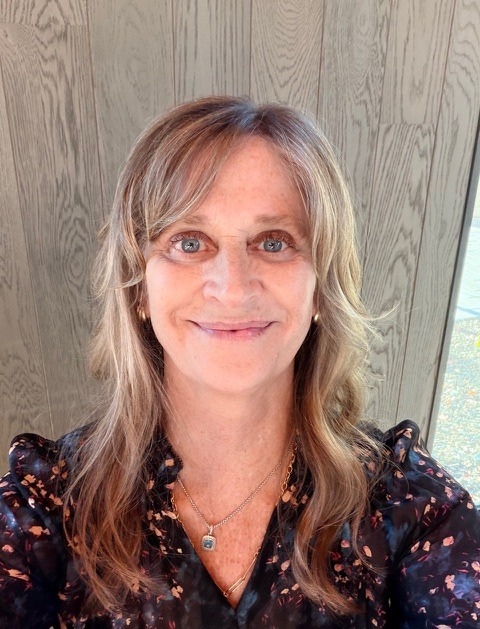
Meet Conna-Lee
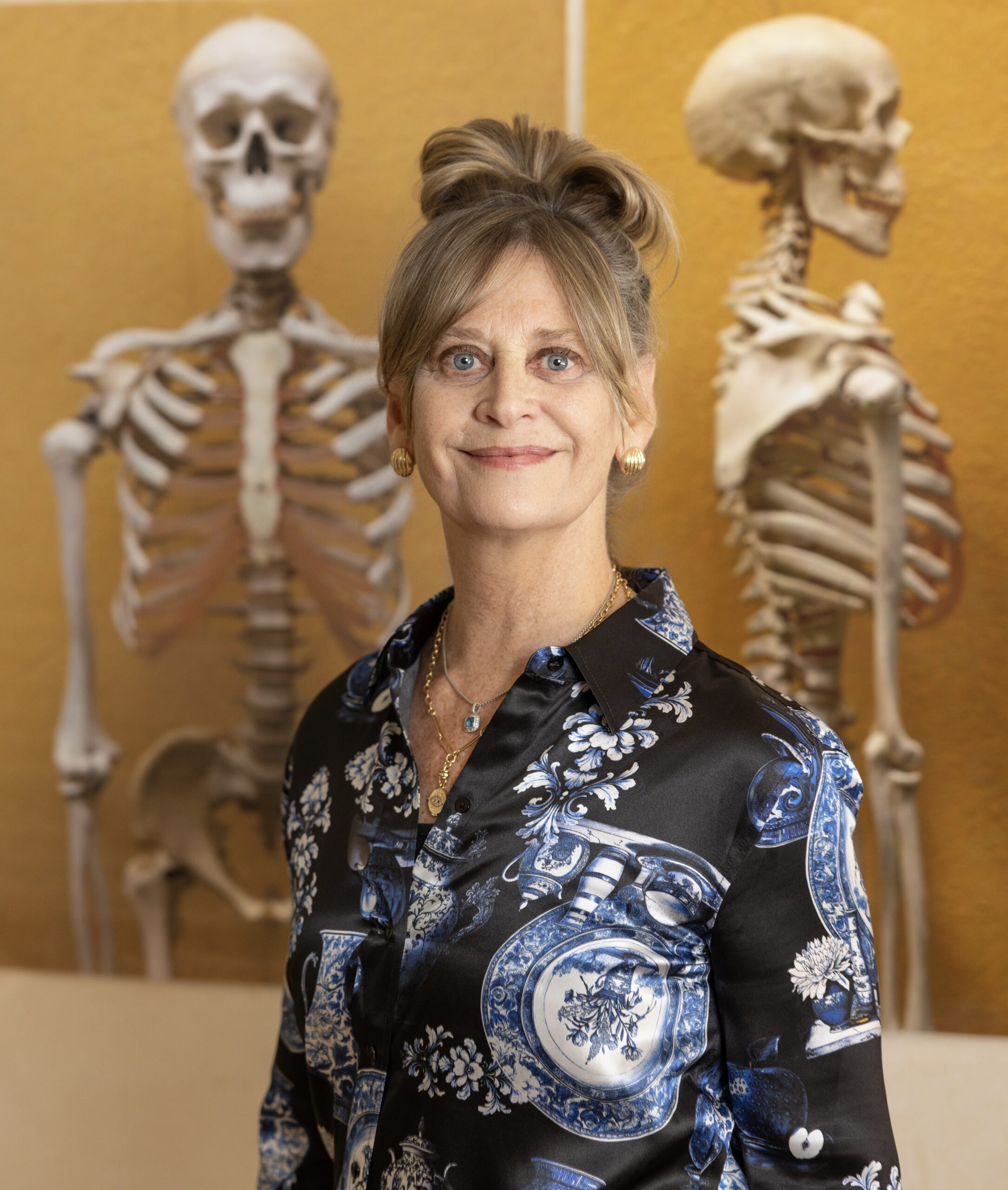
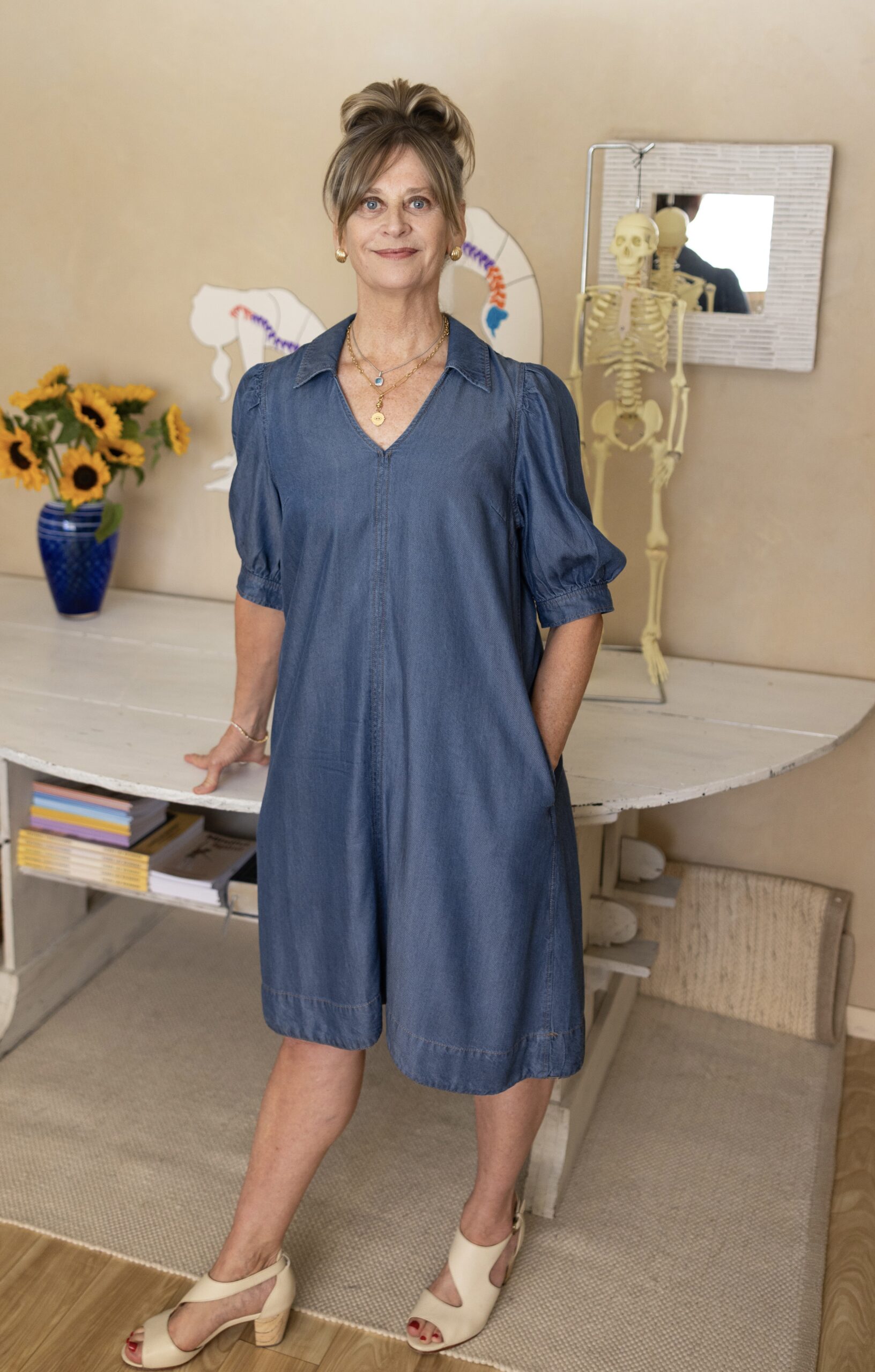
Conna-Lee Weinberg is the founder of SKELETHEA® and a movement specialist whose work focuses on conscious voluntary control of the spinal column. For more than eighteen years, she has developed, demonstrated, and taught voluntary spinal and vertebral control, while seeking independent scientific investigation into what this capacity may reveal about human movement and the nervous system. Her background includes professional dance and decades of movement teaching, which gave her a strong foundation in physical awareness and movement observation.
A Question That Began in the Neck
Some lives are shaped by a plan. Others begin to change because of a question that refuses to disappear.
For Conna-Lee Weinberg, that question emerged while she was working with a client more than eighteen years ago. She noticed something unusual at a vertebral level in her own neck. Rather than dismissing the sensation, she paid attention to it.
She wanted to know what she was feeling. Was the movement intentional? Could it be consciously controlled? And if so, how much control over the spine might actually be possible?
Those questions led her into a path she had not planned.
Weinberg had already spent much of her life around movement. She grew up in a highly athletic family, trained seriously in dance, performed professionally, and later devoted decades to teaching movement and studying the ways the body organizes itself. Physical awareness was already part of her life. Yet what she discovered in her own spine opened an entirely different area of inquiry.
For about a year, she explored the experience on her own body. She worked to consciously connect with the spinal column, distinguish individual vertebral levels, and explore whether she could consciously select the spine itself as the initiating structure for movement.
Eventually, her curiosity developed into something much larger.
She began developing an increasingly refined ability to consciously direct movement from the spinal column as a whole, through sections of the spine, and at individual vertebral levels. Over time, she also found that this ability could be taught to others.
What began as one unusual observation became a long investigation into the possibilities of human motor control.
“I did not exactly choose this field in the conventional sense, I discovered something that I could not stop investigating.”
That curiosity remains at the center of her work today.
Growing Up in a World of Movement
Weinberg’s relationship with movement did not begin with SKELETHEA®. It began much earlier.
Dance taught her discipline, awareness, repetition, and attention to the body. Professional performance demanded a relationship with movement that went beyond casual exercise. The body was something to be trained, observed, and understood.
Later, through years of teaching, she continued to explore how people move and how physical habits become established.
Yet her current work was not the result of a conventional career plan. There was no moment when she decided to pursue a recognized field with a clear professional path ahead.
Instead, she followed what she could directly experience.
That distinction has mattered throughout her journey. Weinberg has often found herself trying to describe something for which she believes there is little established language or framework. She is careful about the difference between what she can personally demonstrate and what still requires scientific explanation.
Her work is grounded in direct observation. She can describe what she consciously experiences in her own body and what she has observed while teaching others. But she does not claim to have answers where research has not yet provided them.
That commitment to honesty has become one of the values guiding her work.
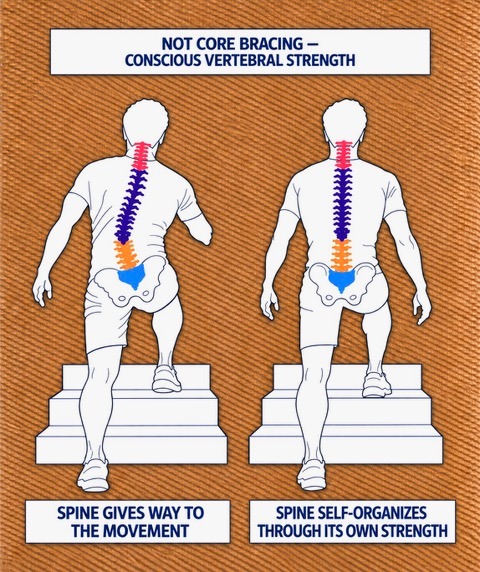
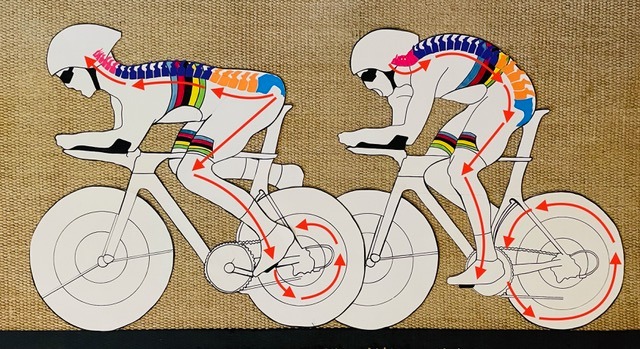
The deeper she explored, the more her understanding of movement began to change. Familiar activities such as swimming, cycling, skating, yoga, and walking began to feel fundamentally different. She could consciously choose the spinal column itself as the initiating structure for movement, sometimes directing movement from the spine as a whole, sometimes through a particular section, and sometimes from an individual vertebral level. She could also consciously change the relationship between spinal movement and movement of the limbs, connecting or separating them as she chose.
She began to notice greater ease and fluidity in her body. Movements that had once required conscious effort sometimes felt more naturally organized.
For Weinberg, these experiences were not simply about flexibility or strength. They raised a more fundamental question about how movement begins and how much conscious influence a person may have over the structures involved in that movement.
When the Body Began to Organize Differently
One of the most significant periods in Weinberg’s journey involved her own spinal alignment.
She had a 19 degree lumbar curve to the right. As she developed greater conscious awareness and voluntary control of her lumbar spine, she began deliberately working with its organization during everyday movement.
Hiking became part of that process.
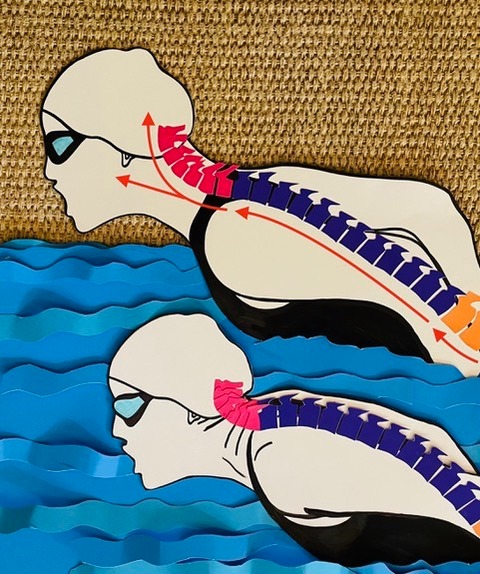
During walks of three miles or more, she was not simply correcting posture. She was consciously reorganizing the lumbar spine itself, creating space between vertebrae, changing its direction, and maintaining that new organization while the rest of the body continued moving. This was not a brief experiment. It became part of an ongoing practice that developed over time.
Gradually, she experienced changes in how her body organized itself. According to her experience, the deep muscles closest to the vertebrae became stronger in different alignments, and the habitual organization of her spine began to shift.
Eventually, the 19 degree lumbar curve was no longer present.
The experience reinforced something that was already becoming clear to her. What she was exploring was not limited to isolated movements. It seemed connected to the way the body organized movement as a whole.
Her feet, balance, posture, and broader movement patterns appeared interconnected with what was happening through the spinal column.
But perhaps the most important turning point came when she began seeing changes in other people.
Clients learning with Weinberg could begin to consciously feel their own spinal movement. Their abilities varied, but she observed that some people developed a new awareness of positions and habits that had previously felt fixed.
As they learned to direct their attention toward the spine, some began to experience movement differently. Weinberg saw clients become aware of how changes in the organization of the spinal column could affect weight through their feet and the positioning of the rest of their bodies.
For people who had spent years living with uncomfortable or painful held positions, this awareness could be significant.
Seeing these experiences in others mattered deeply to her.
It suggested that what she was discovering was not simply a personal ability unique to her own body. It also gave her a reason to continue refining how she taught the work.
The question grew larger. If people could learn to consciously sense and influence movement through their spines, what might that suggest about the body’s capacity for voluntary motor control?
For Weinberg, that question remains open. It is also one of the reasons she believes the work deserves serious scientific attention.
Trying to Describe What Had No Familiar Language
Discovery can be exciting. Explaining a discovery can be much harder.
One of Weinberg’s greatest challenges has been finding a way to communicate an experience that she believes is not commonly discussed in the terms she uses.
She was attempting to describe conscious, voluntary control of the spinal column itself. Yet she could not find an established framework that fully reflected what she was experiencing.
The spine also carries a particular kind of cultural and medical sensitivity. Many people are taught to protect it carefully, brace it, or avoid unfamiliar movement. As a result, the idea of consciously exploring movement at a vertebral level can initially sound uncomfortable or difficult to imagine.
Weinberg found that direct experience often communicated more effectively than explanation.
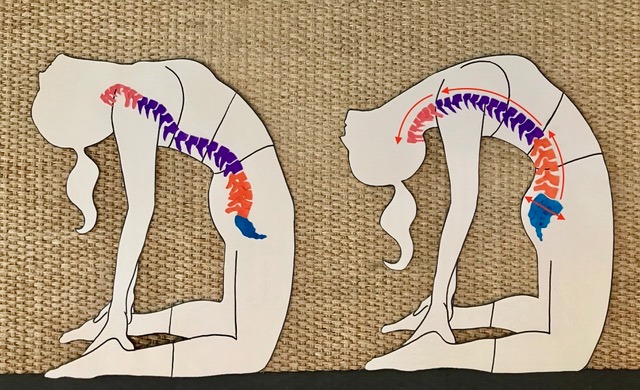
When someone places a finger on one of her vertebrae, she can tell them the direction she intends to move it and then consciously produce movement that they can feel beneath their finger. When hands are placed directly on her spine, they can also experience the movement of the spinal column beneath them.
For Weinberg, the experience begins before the visible movement: she consciously identifies the vertebral level, chooses the direction of movement, and then initiates the movement from that point. This tactile experience can make an abstract description much more understandable.
The distinction is important to her. Her focus is on the conscious selection of where movement begins within the spinal column—whether from the spine as a whole, a vertebral section, or an individual vertebral level—and how that movement is then voluntarily directed and organized.
Yet demonstrating an ability and having it formally investigated are very different things.
She has spent years practicing and documenting what she can. Her work has involved more than 15,000 hours of personal practice. She has also sought objective observation through radiology reviewed stress imaging, physician observed ultrasound, surface EMG, and an IRB approved study.
Still, she recognizes that more work is needed.
Her goal is not to declare the scientific questions settled. She wants the work to be independently observed, measured, and characterized by researchers with the expertise and tools to investigate it properly.
That process has not been easy.
Something can be directly demonstrable and repeatable, yet still struggle to find a place within established systems of research. When there is no obvious pathway for investigating a particular phenomenon, gaining serious attention can take time.
Weinberg has continued anyway.
She has practiced, taught, refined her approach, documented what she could, and reached out to people who might be willing to examine the work seriously.
The Persistence to Keep Going
When Weinberg speaks about what she is most proud of, she does not begin with recognition.
She talks about endurance.
Developing work that is difficult to explain and has not yet been formally characterized requires a particular kind of persistence. There have been periods when the work was overlooked and moments when stopping would have been easier.
But she continued.
She continued practicing when there were new levels of awareness to explore. She continued teaching when she saw others begin to develop their own understanding. She continued documenting what could be observed and looking for ways to bring the work into conversations with researchers and professionals.
That persistence has become part of her identity.
“The biggest thing that has carried me through has been curiosity, Every time I discovered another level of control, or watched someone else begin to access it, I had another reason to keep going.”
Her curiosity is balanced by discipline, but it is not the only part of her life.
Weinberg describes herself as self disciplined and easy natured. She makes time for family and friends, art, drawing, and projects that take her attention beyond her work. She enjoys sitting by the ocean and hiking, particularly when she is alone.
Walking provides space to think.
She often meditates while hiking, allowing the rhythm of movement and the quiet around her to create distance from the frustrations of professional outreach.
She also talks openly with people she trusts when the difficulty of getting the work understood becomes discouraging.
Her son has been another important source of inspiration.
Watching him approach his own life with determination, intelligence, courage, and persistence has reminded her of the importance of continuing to believe in meaningful work even when others do not yet understand it.
As a mother, she is proud of him. But she also speaks of him as someone she genuinely admires.
His willingness to pursue ambitious goals has encouraged her during periods when she struggled to gain attention for her own work.
What SKELETHEA® Is Trying to Understand
Today, Weinberg’s work through SKELETHEA® is centered on a question that has followed her for nearly two decades.
How much conscious, voluntary control of the spinal column is possible?
Her focus extends beyond teaching. She wants the ability she has developed to be independently examined.
She believes there may be relevance for fields including movement science, motor control, neuroscience, biomechanics, medicine, rehabilitation, athletics, and technology. At the same time, she remains clear that these possibilities need proper investigation.
That distinction reflects the honesty she brings to her work.
She can speak about what she experiences and demonstrates. She can describe what she has observed in the people she teaches. But she does not want to present scientific conclusions that have not yet been established.
For her, serious investigation is essential.
She has seen clients develop greater awareness of their own spinal movement and, in some cases, experience changes that affected their comfort and freedom of movement. These direct teaching experiences have shaped her belief that the work could have broader significance.
But she also knows that individual experiences are not the same as scientific validation.
That is why she continues seeking independent observation.
There is also a personal sense of urgency behind her work.
Weinberg does not want what she has learned to remain dependent on one person.
She has spent years developing a highly personal and refined capacity. If the knowledge is to continue, it needs to be understood well enough that other people can study, teach, question, and develop it.
She wants the work to become something larger than her own experience.
A School, New Teachers, and Young Minds
Weinberg’s vision for the future is practical as well as ambitious.
She wants to establish a school where adolescents can learn conscious spinal and vertebral control.
Her interest in young people comes from what she has observed while teaching. In her experience, they can begin learning aspects of the work quickly. They may also approach the spine without some of the assumptions that adults have developed about what is or is not possible.
When young people place their hands on her spine and feel movement occurring at a vertebral level, the concept becomes much easier to understand. Feeling that movement directly gives them a physical reference for developing their own awareness and control.
Weinberg sees potential in that openness.
But teaching young people is only one part of her vision.
She also wants to train teachers.
For SKELETHEA® to continue beyond her own lifetime, she cannot remain the only person capable of communicating the work. She wants others to develop a deep understanding of the method and to learn how to teach it with clarity and precision.
Alongside education, she hopes researchers in neuroscience, biomechanics, motor control, medicine, and movement science will take an interest in investigating what she has developed.
Ultimately, she imagines a body of knowledge that can continue growing independently.
A school could introduce young people to the work. Trained teachers could carry it into new communities. Researchers could investigate the questions it raises. Together, those elements could create something more durable than a single person’s lifetime.
That is the future Weinberg is working toward.
Staying Curious Long Enough to Be Heard
There is a quiet lesson running through Conna-Lee Weinberg’s story.
Not every meaningful path begins with certainty.
Sometimes it begins with noticing something unusual and refusing to look away.
For Weinberg, a moment of awareness in her neck became eighteen years of exploration. Her curiosity led to thousands of hours of practice, changes in how she experienced her own movement, years of teaching, medical documentation, and an ongoing effort to bring an unfamiliar idea into serious scientific conversation.
Her story is not one of easy acceptance.
It is a story of staying with a question.
She encourages others to remain curious when they encounter something that does not fit neatly within what they have been taught to expect. Direct experience and careful observation, she believes, can be valuable starting points, particularly when they are accompanied by honesty about what remains unknown.
Her own journey reflects that balance.
She has not stopped because every question has been answered. In many ways, she continues because they have not.
The spine remains, for her, both a physical structure and an ongoing source of inquiry. What once felt like a single spinal column has become, through years of practice, something she can consciously experience and organize at multiple levels, from the entire spine, to sections of the column, to individual vertebrae. Each new level of awareness offers another question, and each person who begins to experience their own movement differently becomes another reason to keep learning.
Perhaps that is what has sustained her longest.
Not certainty.
Not recognition.
Curiosity.
And the willingness to continue long enough to see whether the questions that first drew her in might one day lead to a deeper understanding of what the human body is capable of learning.
For More Features
Be Featured in The Real Edit!
Every story has the power to shape how we see innovation, leadership, and purpose. If you’re a founder, creator, executive, or changemaker with a journey worth telling , we’d be honored to help you share it.
To inquire about being featured:
Email us at: info@realedit.site
Follow The Real Edit