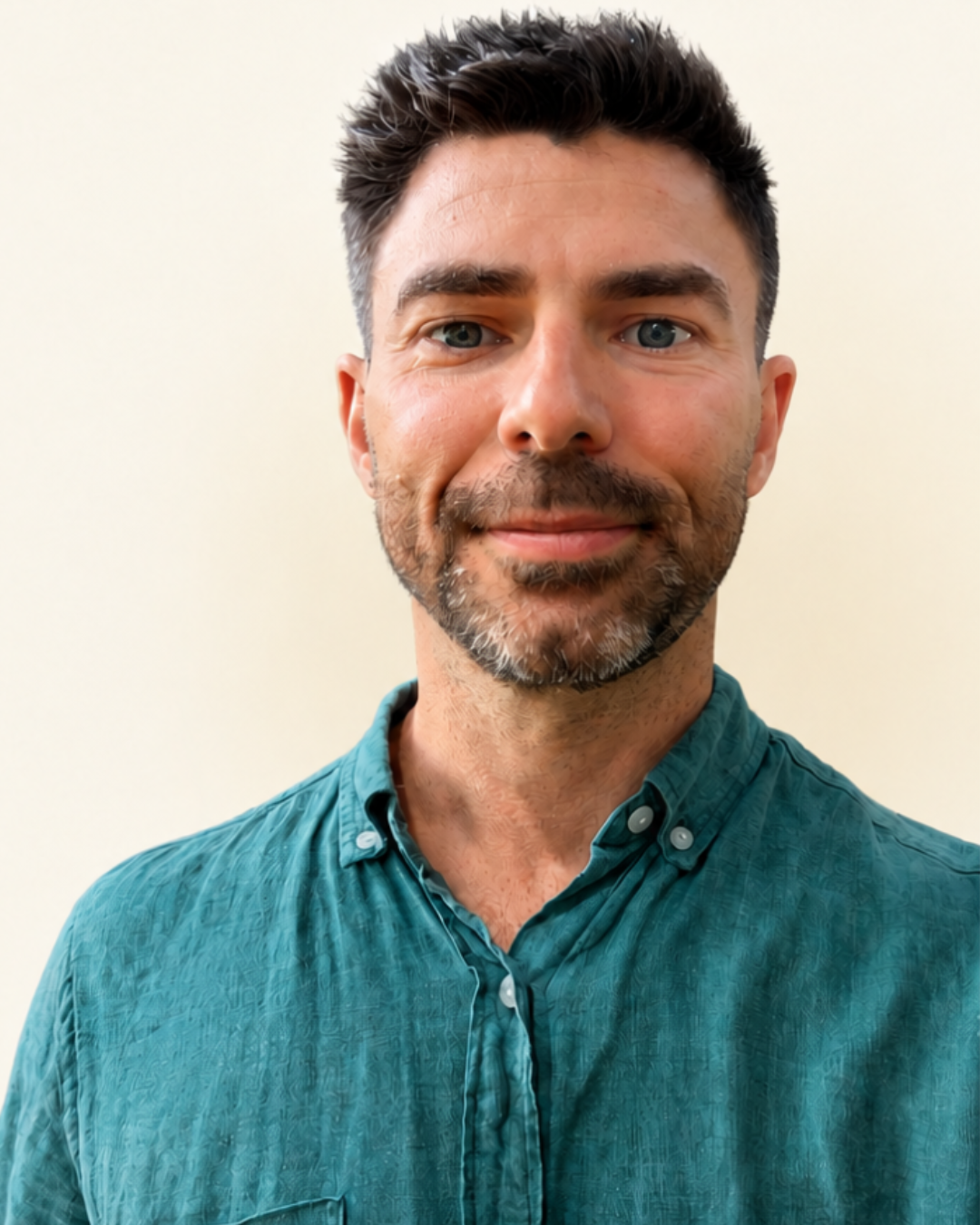
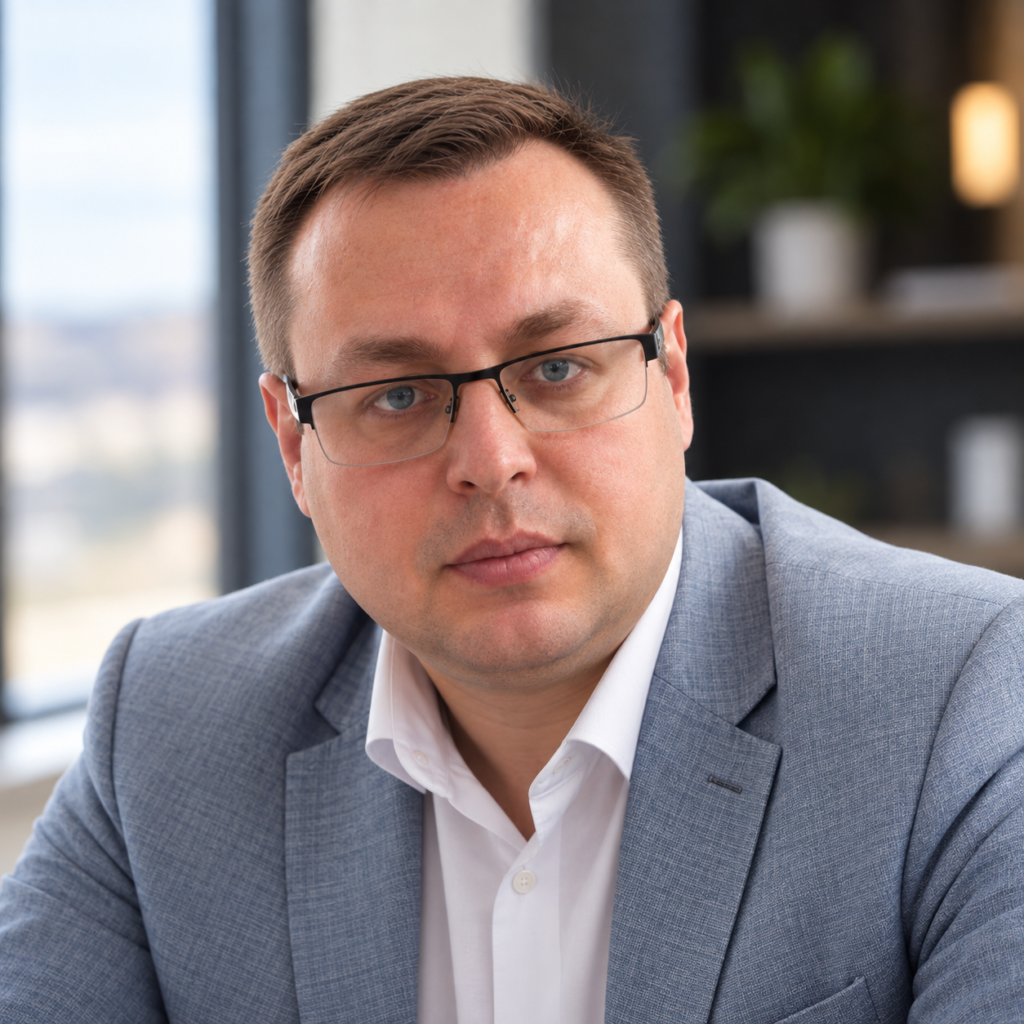
Meet Burca
Burca Ruslan is the Founder and CEO of SellShot Corp and the Founder of Axis Digital. Based in Chisinau, Moldova, he brings a background in law, entrepreneurship, technology, and systems thinking to his work, with a particular interest in risk, ownership, and the structures that shape long term outcomes.
Looking Beyond the Problem in Front of Him
There is a particular way of looking at the world that comes from spending years around contracts, disputes, negotiations, and difficult business decisions. For Burca Ruslan, law was not only a profession. It became a way of understanding how decisions unfold, how structures influence behavior, and how problems that appear sudden are often years in the making.
His professional life began in law, where he worked with complex commercial situations and learned to examine the details behind a decision. Over time, however, he became less interested in simply resolving problems once they appeared. He wanted to understand why they had emerged in the first place.
That curiosity gradually moved him toward systems and risk architecture. He began looking at the relationship between decisions, incentives, structures, and human behavior. Instead of seeing each challenge as an isolated event, he became interested in the wider environment surrounding it.
This way of thinking eventually led him toward entrepreneurship. It was not a dramatic break from his previous career, but a gradual extension of the questions he had already been asking.
He describes his transition as something that developed through the way he learned to approach problems rather than through one defining decision. The move from advising and analyzing to building gave him an opportunity to test those ideas in circumstances where the outcome could not be known in advance.
When Stability Stopped Feeling Like Enough
One of the more important realizations in Ruslan’s journey was that professional stability and personal progress can exist separately.
A secure career can provide knowledge, experience, and a sense of direction. It can also make it easy to delay the harder question of what a person wants to create independently. For Ruslan, that tension became increasingly difficult to ignore.
He had spent years examining businesses and the decisions that shaped them. Eventually, he wanted to experience the responsibility of building something himself.
That shift became particularly tangible with SellShotPro, a marketplace created around photographers and visual creators. The idea was not simply to build another place where images could be uploaded and sold. Ruslan was interested in a deeper question about ownership.
In many parts of the creator economy, platforms sit between creators and their audiences. They can influence visibility, distribution, pricing structures, and the commercial relationship between the person producing the work and the person buying it.
Ruslan became interested in whether more of that control could move toward the creator.
That question gave SellShotPro its broader direction. Rather than thinking only about photographs as individual products, he began thinking about the infrastructure around a photographer’s professional identity. A creator could have a portfolio, a storefront, collections, pricing, licensing tools, and a direct way to share their work with an audience.
The challenge of building such a system also changed Ruslan’s understanding of entrepreneurship. Ideas that had previously existed as concepts about incentives, ownership, risk, and structure became practical decisions involving technology, payments, product design, marketing, capital, and international business.
It was a different kind of learning. Legal work had taught him to study the possible consequences of a decision before acting. Entrepreneurship required him to make decisions while some of those consequences remained unknown.
That difference became one of the most useful lessons of the transition.
Learning to Move Before Everything Is Certain
Uncertainty has been one of the recurring realities of Ruslan’s entrepreneurial experience.
Building a company means making choices without complete information. Resources are limited. Timelines change. Plans require adjustment. Some ideas work differently in practice than they appeared on paper.
His legal background remains useful in those situations. It taught him to separate facts from assumptions, identify potential risks, and consider what may happen several steps ahead. But building a company also taught him that analysis has a limit.
Eventually, a decision has to be made.
Building SellShotPro taught me that you rarely get complete information before a decision. At some point, the greater risk is not making the wrong decision — it is waiting so long for certainty that the opportunity moves without you.
Ruslan has learned to look at setbacks as information rather than simply as evidence of failure. When something does not work, he considers whether the underlying problem relates to execution, timing, incentives, or the architecture of the system itself.
That approach reflects the larger philosophy behind his work. A difficult result is not necessarily an isolated mistake. Sometimes it reveals something about the structure in which the mistake occurred.
This is also where his interest in risk becomes more nuanced. Risk is not limited to obvious threats or dramatic events. It can emerge slowly through dependencies, assumptions, incentives, and decisions that appear reasonable at the time.
For Ruslan, understanding those patterns is part of responsible decision making.
It also shapes how he approaches difficult periods personally. He does not expect motivation to remain constant. There are times when confidence comes easily and others when nearly every decision can feel uncertain.
During those periods, he returns to structure. He separates what he can influence from what he cannot, identifies the next practical decision, and continues from there. Physical activity helps him regain perspective, but the deeper lesson is about patience.
He has learned not to turn a temporary difficulty into a permanent conclusion about a project or a life.
That distinction matters in entrepreneurship, where a slow month can easily feel like a judgment on a much larger idea.
Building More Than a Marketplace
Today, SellShotPro represents the practical expression of many of the ideas Ruslan has developed throughout his career.
His ambition is for the platform to become more than a conventional marketplace for images. He wants photographers and visual creators to have a stronger commercial identity of their own within the system.
That means creating space for each creator to develop a public portfolio, personal storefront, collections, pricing, licensing options, and a direct link they can share with their own audience.
The underlying idea is straightforward. A creator should not have to surrender all control simply because they need infrastructure to reach customers.
Ruslan explains the philosophy behind that direction clearly:
“I believe good leadership is not about controlling every decision. It is about designing an environment where people understand their role, take responsibility, and can create value independently.”
That principle extends beyond the product itself. It reflects his broader view of leadership, which is rooted less in authority and more in creating conditions where other people can act with independence.
For him, the value of a system is partly measured by what people are able to do within it.
This is why his work across SellShotPro, Axis Digital, and his writing does not feel disconnected to him. Each project approaches the same underlying questions from a different direction.
SellShotPro explores ownership and commercial infrastructure for creators. Axis Digital extends his interest in systems and technology. His forthcoming book, Architecture of Risk, brings together ideas that have developed through years of examining decisions, structures, incentives, and their consequences.
Writing the book has also helped him recognize the connection between the different chapters of his professional life.
What once appeared to be separate areas of law, entrepreneurship, technology, and risk began to look more like different expressions of one sustained curiosity.
A Different Definition of Success
Ruslan does not define success primarily through titles or professional status.
For him, success is closely connected to freedom and responsibility. Freedom means having the ability to choose what he builds, where he puts his time, and which ideas he follows. Responsibility means accepting the consequences of those decisions.
That relationship between freedom and responsibility is central to how he thinks about independence.
The more control a person wants over their professional life, the more responsibility they must be prepared to carry. There is no separation between the two.
This perspective has also influenced what he is most proud of.
SellShotPro began as an idea. It has since become a functioning platform with creators, content, and the foundations of an international marketplace. Reaching that point required Ruslan to move well beyond the boundaries of his original professional background.
He had to learn about technology, payments, product development, marketing, corporate structures, and international business. Each new area brought unfamiliar questions, and each required him to become comfortable with not knowing everything at the beginning.
Yet he does not see the unfinished nature of the work as a weakness.
For him, there is value in having taken something that once existed only as an idea and given it a place in the real world.
The same principle applies to his writing. Architecture of Risk is an attempt to organize years of professional observation into a larger body of thought about how systems influence outcomes.
The book reflects an interest that has remained consistent throughout his journey: understanding what exists beneath visible events.
Designing for What Comes Next
Ruslan’s immediate focus is the continued development of SellShotPro into a broader commercial ecosystem for photographers and visual creators.
The goal is not simply to increase the number of images available through the platform. It is to build an environment where creators can establish something that feels more like their own business.
That distinction is important.
A marketplace can provide access to customers. A broader commercial infrastructure can provide a foundation for an independent professional presence.
Ruslan sees the two ideas as different.
His future plans also include the continued development of Axis Digital and his work around Systems and Risk Architecture. Through these projects, he intends to keep exploring how systems are designed and how their effects can extend far beyond the original decisions that created them.
There is a long term quality to this work. He is interested not only in what a decision accomplishes today, but in what it makes possible or difficult tomorrow.
That way of thinking also explains why he is drawn to independent thinkers, founders, authors, and people willing to question assumptions. He does not follow a single role model or attempt to reproduce one person’s path.
Instead, he learns across different perspectives.
The common thread is curiosity. He is interested in people who build something that did not exist before, challenge accepted assumptions, and think seriously about human behavior, technology, systems, and consequences.
The Risk of Staying Where It Is Comfortable
Perhaps the clearest expression of Ruslan’s philosophy is his understanding of stability.
A stable situation can be useful. It can provide security and time to develop. But stability can also become a reason to remain inside a structure that no longer reflects where a person wants to go.
That realization sits quietly underneath his transition from law into entrepreneurship.
His story is not simply about leaving one profession for another. It is about changing the scale at which he wanted to participate.
Instead of only examining systems from the outside, he wanted to build them. Instead of only identifying risks, he wanted to understand how architecture could reduce or redistribute them. Instead of only analyzing ownership, he wanted to create infrastructure that could give creators more of it.
His advice to others follows naturally from that experience:
“Risk is not always created by change. Sometimes the greater risk is remaining inside a system simply because it feels familiar.”
There is no promise in that idea that change will be easy. In fact, Ruslan’s own experience suggests the opposite. Building something independently involves uncertainty, mistakes, delays, and periods when progress feels slower than expected.
But there is also a different kind of clarity that comes from taking responsibility for the direction of one’s work.
For Ruslan, that is where independence becomes meaningful.
Building Something That Can Outlast the Builder
The most interesting thread through Burca Ruslan’s story is not the movement from law to entrepreneurship. It is the persistence of one question beneath both.
How do systems shape the lives and choices of the people inside them?
Law gave him one perspective on that question. Entrepreneurship gave him another. SellShotPro allows him to explore it through creator ownership and commercial infrastructure. Axis Digital gives him another space for systems and technology. Architecture of Risk gives him room to examine the subject more deeply through writing.
Across all of these areas, he remains focused on long term consequences.
He wants to build things that can exist beyond his immediate involvement and create value for people who use them. That is a different measure of achievement from simply holding a particular title or reaching a particular milestone.
It is also a more demanding one.
To build something that lasts requires accepting responsibility for the decisions that shape it, remaining honest about what is not working, and continuing to adapt as circumstances change.
Ruslan’s journey suggests that progress does not always begin with a dramatic leap. Sometimes it begins with noticing that the system around you no longer answers the questions you are asking.
From there, the work is to understand the architecture, accept the uncertainty, and begin building differently.
Because sometimes the greatest risk is not that a system will fail, but that it will continue working exactly as designed.
For More Features
Be Featured in The Real Edit!
Every story has the power to shape how we see innovation, leadership, and purpose. If you’re a founder, creator, executive, or changemaker with a journey worth telling , we’d be honored to help you share it.
To inquire about being featured:
Email us at: info@realedit.site
Follow The Real Edit