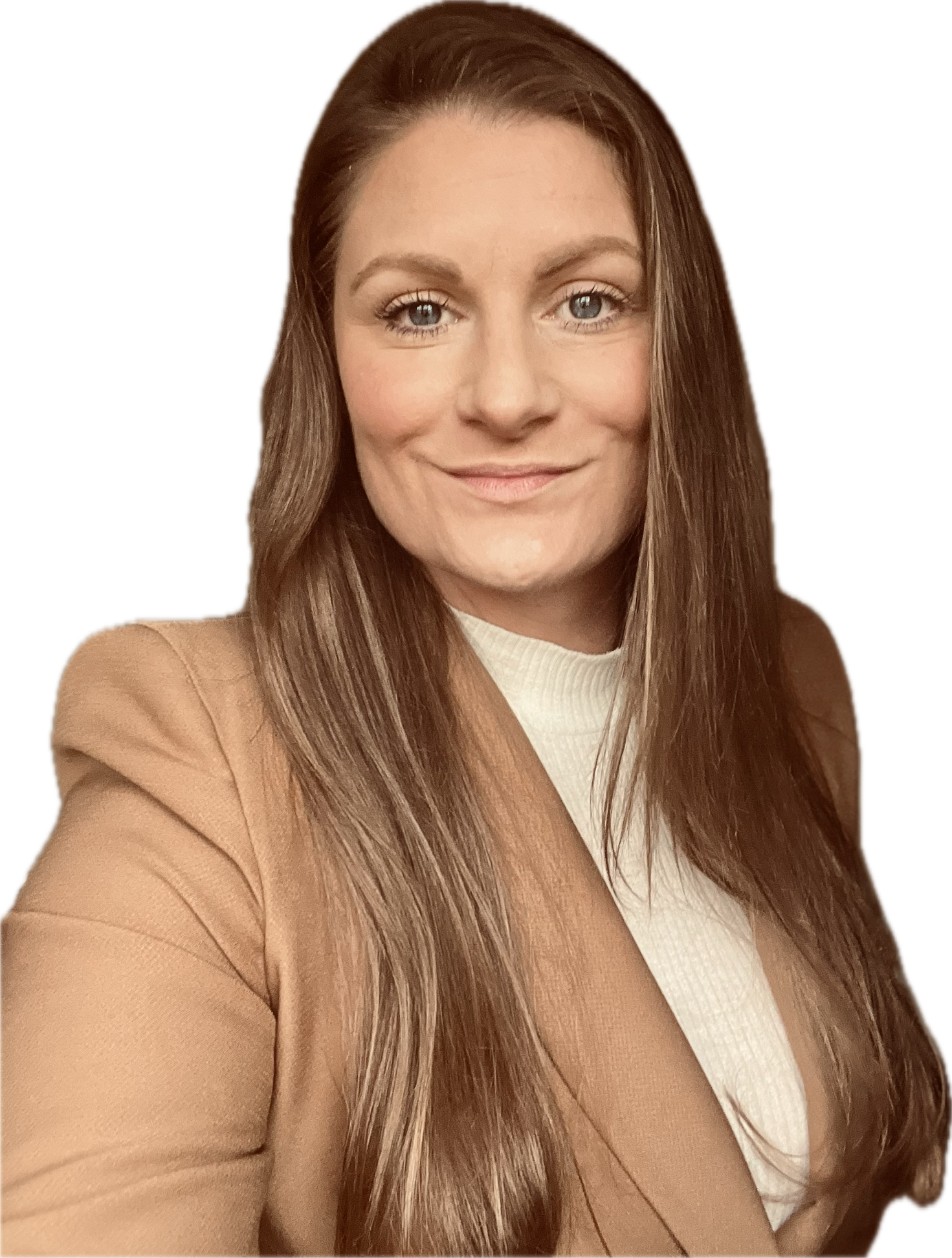
Meet Bree
Bree Phillips is the CEO and cofounder of Phantos AI, a Minneapolis based company focused on using automation to reduce repetitive work for businesses. Her path to entrepreneurship moved through manual labor, customer service, technical support, healthcare claims, systems management, unemployment, and eventually a decision to build something of her own with her husband, Harish.
From Small Town Work to Finding Her Place
Bree’s professional story did not begin in technology. It began with practical work and the necessity of finding a way forward.
She grew up in Mayfield, Kentucky, a small town where opportunities could be limited, particularly for someone entering the workforce directly after high school. In late 2012 and early 2013, she found a contracting job installing and repairing ceilings in a nursing home. From there, she moved into the vending machine business, transporting, installing, and maintaining machines for local businesses.
Her next chapter took her into customer service at a sizable car dealership in Clarksville, Tennessee. She started as a hostess and eventually became Lead Supervisor for the same team. The work gave her experience dealing with people, solving problems, and navigating the pressures that come with being responsible for others, even though she had not yet found the professional direction that felt right.
Then the pandemic changed the shape of working life.
Bree began looking for work from home opportunities while continuing with her existing job. She eventually entered the call center world, working in Technical Support for a third party vendor supporting Apple. Receiving an iMac in the mail for the role was an unexpected introduction to a more technical side of work.
Customer service continued to follow her through several roles and industries, but the work was becoming increasingly draining. Eventually, an opportunity in healthcare claims in Minneapolis introduced her to something different. Through that role, she moved into configuration work using SQL and later became an Operations and Systems Manager.
For the first time, she found herself doing work that genuinely suited her.
It was not simply the technical side that mattered. It was the ability to understand how systems worked, identify problems, improve processes, and make difficult things easier for the people who depended on them. After years of feeling worn down by repetitive customer service work, Bree had finally discovered a professional environment where her instincts for problem solving could become a strength.
That chapter lasted roughly three and a half years.
Then, in October 2024, she was laid off.
What Losing a Career Taught Her About Leadership
Being laid off after finally finding work she enjoyed was painful in its own way. Bree spent nearly two years searching and applying for jobs without finding the stability she needed. She took on freelance Business Development work at times, but it never developed into a full time position.
It was during this period of uncertainty that an idea began to emerge.
She and her husband, Harish, looked at their situation and began questioning whether continuing to search for the right employer was actually the answer. They had both seen how much time businesses could lose to repetitive tasks, inefficient systems, and problems that nobody had enough time to solve.
Instead of continuing to look for someone else to hire them, they decided to create something themselves.
Phantos AI grew from that decision.
For Bree, the company was not simply a response to unemployment. It was also a response to everything she had experienced in the workplace. She had known what it felt like to work under managers who listened and managers who did not. She had experienced the difference one supportive leader could make, and she had experienced how quickly a team could suffer when leadership stopped taking responsibility for the conditions around them.
One manager in particular changed the direction of her career. During her healthcare claims work, that manager recognized something in Bree and encouraged her toward operations. That push helped her discover a field where her abilities became much clearer to her.
Later, the situation changed. After that manager left, a system migration went badly. The team was blamed for problems connected to a program that was not ready, even though the problems were outside their control. Accuracy fell dramatically, and several employees were placed on performance improvement plans.
For Bree, the contradiction was difficult to forget. She had been told she was a subject matter expert and one of the strongest people on the team, yet she was eventually laid off anyway.
That experience shaped more than her view of employment. It shaped her view of leadership.
She began to understand that if she ever had the opportunity to build a company herself, she wanted it to operate differently. She did not want people to feel disposable. She did not want employees to be ignored when something went wrong. She did not want clients to feel that signing a contract meant giving up control.
Those principles became part of the foundation of Phantos AI.
Turning Survival Into Empathy
There is another layer to Bree’s story that reaches far beyond her professional life.
She describes growing up in poverty and experiencing abuse, including spending years in an abusive relationship. She has experienced homelessness, loss, instability, and the death of people close to her. She also discovered later in life that she is AuDHD, giving her a new framework for understanding many of the difficulties she had struggled to explain earlier.
At 27, that diagnosis changed the way she understood her own past.
For years, she had interpreted difficulties through the lens of personal failure, wondering whether she was simply not trying hard enough or doing enough. Looking back now, she can see how much of her life had been shaped by survival.
She describes that period of her life with unusual directness:
“For most of my life, I was running on pure survival mode, just grit and instinct, figuring it out because there was no other option.”
That history did not disappear when her circumstances changed. Instead, it became part of how she understands other people.
She knows what it means to feel unseen. She knows what it feels like when there is no reliable person to lean on. She knows the difference between someone simply managing you and someone actually listening to you.
That distinction is central to how she wants Phantos AI to operate.
Bree describes her leadership philosophy through a simple set of values: authenticity, empathy, ownership, transparency, and listening. None of those ideas came from a business textbook. They came from experience.
She fought hard to become comfortable being herself, so she does not want to create a workplace where employees feel they have to perform a version of themselves just to belong. She knows how damaging it can be to feel overlooked, so she wants clients and employees to feel heard. And because one manager listening to her changed the course of her career, listening has become one of the first things she wants to offer others.
For someone who spent so much of her life simply trying to get through the next challenge, building a company around empathy is not an abstract principle. It is personal.
An AI Company With a Human Boundary
Bree’s relationship with artificial intelligence also evolved through experience.
When AI first became prominent, she was skeptical. Her first instinct was to see it as another technology that could eventually replace people. She had spent years doing repetitive work herself and understood how easily technology could be used to remove human involvement rather than support it.
Her perspective changed after meeting Harish and seeing what AI and automation could actually do when applied thoughtfully.
Instead of using technology simply to eliminate jobs, Bree became interested in the repetitive tasks that make people’s jobs exhausting in the first place. Data entry, administrative work, repetitive communication, scheduling, and other routine processes can consume hours without necessarily requiring the full attention of a human being.
That became the idea behind Phantos AI.
The company’s premise is straightforward: automation should remove unnecessary repetitive work while allowing people to remain at the center of their businesses.
For Bree, the distinction matters.
She does not want automation to make people feel less important. She wants it to give them more time to do the parts of their work that actually require judgment, relationships, creativity, and care.
That philosophy also shapes how she approaches clients. She wants businesses to retain ownership of their work and infrastructure rather than becoming permanently dependent on a provider. She wants conversations to remain personal rather than disappearing behind layers of support. She wants solutions to be designed around the client’s actual circumstances, including their budget and existing systems.
It is an approach rooted in a simple question: what problem is the person actually trying to solve?
The Moment Phantos Became Real
For all the thinking that went into creating the company, the moment that made Phantos AI feel real was remarkably simple.
Their first client arrived under visible pressure. The problem was not theoretical. It was affecting his sleep.
After working with him, the team was able to reduce a task that had been taking hours to something that could be handled in less than a minute. During their final call, the client told Bree,
“you guys helped me get time for my family back, turned my issue from 6 hours to under a minute.”
That moment mattered because it connected everything.
The years of repetitive work. The frustration of inefficient systems. The experience of being unsupported. The long job search. The conversations with Harish about what technology could become. The decision to stop waiting for someone else to create the opportunity.
Suddenly, all of it had a purpose.
Bree had spent much of her life trying to reclaim time, stability, and a sense of control. Now she was helping someone else do the same.
That is the kind of impact she wants Phantos AI to pursue. The company is particularly interested in working with businesses that feel overwhelmed and lack the time or resources to solve their operational problems themselves.
The underlying idea is not complicated. Technology should reduce unnecessary strain rather than create another layer of it.
Success Without the Mansion
Bree’s definition of success is also revealing.
She has little interest in the traditional image of entrepreneurial achievement built around wealth, status, or an impressive lifestyle. She is not motivated by the idea of owning an enormous house simply because she can.
Her measure is more personal.
She wants to help people who have experienced some of the same difficulties she has experienced. She wants to build a sustainable life while doing meaningful work. And perhaps most importantly, she wants to experience the freedom of being herself without having to hide or perform.
After spending so much of her life in survival mode, peace has become a meaningful form of success.
That perspective also explains why her ambitions for Phantos extend beyond business growth. The company is actively working toward expansion into Europe and the UK, with longer term plans to develop an in house product of its own.
But Bree also wants her work to help people feel less alone.
She wants people to become more comfortable with the parts of themselves they once believed they had to hide. Through her content and through Phantos, she hopes people can find some sense of recognition in what she creates.
For her, that personal mission sits alongside the business rather than beneath it.
Building What She Once Needed
Bree’s future vision is therefore larger than automation.
There is a practical business goal: expand the company’s reach, continue developing its capabilities, and eventually put a product built entirely by the Phantos team into the hands of people who need it.
But there is also a human goal that runs through everything she describes.
She wants to build the kind of company she once needed to encounter.
A company where people listen before they fix. Where employees are treated as people rather than resources. Where clients retain ownership and understand what they are receiving. Where technology does not require people to surrender control. Where authenticity is not something written into a values statement and forgotten once work begins.
That ambition is especially meaningful because it comes from someone who has experienced the opposite.
Bree does not present resilience as a polished quality that appeared naturally. Her resilience was built through circumstances that gave her very little choice but to keep going. What has changed is what she does with that resilience now.
She is no longer simply using it to survive.
She is using it to build.
Choosing What to Let Go
Perhaps the clearest expression of Bree’s philosophy comes from the advice she would give to people trying to find their own way.
Rather than encouraging people to endlessly push through discomfort, she argues for another kind of courage: knowing what to leave behind.
Her message is to give up the things that no longer align with happiness. To give up the facade created to satisfy other people’s expectations. To give up the version of yourself that was built only to survive someone else’s demands. And to stop believing that rest, happiness, or authenticity must first be earned.
For someone whose life has involved so much endurance, that message feels less like a motivational slogan and more like a conclusion reached through experience.
Bree Phillips did not arrive at entrepreneurship through a straight line. Her journey moved through manual labor, customer service, technology support, healthcare operations, management, unemployment, and finally the uncertain territory of building a company from the ground up. Each chapter left something behind.
The practical skills came from the jobs. The leadership lessons came from the managers who believed in her and those who did not. The empathy came from knowing what it meant to be unsupported. The vision for Phantos came from seeing how technology could either distance people from their work or give them something valuable back.
Now, she is trying to build the latter.
For Bree, the goal is not simply to create a successful AI company. It is to create a company where technology serves people without asking them to surrender the parts of work and life that make them human.
And after spending years searching for a place where she could belong, she is finally building one of her own.
For More Features
Be Featured in The Real Edit!
Every story has the power to shape how we see innovation, leadership, and purpose. If you’re a founder, creator, executive, or changemaker with a journey worth telling , we’d be honored to help you share it.
To inquire about being featured:
Email us at: info@realedit.site
Follow The Real Edit