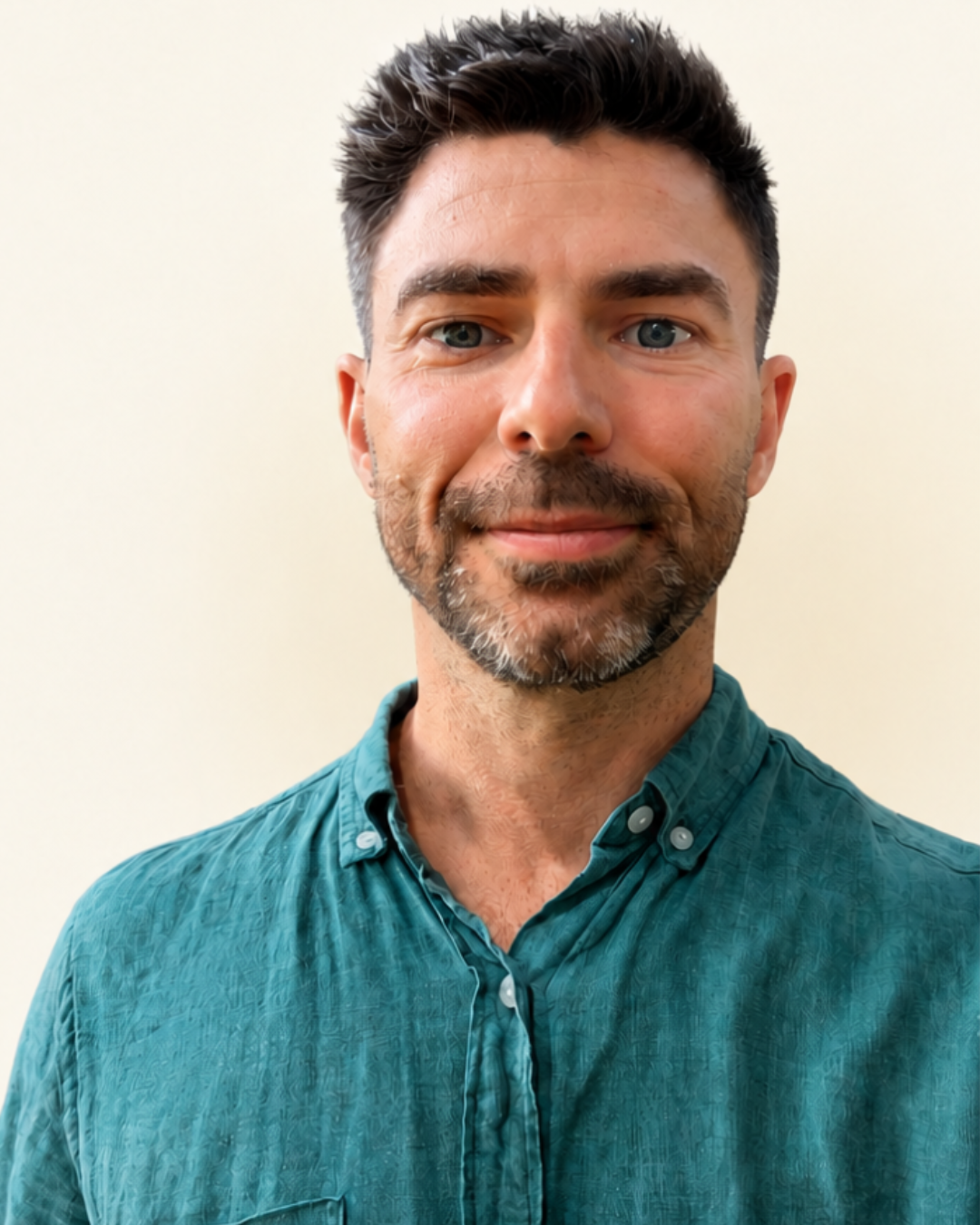
Meet Blake
Blake McPherson is the founder of McPherson AI, where he is building Observa, a platform focused on accountability and governance for AI agents capable of taking real world actions. Based in San Diego, California, he brings an unusual perspective to the field. His professional roots are in restaurant operations, where years of managing people, inventory, costs, customers, and unexpected problems shaped the way he thinks about technology today.
Where Operations Became the Foundation
Long before Blake McPherson was thinking about autonomous AI systems, he was learning how businesses work during the most revealing moments: when the shift is busy, something goes wrong, and there is no time to hide behind theory.
He entered the restaurant industry at 19, joining a major quick service restaurant chain and gradually moving from shift leader to assistant manager and eventually general manager. The progression gave him an education that could not be learned entirely from books or classrooms. He saw the daily realities of staffing, food costs, inventory, customer service, execution, and operational breakdowns.
Restaurant management taught him something that would eventually become central to his approach to artificial intelligence. A system is only useful if it works when people actually depend on it.
That perspective stayed with him as his interest in technology developed. He began exploring whether AI could do more than generate text or produce interesting demonstrations. He became interested in the repetitive operational work that consumed managers’ time and wondered whether technology could give ordinary operators some of the leverage that previously required larger teams or specialized technical resources.
He did not arrive in AI through the conventional route. He was not a software engineer with years of experience behind him before deciding to build an AI company. Instead, he learned by experimenting, building, testing, and gradually turning practical problems into working tools.
His first major step was creating AI skills designed around restaurant operations. What began as experimentation eventually became a collection of publicly available tools that attracted thousands of downloads. For Blake, that response mattered because it provided evidence that his experience outside traditional technology circles could still translate into something useful for other people.
The lesson was simple but important. His background was not something he needed to overcome before entering technology. It was part of what allowed him to see problems differently.
When AI Became More Than a Tool
The development of McPherson AI marked another shift. What had started as curiosity and personal experimentation became something Blake was willing to approach as a company, bringing greater attention to product quality, documentation, testing, security, and long term architecture.
But the more capable his AI systems became, the more his questions changed.
At first, the question had been what AI could automate. Eventually, it became what happens after AI is given the ability to act.
That distinction is at the heart of Observa.
A system that only produces information creates one kind of risk. A system that can send a message, update a database, change a record, book an appointment, or trigger another system creates another. Once an AI agent begins taking actions, intelligence alone is no longer enough to determine whether the system can be trusted.
Blake became increasingly interested in the space between an action being attempted and an outcome being verified. An API may return a successful response. An agent may report that it completed a task. Yet neither necessarily proves that the intended business result actually occurred.
That realization became a defining point in his work.
“I think there is an important opportunity to make this kind of infrastructure accessible beyond larger enterprises with dedicated security and compliance teams.”
Observa grew from that concern. Its purpose is to provide a layer for discovering agents, defining their authority, controlling consequential actions, verifying what happened afterward, and preserving evidence when something does not go according to plan.
The idea is grounded in a question Blake has been asking since his days in restaurant management: Did the system actually produce the result that was needed, and who is responsible when it did not?
Learning Through Evidence and Iteration
Moving into a highly technical field without a traditional engineering background has presented its own challenges.
Blake has had to learn unfamiliar concepts while simultaneously building products that need to work. That has meant accepting uncertainty rather than trying to disguise it. Instead of assuming that confidence is a substitute for knowledge, he has developed a process around testing, evidence, independent review, and breaking complicated problems into smaller pieces.
His approach is particularly influenced by his operational background. In a restaurant, a problem does not remain theoretical for very long. A staffing issue affects the shift. An inventory mistake affects costs. A service failure affects customers. Reality provides immediate feedback.
That experience shaped the way he works with AI.
He sees not knowing something as a reason to investigate more carefully, not a reason to stop. When he encounters something unfamiliar, he works through it, challenges his assumptions, tests the system, and looks for evidence that supports or disproves what he believes.
That discipline has also been necessary because he has been developing McPherson AI while maintaining the responsibilities of a full time operating career and raising a family. His circumstances have made efficiency important, but they have also clarified where his strengths lie.
He does not expect to compete with experienced software engineers by simply writing code faster. Instead, he brings an understanding of business problems and operational consequences, then uses modern AI tools to extend what he can accomplish.
There is a quiet confidence in that approach. It does not depend on having every answer at the beginning. It depends on being willing to keep learning while making sure that mistakes are discovered before they become expensive real world failures.
Building Accountability Into Action Taking AI
The deeper purpose behind Observa is not simply to make AI more capable. It is to make increasingly capable systems easier to understand and govern.
For Blake, accountability begins with knowing who or what has authority to act. It continues through understanding what was supposed to happen, what actually happened, and what evidence exists to establish the difference.
That framework reflects the way he thinks about leadership as well.
His years in operations taught him that responsibility cannot disappear simply because a process becomes complicated. Someone still needs to understand what is happening and take ownership when reality differs from expectations.
That principle now informs his thinking about autonomous systems.
As AI agents become more capable, organizations will increasingly rely on them to perform tasks that once required direct human involvement. The challenge is not only whether those systems can perform the work. It is whether people can retain meaningful visibility into their actions and consequences.
Observa is being built as a runtime-neutral governance and verification layer. OpenClaw was the first supported runtime, with n8n now entering beta validation and additional runtimes designed to connect through the same underlying Observa architecture.
Blake is particularly interested in making this infrastructure useful to organizations that may not have the extensive security, compliance, or engineering resources available to large enterprises. Small businesses, independent builders, and growing organizations are adopting AI agents too. They face many of the same questions about authority, verification, privacy, and responsibility.
His goal is to help answer those questions in practical terms.
Letting Real Users Shape the Product
One of the more meaningful developments in Blake’s journey has been the growing interest from people outside his immediate circle.
Builders, operators, and domain experts have begun reaching out to challenge assumptions, identify edge cases, contribute ideas, and test parts of the architecture. That has changed the nature of the work.
What began as something Blake was developing largely on his own is gradually becoming a conversation with a wider community.
For someone who values evidence over appearance, that matters. Outside perspectives expose weaknesses that are difficult to see when an idea remains inside one person’s head. They also provide a different kind of validation. It is one thing to believe a problem exists. It is another to have experienced people recognize the same problem and become interested in helping solve it.
That process is influencing the next stage of Observa. Rather than designing every component in isolation, Blake wants real workflows and real users to reveal where the architecture holds up and where it needs to change.
The philosophy is consistent with his broader approach: build something tangible, test it against reality, and allow the evidence to determine what comes next.
A Broader Idea of Success
For Blake, success is not defined entirely by company revenue or the size of a product.
Financial sustainability matters because he wants McPherson AI to become a durable company. But he also measures progress by whether people genuinely use what he builds, whether the work contributes useful ideas to the development of AI, and whether the company creates opportunities for his family.
There is also a personal dimension to the ambition. He wants to become the person capable of leading the company he is trying to build.
That means continuing to learn without losing the operator mindset that brought him into technology in the first place. Curiosity remains important, but so does skepticism. Testing assumptions matters more than simply moving quickly. Activity is not the same thing as progress.
That distinction may be one of the strongest connections between his restaurant background and his work in AI. In both environments, results eventually become visible. A plan can look excellent, but the real test comes when it meets reality.
Blake wants McPherson AI to remain grounded in that reality.
Building Toward a More Accountable AI Future
The immediate focus is Observa and its development from an early architecture and design partner stage into a product capable of governing action taking AI across different environments.
That includes expanding beyond its initial OpenClaw focus, strengthening verification and recovery capabilities, and exploring domain specific applications in areas where accountability and privacy are particularly important.
Healthcare is one example of a sector where the consequences of automated actions can be especially significant. For Blake, that makes the need for clear authority, evidence, and verification even more important.
But his ambitions extend beyond one platform or industry.
He sees a future in which McPherson AI can contribute to the infrastructure organizations need as autonomous systems become a larger part of everyday work. The goal is not to remove humans from the process. It is to give people greater leverage while preserving their ability to understand, oversee, and take responsibility for what technology does.
That balance is central to his vision.
He wants AI to expand what individuals and organizations can accomplish without creating a world in which responsibility becomes impossible to trace.
The Advantage of Starting Somewhere Unexpected
There is something fitting about Blake McPherson’s path from restaurant operations into AI governance.
His career began in an environment where systems are judged by what happens during a real shift. Years later, he is building technology around a similar principle: what matters is not simply what a system claims to have done, but whether the intended result actually happened.
His story also offers a broader lesson about entering unfamiliar territory. A traditional starting point can be useful, but it is not the only path toward meaningful work. Blake brought years of operational experience into a field where that perspective was not necessarily conventional, then used AI itself as a tool for expanding his technical capabilities.
The result is still being built. McPherson AI is at a stage where the architecture is being tested, challenged, refined, and shaped by people who see value in the problem.
For Blake, that process is part of the work rather than something separate from it.
“Do not assume that your starting point determines where you are allowed to go.”
It is a fitting reflection for someone whose own path has crossed several boundaries. Restaurant operations gave him an understanding of responsibility and real world execution. AI gave him new ways to apply that knowledge. Observa has given him a place to bring the two together.
What comes next will depend on continued learning, testing, and listening to the people who use what he builds. But the principle underneath it remains remarkably consistent: technology should create more possibility without making accountability disappear.
That is the question Blake McPherson carried from the restaurant floor into the world of autonomous AI, and it may be the one that continues to shape everything he builds.
For More Features
Be Featured in The Real Edit!
Every story has the power to shape how we see innovation, leadership, and purpose. If you’re a founder, creator, executive, or changemaker with a journey worth telling , we’d be honored to help you share it.
To inquire about being featured:
Email us at: info@realedit.site
Follow The Real Edit