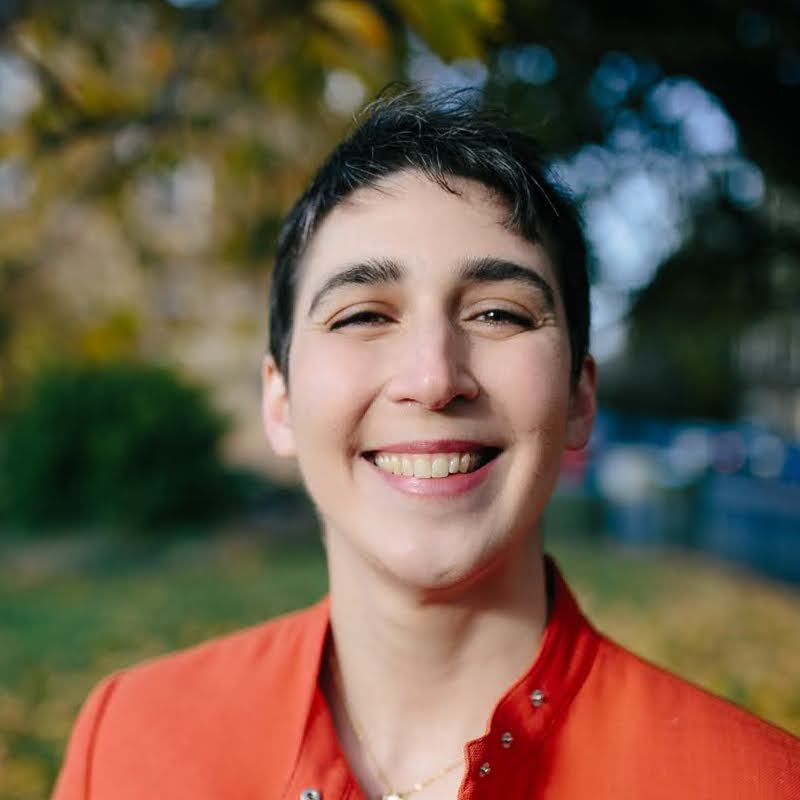
Meet Belle
Belle Espinal is the founder of Consult Espinal and a founder of Sisters of Economic Action, where she works at the intersection of economic strategy, community engagement, education, and economic justice. A consultant, social entrepreneur, and PhD candidate, she helps communities and organizations move from ideas and plans toward meaningful execution while working toward a broader vision of economic opportunity for marginalized communities.
Learning to Imagine More for Herself
Belle Espinal’s story begins with achievement, but achievement alone never fully explained what she was capable of becoming.
She received a full ride to college through the QuestBridge Scholarship, studied abroad four times during her undergraduate years, and worked three jobs while on campus. From the outside, it was a remarkable display of determination. Yet even while accomplishing things that required considerable discipline and ambition, she recognized that her understanding of her own possibilities remained limited.
That realization became one of the quieter turning points in her life. Success had taught her that she could work hard, but it had not necessarily taught her to imagine differently.
Her first professional path took her into education as an ESL teacher. There, she encountered problems that were larger than the classroom. She became increasingly uncomfortable with the conditions surrounding low literacy rates and the school to prison pipeline. Rather than simply accepting those realities as part of the environment in which she worked, she began asking what could be changed and where she could contribute.
That instinct would follow her through every stage of her career.
She began exploring entrepreneurial ventures connected to health and wellness and museum access. At the same time, she became interested in the ways family businesses functioned across very different circumstances. Some businesses had been passed down through generations, while others struggled to survive for even six months.
The contrast stayed with her. Business success was not simply about having a good idea or working hard. Access to resources, knowledge, networks, opportunity, and institutional support could determine whether an organization had the chance to survive.
Belle began to understand that the questions she was asking were not only individual questions. They were structural ones.
Seeing the Uneven Rules of Opportunity
After moving to Cleveland, Belle began a career in economic development. This gave her a closer view of how public resources were distributed and who was positioned to benefit from them.
The work allowed her to examine economic systems from within, including the ways public funding reached businesses and communities. What she saw troubled her.
She noticed a stark difference between the treatment of wealthy interests and the working class. Larger and wealthier organizations could receive significant incentives with relatively few conditions, while people and organizations seeking much smaller amounts of support could face extensive paperwork, uncertainty, and administrative barriers.
For Belle, these observations were not abstract policy concerns. They were connected to real people and the lives they were trying to build.
She also watched two senior Black women move to Cleveland in hopes of beginning a new chapter, only to lose their jobs within two years. Their experiences became part of a larger realization about the difficulties Black women can face when attempting to create stability, build careers, and establish themselves in environments that were not designed with their success in mind.
Cleveland’s reputation as a difficult place for Black women added another layer to what she was seeing. In 2020, the city had been named the worst city for Black women, a reality that Belle could not easily separate from the economic systems she was studying.
She began to see how economic opportunity, race, gender, employment, access to capital, and community wellbeing were deeply connected.
For years, the idea of a concrete ceiling had shaped her own professional experience. She had encountered barriers that felt less visible than a formal prohibition but just as limiting. Eventually, she reached a point where continuing along the same path no longer felt sustainable.
Her response was not to wait for someone else to create an opening.
She decided to create one herself.
Betting on Herself When the Path Narrowed
In August 2025, Belle became a full time entrepreneur and PhD student. The decision represented more than a career change. It reflected a deeper shift in how she understood her own capacity and responsibility.
Entrepreneurship became a practical response to the barriers she had experienced and witnessed. She recognized that creating a social enterprise could give her room to sustain herself while continuing to work on issues she cared about deeply.
The move required a different kind of confidence. Belle had already demonstrated that she could work hard. The challenge now was believing that she was capable of choosing a different path and building something around her own convictions.
That internal work remains important to her.
When circumstances become difficult, when she feels overwhelmed, or when someone makes a discouraging comment, she consciously returns to positive self talk. It is a simple practice, but one that speaks to a much larger part of her journey. Before she could ask other people to imagine better possibilities for themselves, she had to learn to extend that same imagination toward her own life.
Her philosophy is straightforward. When there is a gap, she believes someone should be willing to fill it. When there is something missing from the world that deserves to exist, she believes it can be created.
That perspective has shaped the way she approaches both entrepreneurship and social change.
She does not see systems and entrepreneurship as opposing forces. Her experience in economic development taught her the value of working inside systems, understanding how they function, and identifying where change can happen. Her entrepreneurial work gives her another way to respond when existing structures are not meeting people’s needs.
For Belle, both approaches belong in the same conversation.
Turning Resources Into Possibility
Today, Belle works through Consult Espinal, helping communities and organizations turn plans into execution through economic strategy, community engagement, and learning systems. Her work is grounded in the belief that good ideas need practical support if they are going to become useful outcomes.
That same principle is reflected in her work with Sisters of Economic Action.
One of the achievements she is most proud of is the nonprofit’s ability to provide workforce scholarships and operating grants to other nonprofits. These programs matter to her because she understands how difficult it can be for smaller organizations and working people to access funding.
The work is not simply about distributing resources. It is about helping people gain access to information and opportunities that can change what they believe is possible.
Belle measures success differently from conventional business metrics. For her, success is closely connected to the number of people who receive good, empowering information.
That belief also shapes the cohorts she runs. She describes them as educational, but the meaning goes beyond instruction. The gratitude she receives from participants after a program ends reminds her why the work matters.
Her approach is rooted in empathy, love, and compassion. Those values influence how she works with communities and how she thinks about leadership.
Information can be a form of access. Education can become a form of economic power. A scholarship can create breathing room. A grant can allow a small organization to keep serving its community. A better understanding of a system can help someone navigate it with greater confidence.
These are the smaller mechanisms through which larger social change can begin.
From Cleveland to a Wider Economic Justice Vision
Belle’s ambitions now extend well beyond the communities where her work first took shape.
She has begun learning Arabic and hopes to develop international strategies focused on women’s economic justice. Her long term vision is to build an international economic justice agency that partners with countries and works alongside some of the world’s most marginalized communities.
The scale of that vision is significant, but it is consistent with the direction of her life. Her work has always moved toward questions of access, power, resources, and possibility.
What changes when families have more choices?
What happens when communities have greater control over resources?
What becomes possible when people are given information that institutions have historically made difficult to access?
These questions sit beneath her professional work and her academic journey.
Her commitment to economic justice is also personal. She grew up in a low income single parent household and watched her mother make professional and personal sacrifices while raising her children. Those experiences gave Belle an early understanding of what limited choices can mean for a family.
Her work is therefore connected to a simple hope: that families in 2026 should have more options than they had before.
Creating those options requires more than individual determination. It requires changes in systems, access to resources, education, and a willingness to question structures that have become normalized.
Belle is interested in all of those layers.
A Larger Dream Requires a Larger Imagination
As Belle continues balancing entrepreneurship, consulting, doctoral study, and her growing interest in international economic justice, she is also continuing to develop the mindset required for the future she imagines.
Her advice to others is rooted in the same lesson she has had to learn herself: do not allow the limits around you to become the limits inside you.
She wants people to dream beyond what seems immediately practical. For her, imagination is not separate from action. It is often where action begins.
That philosophy is particularly meaningful given her own journey. She once had significant academic achievements and professional opportunities but still struggled to see the full range of what she could accomplish. Her evolution has involved not only changing careers but changing the scale of what she believes is possible.
She now sees herself working across communities and eventually across countries, connecting economic justice with practical strategies that help people build stronger lives.
The journey is still unfolding. She is learning Arabic, pursuing her PhD, growing her consulting practice, and continuing to develop organizations focused on opportunity and access.
There is no indication that she sees the work as finished.
Choosing Possibility Over Permission
At the center of Belle Espinal’s story is a willingness to question the boundaries presented to her.
She has moved from education into entrepreneurship, from entrepreneurship into economic development, and from observing systems to actively building alternatives within and around them. Along the way, she has learned that achievement is not only about reaching a particular position. It is also about deciding what kind of world that position allows you to help create.
Her understanding of leadership is grounded in how people should treat one another. She believes in extending to others the same respect and consideration she would hope to receive herself.
That principle gives her work a human center.
Belle is not simply interested in economic systems as structures. She is interested in what those systems mean for actual people, particularly those who have historically had fewer choices and fewer opportunities to shape the conditions around them.
Her story ultimately comes back to imagination. The ability to picture something better, the courage to pursue it, and the willingness to build when an existing path is not enough.
For someone who once realized that her own definition of possibility was too small, that may be one of the most important transformations of all.
For More Features
Be Featured in The Real Edit!
Every story has the power to shape how we see innovation, leadership, and purpose. If you’re a founder, creator, executive, or changemaker with a journey worth telling , we’d be honored to help you share it.
To inquire about being featured:
Email us at: info@realedit.site
Follow The Real Edit