Meet Anna
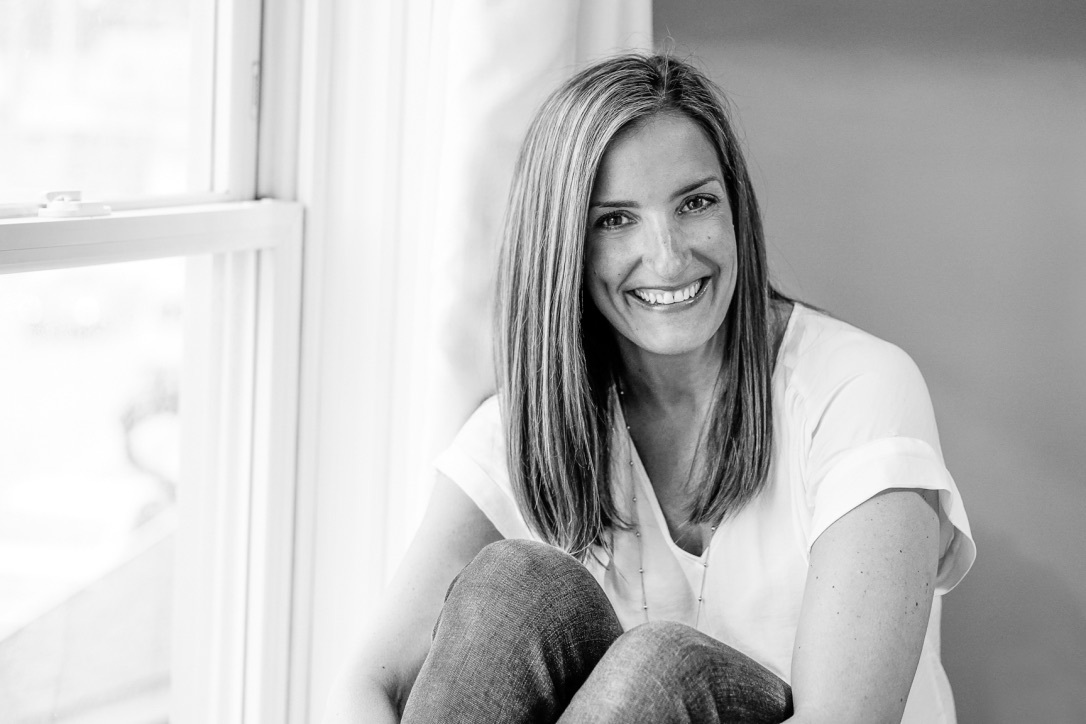
Anna Iles is a Hong Kong based futures thinker, facilitator, coach, and founder of Flux Compass. Her work sits at the intersection of strategic foresight, conflict transformation, social inclusion, and community wellbeing. Across more than fifteen years, she has worked with organisations, educators, youth networks, and communities navigating uncertainty in fragile and rapidly changing contexts.
Learning to Listen Beneath the Surface
There are people who move through the world collecting answers, and there are people who spend their lives learning how to ask better questions. Anna Iles belongs firmly to the second group. Her work is not rooted in prediction or certainty. It is rooted in listening. Listening to people living through conflict. Listening to communities carrying grief and displacement. Listening closely enough to notice what remains possible, even when systems seem fractured beyond repair.
Throughout her career, Anna has returned to one belief again and again: that imagination is not a luxury reserved for stable times. It is often most necessary when people feel trapped by fear, violence, or uncertainty. The future, in her view, is not an abstract concept. It is something people shape every day through conversation, relationships, and the stories they tell themselves about what can still emerge from difficult circumstances.
Her work today spans strategic foresight, trauma aware facilitation, youth engagement, systems transformation, and coaching. Yet beneath the complexity of the projects lies something deeply human. Anna helps people reconnect with agency when the world around them feels unstable.
From Environmental Journalism to Systems Thinking
Anna’s earliest professional experiences began in India as a journalism intern and freelancer with Down To Earth, a science and environment magazine focused on issues shaping everyday life. She researched land use, housing, river sanitation, and the rapid expansion of mobile networks. The work exposed her to the ways politics, infrastructure, ecology, and inequality intersect in ordinary communities.
Those early years shaped the lens she still carries today. Rather than viewing environmental issues in isolation, she became interested in systems and relationships. She saw how policy decisions filtered down into lived realities, often unevenly and unfairly. Most importantly, journalism taught her how to listen carefully to people whose stories rarely appeared in official narratives.
Back in the United Kingdom, she moved into the charity and social sector, working across communications and advocacy connected to gender equality, public health, mental health, and environmental justice. These roles deepened her understanding of how institutions speak about communities and, just as importantly, how often they fail to hear them.
Her transition into futures thinking felt less like a career pivot and more like a natural continuation of the same work. Journalism had taught her how to document change. Futures thinking invited her to explore where those changes might lead.
“The journey from social impact journalist and editor to futures thinker seemed a natural progression to me, As a journalist and editor, you report on change, and support others to share stories about the changes they’re witnessing. As a futurist, you ask and support others to ask where critical changes might lead.”
That perspective eventually led her to Forum for the Future, where she worked first as editor of Green Futures magazine and later as a sustainability advisor specialising in futures thinking. Immersed in conversations around climate, food systems, energy, cities, and innovation, she developed approaches that helped organisations think beyond immediate pressures and consider long-term societal shifts.
Later, she launched and curated the Futures Centre in Singapore, a horizon scanning platform that combined trend monitoring, digital communities, and immersive experiences. The work consolidated her identity as someone who could help organisations make sense of uncertainty without reducing complexity into simplistic solutions.
The Moment That Changed the Questions
In 2014, Anna attended the inaugural Women on the Move Awards in London, an event recognising migrant women standing against injustice and systemic violence. One story in particular stayed with her. Tatiana Garavito, a young Latin American migrant woman, spoke about her work supporting women experiencing abuse and exclusion in the United Kingdom.
The experience altered the way Anna understood leadership, innovation, and systems change. She realised that many institutions still rely on narrow assumptions about who holds knowledge and authority. Communities living closest to violence and inequality were often treated as beneficiaries rather than collaborators.
The event became a turning point in how she approached foresight and organisational transformation. Diversity of perspective no longer felt like a secondary consideration. It became foundational.
“I realised that diversity of perspective is not a nice to have for innovation or policy, It is the backbone of any society that hopes to be resilient.”
That insight led her deeper into decolonial thinking, not simply as theory, but as practice. She began asking more difficult questions within her work. Whose knowledge is centred? Who carries the risks of decisions made elsewhere? Who is invited to shape the future, and who is excluded from it?
Around the same time, Anna left the relative stability of Forum for the Future and founded Flux Compass in Hong Kong. The decision required stepping directly into uncertainty herself. Alongside building her consultancy, she also trained as a certified life coach, a process she describes as personally transformative.
The combination of strategic foresight and coaching became central to her work. It allowed her to move beyond organisational strategy and engage more deeply with how people experience uncertainty emotionally, psychologically, and relationally.
Carrying Trauma Without Letting It Define the Future
Some of the most defining experiences in Anna’s life did not happen in conference rooms or strategy workshops. They emerged from deeply personal encounters with violence, vulnerability, and recovery.
Growing up, she became acutely aware of gender based discrimination and violence, both intellectually and personally. As a teenager, she experienced grooming and abuse by a trusted member of her community, an experience that shaped her understanding of power, safety, and survival.
Rather than allowing those experiences to narrow her world, she found inspiration in writers, artists, and adventurers who refused to accept limiting narratives about identity and possibility. Figures such as Eartha Kitt, Jeanette Winterson, Dervla Murphy, and Kai Cheng Thom showed her that creativity and tenderness could coexist with resilience.
Her own life gradually reflected similar instincts. Through creative writing, coaching, and experiences like a solo month-long cycling journey across Kyrgyzstan, she began reclaiming voice, direction, and agency on her own terms.
Another moment that profoundly shaped her work came during a UNICEF mission in Iraq in 2018. While speaking with teenagers in a refugee camp about their outlook toward 2030, she asked a simple question about the future. One boy quietly answered with a single word: “War.”
The response stayed with her long after she left.
In that moment, Anna recognised how trauma affects the human ability to imagine alternatives. When survival dominates everyday life, the future can begin to feel closed off entirely. Since then, much of her work has explored how futures thinking might support healing rather than simply strategic planning.
She has spent recent years examining how trauma informed approaches can help communities process grief, rebuild relationships, and create space for renewed agency. Through the Futures for Conflict Transformation community she convenes, practitioners and peacebuilders explore how foresight methods can be adapted for fragile and conflict affected settings with greater sensitivity and care.
Building Spaces Where People Feel Seen
Today, Anna’s work stretches across continents and communities. Through Flux Compass and her collaborations with organisations such as UNICEF Iraq, GGGI, Women’s Worldwide Web, and youth led climate initiatives, she facilitates conversations that help people move through uncertainty with greater clarity and connection.
What distinguishes her work is not simply the strategic frameworks she uses, but the atmosphere she creates around them. Her focus is on designing spaces where people feel psychologically safe enough to speak honestly, imagine differently, and reconnect with their own agency.
This is especially visible in her work with women and young people living through conflict and displacement. In partnership with Women’s Worldwide Web and Code To Inspire, Anna co-created a twelve week programme supporting Afghan women as they explored questions of wellbeing, values, identity, and future direction amid profound instability.
Participants described moving from hopelessness toward self compassion and calm courage. For Anna, those shifts matter deeply because they reveal something larger than individual transformation. They reveal the possibility of rebuilding connection and meaning even under immense pressure.
Her work also extends into education and cultural exchange. One particularly meaningful initiative connects students from Sanjan Nagar School in Lahore with students from St Stephen’s School of Sanctuary in Bradford, her hometown in the United Kingdom. Through shared creative activities such as recipe exchanges and collaborative crochet projects, the students build relationships grounded in everyday human connection rather than political division.
The project reflects Anna’s broader philosophy that peacebuilding often begins with small acts of shared imagination and care.
Alongside community centred work, she continues advising major organisations on long-term strategy, governance, and systems change. Whether facilitating a youth consultation for a global institution or holding conversations with women in refugee settings, her underlying goal remains remarkably consistent: helping people recognise themselves as co authors of the future rather than passive recipients of change.
A Practice Rooted in Curiosity and Care
Anna speaks openly about the challenges of sustaining this kind of emotionally demanding work while raising three children and managing an international consulting practice. Movement has become one of her anchors. Running, swimming, and yoga help regulate her nervous system and create moments of steadiness amid constant travel and complexity.
Writing also remains essential. Notes, poetry, fragments, and reflections allow her to process what she witnesses across different communities and contexts. Increasingly, she is dedicating time to distilling these experiences into more shareable forms, including toolkits, papers, and future academic research.
Her next chapter includes expanding work with women and youth in conflict affected communities, including a new project with Sudanese women in Kakuma refugee camp in Kenya. She is also developing ReStory, a practitioner led initiative supporting decolonial transformation within museums, galleries, libraries, and archives.
At the centre of all these projects is a belief that communities experiencing collapse are not defined solely by crisis. They remain capable of authorship, creativity, and renewal.
The Quiet Work of Expanding Possibility
Anna’s work does not offer easy optimism. She has spent too much time alongside communities facing war, displacement, trauma, and systemic inequality to rely on simplistic hope. What she offers instead is something quieter and perhaps more durable: the belief that people can still shape meaning together, even in fractured circumstances.
Again and again, her career has returned to the same essential practice of making space. Space for difficult conversations. Space for grief. Space for imagination. Space for people who have historically been excluded from decision making to recognise their own authority and insight.
In a world increasingly shaped by uncertainty, that work feels both deeply practical and profoundly human.
As Anna puts it,
“You do not have to wait until circumstances shift to start shaping futures you care about. Begin where you are, with the communities already around you, and treat each small experiment, each conversation, or act of care, as part of a longer arc of change.”
For More Features
Be Featured in The Real Edit!
Every story has the power to shape how we see innovation, leadership, and purpose. If you’re a founder, creator, executive, or changemaker with a journey worth telling , we’d be honored to help you share it.
To inquire about being featured:
Email us at: info@realedit.site
Follow The Real Edit