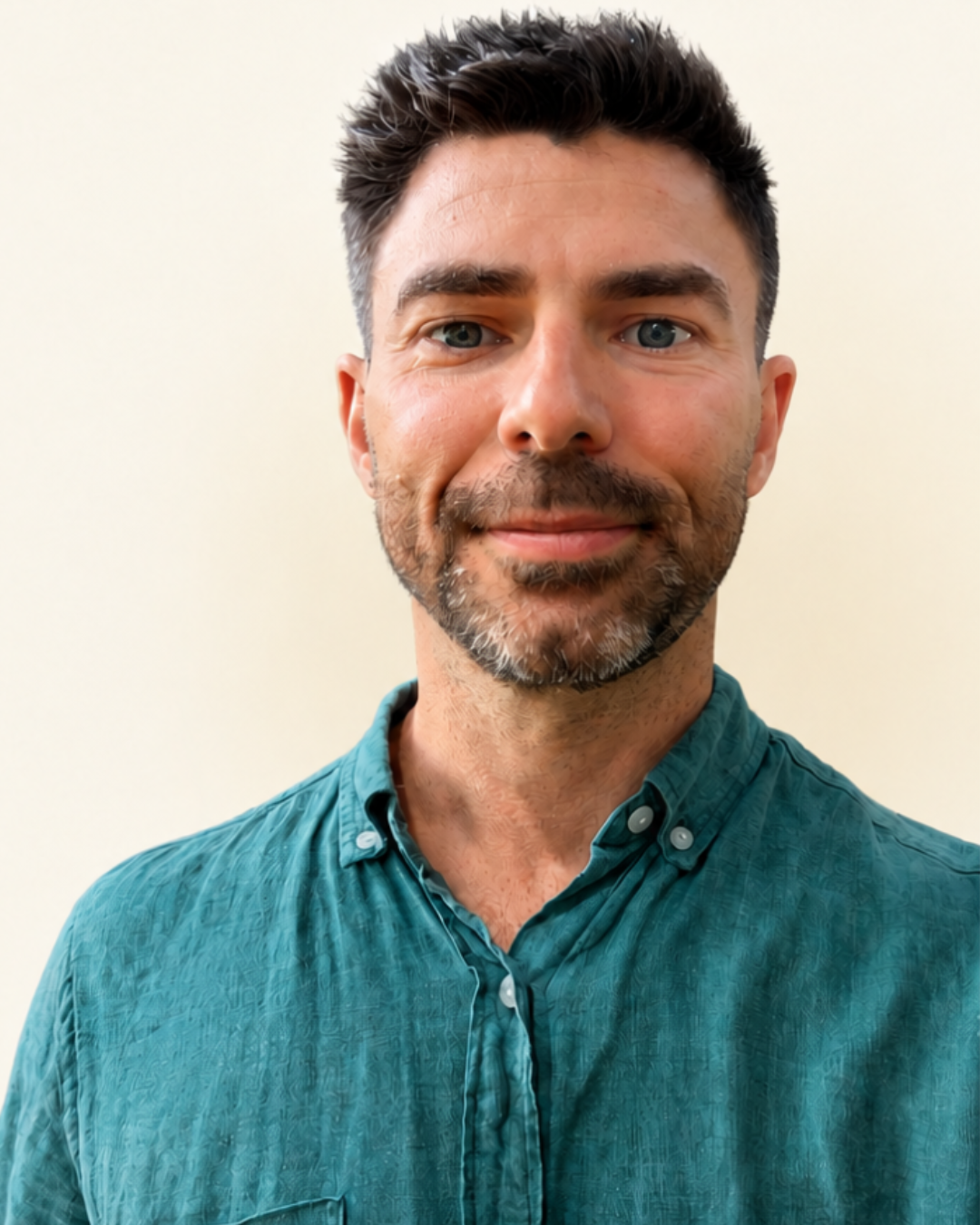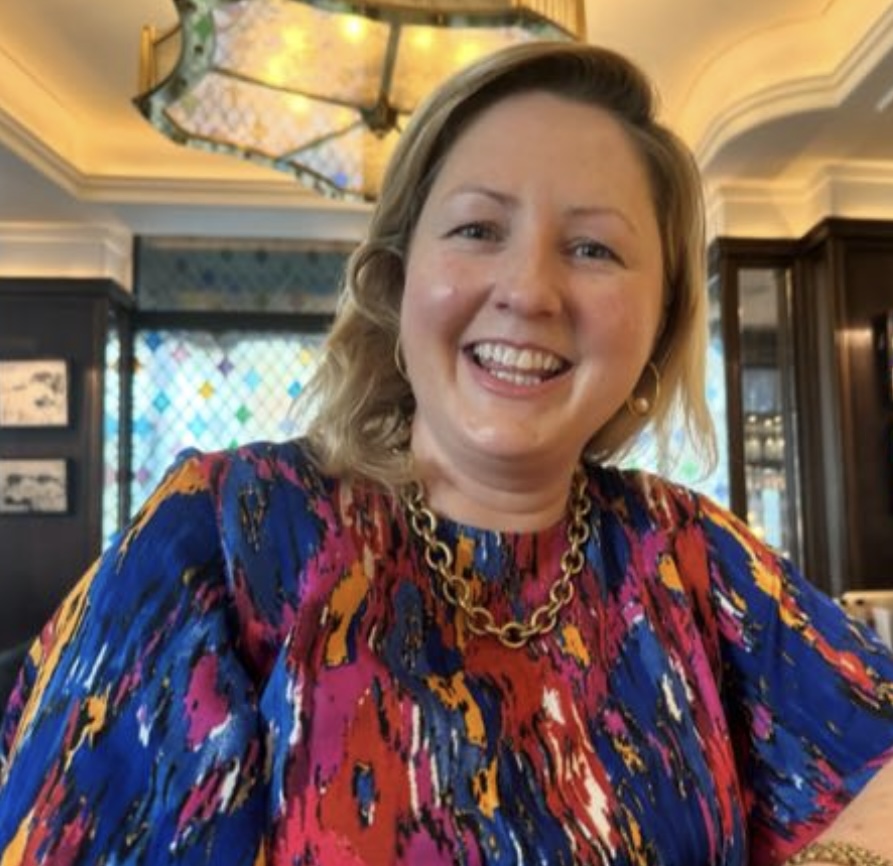
Meet Angeliki
Angeliki Vasileiadou is a Founder and Managing Consultant based in Kavala, Greece. At 26, she leads NorthBlue Consulting, working with SMEs on strategy, digital transformation, technology, AI, and new ways of working. She is also the author of The Gen Z Outlook, where she explores the relationship between younger professionals and the workplaces they are entering.
A Future She Refused to Wait For
Some people spend years trying to fit comfortably into the world they inherit. Angeliki Vasileiadou has always been more interested in asking whether that world could be improved.
For her, progress is not an abstract idea. It is practical. It is about making things better, smarter, and more relevant to the reality businesses and people are living in. Her curiosity moves naturally toward technology, artificial intelligence, strategy, and the ways organizations respond when the world around them changes.
But behind her professional interests is something more personal. Angeliki has been building a life around independence, ownership, and the freedom to make choices for herself.
At 26, she has already worked across consulting and European projects, represented organizations internationally, founded NorthBlue Consulting, and written her first book. Yet her story is not simply about reaching milestones early. It is about refusing to believe that age should determine when someone is allowed to take their own ideas seriously.
She is interested in what happens when younger professionals stop waiting for permission, while also recognizing that having a voice requires responsibility.
That balance between questioning and learning, ambition and humility, independence and accountability has become central to the way she sees her work. She wants to contribute to what comes next, but she does not believe progress means dismissing everything that came before.
Instead, she believes in learning from experience, understanding the systems already in place, and having the courage to question them when they no longer serve the people within them.
Learning to Trust Her Own Direction
Angeliki’s path toward entrepreneurship was built through experience rather than a single dramatic decision. Her career gave her opportunities to work within complex consulting environments and European projects, where she gained exposure to different organizations, ideas, and ways of thinking.
Those experiences helped her understand the practical side of business. They also gave her something equally important: confidence.
She learned that being relatively young did not automatically mean she had nothing valuable to contribute. Through her work, she earned the trust of experienced business leaders and discovered that credibility is not something that should be assumed. It is something built through preparation, responsibility, and the quality of the work itself.
That lesson became particularly meaningful as she thought about her own generation.
Gen Z has entered workplaces at a time of rapid technological change, shifting expectations, and increasing uncertainty about what careers will look like in the future. Yet younger professionals often find themselves caught between two conflicting messages. They are told that their ideas matter, but they are also expected to prove themselves before they are taken seriously.
Angeliki understands that tension personally.
She does not believe younger people should expect influence simply because they belong to a new generation. At the same time, she does not believe they should remain silent until they have accumulated decades of experience.
For her, the answer lies somewhere between those extremes. Younger professionals should learn, contribute, and take responsibility. But they should also be willing to bring forward perspectives that may not yet exist inside established systems.
That belief eventually became part of her identity as both a consultant and a writer.
Her career gave her the foundation to create NorthBlue Consulting, but the decision to build something independently also represented a deeper shift. It meant trusting that she could create a professional path without completely reshaping herself to match someone else’s definition of what a professional should look like.
That distinction matters to her.
There is often an unspoken pressure to become more conventional in order to be taken seriously. People learn which opinions are safe to express, which parts of themselves should remain hidden, and how to adapt their personalities to fit the expectations of professional environments.
Angeliki has chosen a different approach. She values professionalism, but she does not believe it requires erasing individuality.
Her ambition has never been to become a copy of someone who succeeded before her. She wants to learn from those who came before, while leaving room to build something with her own identity.
The Courage to Question the Blueprint
Curiosity is one of the strongest threads running through Angeliki’s story.
She is drawn to change rather than intimidated by it. New technology, new generations, and new ways of working represent questions to explore rather than threats to avoid.
That mindset has also given her what she describes as a little rebellion.
For Angeliki, rebellion is not about disagreement for its own sake. It is about refusing to accept an explanation simply because something has always been done that way. It is the willingness to pause and ask whether an inherited process still makes sense.
She believes that many of the systems people work within were created for a different time. Markets change. Technology changes. Expectations change. The people entering workplaces change as well.
The challenge, then, is not simply to protect the old structure. It is to understand what remains valuable and recognize what needs to evolve.
This perspective is especially important in her relationship with Gen Z.
The conversation around generations can easily become simplistic. Older generations may see younger professionals as impatient or inexperienced. Younger people may see established workplaces as resistant to change.
Angeliki is interested in closing that distance rather than widening it.
Through The Gen Z Outlook, she has tried to create a more thoughtful conversation about the generation she belongs to. She wants businesses to listen to younger voices, but she also believes Gen Z has a responsibility to demonstrate value through action.
As she puts it,
“Earn your credibility, but don’t erase yourself in the process.”
That idea captures much of her approach.
Credibility matters. Experience matters. Responsibility matters. But none of those things require a person to surrender their perspective.
Angeliki believes younger professionals can question systems while still respecting the people who built them. They can admit what they do not know while contributing what they see differently. They can learn from previous generations without assuming that every existing method should remain unchanged.
For her, progress is not a battle between generations. It is a conversation about how different experiences can meet the realities of the present.
Building NorthBlue on Her Own Terms
NorthBlue Consulting emerged from Angeliki’s desire to build something independently.
The consultancy reflects many of the questions that have shaped her professional life. How can businesses adapt without becoming overwhelmed by change? How can smaller companies access strategic and technological support that often feels designed for much larger organizations? How can ideas move beyond presentations and become practical action?
Her work focuses on helping businesses examine what is no longer working and consider what needs to change.
This can involve strategy, digital transformation, technology, artificial intelligence, innovation, and organizational structures. But beneath these areas is a simpler purpose: helping businesses become more prepared for the world they are already entering.
Angeliki is particularly interested in SMEs.
Smaller and medium sized businesses often face the same changes affecting larger organizations, but they do not always have the same resources available to respond. Technology develops quickly. Customer expectations shift. New markets emerge. AI is changing conversations about work and productivity.
For many business owners, the question is not whether change is coming. It is how to respond to it without losing direction.
Through NorthBlue, Angeliki wants modern consulting to feel more accessible and relevant to those businesses.
She is also interested in supporting new entrepreneurs who have ideas but need help turning them into structured and sustainable businesses. This reflects her own experience of moving from professional work toward building something of her own.
Entrepreneurship, in her view, is not simply about having an exciting idea. It also requires responsibility, structure, adaptability, and the willingness to continue when the path becomes less clear.
Her work is therefore connected to a larger belief that good ideas need practical foundations.
Technology alone does not solve every problem. Strategy without execution does not create change. Innovation without understanding people can quickly become disconnected from reality.
Angeliki is interested in the spaces between these ideas and in helping close the gaps that often prevent progress from becoming meaningful.
When Ambition Meets the Reality of Uncertainty
Angeliki speaks openly about ambition, but she does not present it as a perfectly balanced or effortless experience.
She describes herself, with humor, as being somewhat dramatic about her goals. Once she decides on a future she wants, giving up can feel more difficult than continuing.
That determination has helped carry her through challenging periods, but it has also required her to reconsider what ambition means.
For years, pushing constantly could feel closely connected to progress. Like many ambitious people, she associated forward movement with doing more, working harder, and continuing regardless of exhaustion.
Balance, she admits, is still something she is learning.
What keeps her moving is not the belief that every moment must be productive. Instead, she has developed a different relationship with uncertainty.
She sees chaos as part of the process.
Difficult periods do not automatically mean she has chosen the wrong path. Sometimes they simply mean that she is in the middle of something that has not yet taken shape.
Her response is to adapt.
She allows herself the difficult moment, the frustration, and the uncertainty. Then she looks for the next move.
One of the deeper motivations behind her ambition is her awareness of time. Angeliki thinks seriously about the fact that life is limited, and rather than allowing that awareness to stop her, she uses it to gain perspective.
When something feels overwhelming, she asks herself what she would regret more: trying and failing or never trying at all.
The answer often brings her back to action.
She explains this outlook clearly when she says,
“I’m far more afraid of reaching the end of my life knowing I settled for one I didn’t choose than I am of struggling while trying to build the one I actually want.”
It is a revealing statement because it shows that her ambition is not only about achievement.
It is about ownership.
She wants the freedom to decide what kind of work she does, where she lives, what ideas she pursues, and how her future takes shape. Financial independence matters to her, but so does freedom of movement and the ability to make choices without feeling trapped by circumstances.
She does not dream of a life without work.
In fact, she enjoys working and creating.
The difference is whether that work is chosen.
For Angeliki, success means reaching a point where she can work because she wants to, not because she has no other option. It means having greater ownership over her time, decisions, and direction.
A Voice for a Generation Still Finding Its Place
Writing The Gen Z Outlook became another way for Angeliki to explore the questions already present in her professional life.
The book gave her an opportunity to turn personal observations and experiences into a wider conversation.
She has seen how quickly generations can misunderstand one another. Younger people may feel dismissed before they have the opportunity to contribute. More experienced professionals may feel that younger employees underestimate the value of experience.
Neither perspective, on its own, tells the whole story.
Angeliki wants to create more room for both.
She believes businesses benefit when younger professionals are heard, particularly because they are entering workplaces with different experiences of technology, communication, education, and social change.
At the same time, she does not believe that having a voice means expecting immediate agreement.
A voice carries responsibility.
It requires preparation. It requires contribution. It requires the willingness to listen as well as speak.
This is where her perspective becomes more nuanced than a simple call for Gen Z to challenge everything.
She believes in questioning systems, but she also believes in earning trust.
She encourages younger people to learn from previous generations, admit when they do not know something, and remain open to experience. But she also encourages them not to confuse respect with silence.
That distinction is important.
Respecting experience does not mean abandoning curiosity. Learning from others does not mean following every blueprint they leave behind.
Angeliki wants her generation to participate in shaping the future rather than waiting outside the rooms where decisions are being made.
Her message is not that young people must have all the answers.
It is that they should not wait until they feel completely ready before they begin contributing.
The Values Behind the Work
Angeliki’s professional decisions are guided by a set of values that feel closely connected to one another: curiosity, independence, adaptability, kindness, responsibility, and a willingness to question.
Her parents have been particularly important influences in her life. She credits them with shaping how she thinks about resilience, responsibility, and the importance of building a life for oneself.
She is also inspired by women who build careers, businesses, and independence without necessarily receiving widespread recognition.
That everyday determination matters to her.
She admires public figures who have built their own paths and challenged conventional expectations, but she is not interested in reproducing another person’s journey.
She takes inspiration from people who are ambitious, outspoken, and resilient, then considers what those qualities might mean within her own life.
This reflects one of the central ideas behind everything she is building: leaving a personal signature.
She does not want to simply inherit a professional blueprint and follow it without question.
She wants to understand it first.
Then she wants to decide which parts belong in her own story.
That philosophy connects NorthBlue, her writing, and her broader entrepreneurial ambitions.
Each is an attempt to create rather than merely follow.
NorthBlue Is Only the Beginning
Angeliki does not see NorthBlue Consulting as the final destination.
She sees it as the beginning of a much larger entrepreneurial journey.
Her goal is to grow the consultancy into a recognized space for helping businesses adapt to new markets, technologies, generations, and ways of working. She wants to continue making strategic, digital transformation, and innovation support more accessible to SMEs.
But her vision extends beyond consulting.
She has ideas for businesses and digital products and hopes, over time, to build a group of companies and ventures under one umbrella.
The desire behind this is not simply expansion.
Angeliki is interested in creating across different industries and exploring different ideas rather than limiting herself to a single professional identity.
She also hopes to grow internationally, participate in European projects, develop her own products, and see The Gen Z Outlook published.
There is a sense of openness in the way she speaks about the future.
She has direction, but she is also willing to adapt.
That may be one of the most important qualities in her story. She is ambitious about where she wants to go, yet her understanding of progress leaves room for change.
She does not believe a person must know every detail of the journey before beginning.
Sometimes the next step becomes visible only after taking the current one.
Her preferred mindset is simple: she will figure it out.
Not because every challenge will be easy, but because uncertainty does not have to become a reason to remain still.
Leaving a Signature on What Comes Next
At 26, Angeliki Vasileiadou is still at the beginning of her professional story. She recognizes that herself.
She is proud of what she has built, but she is more interested in what can still be created.
There is a dream she mentions that reflects her desire to make an early and visible contribution. She would one day like to be included in the Forbes 30 Under 30 list, not simply for the recognition itself, but because she sees it as evidence that she has built something meaningful enough to leave a mark.
Yet the deeper theme of her journey is larger than any list or title.
It is about choosing a life rather than settling into one by default.
It is about respecting experience without becoming limited by tradition.
It is about allowing younger voices into the conversation while recognizing that influence must be supported by meaningful work.
And it is about continuing to ask questions.
Why are things done this way?
Who decided this was the only option?
What could happen if we built something better?
Angeliki does not claim to have every answer. Her story is still unfolding, and she remains aware of how much there is to learn.
But perhaps that is precisely what makes her perspective feel grounded.
She is not waiting to become fearless before moving forward. She is learning to continue despite uncertainty.
Through NorthBlue Consulting, her writing, and the ideas she hopes to bring to life, she is creating space for a different kind of professional journey, one built around curiosity, responsibility, independence, and the courage to question what already exists.
For Angeliki, the future is not something to watch from a distance. It is something people participate in shaping.
And as she continues to build, adapt, question, and begin again when necessary, she carries one belief with her: learn from what came before, take responsibility for what you bring, and have the courage to leave your own signature on what comes next.
For More Features
Be Featured in The Real Edit!
Every story has the power to shape how we see innovation, leadership, and purpose. If you’re a founder, creator, executive, or changemaker with a journey worth telling , we’d be honored to help you share it.
To inquire about being featured:
Email us at: info@realedit.site
Follow The Real Edit