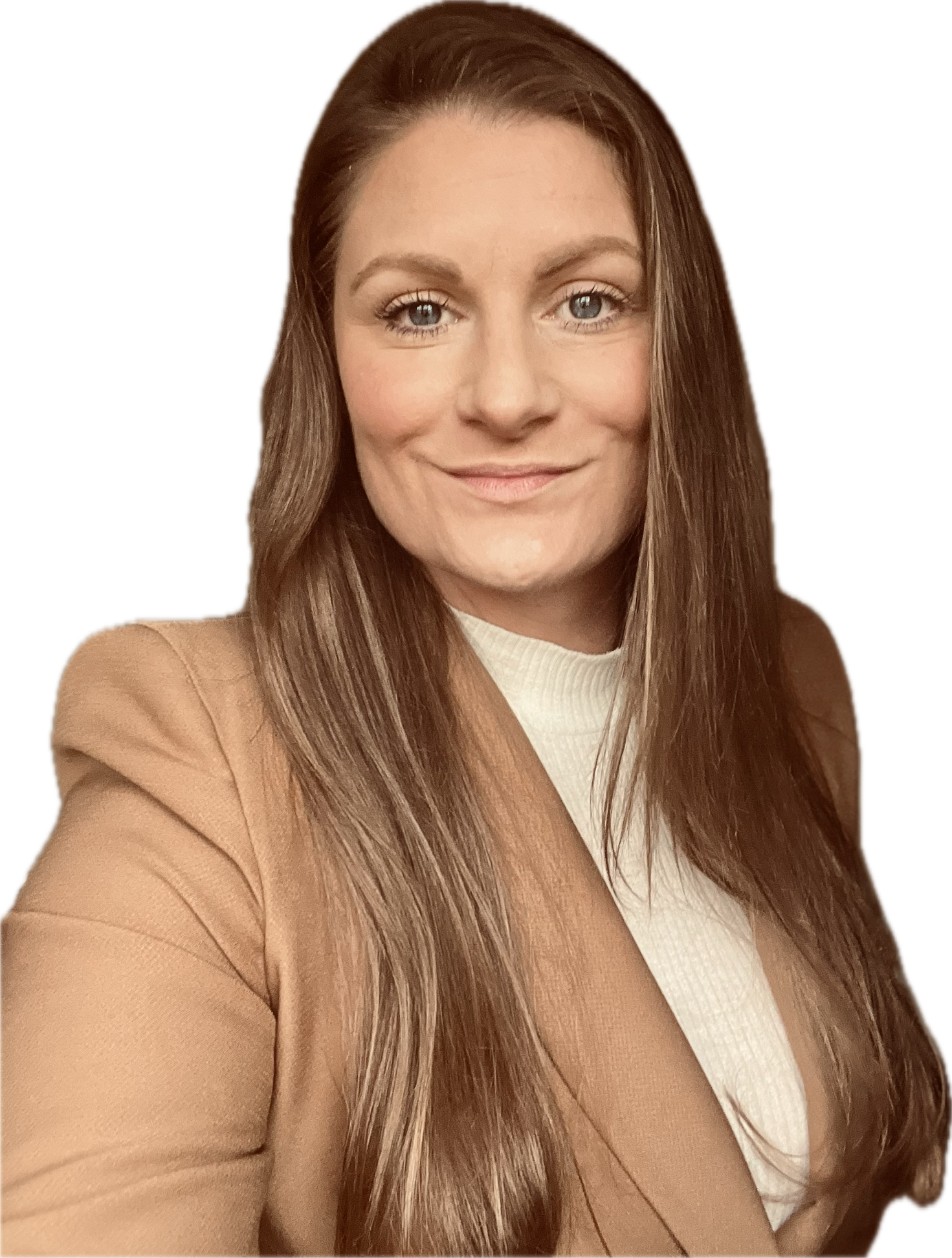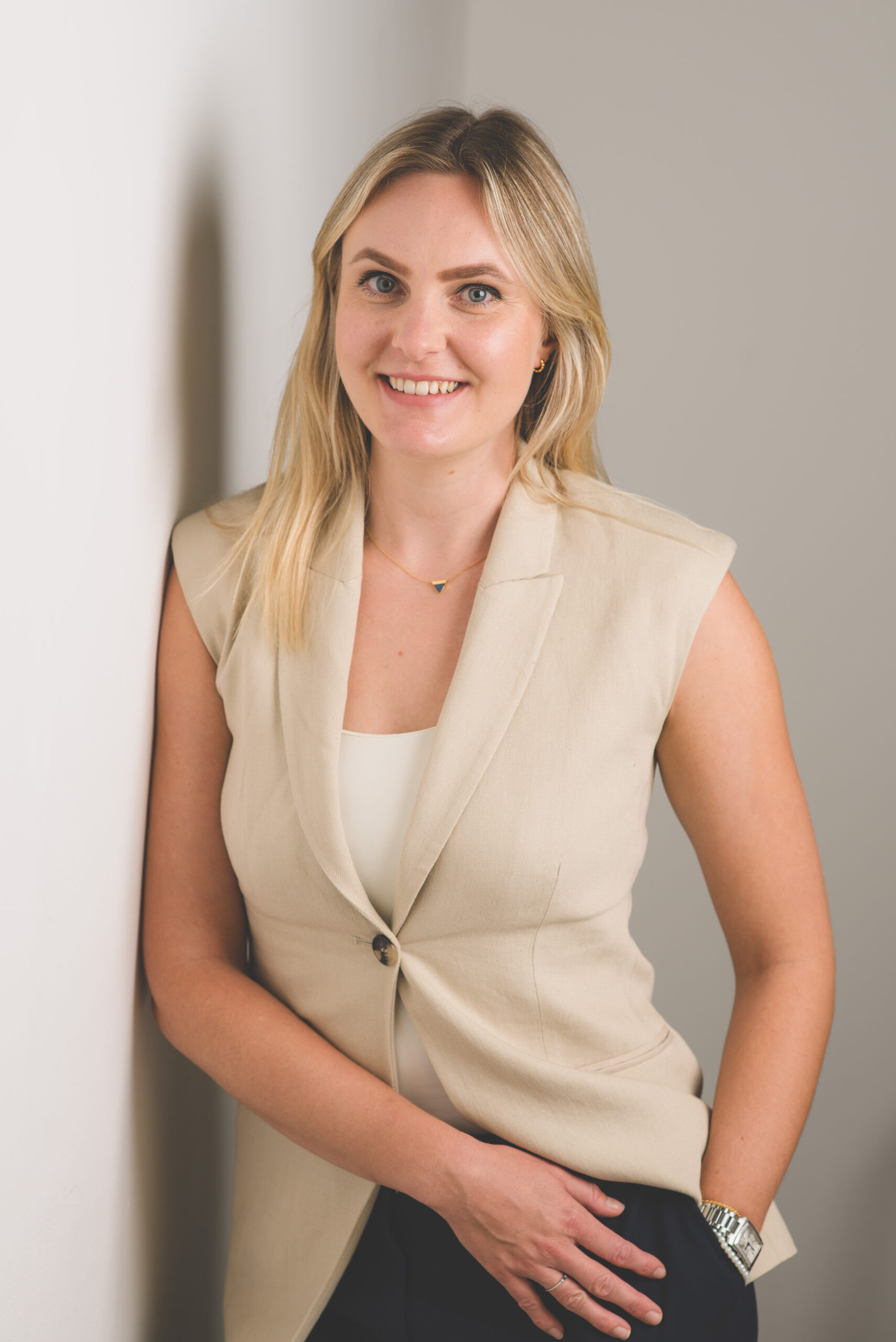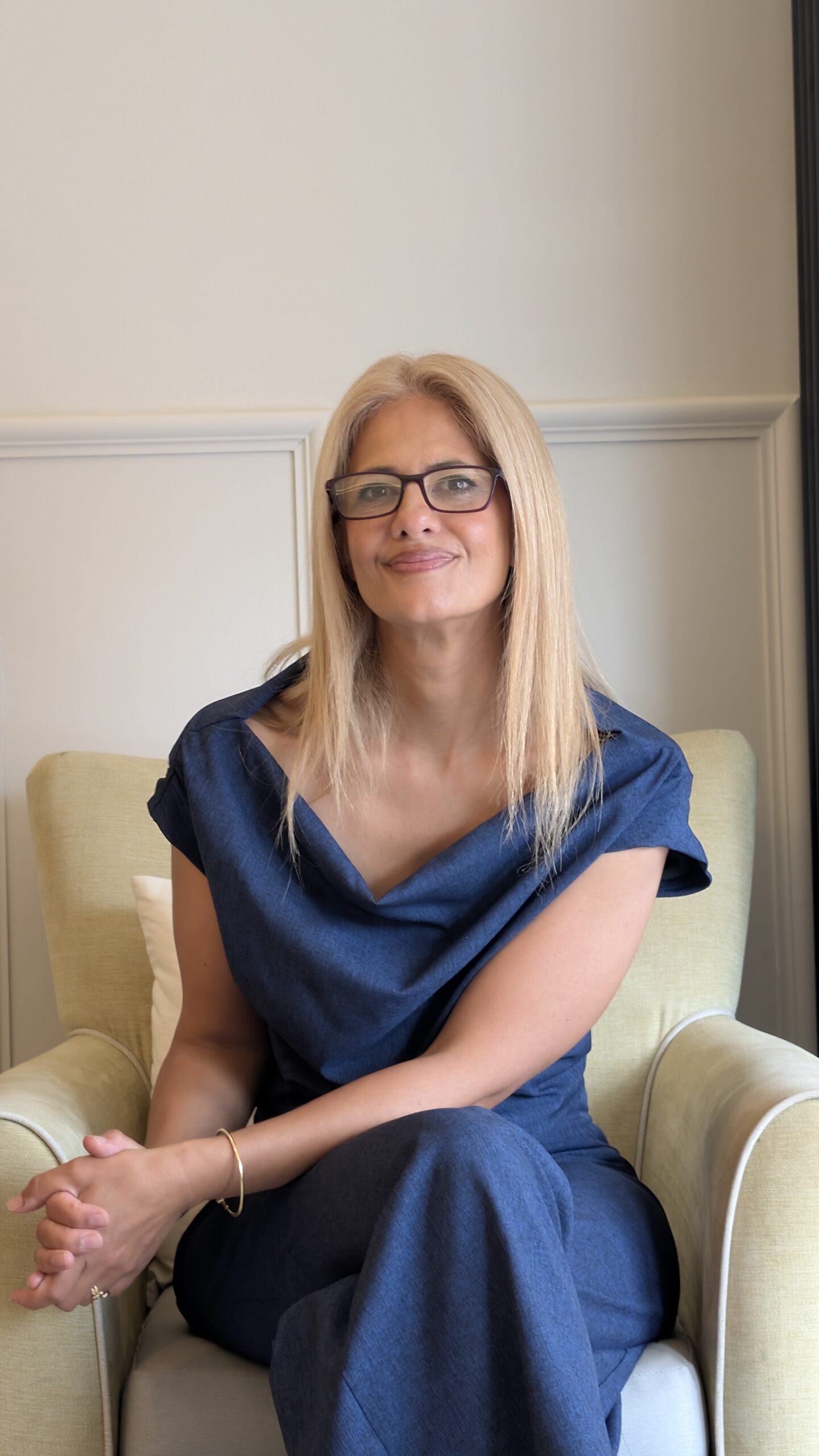
Meet Ursula
Ursula Cárdenas Vignes is the founder and CEO of lünarTechStudio, a deep tech studio based in Aachen, Germany. An architect and urban planner by training, she works at the intersection of geospatial intelligence, urban systems and human mobility.
When Ursula moved to Germany in 2021, approximately 281 million people lived outside their country of birth (IOM, 2022). By 2024, that number had reached 304 million — a record high (UNDESA, 2024). A further 123 million were forcibly displaced (UNHCR, 2024) the pace is not slowing. These populations move through cities that were largely built to understand static residents. Most of the data those cities hold about human mobility has never been turned into action.
Through SIM — Space in Motion, built for the real sapiens in motion — Ursula is developing spatial intelligence infrastructure that helps cities read territorial conditions and understand where mobile and newly arrived communities may need support. SIM does not track individuals. It reads broader spatial patterns to make human mobility legible to the planning systems that have, until now, largely made it invisible.
When a Journey Becomes a Purpose
Some careers begin with a roadmap. Others begin with a question that grows until it becomes impossible to ignore.
For Ursula, that question began with an interest in spaces, developed through migration and became a mission to help cities respond more thoughtfully to the people continually reshaping them.
Her story is not only about entrepreneurship. It is about how migration, research, architecture and lived experience came together into something she did not plan but could not have designed better: work she is passionate about, that draws on everything she has learned, that brings together her strongest qualities — and that has demanded she face her own limitations and transform them. Every challenge she encountered did not only ask for her strengths. It asked her to grow where she was not yet ready.
The Japanese call it ikigai — the place where what you love, what you are good at, what the world needs and what sustains you all meet. For Ursula, that place turned out to be geospatial intelligence for people and cities in motion.
From Childhood Curiosity to a New Beginning
Architecture entered Ursula’s life early. Long before she imagined herself leading a technology company, she was carefully arranging Barbie houses. Her curiosity about the way spaces influence people became formal studies in Perú, where she developed skills in drafting, Building Information Modeling and logistics.
Moving to Germany for a Master of Science in Urban Planning changed how she saw cities. While balancing academic work with employment in an architectural office, she experienced the demands of adapting to a new language, culture and professional environment.
Migration expanded her understanding of identity, integration and belonging.
“Migration gave me a new identity. It turned me into a true believer that such a switch was worth it — and here I am, building for everyone who makes one.”
Seeing a Gap Others Had Not Seen
While working in Germany on reception housing projects for immigrants, she recognised challenges that extended beyond housing itself. The deeper issue involved understanding how migration shaped cities and how cities responded in return.
People arriving in a city also need access to services, work, information, social networks and neighbourhoods where they can find belonging.
Her master’s research at RWTH Aachen combined urban theory, territorial analysis, field experience and direct engagement with users. The humanitarian organisation for which the research was developed validated its potential.
The result became more than a thesis. It became the first blueprint for a practical solution.
Ursula was not researching migration from a distance. She was an immigrant designing a solution for mobile communities from a perspective shaped by both research and lived experience. Her perspective allowed her to approach the challenge with empathy while maintaining the objectivity required for meaningful research.
Building Something Bigger Than a Startup
The entrepreneurial journey began with experimentation.
In 2023, Ursula and her father and Chief Technology Officer, Luis Cárdenas Ojeda — a software architect with four decades of experience across fintech, government infrastructure and applied AI — developed a functional MVP focused on remittances, drawing on technology infrastructure he had spent years building.
Working with him changed Ursula’s understanding of technology. She did not need to become a programmer to see that technology could be built around a real human problem.
Some of the most serious technology in history was built by families first.
The dots began to connect. She was already designing a territorial analysis methodology, data that concludes into a decision. The question arrived: what if this could become an interface? Built by us. Again. For a real problem she had lived, researched, and documented: cities that hold data about mobile populations but lack the tools to process it into action.
This experience became lünarTechStudio.
The company’s name reflects the vision. In Spanish, lunar means a birthmark — and Ursula has a particularly striking one: a mark that runs from her neck to her arm, shaped, some might say, like a map. It grew with her. Like the entrepreneurial and technical mindset she inherited, it was never going to disappear — it was always going to become part of who she is, and eventually, part of what she builds.
Lunar also evokes the moon, whose cycles govern the rhythms of living systems. There is a fitting parallel in her tech legacy: her father’s infrastructure was never quietly in the background. It was the foundation of the life that made everything possible — the education, the move, the master’s degree, the vision. A kind of special backend running beneath the surface, waiting to be continued as legacy at the right moment and for the right purpose. Today it powers technology designed to understand the cyclical patterns of human dynamics — the flows of people moving, settling, and moving again.
Learning Through Every Challenge
Building a company while completing a master’s degree, working professionally and adapting to a new country required resilience. It also taught Ursula that leadership is not about doing everything alone.
It is about understanding your strengths, recognising where others bring complementary expertise and building collaborations around a clear purpose.
One quality Ursula is proud of — and one that has shaped the way she builds — is that she is, by nature, a connector. Her dearest friends calle her a social butterfly without apology. During her master’s at RWTH Aachen she became a confident public speaker, something she worked at and now considers one of her strengths. That combination — technical competence and genuine social ease — is what has allowed her to build institutional partnerships, earn trust in rooms where she was the only foreign woman, and create space for meaningful collaborations.
She is also aware of the barriers women founders face in access to funding and visibility. Rather than allowing that reality to limit her ambition, she sees it as motivation. She actively invites other women — founders, researchers, urban thinkers, community builders — to reach out, co-create and build together. The work is more powerful when it is shared.
Research With Human Purpose
SIM (Space in Motion) is a spatial intelligence engine with a purpose that is both technical and deeply human: to process territorial data into approaches that make invisible realities visible.
We all live in cities. We have our homes, our cafes, our supermarkets, our parks. We move through urban fabric every day without fully understanding how it works, how it shapes us, or how we contribute to it. SIM was built on the conviction that understanding our surroundings is not a technical luxury — it is a condition for making better decisions, for everyone.
The engine brings together a proprietary methodology — designed to be adaptable across regions and contexts — that translates territorial conditions into processed, legible insights. Not to surveil. Not to reduce people to data points. But to reveal what a city actually contains, and what it still lacks, for the communities navigating it.
Think of it the way you think of the SIM card in a mobile phone: the feature that enables signalling, network access and connection. SIM — Space in Motion — is being built toward that same kind of utility. A tool that reads the signals of our own surroundings, our physical contexts, our built worlds and makes them legible to the people and institutions responsible for shaping them.
Its roadmap moves from a validated research prototype toward operational infrastructure for people, cities, planning authorities and humanitarian organisations.
Ursula’s ambition is not simply to create another technology platform. It is to set a new standard for understanding human mobility in urban planning, one built on evidence, respect for people, and the conviction that data should serve communities, not the other way around.
Measuring Success Through Growth
A friendly reminder and living evidence of Ursula’s philosophy sits in her home.
Three months after arriving in Germany, Ursula planted an avocado seed. The conditions suggested it should not thrive. Four years later, it stands nearly three metres tall.
At first, she thought its success would only come when it produced fruit. Later, she understood something more fundamental: surviving and adapting in conditions that were never designed for you is already success.
“Whatever you do, enjoy it. And if you are good at it, go deep.”
Looking Toward the Cities of Tomorrow
Ursula envisions cities that understand humans in motion with greater intelligence, empathy and precision.
She hopes to establish a recognised framework for incorporating human mobility into spatial planning. Technology should not replace human judgement, she believes; it should strengthen it by revealing patterns that would otherwise remain invisible.
Space in Motion, built for the real sapiens in motion, is the idea at the heart of this vision. People are not simply data points on a map. They are individuals and communities moving through spaces, adapting, connecting and reshaping the places around them.
As AI models and spatial data science continue evolving, behind every dataset, Ursula believes, is someone looking for stability, opportunity and connection.
Growing Into the Person She Was Meant to Become
Ursula’s journey is not defined only by crossing borders or founding a startup. It is defined by learning to trust that each experience was preparing her for this work.
Architecture taught her how to read spaces. Urban planning taught her to ask who uses them. Migration taught her how people experience them. Research gave her evidence, and technology gave her tools.
Together, they formed a purpose greater than any individual achievement.
For Ursula Cárdenas Vignes, success is not measured by recognition alone. It is measured by continuing to use every tool she has earned and building a future where cities become more thoughtful because they better understand the people who call them home.
For More Features
Be Featured in The Real Edit!
Every story has the power to shape how we see innovation, leadership, and purpose. If you’re a founder, creator, executive, or changemaker with a journey worth telling , we’d be honored to help you share it.
To inquire about being featured:
Email us at: info@realedit.site
Follow The Real Edit