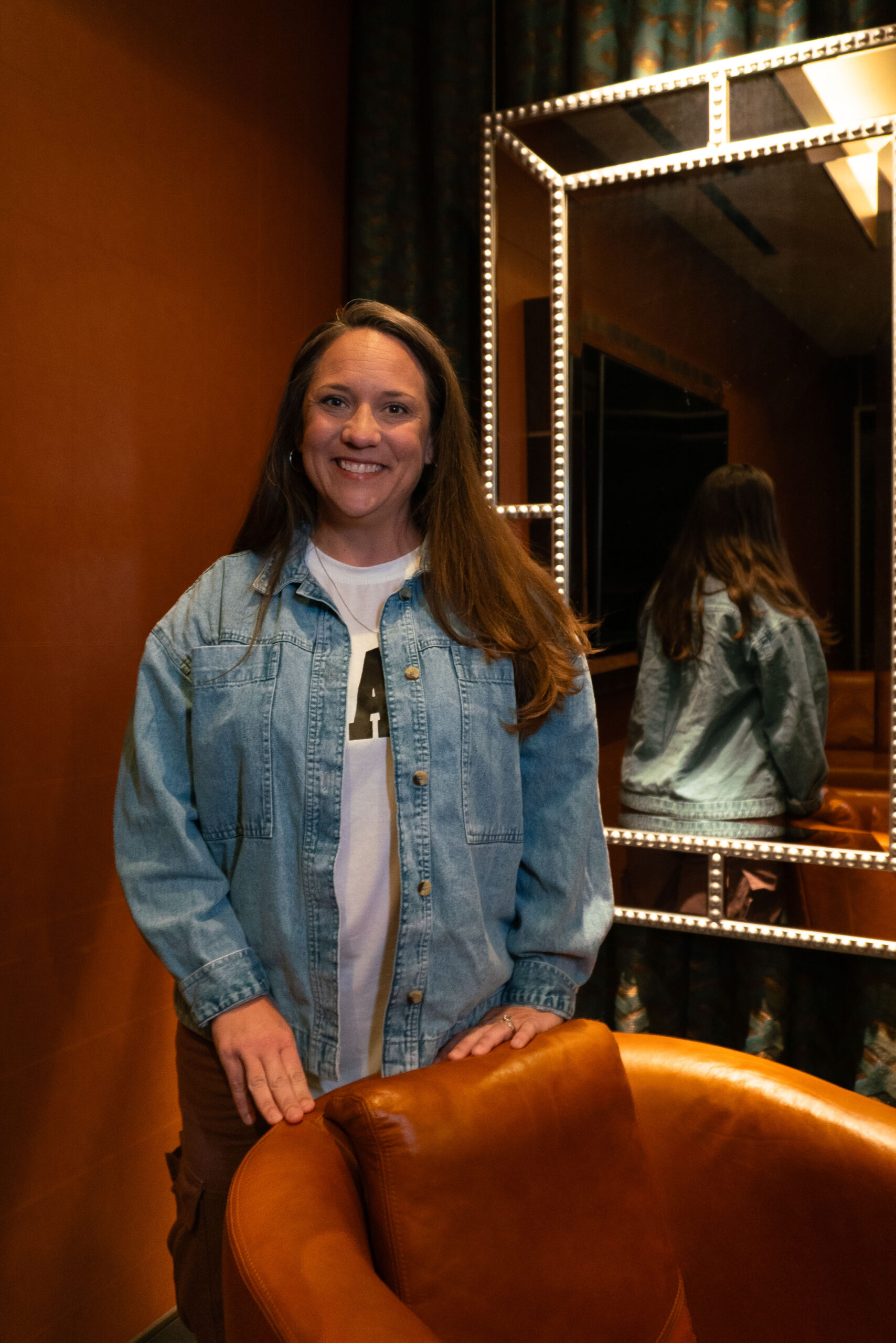
Meet Troy
Troy Cunningham-Jackson is the CEO and co-founder of Sugar & Leather AI, based in Alameda, California. His work sits at the intersection of leadership, artificial intelligence, workforce development, and human access — helping people and organizations adapt to technological change in ways that remain ethical, inclusive, and deeply human.
Learning to See People Beyond Systems
Troy Cunningham-Jackson didn’t come to technology because he was fascinated by machines. He came to it because he was fascinated by people.
Long before he was building AI systems or shaping workforce transformation strategies, he was paying close attention to something far more fundamental: how people respond to uncertainty, how communication either builds or erodes trust, and how leadership can quietly empower someone or quietly diminish them.
Those observations didn’t leave him. Working across technology support, sales, and leadership roles gave him exposure to systems and operations, but more importantly, it gave him a front-row seat to the emotional reality people carry into workplaces every day. He learned how quickly people disengage when they feel unseen and how dramatically their confidence grows when they feel understood.
That understanding became the foundation of everything he would later build.
Troy is also autistic, and he’s clear that his neurodivergent perspective isn’t separate from his work, it’s central to it. The way he processes the world, in high-intensity bursts of pattern recognition and systems thinking, shaped how he approaches both leadership and product design. It also deepened his commitment to building technology that doesn’t assume one way of thinking is the default. He’s seen firsthand what it costs people when systems are designed without them in mind.
As artificial intelligence accelerated and conversations around automation intensified, Troy kept returning to a question many in the industry were overlooking: how do you build systems that improve lives without losing sight of the humanity inside them?
His answer was never just about smarter technology. It was about creating environments
where people could adapt, participate, and feel capable during moments of enormous change.
A Career Built Through Curiosity and Adaptation
Troy’s professional path was never confined to a single lane. It evolved through a series of experiences that taught him how deeply leadership, communication, and systems thinking are intertwined.
During his time at companies like Verizon, he developed a reputation for leadership that held both people and performance in view at the same time. The metrics mattered, but so did the individuals behind them. That balance between operational strategy and genuine human investment became central to his philosophy.
He also found himself increasingly drawn toward entrepreneurship and education as he watched technology widen the gap between those with access to emerging tools and those being quietly left behind. Small businesses, underserved communities, and individuals without institutional backing often struggled to navigate shifts that larger organizations absorbed more easily.
Troy didn’t view AI as a distant trend. He saw it as a societal transition already reshaping daily life and recognized that the real challenge ahead wasn’t technical implementation. It was human adaptation.
That realization led him to co-found Sugar & Leather AI with his wife, Audrey Cunningham Jackson. What started as a business focused on helping organizations operate more efficiently through AI gradually expanded into something much broader, incorporating workforce education, grant development, leadership systems, and community infrastructure designed to make technology genuinely accessible.
“I’ve always been fascinated by the relationship between technology and human behavior. As AI began accelerating, I realized the real challenge wasn’t just building smarter tools. It was helping people and organizations adapt to the changes those tools create.”
The Partnership at the Center of It All
No honest account of Troy’s work is complete without Audrey Cunningham-Jackson.
She is his wife, his co-founder, and one of the most grounding forces in how Sugar & Leather AI operates. Audrey spent nearly three decades in government service within the unemployment system, helping individuals and families navigate some of the most
destabilizing moments of their lives. During the COVID-19 pandemic, she worked tirelessly to help people stay housed and connected to critical resources during a period defined by fear and uncertainty.
She was also raised in a Christian household that fostered children — an upbringing that cultivated a deep, practiced sense of empathy, service, and responsibility toward others. Those values didn’t stay in the background. They show up in how she leads, how she writes grants, and how she approaches every partner and client relationship.
Troy speaks about her with admiration that goes well beyond professional respect.
“I’m most inspired by my wife, Audrey Cunningham-Jackson. Watching the way she leads with humility, resilience, and genuine care for people has had a profound influence on both my personal life and professional philosophy.”
Together, they didn’t just build a company. They built a shared framework for what long term, values-driven impact actually looks like in practice.
Translating Complexity Into Something Human
One of the recurring challenges in Troy’s work is helping people engage with ideas that feel intimidating before they even have a chance to understand them. Artificial intelligence is easily hijacked by technical language, fear, or abstraction. For many individuals and organizations, the speed of change feels overwhelming long before the substance of it becomes clear.
Troy recognized early that innovation only matters if people can access and apply it in their own lives. That insight shaped how he approaches education, leadership, and systems design.
His work centers on translation — taking complex systems and making them legible for small business owners, educators, nonprofits, and emerging entrepreneurs. Reducing fear while increasing adaptability. His approach treats clarity and empathy as core competencies, not soft additions to technical capability.
He believes most people aren’t resistant to change itself. They’re resistant to feeling excluded from it.
That belief also informs projects like the ARIES AI platform — an AI-native business operating system built for mid-market companies — and broader workforce transition initiatives developed through Sugar & Leather AI. These aren’t just products. They’re attempts to reduce barriers and widen participation in an economy that’s reorganizing itself faster than most people can track.
Leadership, in Troy’s view, is fundamentally about helping people feel capable. And systems — no matter how intelligent — only earn their value when they do the same.
Building Infrastructure for the Future
Today, Troy’s work extends well beyond business consulting or product development. His focus has increasingly shifted toward larger questions: governance, accessibility, and the long-term relationship between people and intelligent systems.
He believes we are entering one of the most significant workforce transitions in modern history. As AI continues reshaping industries and economies, the need for thoughtful infrastructure becomes urgent. Education, ethics, community preparation, and governance can no longer be treated as separate from technological innovation — they have to be built into it from the start.
He also imagines a near future where agentic AI systems reduce some of the structural pressure people face between work, survival, family, and access to opportunity. He doesn’t view automation purely through the lens of disruption. He sees the potential for systems that create greater balance and freedom — if they’re designed responsibly and with the full range of human cognition in mind.
At the center of all of it is the same core principle that guided his earliest leadership work: technology should serve people. All people. Not just the ones the system was originally designed for.
Remaining Human in an Accelerating World
Despite working in one of the fastest-evolving sectors of modern society, Troy consistently returns to themes that are grounded rather than grand. Curiosity. Empathy. Adaptability. The discipline of building systems that don’t require people to disappear into them.
He believes the future will belong to people who can keep learning while also staying human in how they communicate and collaborate. Technical knowledge matters, but so does emotional intelligence. Systems matter, but so do relationships.
That perspective feels especially important as conversations around AI swing between panic and uncritical enthusiasm. Troy doesn’t live in either place. He sees both the opportunity and the responsibility that come with this moment.
He’s clear that technological progress without ethical consideration doesn’t reduce inequality. It deepens it. The future he’s working toward is one where education, access, and
human dignity aren’t afterthoughts, they’re the architecture.
Not just more intelligent systems. More compassionate ones.
A Leadership Philosophy Rooted in Access
What stands out most across Troy Cunningham-Jackson’s journey isn’t his interest in AI or his entrepreneurial range. It’s the consistency of his underlying purpose.
Whether managing teams in corporate environments, building AI infrastructure, advocating for neurodivergent accessibility, or developing future-focused initiatives with Audrey, the through line has never shifted. He wants people to feel capable in spaces that were often designed to make them feel otherwise.
His leadership philosophy is built on widening access rather than protecting status. He believes meaningful innovation happens when people are given the tools, confidence, and support to participate fully in change — rather than be managed through their fear of it.
In a world defined by rapid technological acceleration, that’s not a soft idea. It’s the most necessary one.
For More Features
Be Featured in The Real Edit!
Every story has the power to shape how we see innovation, leadership, and purpose. If you’re a founder, creator, executive, or changemaker with a journey worth telling , we’d be honored to help you share it.
To inquire about being featured:
Email us at: info@realedit.site
Follow The Real Edit