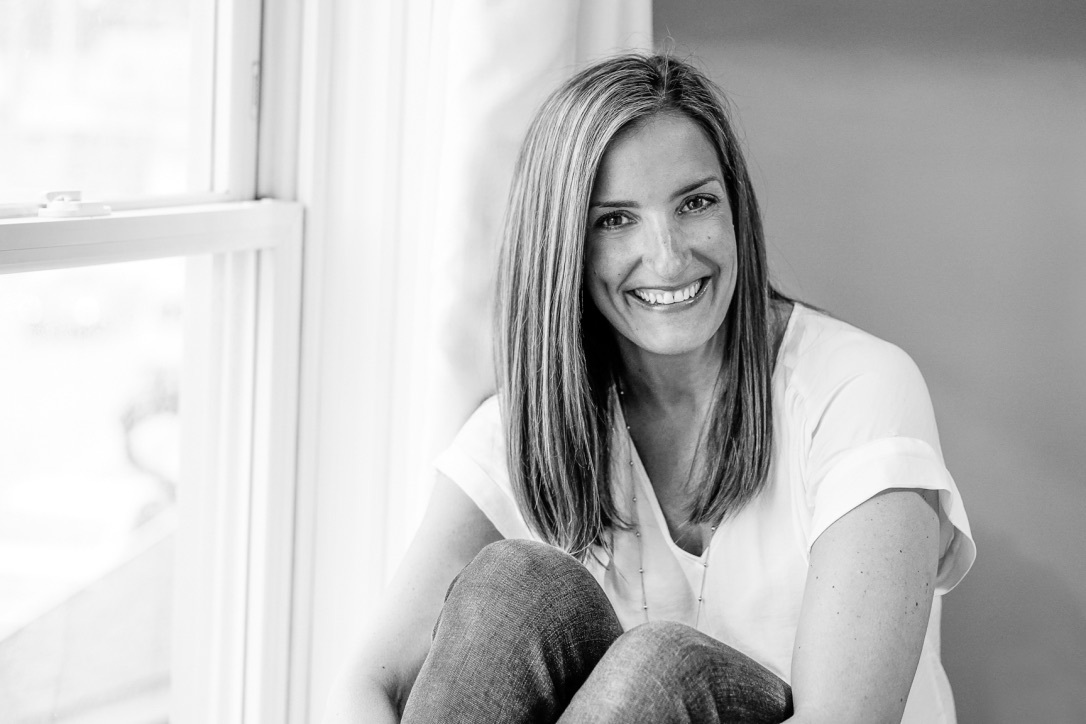
Meet Nia
Nia Davis is the Founder and Executive Director of The Adoptee Space, Inc. a nonprofit dedicated to supporting adult adoptees through community, storytelling, and access to mental health and identity resources. With a career rooted in writing and communications, she has spent more than two decades helping organizations tell meaningful stories before building a space shaped by her own lived experience as an adoptee.
The Work of Finding What Was Missing
There is a quiet persistence in the way Nia Davis speaks about her life, as though each chapter, no matter how scattered it once seemed, has slowly found its place. Her story does not follow a straight path. It moves instead like a series of returns, circling back to writing, to people, and eventually to herself. At the center of it all is a simple but deeply felt intention: to create something that once did not exist for her.
For Nia, the idea of belonging was never abstract. It was something she carried questions about from an early age. Questions about identity, about connection, about what it means to know where you come from. These questions did not always have answers, but they shaped the way she moved through the world. They also shaped the work she would eventually create.
Today, through The Adoptee Space, she is building a community where those same questions can be spoken out loud, held with care, and explored without judgment. It is not just a professional endeavor. It is deeply personal.
A Life Written in Many Directions
Before The Adoptee Space came into being, Nia’s journey unfolded across industries, roles, and countries. At first glance, it might seem scattered, but at its core was a consistent thread: storytelling.
She began as a newspaper reporter, drawn to the power of words and the responsibility of telling stories that matter. Writing was never just a skill for her. It was a way of understanding the world. As a child, she wrote plays. As a teenager, she turned to poetry. Choosing to study print journalism felt like a natural extension of something that had always been part of her.
Her early professional years moved between journalism, public relations, and nonprofit communications. She worked with organizations that served communities in need, including social services, public broadcasting, and humanitarian aid. Each role added another layer to her understanding of people and the systems that shape their lives.
At one point, she shifted into teaching English as a second language, first in the United States and later in Japan. Teaching offered a different kind of connection. It required patience, empathy, and an ability to meet people where they are. Even then, the thread remained the same. She was still working with language, still helping others find their voice.
Her career also included time in healthcare, running a marketing agency, and working at Harvard Law School. There were moments of forward movement and moments of pause. There were beginnings and endings that did not always come with clear explanations.
Looking back, what might have once felt like detours now appear as preparation. Each experience, whether stable or uncertain, contributed to a deeper understanding of communication, resilience, and purpose.
When the Body Speaks and Life Listens
In 2017, Nia experienced a moment that shifted her perspective in a way that could not be ignored. After having a second seizure, she found herself confronting something that many people postpone thinking about. The fragility of health. The reality that time is not guaranteed.
It was not just a medical event. It was a turning point.
The experience forced her to reconsider how she was spending her time and energy. It brought a kind of clarity that often only comes when something interrupts the ordinary rhythm of life. She began to ask herself more direct questions. What truly matters. What kind of work feels meaningful. What she wants to build, not just professionally, but personally.
At the same time, another long and deeply personal journey was unfolding in the background. Over the course of twenty four years, Nia searched for and eventually found her birth parents and siblings. This process, which stretched from 2001 to 2025, was not a single moment of discovery but a gradual unfolding. Each connection brought new understanding, but also new layers of emotion.
Through these experiences, she began to see more clearly the gaps that existed for adoptees, especially as adults. There were resources for children and adoptive families, but very little that addressed what happens later. The questions of identity do not disappear with age. In many ways, they become more complex.
She reflects on this realization with a sense of clarity that is both personal and universal.
“Searching for and finding my birth parents and siblings over a span of years is what eventually led me to creating The Adoptee Space.”
What she found through her own journey was not just connection, but also the absence of a broader support system. There were emotions that did not have clear language. There were experiences that were difficult to explain to people who had not lived them. There was a sense of isolation that could not easily be named.
Naming What Often Goes Unseen
One of the challenges Nia encountered was not just the experience itself, but how that experience is perceived by others. Society often holds a simplified narrative about adoption. It is framed as a positive outcome, a story of rescue and stability. While that can be true, it is not the full picture.
There are layers that remain largely unspoken. The loss of birth families. The shift in identity. The questions about origin, culture, and belonging. These are not always visible, but they are deeply felt.
Nia has spent time thinking about how to communicate this complexity in a way that invites understanding rather than defensiveness. She speaks about the emotional landscape of adoptees with both honesty and care.
“Society often depicts adoptees as privileged, but they do not understand the trauma that comes with loss of identity and the feelings of isolation that many cannot name.”
This perspective does not seek to diminish the positive aspects of adoption. Instead, it expands the conversation. It makes room for a more complete understanding, one that includes both gratitude and grief, both connection and loss.
Through her work, Nia is helping to bring these experiences into the open. Not as a way of defining adoptees by their challenges, but as a way of validating their realities.
Building What Once Did Not Exist
The Adoptee Space was established in September 2025, but in many ways, it had been forming long before that. It grew out of lived experience, journaling and reflection, and a deep awareness of what was missing.
At its core, the organization is designed to support adult adoptees. It offers a place where people can share their stories, connect with others who understand their experiences, and access resources related to mental health and identity.
The idea is simple, but the impact is significant. For many adoptees, adulthood brings a new set of questions that are not always addressed by existing systems. There is often a lack of community, a lack of language, and a lack of support that feels relevant to their stage of life.
Nia approached the creation of The Adoptee Space with the same care she has applied to storytelling throughout her career. She understood that building a community is not just about structure. It is about trust. It is about creating an environment where people feel safe enough to be honest.
Her background in communications continues to shape how the organization operates. She brings a thoughtful approach to messaging, ensuring that the stories shared within the space are handled with respect and authenticity.
Beyond the structure, there is also a sense of intention. The work is guided by values such as honesty, integrity, transparency, and flexibility. These are not abstract principles. They are reflected in how the space is built and maintained.
For Nia, success is not measured by scale alone. It is defined by the ability to create something meaningful and sustainable. Something that has a real impact on how people live and understand themselves.
Holding Vision with Patience
Looking ahead, Nia’s vision for The Adoptee Space is both clear and grounded. She hopes to grow it into a central hub for adult adoptees, a place where resources are accessible and connections are meaningful.
Part of that vision includes building partnerships within the adoptee community and beyond. Collaboration, for her, is not just a strategy. It is a way of strengthening the collective effort to support adoptees in more comprehensive ways.
At the same time, she remains aware of the challenges that come with building something new. There is the ongoing balance between personal and professional responsibilities. There are days when progress feels slow or uncertain.
She approaches these challenges with a sense of steadiness rather than urgency. The focus is not on immediate results, but on long term impact. On creating something that will continue to grow and evolve over time.
Her advice to others reflects this perspective. It is simple, but it carries weight. If there is an idea or a dream that continues to return, it is worth pursuing. Not because it guarantees success, but because it leads to a deeper sense of fulfillment.
A Quiet Kind of Leadership
There is a particular kind of leadership in the way Nia moves through her work. It is not loud or performative. It is steady, reflective, and rooted in lived experience.
She does not position herself as someone who has all the answers. Instead, she creates space for questions. She understands that identity is not something that can be resolved in a single moment. It is something that unfolds over time.
Through The Adoptee Space, she is offering more than resources. She is offering recognition. The recognition that certain experiences deserve to be acknowledged. That certain stories deserve to be heard.
In building this work, Nia is also continuing her own journey. The act of creating space for others is, in many ways, an extension of creating space for herself.
Her story is not defined by a single turning point or a single role. It is defined by the willingness to keep moving, to keep asking questions, and to keep building something meaningful from those questions.
In the end, what she is creating is not just an organization. It is a reflection of a deeper understanding. That belonging is not something that should be left to chance. It is something that can be built, carefully and intentionally, one story at a time.
For More Features
Be Featured in The Real Edit!
Every story has the power to shape how we see innovation, leadership, and purpose. If you’re a founder, creator, executive, or changemaker with a journey worth telling , we’d be honored to help you share it.
To inquire about being featured:
Email us at: info@realedit.site
Follow The Real Edit