Meet Godsown
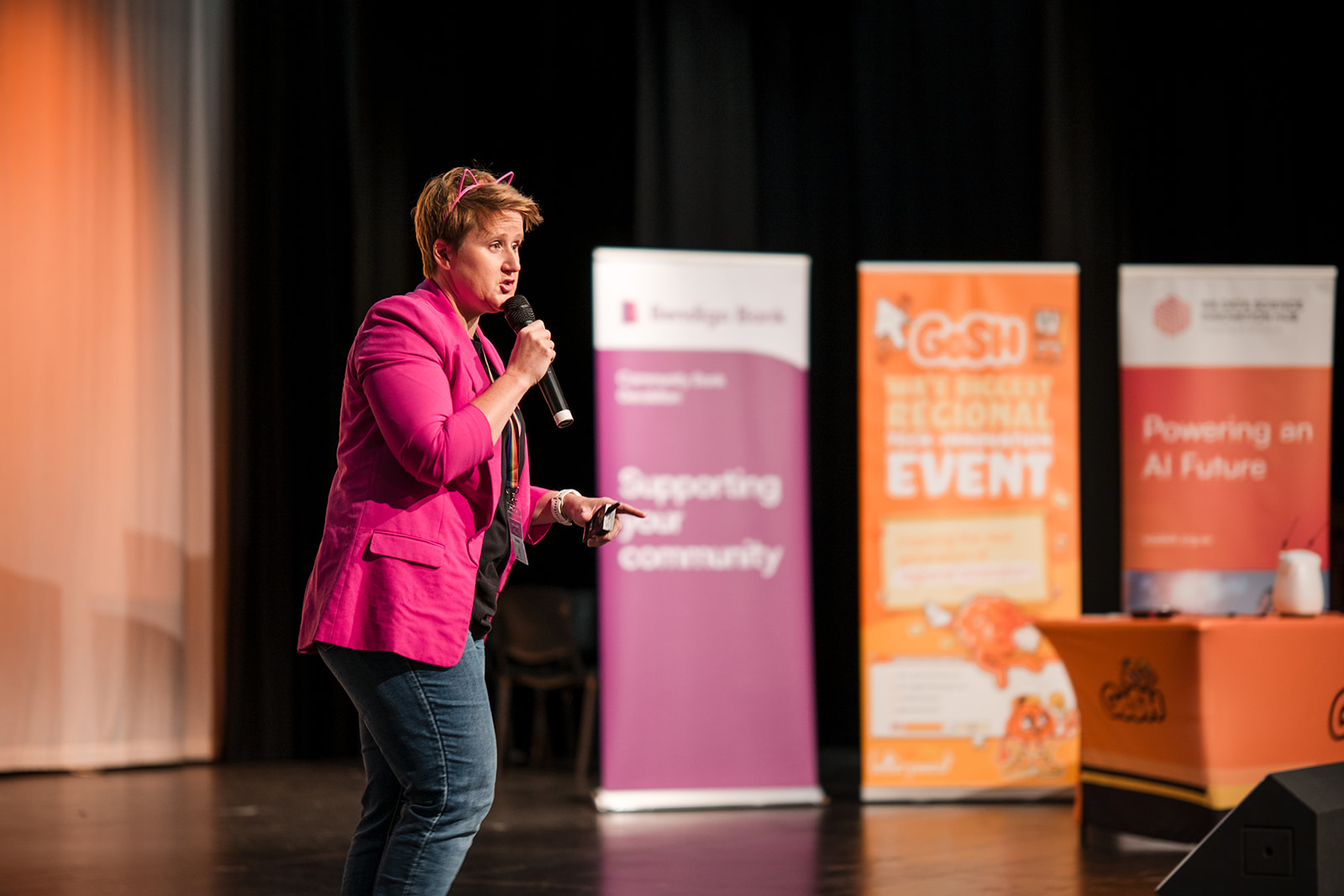
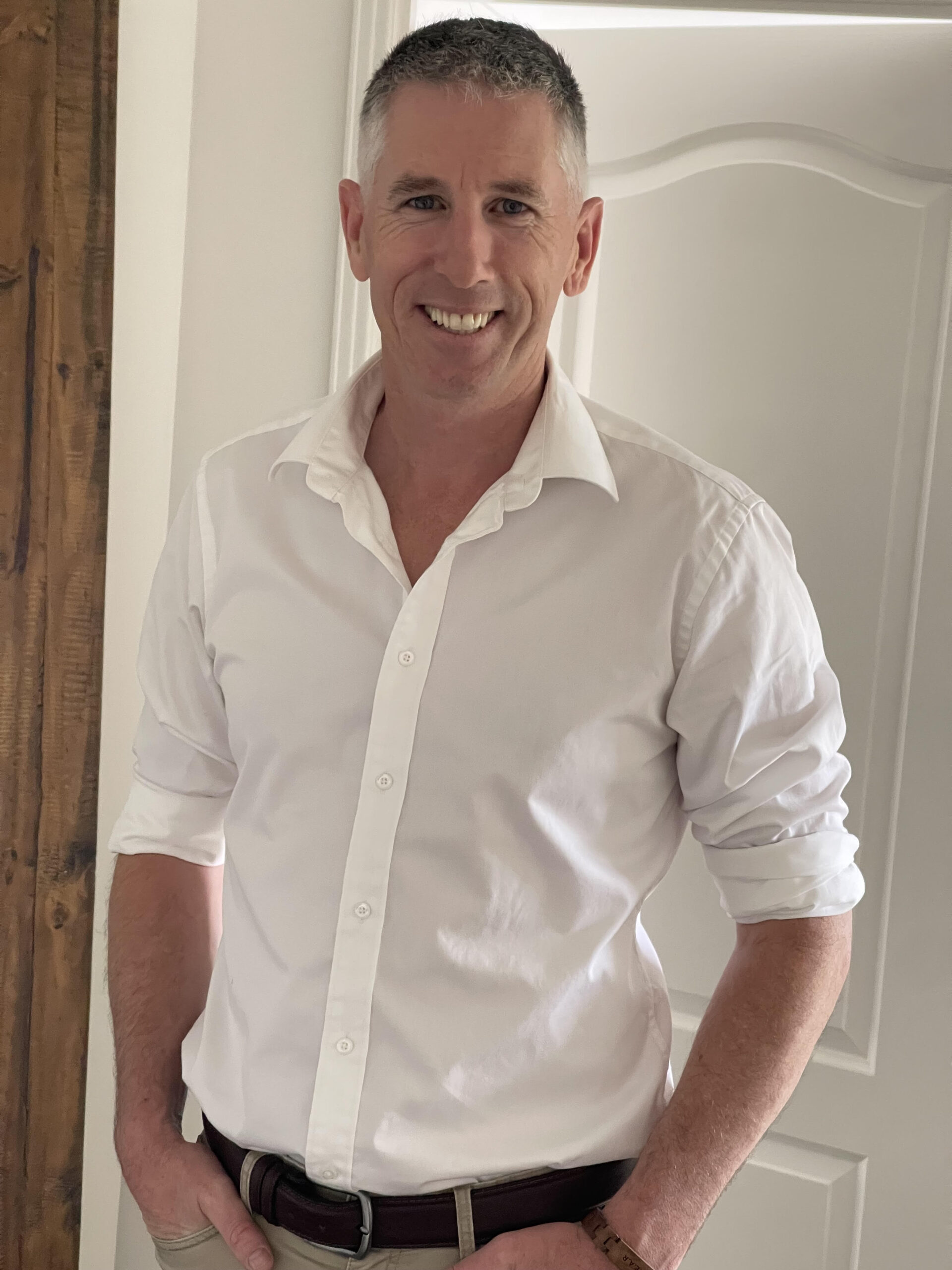
Godsown Wil is a founder, public speaker, and Identity & Career Transition Strategist based in Lymington, New Forest, England. His professional path has moved through insurance, surveying, mapping, land administration, operations, education, and professional speaking. Today, he helps professionals and aspiring entrepreneurs approach career change as a deliberate transition rather than an impulsive decision.
A Career Built Through Becoming
Some careers follow a visible line. One qualification leads to one position, which leads naturally to the next. Godsown Wil’s story has developed differently. His professional life has been shaped by several transitions, each requiring him to learn again, adapt, and make room for a new version of himself without simply discarding everything that came before.
That pattern is now at the heart of his work.
He began his career in insurance sales in Ghana, an experience that introduced him to professional life and the realities of building a career through direct engagement with people. Over time, however, his interests began moving elsewhere. He returned to education and entered the world of surveying and mapping, eventually studying Geomatic Engineering while continuing to work.
His professional development later brought him to the Ghana Lands Commission, followed by roles in site operations and management. These experiences gave him technical knowledge, professional discipline, and an understanding of what it means to build expertise over time.
Yet beneath those different roles, another interest was developing.
Godsown became increasingly curious about people who were capable, experienced, and ambitious, but still found themselves unable to move toward the life or career they wanted. He noticed that knowing what to do was often not enough. There were deeper questions underneath a career decision: questions about identity, responsibility, fear, expectations, and the possibility of losing something familiar in pursuit of something new.
Eventually, he recognised that these questions were not only relevant to other people. They were questions he had been living himself.
Learning to Start Again Without Starting From Nothing
One of the most important decisions in Godsown’s own journey was returning to education after he had already entered working life. It would have been easy to view existing responsibilities as reasons to remain where he was. Instead, he began building another direction alongside the life he already had.
That choice became particularly meaningful when he studied Geomatic Engineering while continuing to work. The experience taught him that change does not always have to begin with an ending.
There is a common idea that transformation requires a dramatic break. Leave the job. Start over. Take the risk. Follow the dream.
Godsown’s experience led him toward a different understanding.
For him, meaningful change could happen gradually. A person could continue meeting present responsibilities while preparing for a different future. Existing work could provide stability while education, training, relationships, and new skills created possibilities that did not exist before.
This approach became more important after nearly a decade in surveying-related work. Nothing had necessarily gone wrong. He had qualifications, experience, and professional capability. From the outside, there were good reasons to continue.
But a career can function successfully while no longer reflecting the person who is developing within it.
Recognising that difference became one of the quieter turning points in his life.
Rather than making an abrupt exit, Godsown began preparing for what might come next. He continued meeting his responsibilities while investing in professional development, studying, strengthening his speaking abilities, and exploring a new direction.
The process required patience.
It also required him to become comfortable with being a beginner again.
That may be one of the most significant themes running through his story. Beginning again did not mean becoming inexperienced in every sense. His previous experiences, skills, education, and professional relationships remained part of him. They simply had to be understood differently.
His past was not something he needed to erase in order to move forward.
It became something he could build from.
When the Question Changed
The deeper challenge was not simply deciding what career to pursue next. It was understanding how to change without making unnecessary sacrifices.
A person with an established career may have more than a job to consider. There may be income, family responsibilities, professional credibility, financial commitments, and years of accumulated experience. These realities can make conventional advice about taking action feel incomplete.
Godsown understands that tension because he has lived it.
His own transitions forced him to consider what could be gained by changing, but also what could be lost by moving too quickly. Starting a new direction meant accepting uncertainty. It meant wondering how long the new path might take and whether the investment would eventually be worthwhile.
But over time, he came to believe that there is another side to that calculation that is often overlooked: the value of what is being sacrificed by staying the same.
Much of the conversation around career and life change focuses on the cost of taking action. What could be lost? What if the new direction fails? What happens to income, security, status, or existing responsibilities?
Those are important questions.
But Godsown believes the calculation is incomplete unless people also ask what staying unchanged could cost them over the next ten or twenty years.
If nothing changes, what opportunities might never be explored? What growth might never happen? What contribution, fulfilment, income, relationships, or experiences might remain unrealised? And what might have been possible during the same period?
This is not about frightening people into making a decision. It is about making the arithmetic complete.
Staying may protect something valuable today, but it may also require sacrificing something that cannot easily be recovered later: time.
For Godsown, that perspective changes the nature of the decision. The question is no longer simply whether change is risky. It is also whether remaining where you are carries its own long-term cost.
There is a phrase that captures this principle for him:
“When the real cost of staying becomes visible, coping stops feeling free.”
The idea is not that everyone must leave a career or pursue a completely different life. Rather, it asks people to become honest about the trade-offs on both sides.
Comparison can make transition feel even more difficult. Looking at people who are already established in the field you want to enter can make the distance between your present and your desired future seem overwhelming.
For Godsown, the answer was not to ignore those concerns. It was to change the question.
Instead of asking whether he should abandon everything and pursue something new, he began asking what he could build today that would make the transition increasingly possible.
That shift changed the way he approached his future.
He began learning while working. He funded professional development through existing income. He tested ideas before becoming dependent on them. He built evidence that the future he imagined was becoming something tangible rather than remaining an abstract ambition.
The philosophy that emerged from this experience became simple: “Don’t Quit. Transition.”
The phrase reflects more than a professional message. It represents something he had already practised in his own life.
He had not moved from one identity to another by pretending his previous life had no value. Instead, he carried useful parts of each chapter forward while allowing himself to grow beyond the limits of an identity that had once fit him.
This way of thinking also changed his understanding of courage.
Courage does not always look like a dramatic leap. Sometimes it looks like continuing to work while studying at night. Sometimes it means investing in a new skill before anyone else can see where it will lead. Sometimes it means having the patience to build a second foundation before stepping away from the first.
For Godsown, that slower process is not a compromise. It can be a deliberate way to create lasting change.
The Identity Behind the Decision
Today, Godsown’s work sits in the space between professional stagnation and reckless change.
He works with professionals and aspiring entrepreneurs who know they have outgrown their current chapter but may not know how to move forward while protecting what already supports them.
His focus is not simply on what people should do next, but on who is attempting to do it.
Godsown believes that a new strategy can struggle when it is being carried by an old identity — particularly one shaped by years of conclusions such as, “I’m too old,” “I don’t finish things,” or “this is simply who I am.”
For him, sustainable transition requires people to examine both the practical bridge into the future and the identity expected to cross it.
That means looking beneath the surface of a career decision.
Who do they need to become?
What beliefs are keeping them where they are?
What responsibilities must be respected?
Which skills can travel with them?
What can they begin building before they make a major change?
And perhaps most importantly, what would happen if they stopped treating the decision as a choice between staying exactly where they are and abandoning everything?
That is where Godsown sees another possibility.
He describes it as building the bridge.
The idea is straightforward. Instead of demanding that people destroy their current source of stability before they have created something capable of replacing it, he encourages them to develop the next chapter deliberately.
That might mean gaining qualifications, developing new skills, building professional relationships, testing a business idea, practising communication, creating additional income streams, or simply beginning to behave like the person they want to become.
His work also challenges the assumption that hesitation automatically means someone lacks ambition.
For someone carrying genuine responsibilities, caution can be reasonable. Financial and family considerations are not necessarily excuses. They are part of the reality in which many adults have to make decisions.
The goal, then, is not to remove responsibility from the equation.
It is to make the equation more complete.
Godsown encourages people to consider not only the potential cost of changing, but also the long-term cost of remaining in a situation that no longer reflects who they are becoming.
Building GEL Into Something People Can Use
GEL — Get Clear. Embrace the Model. Live the Dream. — is Godsown’s developing framework for turning the “Don’t Quit. Transition.” philosophy into a practical process.
It addresses the gap between wanting a different future and becoming capable of consistently behaving in ways that can create and sustain it.
For professionals and aspiring entrepreneurs who can see that they want something different but feel constrained by age, responsibility, financial security, or uncertainty about beginning again, GEL is intended to provide a structure for moving from awareness toward action.
The framework reflects the broader ideas behind Godsown’s work: clarity about what needs to change, an understanding of the model or approach required to move forward, and the development of behaviours that make the desired future increasingly real.
Through professional speaking, coaching, workshops, and thought leadership, he is exploring how identity influences career decisions and how people can develop sustainable ways of moving forward.
His interest in speaking has also grown through deliberate training and practice. His experience with the Professional Speakers Academy has reinforced his belief that communication is a craft. Strong speaking is not simply about standing in front of people. It requires preparation, observation, repetition, refinement, and a willingness to keep learning.
That same philosophy appears in his broader work.
Godsown is less interested in presenting successful people as finished products than in understanding what they had to learn and practise before they became capable of doing what they eventually achieved.
This reflects something important about his view of identity.
He does not see ability as a permanent label. A person can acquire new capabilities. Someone who has spent years in one profession can learn another discipline. Someone who once struggled with confidence can develop communication skills. Someone who has never considered entrepreneurship can gradually learn how to build something of their own.
The finished identity is therefore less interesting to him than the process of becoming.
A Future Built With Intention
Looking ahead, Godsown wants to expand GEL into a practical body of work that can reach people through speaking, coaching, workshops, and writing.
He hopes to speak internationally, work with organisations as well as individuals, publish around the themes of identity and transition, and develop ideas that can influence how people understand starting again.
At the centre of that ambition is a belief he has tested personally: a person does not have to destroy one chapter before beginning another.
He wants transition to be recognised as a legitimate path in its own right.
For someone who has spent twenty years developing one profession, changing direction can feel intimidating. For someone carrying family responsibilities, it can seem irresponsible. For someone comparing themselves with younger professionals already established in a new industry, it can feel as though the opportunity has passed.
Godsown’s experience offers another way of seeing time.
Being later than expected does not mean being finished.
A previous career does not have to become wasted time simply because a new direction is emerging. The skills developed there may become part of what makes the next chapter possible.
His own journey from insurance to surveying, from education to land administration, from operations to professional speaking and career transition reflects that belief. Each stage contributed something, even when the destination was not yet visible.
Becoming Capable of Carrying the Next Chapter
For Godsown, success is not defined only by income, recognition, or professional position.
It is connected to capacity.
He wants to become capable of carrying the life he says he wants, while remaining present for the responsibilities that already matter to him. That includes his work, his family, his personal development, and the people he hopes to help.
This perspective also explains why he does not rely heavily on motivation.
Motivation changes. Some days bring energy and clarity, while others bring uncertainty or fatigue. Rather than waiting for a constant sense of inspiration, he focuses on the next action within his control.
Sometimes that action is substantial. Sometimes it is simply reading, writing, practising, having one useful conversation, or completing a small piece of work that keeps a new direction alive.
Over time, those small actions become evidence.
Evidence matters because identity can change through experience. A person begins to see that they are no longer merely thinking about becoming a speaker, entrepreneur, leader, or professional in a new field. They are already practising the behaviours associated with that identity.
That is where transition becomes real.
Godsown’s story ultimately returns to a simple but significant idea: starting again does not mean starting from nothing.
Everything learned along the way can become part of the next foundation.
The insurance experience remains part of his understanding of people and professional life. His surveying and mapping background reflects technical discipline and persistence. His education demonstrates his willingness to return to learning. His experience in land administration and operations contributes another layer of professional understanding. His development as a speaker adds a new form of communication.
None of those chapters has to disappear.
They can become part of the person he is still becoming.
The Bridge Is Part of the Journey
There is something quietly human about a person who refuses to divide life into neat before-and-after chapters.
Godsown Wil’s journey does not suggest that every career change should be cautious or that people should never take significant risks. Instead, it reflects his own experience of making change while carrying real responsibilities.
His philosophy is rooted in the belief that ambition and responsibility do not have to exist on opposite sides of a decision.
A person can want more and still appreciate what they have.
They can feel restless without being reckless.
They can begin again without pretending that the past was a mistake.
They can also ask a harder question: not only what change might cost, but what remaining unchanged might quietly take from them over time.
Most importantly, they can allow their identity to develop through deliberate action rather than waiting for a perfect moment to arrive.
His work now asks professionals and aspiring entrepreneurs to look beyond the immediate decision and consider the person behind it.
Who are they becoming?
What do they need to learn?
What can they build now?
What existing ground can support the next step?
What is the real cost of staying exactly where they are?
And what would become possible if change were treated not as a cliff, but as a bridge?
For Godsown, the answer is found in the principle that has grown out of his own journey:
“Don’t Quit. Transition.”
It is a message about patience, responsibility, learning, and the courage to become a beginner again.
Perhaps that is the most meaningful lesson in his story. A career does not have to be a single straight line to have meaning. Sometimes the turns, pauses, returns to learning, and unexpected chapters are precisely what teach a person how to carry the future they eventually choose.
For More Features
Be Featured in The Real Edit!
Every story has the power to shape how we see innovation, leadership, and purpose. If you’re a founder, creator, executive, or changemaker with a journey worth telling , we’d be honored to help you share it.
To inquire about being featured:
Email us at: info@realedit.site
Follow The Real Edit