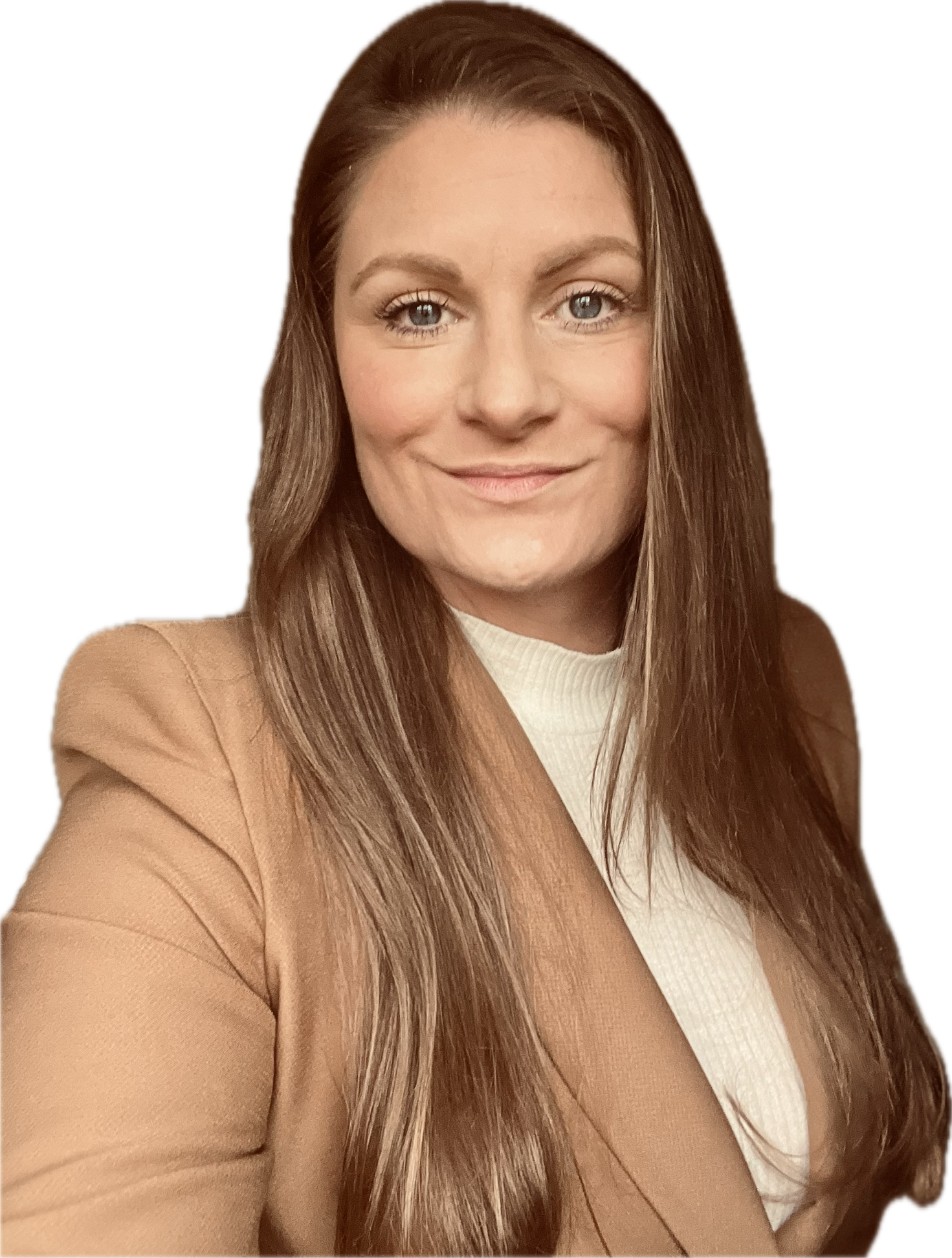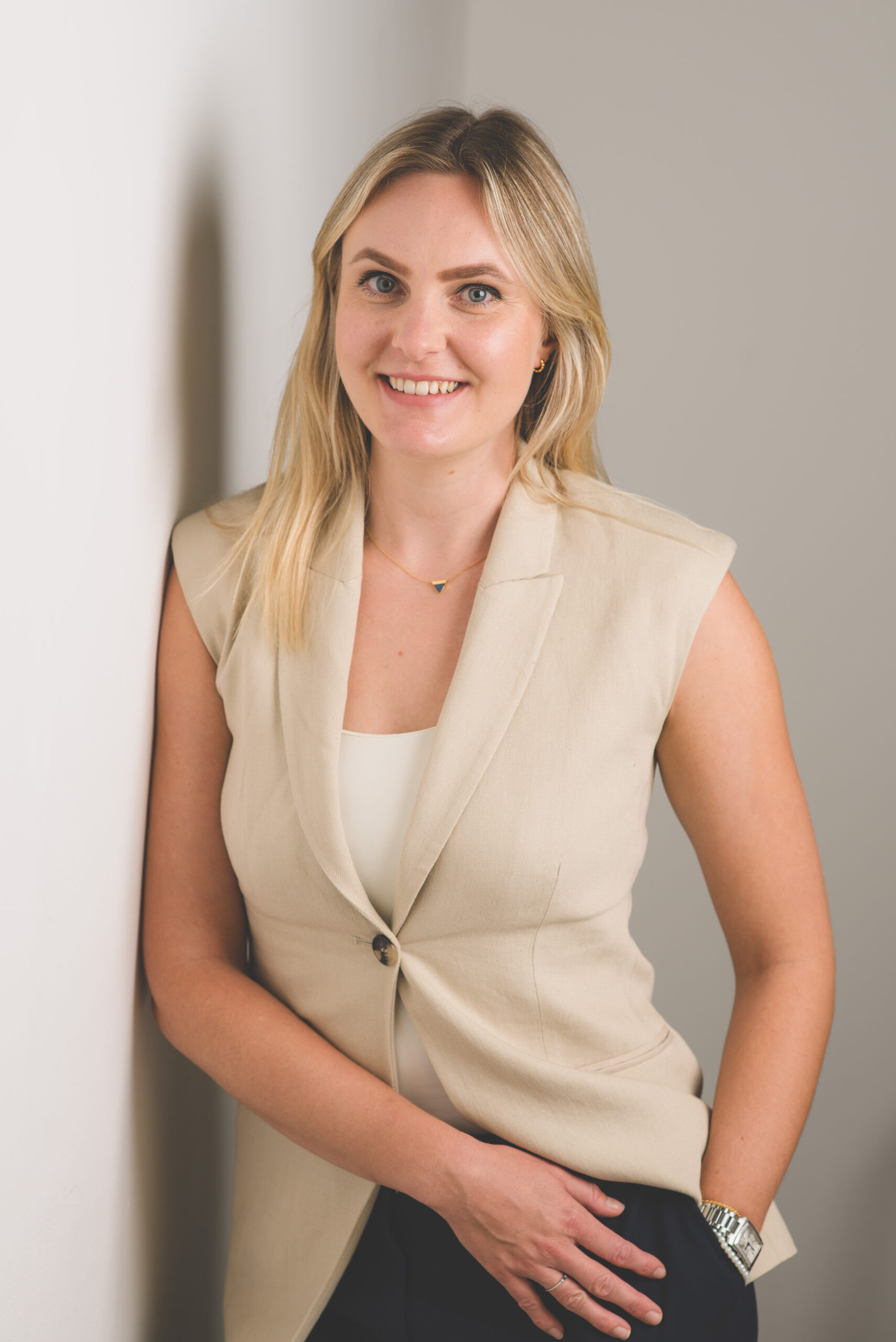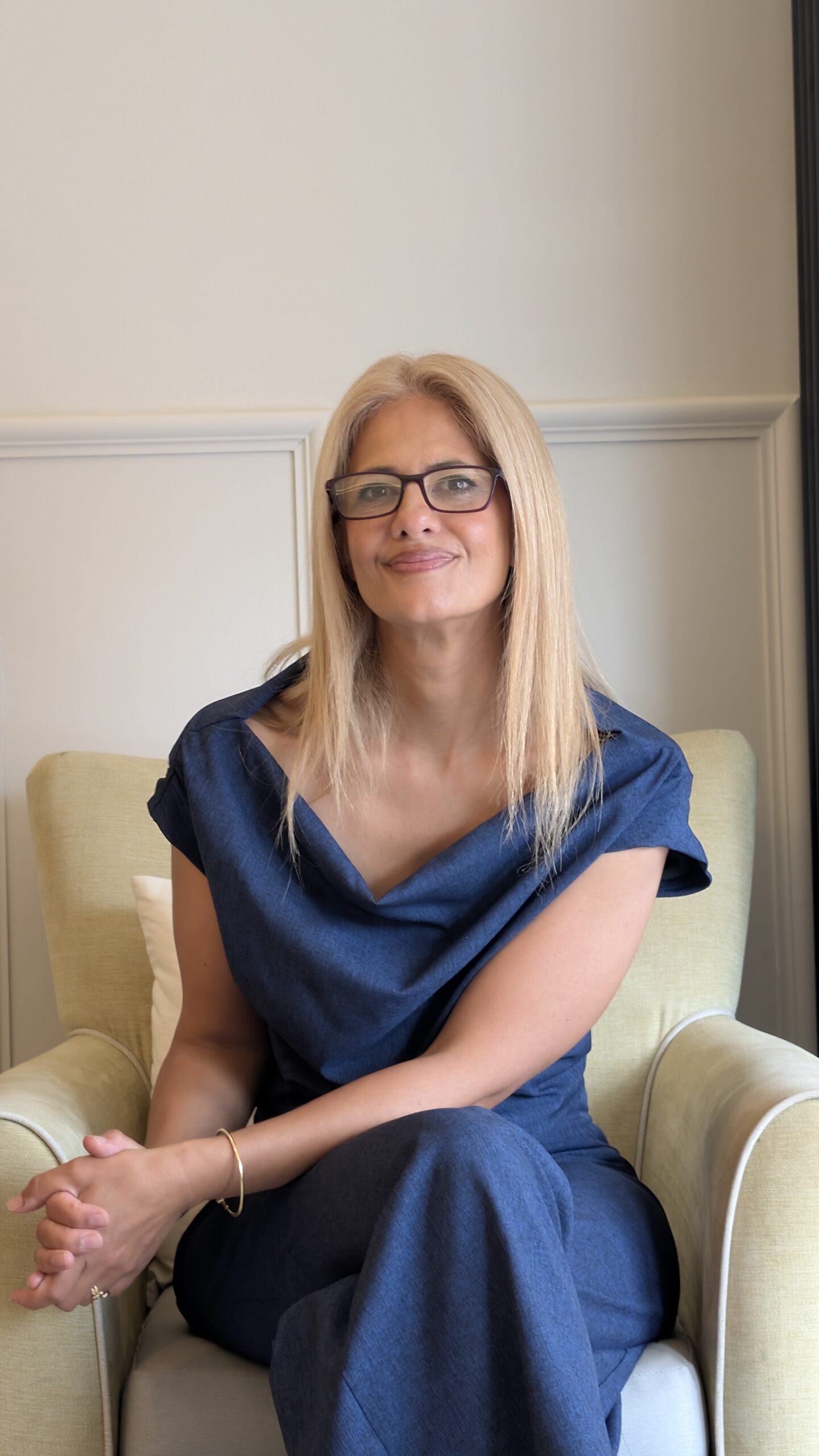
Meet Nevena
Nevena Nikolova is a Bulgaria-based Matrescence Facilitator who helps mothers understand the emotional, personal, and professional transformation that can come with motherhood. With a background in recruitment and talent acquisition, she now focuses on bringing greater awareness of matrescence to women and workplaces.
The Life That Changed in More Ways Than One
For Nevena Nikolova, motherhood was not simply a new role added to an already familiar life. It became a period of profound change that reshaped her values, priorities, relationships, understanding of work, and sense of self. What began as a personal experience gradually became the foundation for a new professional direction.
Today, Nevena works to help women understand that the complicated feelings surrounding motherhood are not signs that something is wrong with them. Feeling lost, grieving aspects of a former life, needing more support, or discovering that old priorities no longer fit can all be part of the transition. Through her work as a Matrescence Facilitator, she wants mothers to have language for experiences that are often left unexplained.
Her path to this work was not carefully planned. In many ways, it resembles the journey she now speaks about: unexpected, sometimes difficult, and shaped by moments that only become meaningful when viewed from a distance.
A Career Built Through Unexpected Turns
Nevena’s professional life began far from matrescence. As a student, she worked in a call center and a clothing store before moving into management support roles. Recruitment entered her life almost by accident when, in one of her positions, she became involved in helping with hiring.
That experience eventually opened a longer chapter in talent acquisition. Communication remained the common thread throughout her different roles. She was continually working with people, listening to them, understanding their needs, and helping organizations connect with the right individuals.
She never imagined that this experience would eventually become relevant to her work with mothers. Yet the connection became clearer later, when she began questioning how workplaces understood women returning after maternity leave.
Nevena believes that unexpected turns can carry their own kind of direction. The roles we enter without a carefully designed plan can still give us skills, perspectives, and experiences that become important much later.
Then came a period that changed almost everything.
When Life Asked Her to Slow Down
A month before becoming pregnant, Nevena underwent life-saving surgery on her birthday. It was an experience that immediately changed her perspective on life. Before she had fully processed what had happened, she discovered that she was pregnant.
Then the pandemic began.
She and her partner decided to leave the capital and move to a smaller town. Soon after, she became a mother during one of the most uncertain periods in recent history. Her son was born by emergency C-section after what had initially begun as a natural birth. At the same time, she was adjusting to a new city, a new home, a baby, and a life without the familiar network of friends and people who had previously surrounded her.
All of this happened within a remarkably short period.
The changes were physical, emotional, practical, and personal. Nevena eventually began therapy, a decision that became an important part of how she understood herself. For about two years, she worked through emotions she had previously struggled to accept and learned that asking for help was not a weakness.
It was a lesson she wanted to pass on to her son.
She began thinking differently about vulnerability and emotional expression. If she wanted him to understand that sadness, anger, sensitivity, and tears were natural parts of being human, she first had to allow herself to experience those emotions without judgment.
“I didn’t want him to hide his feelings, as well as I didn’t want to hide mine,” she says.
Motherhood was teaching her something she had not expected: that caring for another person also required becoming more honest with herself.
The Woman Who Returned Was Not the Woman Who Left
Her relationship with work became another important part of this transformation.
After her son’s birth, Nevena returned to work part-time in recruitment. Eventually, however, she faced the reality that returning full-time would mean working later hours because of the United States-based clients her company served. With a child who was still very young and needed her at night, she could not make that schedule work.
After four and a half years with the company, she made the difficult decision to leave.
It was not a decision she took lightly. She wanted to be present for her son, especially during those early years when her priorities had changed so significantly.
She later moved through two more companies before spending around two years away from active recruitment. When she was eventually laid off, the experience initially made her question her professional worth. Like many people, she wondered whether time away had put her behind others.
But the experience also gave her space to look more closely at what happens to women after they become mothers.
She noticed a gap between the woman who leaves the workplace and the woman who eventually returns. Companies, she felt, can sometimes expect a mother to return as the same professional who left, even though motherhood may have changed her values, priorities, confidence, needs, and perspective.
That question stayed with her.
What happens to women during this transition? Why are so many of these changes discussed only in terms of problems? And why was there so little language for the broader transformation taking place?
While searching for answers, Nevena discovered the concept of matrescence.
The term was new to her. She began reading books and looking for more information, and something about the concept immediately resonated. It gave her an explanation for feelings she had experienced but had not known how to name.
For the first time, she could see that the transformation she had gone through was not simply something to overcome. It was part of becoming a mother.
Giving Mothers Words for What They Feel
Matrescence describes the transition into motherhood and the many ways a woman can change through that process. For Nevena, discovering the concept was significant because it gave structure to an experience that is often reduced to simple explanations.
A mother who feels different after giving birth may be told that she has changed or that she is experiencing depression, without anyone exploring the wider emotional and identity shifts that can accompany motherhood.
Nevena wants to make that conversation broader.
Her work today focuses particularly on pregnant women and women with children aged 0–3. She wants women to have accurate information before becoming parents, feel prepared for the transition, and understand what naturally happens to women during pregnancy and after birth. Just as importantly, she wants them to know they do not have to feel alone in the messy feelings and emotions that can come with these periods, believing that greater awareness and support can help prevent serious conditions from developing.
Her work focuses on helping mothers and mothers-to-be understand that motherhood can contain conflicting emotions. There can be love and exhaustion, gratitude and grief, joy and loneliness, sometimes within the same day.
She is also interested in the relationship between motherhood and professional life. Her own experience showed her how difficult it can be when workplaces do not account for the reality that a returning mother may need flexibility and understanding.
She wants companies to recognize that time away from work does not erase a woman’s capabilities.
A woman may return with different priorities, but that does not mean she has less to contribute. In some ways, motherhood can develop skills that are deeply relevant to professional life, including negotiation, emotional awareness, patience, adaptability, and leadership.
Nevena also sees the importance of community. In earlier generations, children were often surrounded by grandparents, relatives, and neighbors who could share responsibility. Today, many families have much smaller support networks.
That difference can profoundly affect how a mother experiences her own role.
Building a Different Conversation in Bulgaria
One of Nevena’s proudest decisions has been to begin speaking openly about motherhood and matrescence.
For someone who once worried about what other people might think, this has required courage. She has started conversations with friends, colleagues, and others who may not immediately understand the subject.
Those conversations have shown her how many women share similar emotions, worries, anxiety, and loneliness.
She has also become one of the first people in Bulgaria certified as a Matrescence Facilitator through ICF and Mama Rising. Rather than treating this as the end of her learning, she sees it as the beginning of a larger conversation.
Her goal is to help build a community where women can talk honestly about motherhood without comparison or judgment. She wants mothers to be able to speak about the beautiful parts as well as the difficult ones.
That honesty matters because the expectations placed on mothers remain remarkably high. Women are often expected to care for children, maintain careers, manage homes, remain emotionally available, and somehow do everything without needing much support.
Nevena’s work asks a simpler question: what would change if support were considered part of the structure rather than something a mother has to earn?
A Different Definition of Success
Motherhood also changed Nevena’s understanding of success.
Before having her son, she associated success with career progression, promotions, higher salaries, and professional titles. Those things once provided a clear measurement of how far she was moving.
Her experiences changed that definition.
After surviving a serious operation and becoming a mother, she began to see time differently. Health, family, shared experiences, travel, and ordinary moments became more valuable.
Today, success means doing work that feels meaningful and peaceful. It means having enough space for family and being able to enjoy life rather than constantly measuring it through professional achievement.
That shift does not mean she has stopped caring about work. Instead, work has become more closely connected to purpose.
She wants to do something that matters to her, something that allows her to feel that her time and energy are being used in a way that reflects who she has become.
From Personal Experience to Wider Change
Nevena’s ambitions for the coming months are closely connected to this purpose. She wants to spread awareness of matrescence among women in Bulgaria, build a community where mothers can speak openly, and bring the conversation into workplaces.
She believes companies also have a role to play in understanding what happens when women return after maternity leave.
Her message is not that motherhood should determine a woman’s professional path. Rather, she wants workplaces to recognize that a woman may return changed without returning diminished.
Motherhood can reshape priorities. It can create new responsibilities and require flexibility, especially during the early years. Those needs can evolve as children grow, just as the mother continues to evolve alongside them.
Nevena sees motherhood as a form of education in itself, one that can develop leadership, negotiation, emotional intelligence, patience, and a deeper understanding of people.
Most importantly, she wants society to stop viewing maternity leave simply as a gap on a CV.
Making Room for the Woman Who Emerges
Nevena’s story began in recruitment, moved through motherhood and uncertainty, and eventually led her toward a field she had not even known existed a few years ago.
The connection between these chapters is people.
Throughout her career, she has worked with people. Through motherhood, she learned to understand herself more deeply. Through matrescence, she found a language that helped connect those two experiences.
Her work now asks others to make room for that same complexity.
A mother does not become less capable because she has stepped away from the workforce. She does not necessarily return as the same person who left. She may have new priorities, new strengths, different boundaries, and a different understanding of what matters.
For Nevena, acknowledging that transformation is not about giving mothers special treatment. It is about seeing them accurately.
“I want to help them understand that motherhood is beautiful, but some days are tough,” she says.
There is something quietly powerful in that distinction. Motherhood does not need to be idealized to be meaningful. Women do not need to pretend that every part of it is easy in order to appreciate what it gives them.
Nevena is building her work around that honesty, helping mothers name what is happening inside them and encouraging workplaces to see the person behind the maternity leave.
Her own journey has taught her that life rarely follows the straight line we imagine. Sometimes a career changes unexpectedly. Sometimes a difficult experience opens a door that was invisible before. Sometimes becoming a mother changes the definition of who you thought you were.
And sometimes, finding the right words for that change can be the beginning of finding yourself again.
For More Features
Be Featured in The Real Edit!
Every story has the power to shape how we see innovation, leadership, and purpose. If you’re a founder, creator, executive, or changemaker with a journey worth telling , we’d be honored to help you share it.
To inquire about being featured:
Email us at: info@realedit.site
Follow The Real Edit