Meet Nina
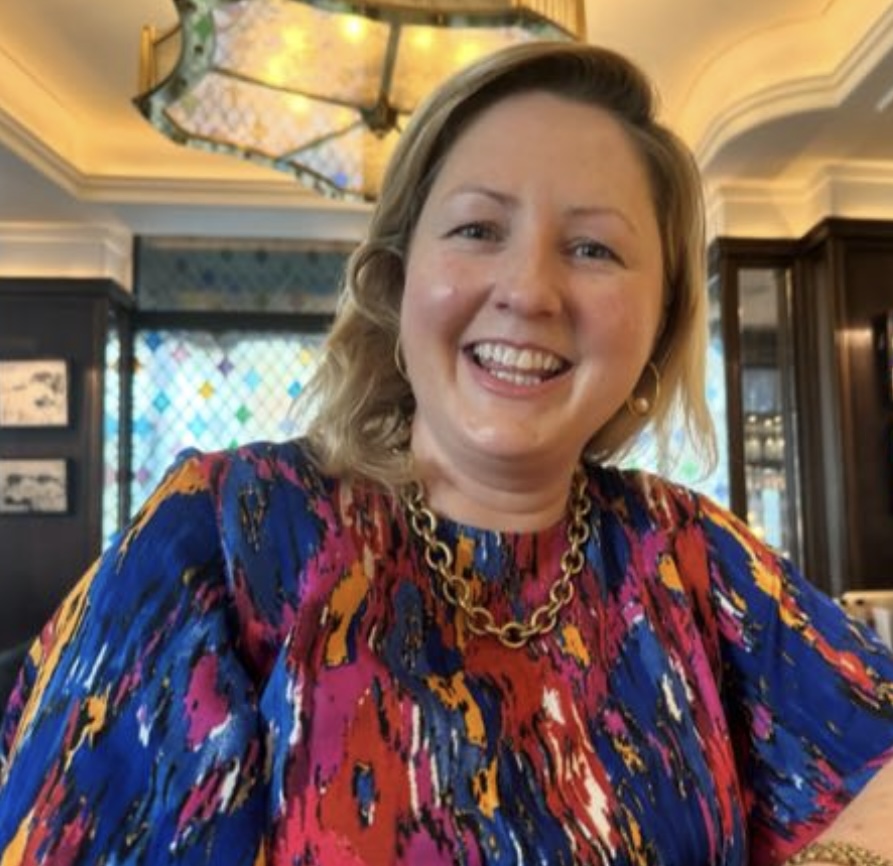
Nina Blassengale is the Founder and Principal Guide of CROSSING CHANGE, an independent practice focused on helping teams learn from their experiences, navigate change, and improve how they execute their work. Based in Washington, D.C., she brings years of experience across federal financial management, project management, change management, organizational transformation, facilitation, and leadership development.
The Lessons Hidden Inside the Work
For Nina Blassengale, better team performance does not begin with finding an outside answer. Often, the answer is already sitting inside the room.
Every project leaves something behind. There are decisions that worked, choices that did not, moments when communication broke down, unexpected successes, and small discoveries that only become visible after people have lived through the work. Nina has built her practice around helping teams slow down enough to recognize those lessons and use them.
Her work is rooted in a simple but consequential idea: people who have experienced a project together possess knowledge that can help them do the next one better. The challenge is creating the space for that knowledge to be shared honestly, without turning reflection into blame.
That perspective has grown from a career spent moving through different sides of organizational work. From financial management in the federal government to project leadership, facilitation, and change management, Nina has repeatedly found herself at the intersection of people, processes, and transformation. Today, through CROSSING CHANGE, she brings those experiences together to guide teams toward stronger execution and more thoughtful change.
A Career Built One Discipline at a Time
Nina’s professional journey began in Washington, D.C., at PricewaterhouseCoopers, where she worked in the federal government practice providing financial support to federal agencies. From there, she continued building her experience through roles at IBM, Booz Allen, and again at IBM.
Her early career was centered on federal financial management, but her interests and responsibilities gradually expanded. She moved into project management, earned her Project Management Professional certification, and later developed deeper expertise in change management through Prosci ADKAR certification.
The progression was not necessarily part of one carefully designed plan. Instead, it reflected Nina’s willingness to keep learning and to recognize where her abilities could be useful.
She worked on projects of very different sizes and levels of complexity. Some involved major initiatives with significant organizational consequences. Others were much more ordinary, such as helping reorganize an office’s filing structure. Yet the scale of the assignment did not determine whether the work mattered. Each project offered an opportunity to understand how people work together, how change happens, and where teams can improve.
Facilitation became an especially important part of that journey.
One of Nina’s earliest defining experiences came while she was a mid-level leader at IBM working on a Navy project. She was asked to run a workshop and took the responsibility seriously. She studied how to facilitate effectively, reading a book and other resources before stepping into the room.
The workshop went well. More importantly, it revealed something to Nina about herself.
She realized that she could bring people together, create productive conversations, and guide groups toward meaningful outcomes. That first experience became the beginning of a practice she would continue throughout her career.
Later, she brought similar workshops into the federal government, where she saw how valuable structured reflection could be for teams. Those experiences eventually became part of the foundation for the work she now offers independently.
When a Layoff Became an Opening
The decision to build CROSSING CHANGE did not arrive under ideal circumstances.
Nina was laid off from her federal government work after spending years developing her professional experience. Like any unexpected career disruption, the transition brought uncertainty. She had already spent a significant amount of time looking for another job, and the pressure of figuring out what came next was real.
But the disruption also created an opening she had not previously considered.
A colleague who had become a close friend encouraged Nina to look at her experience differently. She had watched Nina lead lessons learned workshops and had seen how those sessions brought people together and helped teams change the way they approached their work. From her perspective, the skills Nina had developed inside government could be valuable beyond that environment.
Another important voice came from a childhood friend who had built a business of his own. When Nina was laid off, he encouraged her to consider entrepreneurship rather than simply continuing the job search.
That encouragement stayed with her.
Instead of putting all of her energy into finding another position, Nina began asking whether she could put that same energy into creating something of her own. Entrepreneurship had never been the obvious next step in her career, which made the decision both unfamiliar and meaningful.
She describes the experience as completely new territory. There was no guarantee that the practice would work, and building a business while navigating the uncertainty that follows a layoff was difficult. Yet there was also a sense of possibility in finally trying something she had never imagined for herself.
The result was CROSSING CHANGE.
The name itself reflects the nature of the work. Nina helps people cross from one way of working into another, particularly when change requires them to understand what has happened before and use that knowledge to make better decisions going forward.
Refusing to Let the Lesson Disappear
Another important part of Nina’s story came from a different kind of challenge.
At one point in her career, she worked within a chain of command where a leader did not value the change management work Nina was developing. She was encouraged to abandon it, even though the work supported an agency strategic goal.
For Nina, giving up would have been the easier choice.
Instead, she continued meeting the priorities expected of her while also building the change management practice. She did not allow one person’s lack of support to convince her that the work itself lacked value.
Looking back, she sees that experience differently than she might have at the time. What once felt like resistance became part of the professional foundation she could later draw upon. The work strengthened her qualifications in change management and gave her experience that she could eventually use to train and guide others.
That willingness to stay with something meaningful, even when it is not immediately supported, has become an important part of how Nina approaches leadership.
She has also learned that confidence often grows through experience, rather than needing to be fully present from the start.
Her first experience leading a team illustrated that lesson. She was responsible for four people working on a major Navy project that required travel to multiple bases. She felt the pressure of being responsible for others for the first time and wanted to make sure she handled the role well.
Rather than allowing the uncertainty to stop her, she sought guidance from more experienced leaders, learned as she went, and gradually settled into the responsibility.
The experience taught her that leadership does not require having every answer from the beginning. It requires being willing to learn, ask for help, take responsibility, and continue moving forward.
Turning Experience Into Collective Intelligence
Today, Nina’s work centers on something teams produce naturally but may not always recognize as a resource: their own experience.
She guides teams through lessons learned conversations that allow people to examine what happened during their work, understand why certain outcomes occurred, and identify what can be carried into future efforts.
The purpose is not to create a list of mistakes.
It is to create understanding.
A team may finish a project and immediately move to the next priority, leaving little time to consider what the experience actually taught them. Over time, this can lead to familiar problems appearing again. Decisions are repeated without understanding their consequences. Communication issues resurface. Effective practices disappear because nobody takes the time to capture them.
Nina’s approach creates room for teams to pause and examine those patterns.
She believes that the knowledge needed to improve execution is often already present among the people doing the work. Different team members hold different pieces of the story. One person remembers why a decision was made. Another understands what happened when the plan met reality. Someone else may have noticed a problem that was never fully discussed.
When those perspectives come together, the team develops a fuller picture.
That is where Nina sees the real value of lessons learned work. People are not simply documenting the past. They are creating a shared understanding that can influence what happens next.
Her lessons learned work sits within the broader discipline of change management. She helps teams find the alignment needed to move through change collectively, rather than treating transformation as something that only arrives from senior leadership.
For Nina, meaningful change requires participation. People are more able to move forward when they understand the reason for change, have an opportunity to contribute, and can connect the transition to the work they are actually doing.
Her leadership philosophy rests on three values: integrity, hard work, and relationships.
Integrity matters because trust cannot exist without honesty. Hard work reflects her commitment to giving her best effort. Relationships matter because professional progress rarely happens in isolation. Strong working relationships can influence how people collaborate, how they respond to difficulty, and how much they are willing to learn from one another.
Learning Again in a Changing World
Nina’s commitment to learning has not diminished with experience. If anything, it has become more intentional.
One of her recent accomplishments was earning the PMI Certified Professional in Managing AI certification. It was a significant undertaking because her practical exposure to artificial intelligence had largely come through everyday use, including tools such as ChatGPT.
Rather than relying on familiarity alone, Nina wanted to develop a more informed understanding of AI and be able to discuss it responsibly and confidently.
The certification represented more than a credential. It reflected the same instinct that has shaped her career from the beginning: when the world changes, keep learning.
She recognizes that AI is altering the workplace and that professionals in project and organizational environments will need to understand how it affects the way teams operate. By pursuing formal education in the area, she is giving herself the foundation to participate in those conversations with greater knowledge.
For Nina, this willingness to evolve is part of remaining useful to the people she serves.
Building a Practice Around What People Already Know
The future Nina imagines for CROSSING CHANGE is not centered on a single type of organization or one particular project.
Her goal is broader. She wants to guide teams one by one through transformation by drawing out the knowledge they have already accumulated.
She wants organizations to become better at learning from themselves.
That means helping teams recognize that every project contains information about how they work. Their successes can reveal practices worth repeating. Their difficulties can point toward changes that need to be made. Their disagreements can expose assumptions that need to be examined. Their collective experiences can become a source of organizational intelligence rather than something that disappears when the project ends.
Nina hopes to help as many teams as possible use that intelligence to improve their performance.
There is something deliberately practical about that vision. She is not promising that every project will be easy or that teams will never make mistakes. Instead, she is interested in helping people become better learners from one effort to the next.
That philosophy also mirrors how she approaches her own career.
She continues to develop her skills, pursue new areas of knowledge, and remain open to opportunities that were not part of her original plan. Entrepreneurship itself became possible because she was willing to reconsider what her experience could become after circumstances changed.
Finding Strength in the Work and the Life Around It
Building a business after a layoff has not been effortless. Nina speaks openly about the stress and uncertainty involved in creating something independently.
What keeps her moving is a combination of passion, encouragement, and personal discipline.
Her family and the people who encouraged her to pursue independent consulting have provided important support. She also maintains routines that help her stay grounded, including working out, staying active, cycling with a group, and hiking.
Those activities are not separate from her professional life. They give her space to maintain balance while dealing with the demands of building a business.
She also draws inspiration from women who have experienced layoffs or difficult transitions and then created something of their own. She is particularly moved by women who turn uncertainty into an opportunity to build businesses, contribute to their communities, employ others, and create new possibilities.
There is recognition in that inspiration. Nina sees a version of her own experience in those stories.
Her message to people facing difficult transitions is straightforward:
“Don’t give up. When the going gets tough, get tougher and push through.”
She also believes preparation matters. Having financial reserves and a foundation of stability can give people greater freedom to pursue their goals without being consumed by immediate uncertainty.
It is a practical perspective from someone who has experienced how quickly professional circumstances can change.
A Different Way to Think About Progress
Nina defines success in personal terms.
For her, success means knowing that she has done her best, given her full effort, and genuinely tried to achieve the objective in front of her. It is less about a particular title or external measure and more about being able to look back at the work with confidence that she showed up fully.
That definition connects closely to the philosophy behind CROSSING CHANGE.
She asks teams to do something similar. Look honestly at what happened. Understand what can be learned. Recognize what needs to change. Then take that knowledge into the next effort.
There is humility in that process because learning requires acknowledging that there is always something that could have been understood better.
But there is also strength in it.
A team that can examine its own experience without blame is a team capable of growth. A leader who can listen to what people learned is better positioned to make informed decisions. An organization that treats experience as knowledge is less likely to repeat the same problems simply because nobody stopped to understand them.
That is the work Nina has chosen to build.
She is not trying to erase the difficulty from transformation. She is helping people make better use of what difficulty teaches them.
And perhaps that is the most meaningful thread running through her own journey. Her career has been shaped by change, uncertainty, learning, and moments when she had to reconsider what came next. Each stage added another piece to the perspective she now brings to others.
Through CROSSING CHANGE, she is turning those experiences into a way of helping teams move forward with greater understanding.
Her work begins with the belief that people already know more than they sometimes realize.
The next step is turning those lessons into action.
For More Features
Be Featured in The Real Edit!
Every story has the power to shape how we see innovation, leadership, and purpose. If you’re a founder, creator, executive, or changemaker with a journey worth telling , we’d be honored to help you share it.
To inquire about being featured:
Email us at: info@realedit.site
Follow The Real Edit