Meet Catherine
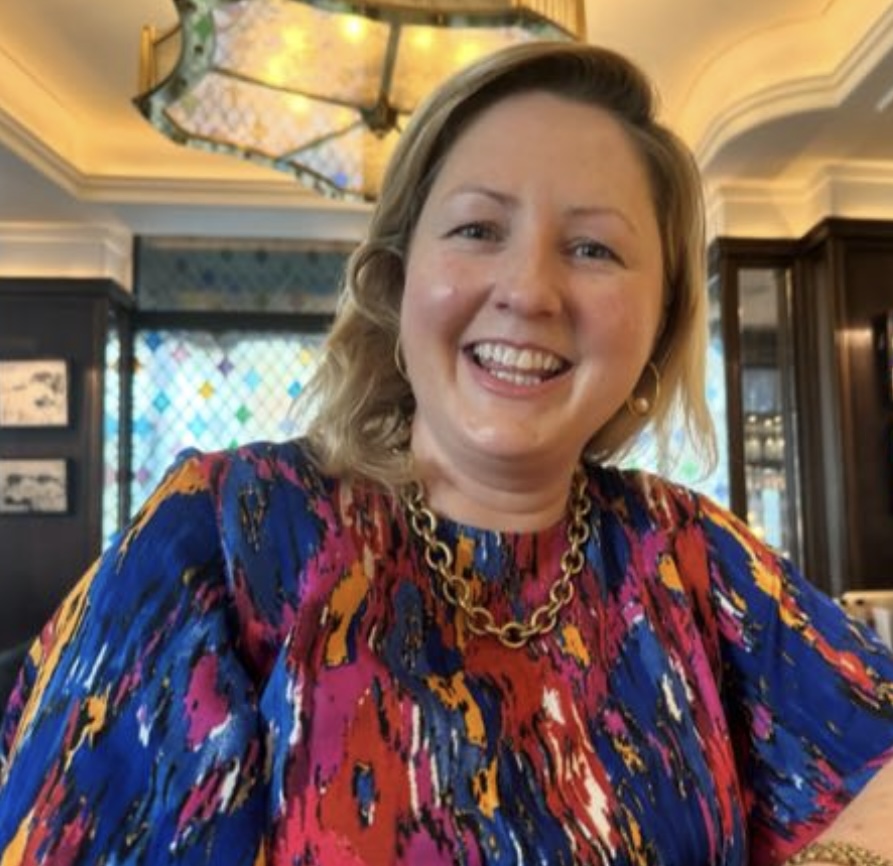
Catherine Ayambirwe Namara is a Ugandan electrical engineer, project manager, mentor and advocate for women and girls. She is the Founder and CEO of Be A Mentor Community Uganda and a Project Manager at MTN Uganda, where her work brings together technology, transformation, sustainability, leadership and women’s empowerment.
A Childhood Question That Became a Life’s Direction
Long before Catherine Ayambirwe Namara had a professional title, she had a question.
She was raised in Kampala, Uganda’s capital city, but her family regularly travelled to their ancestral home in Buyanja, Rukungiri District. At 10 years old, she began to realise that what she had initially experienced as an adventure, the absence of electricity in the village, was in fact a critical challenge that shaped people’s everyday lives
That question became a quiet source of determination.
For Catherine, electricity represented opportunity. It meant being able to study after dark, access information and imagine a future that was not limited by the circumstances into which someone was born. She decided that she would become an electrical engineer and contribute to making electricity accessible to more homes in Uganda.
She went on to study Electrical Engineering at Makerere University and graduated with First Class honours in 2009. Soon after, she joined Uganda’s telecommunications industry. Electrification was progressing, but Catherine began to see another kind of infrastructure that could transform lives.
Connectivity could link people to information, education, markets, opportunities and one another.
Her early technical roles taught her discipline, execution and the importance of delivering results. Over time, her career expanded into project management, digital transformation, strategy and leadership. She pursued postgraduate studies in Project Planning and Management and later completed a Master’s in Management Studies, specialising in project planning and management.
The path seemed to be moving exactly as she had hoped.
But somewhere along the way, Catherine discovered that the infrastructure she wanted to build was not only physical.
People needed infrastructure too.
When Achievement Did Not Feel Like Progress
After nearly a decade in her career, Catherine reached a period that challenged the confidence she had built through years of academic and professional achievement.
She had excellent qualifications, including postgraduate studies completed with distinction. She worked hard and delivered results. Yet professional progression did not come as naturally as she expected.
She submitted hundreds of job applications and experienced repeated disappointment. Eventually, rejection began to feel less like an external circumstance and more like a judgment of her own ability.
She began questioning herself.
At one point, she considered pursuing a PhD largely as a way to escape the frustration she felt about her career. The issue was not that she lacked ambition. She had simply reached a place where working harder no longer seemed to be enough.
Then mentorship entered her life in a more personal way.
Through Project Girls for Girls, Catherine was encouraged to examine what she wanted rather than simply what she believed was available to her. One of her earliest exercises was to write down her goals. The process forced her to confront a reality she had not fully recognised: she was waiting for external validation to confirm what she already knew about herself.
Her mentor encouraged her to stop running from her career and give herself permission to succeed.
That advice changed the way Catherine approached her professional life.
She became more comfortable acknowledging her accomplishments. She learned to speak about her contribution rather than hiding behind collective language. She became more visible, pursued opportunities that once seemed beyond her reach and started understanding rejection differently.
Then one of her mentees sent her a job advertisement.
The role had 15 requirements. Catherine believed she met only two.
Her mentee encouraged her to apply anyway.
Catherine did, and after several interviews, she was selected as the preferred candidate.
The experience became an important lesson in how confidence develops. Sometimes a person does not wait until she feels completely ready. She becomes ready by taking the step.
Discovering the Dream Gap
Mentorship did more than help Catherine navigate her own career. It changed the questions she asked about other women and girls.
As she worked with young women, she noticed that many workplace challenges actually began long before a person entered the workplace.
They began when a girl was choosing school subjects.
They began when she wondered whether STEM was meant for someone like her.
They began when she considered university and did not know which paths were available.
They began when she looked at the people succeeding around her and saw no one who reflected her own circumstances.
Catherine began thinking about the gap between potential and possibility.
A young woman can be highly capable and still struggle to see a future that feels attainable. She may have the intelligence to become an engineer but lack a role model who tells her that she belongs in engineering. A university graduate can have strong academic results but lack the confidence, networks or visibility required to move into the next stage of her career.
This became what Catherine describes as the dream gap.
Her own childhood experience gave her an understanding of how access shapes possibility. Her professional experience showed her how technology can connect people. Mentorship taught her that human connection can do the same.
The work began to take on a larger meaning.
Catherine no longer wanted to mentor only when the opportunity arose. She wanted to create structured pathways that could reach girls before major academic and career decisions had already been made.
That meant going upstream.
It also meant building something of her own.
From an Idea to Be A Mentor Community Uganda
The idea behind Be A Mentor Community Uganda was bigger than Catherine initially knew how to explain.
She understood the problem she wanted to address, but she did not yet know how to turn the vision into an organisation. She had questions about structure, sustainability, partnerships and implementation.
The Vital Voices Leadership Journey became an important part of that transition.
In 2023, Catherine participated in the U.S. Department of State’s International Visitor Leadership Program and visited Vital Voices in Washington, D.C. The experience exposed her to a global community of women who were using their influence to create possibilities for others.
In 2024, she became a Vital Voices Leadership Journey Cohort 8 Fellow. The following year, she attended the Visionaries Summit.
These experiences helped her move from thinking about an idea to developing a practical framework around it. She learned to clarify the problem, articulate her vision and understand how community could become part of the solution.
The support she encountered along the way also showed her that a vision does not have to be carried by one person.
People offered time, expertise, introductions, encouragement and practical support.
In 2025, Catherine formally registered Be A Mentor Community Uganda as a not for profit organisation.
The organisation reflects the evolution of her own journey. She once wanted to build physical infrastructure that would bring electricity to homes. Now she is building human infrastructure that can connect women and girls to confidence, information, mentors, networks and opportunity.
The change in direction is significant, but the underlying purpose has remained remarkably consistent.
Catherine still wants to make life better for someone else.
Taking Mentorship Upstream
Today, Be A Mentor Community Uganda works with women and girls at different stages of their journeys.
The organisation engages girls in secondary schools before they make critical academic and career decisions, while also supporting university students, young professionals and women entering the workplace.
The approach is built around mentorship, access, storytelling and community.
Catherine believes representation matters because people often need to see a possibility before they can imagine themselves pursuing it. That is why storytelling is an important part of her work. Highlighting women in STEM and other fields allows girls to encounter examples of people who have already walked paths they may be considering.
Her work has also included the Global Mentoring Walk, which creates spaces for experienced professionals to connect with students and early career women.
The 2025 Global Mentoring Walk brought together 105 participants under the theme “Lighting the Path.” In 2026, the focus moved further upstream under the theme “Leading Your Journey.”
That year, the programme engaged 173 students at City High School before they reached major academic and career decision points. Through mentoring conversations and vision boarding, students were encouraged to think deliberately about the futures they wanted to create.
For Catherine, the importance of that work is not limited to the event itself.
The real impact is what happens afterward.
Six mentees from the 2025 walk became mentors in 2026. A participant who once needed guidance was now helping someone else navigate her own journey.
That is the kind of cycle Catherine wants to build.
She has also seen the model extend beyond Kampala. One of the organisers, Mariam Antoine, carried the approach into Nakivale Refugee Settlement, creating opportunities for women and girls who might otherwise have had limited access to mentorship.
The organisation’s growth therefore reflects something larger than one programme.
It demonstrates how an idea can move through people.
Making Women Visible and Opening Doors
Catherine’s work at MTN Uganda adds another dimension to her commitment to women’s empowerment.
As a Project Manager, she works at the intersection of technology, transformation and sustainability while also championing initiatives that support women in the workplace.
Through Women@Work, she has contributed to practical efforts around areas such as career growth, financial literacy and wellness.
Her approach to empowerment is grounded in the belief that representation alone is not enough. Women need environments in which they can remain, develop, progress and lead.
That perspective has grown from her own experience.
Catherine knows what it feels like to have the qualifications but struggle to access the next opportunity. She also knows what happens when someone believes in you strongly enough to encourage you to apply for the opportunity anyway.
That is why her work is not simply about telling women to believe in themselves.
It is about creating the conditions that make belief easier.
A mentor can offer perspective.
A network can provide an introduction.
A role model can make a career feel imaginable.
A story can make an achievement visible.
A community can make a difficult journey feel less lonely.
Together, these forms of support can change what someone believes is possible.
The Ripple Effect Matters More Than the Moment
Catherine is proud of the milestones Be A Mentor Community has reached, including formal registration, mentorship programmes, school engagement and storytelling initiatives such as 100 Women in STEM in 100 Days.
But what matters most to her is the ripple effect.
She has seen mentees become mentors. She has watched women establish organisations and ventures of their own. She has seen mentorship travel into new communities through people who believe strongly enough in the idea to carry it themselves.
That is a different way of thinking about impact.
It is not only about how many people Catherine can reach personally. It is about whether the people she supports become capable of creating opportunities for others.
This philosophy is closely connected to how she defines success.
For Catherine, success is not simply measured by professional advancement or personal achievement. It is measured by what becomes possible for other people because she walked a particular path before them.
Her career has taught her the importance of competence, structure and execution. Her mentorship journey has taught her the importance of generosity, community and visibility.
She now brings those lessons together.
The result is a form of leadership that is less concerned with being the person at the centre and more interested in creating systems that continue to work when she is not present.
Leading With Purpose, Courage and Generosity
Catherine’s leadership is shaped by a simple belief that power becomes more meaningful when it is shared.
She believes in purpose before position. Whatever platform she occupies, she wants to use it to create meaningful impact rather than simply advance her own career.
That principle influences how she approaches both professional responsibilities and community work.
She values excellence and continuous learning because she believes good intentions need to be supported by competence. Whether she is leading a project, developing a mentorship programme or working through a business challenge, she wants to leave things stronger and more sustainable than she found them.
At the same time, she recognises that leadership requires humility.
Building Be A Mentor Community Uganda taught her that courage does not mean having every answer. There were moments when she did not know how to move the idea forward. Instead of allowing uncertainty to stop her, she learned to seek help, listen to others and keep refining the vision.
That experience has shaped her understanding of resilience.
She does not believe resilience means doing everything alone.
She draws strength from mentors, friends, colleagues and the wider community around her. She also makes room for rest and reflection, recognising that sustainable work requires the ability to pause as well as persist.
Even small milestones matter to her.
The registration of Be A Mentor Community Uganda involved countless follow ups and administrative steps. When the certificates finally arrived, she marked the occasion with a virtual celebration and launched the organisation’s LinkedIn page.
It was not a dramatic moment.
But it represented something important.
An idea that had once existed mainly in her mind now had a legal identity, a platform and a community around it.
A Future Where Mentorship Becomes Culture
Catherine’s ambitions for Be A Mentor Community Uganda extend beyond individual programmes.
She wants to build a scalable mentorship ecosystem that can reach women and girls with limited access to role models, professional networks and opportunities.
A major part of that vision is strengthening the connection between education and industry.
She wants students to encounter career possibilities before they are forced to make major decisions about their futures. She wants professionals, employers, entrepreneurs, students and mentors to have more intentional opportunities to connect.
She also wants to make women more visible as innovators, entrepreneurs, leaders and problem solvers.
But the long term vision is larger than a collection of programmes.
Catherine wants mentorship to become a culture.
In that culture, receiving support would not be the end of the journey. It would be the beginning of another responsibility. A woman who has benefited from guidance would eventually become a mentor herself. A person who gained access to a network would use that network to create access for someone else.
The goal is a chain of opportunity that continues beyond the original intervention.
That is why the transition from mentee to mentor matters so much to her.
It turns support into something that multiplies.
The Path She Wants Others to See
Catherine’s story has moved through several forms of infrastructure.
As a child, she thought about electricity.
As an engineer, she worked with technology.
As a project manager, she learned how systems can be designed and delivered.
As a mentor, she discovered the importance of relationships.
As the founder of Be A Mentor Community Uganda, she is now building something that sits at the intersection of all those experiences.
Her work is ultimately about access.
Access to information.
Access to role models.
Access to networks.
Access to confidence.
Access to people who can say, at the right moment, that a particular door is worth walking through.
The girl from Buyanja who once wondered how children without electricity could compete has grown into a woman asking a much broader question about opportunity.
She wants to know how society can ensure that girls do not limit their dreams simply because they were born without access to the right people, information or opportunities.
That question has become the centre of her work.
Lighting the Path for the Next Person
Catherine does not measure her journey only by how far she has travelled.
She looks behind her.
There are the girls who have encountered mentors before choosing their subjects. There are young women who have found confidence through community. There are mentees who have become mentors. There are women who have created ventures and organisations of their own. There are communities carrying the mentorship model into places beyond where it began.
For Catherine, these are signs that the work is becoming larger than one person.
Her story also carries a quiet lesson about leadership. A career can begin with one dream and still evolve without losing its original purpose. The form may change, but the desire to create access can remain.
She once wanted to light homes.
Today, she is helping light paths.
And perhaps the most meaningful part of that journey is what happens when someone she has helped no longer needs her to show the way. She can become the person who guides someone else.
That is the future Catherine is working toward: not a world where everyone follows the same path, but one where more people have the confidence, knowledge and connections to choose their own.
Her greatest lesson is simple. Success becomes more meaningful when it is shared. A person does not need to have reached the end of her own journey before she can help someone else move forward.
Sometimes, the path becomes clearer because you choose to light it for another person.
For More Features
Be Featured in The Real Edit!
Every story has the power to shape how we see innovation, leadership, and purpose. If you’re a founder, creator, executive, or changemaker with a journey worth telling , we’d be honored to help you share it.
To inquire about being featured:
Email us at: info@realedit.site
Follow The Real Edit