

This is for preview purpose only. It is unlisted and unindexed on the Internet
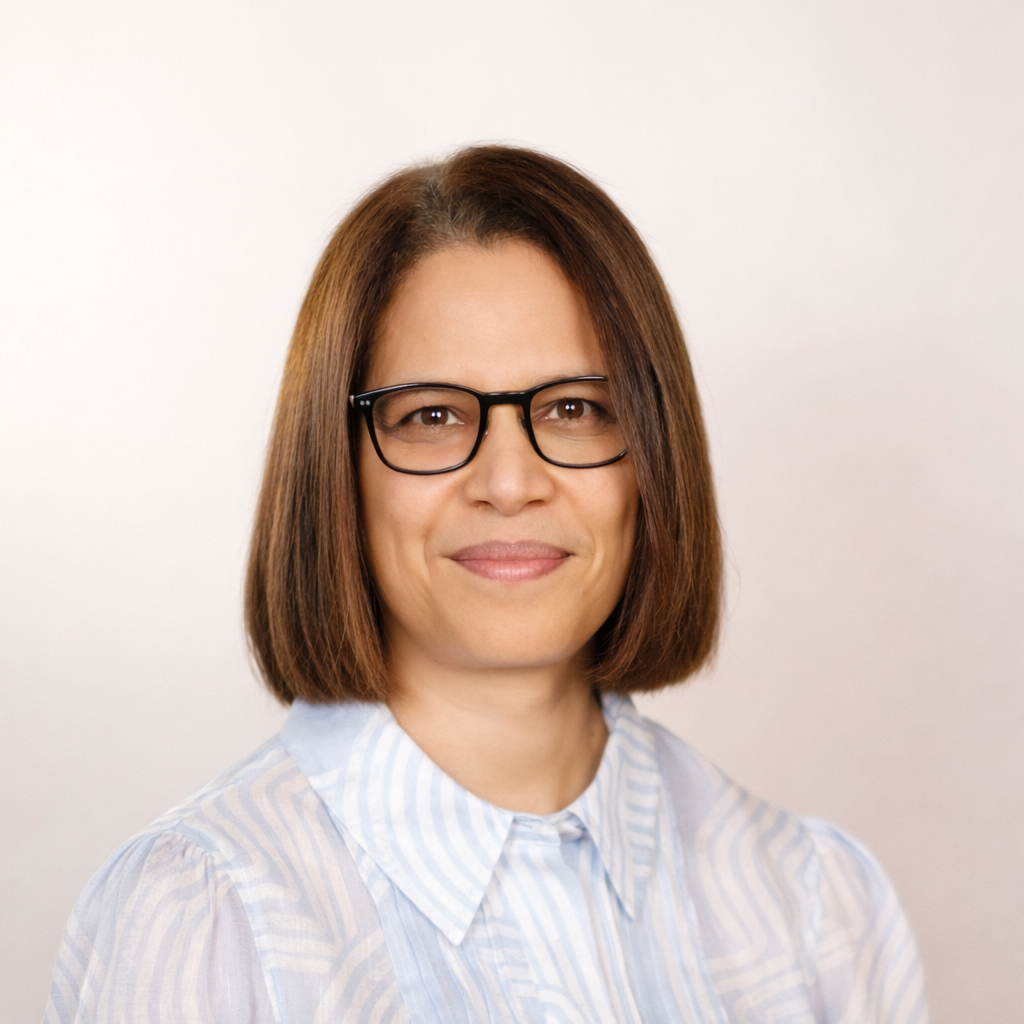
Meet rochelle
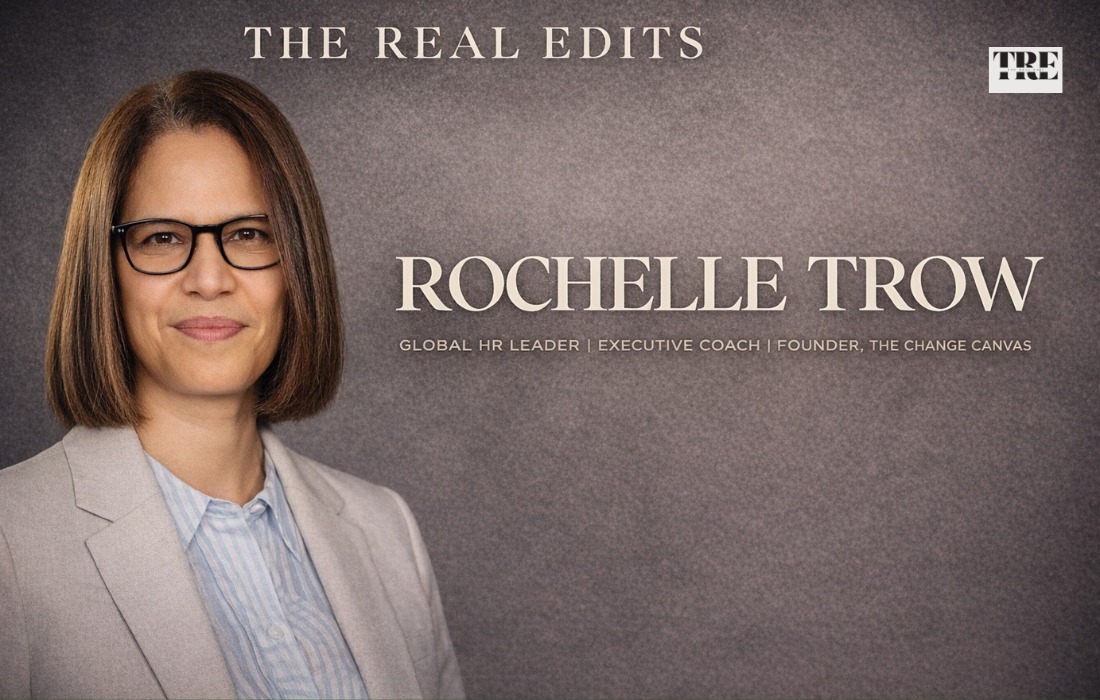
Rochelle Trow is a global HR leader, executive coach, and founder of The Change Canvas, with over two decades of experience across multinational organizations including Unilever, GSK, Takeda, and Onsemi. Having led large scale transformations and operated at the highest levels of corporate leadership, she brings deep expertise in navigating complexity, culture, and change. Today, her work focuses on helping senior leaders build internal stability, align with their values, and lead sustainably in high pressure environments, guided by her belief that true leadership begins from within.
Learning Early What Power Looks Like
Rochelle Trow did not grow up imagining a future as an executive leader in global corporations. What shaped her earliest ambitions was something simpler and more fundamental. She wanted stability.
She was the youngest of ten children, raised in South Africa during the years of apartheid. In that environment, social hierarchies were not abstract concepts. They were visible, immediate, and deeply embedded in daily life. Children learned early where they stood and how systems shaped opportunity.
Those early experiences cultivated a quiet but powerful awareness. Rochelle learned to observe carefully, to understand dynamics between people, and to sense where influence lived inside a room. She became attentive to how structures shaped behaviour and how individuals navigated them.
Much later she would recognise how formative those observations were. At the time they simply felt like survival instincts. But the ability to read complex environments and understand human behaviour would eventually become the foundation of her professional life.
Looking back now, she understands how deeply those early circumstances shaped her thinking. As she reflects on that time, she explains,
“I was the youngest of ten children, raised in South Africa during apartheid. In that environment, you become aware very early of hierarchy, power, and what it takes to belong.”
That awareness would stay with her long after she left the country of her birth.
Curiosity About People, Not Just Performance
Rochelle’s professional career began in retail. It was practical work and it offered opportunity, but what captured her attention was not sales figures or operational metrics. What fascinated her most was people.
She noticed that two employees could operate within the same team and under the same leadership but experience the workplace very differently. One might thrive while another slowly withdrew. The patterns intrigued her.
She wanted to understand what made environments supportive for some and difficult for others. Why did certain cultures allow people to grow while others quietly diminished them?
Those questions drew her toward human resources.
What began as curiosity slowly evolved into a career that would span more than two decades. Rochelle worked across several major multinational companies including Unilever, Rexam, GSK, Astellas, Takeda, and Onsemi. Her roles placed her at the intersection of leadership strategy, organisational change, and cultural transformation.
Over time she became known for operating effectively in complex environments where pressure was high and stakes were even higher. She led large scale transformations, supported mergers and acquisitions, and helped organisations redesign their HR operating models.
Often she was brought into situations where tensions were rising and outcomes were uncertain. Her role required both strategic clarity and emotional steadiness.
Across these experiences, one theme remained constant. Rochelle never lost sight of the human realities inside corporate systems. Strategy mattered, but the human cost of change mattered just as much.
Crossing Continents and Expanding Perspective
In 2002 Rochelle made a decision that would shape the next chapter of her life. She left South Africa and moved to London.
The relocation opened new professional possibilities but also intensified her personal drive. Living and working internationally expanded her world, yet it also brought a subtle internal pressure.
She wanted to prove that she belonged in these global environments.
Ambition became fuelled not only by capability but also by an unspoken need to validate herself. Success became closely tied to performance. The higher she climbed within organisations, the more she felt compelled to maintain that momentum.
Over the next two decades she built an impressive corporate career. Her work brought her into executive leadership circles and placed her at the centre of organisational decisions that affected thousands of employees.
Eventually her life would expand across three countries. She spent nearly twenty years living and working in London before relocating to Switzerland in 2019.
Each move deepened her cultural awareness and broadened her understanding of leadership. Yet internally something quieter was unfolding.
The Mirror Moment
For many leaders the turning point in their story arrives through crisis. For Rochelle the moment was more subtle.
By 2019 she had achieved the kind of career trajectory that many professionals aspire to. She held senior roles, had global responsibility, and was trusted to lead complex transformations.
From the outside everything appeared successful.
Internally she felt something different.
There was no dramatic collapse or public breakdown. Instead there was a growing awareness that she had become highly effective while simultaneously losing connection with herself. She recognised that much of her identity had become intertwined with achievement.
What followed was a period of deep personal change.
She asked her husband for a divorce. Soon after she stepped away from work for nearly a year to recover from burnout. During that time she began examining the internal patterns that had shaped her leadership style and her relationship with success.
The process was not quick or comfortable. It required confronting beliefs that had been built over decades.
She realised that much of her ambition had been driven by early conditioning that equated achievement with safety. In a world where stability had once felt uncertain, success had become a form of protection.
Burnout forced her to slow down long enough to see that pattern clearly.
She began working with therapists and executive coaches, and she returned to writing as a way to process what she was learning about herself.
Through that work she began separating resilience from suppression and performance from identity. The distinction would later become central to her work with other leaders.
She describes that period as a mirror moment. It was a time when she stopped looking outward for validation and began examining the internal beliefs that shaped her decisions.
The process changed her relationship with leadership permanently.
Rebuilding Life From the Inside Out
During those months away from corporate life, Rochelle’s priorities began to shift.
Her twin sons were approaching their teenage years, and she became more present in their daily lives. Family life took on new meaning as she rebuilt her routines and her sense of identity outside work.
Small moments became significant again.
She adopted two British Shorthair cats named Lena and Simba. The act of nurturing something simple and domestic softened parts of her life that had long been dominated by corporate intensity.
Gradually she rebuilt her physical health as well, losing thirty kilograms during that period.
None of these changes were dramatic public transformations. They were quieter forms of recalibration.
What mattered most was that she began to rebuild her life from the inside out rather than from external expectations.
The Birth of The Change Canvas
As Rochelle returned to professional life, she did not abandon the corporate world she knew so well. Instead she chose to engage with it differently.
She began developing what would become The Change Canvas, a platform designed to support leaders navigating high pressure environments.
The idea emerged from her own experience inside executive systems. She had seen many leaders who performed at extraordinary levels externally while privately struggling to sustain that pace internally.
Traditional leadership development often focuses on adding new skills. Rochelle believed the deeper issue was something else entirely.
Many leaders lacked the internal steadiness required to hold complexity, ambiguity, and constant pressure without losing themselves.
The Change Canvas was created to address that gap.
Through coaching, leadership development events, and advisory work, Rochelle helps senior leaders strengthen their internal capacity rather than simply expanding their external capabilities.
Her approach is built around three core anchors: awareness, boundaries, and alignment.
These principles form the foundation of her second book Anchored, released in early 2026.
As she explains,
“We do not need more tools. We need to understand our internal landscape. Everything we need is already within us, but most of us were never taught how to access it.”
This philosophy reflects the lessons she learned during her own period of transformation.
Writing as Integration
Alongside her leadership work, Rochelle has also become an author.
Her first book, Awakening to Wholeness: A Life Unmasked, explored the personal journey that led her to reassess her identity beyond professional roles.
Writing the book allowed her to articulate the internal experiences that many high performing professionals rarely discuss openly.
Her second book, Anchored: Staying Grounded When Everything Speeds Up, translated those personal insights into a practical framework for leaders navigating fast paced systems.
Unlike many leadership books built around productivity frameworks or tactical advice, Anchored focuses on internal steadiness. It explores how leaders can remain grounded while working inside organisations that reward constant acceleration.
The book reflects Rochelle’s belief that sustainable leadership begins with self awareness rather than external strategy.
Leadership in an Accelerating World
Today Rochelle works with senior leaders who are already capable and respected within their organisations. The people she supports are not struggling because they lack competence.
They are struggling because the pace of modern leadership is accelerating faster than traditional resilience strategies can support.
Her work focuses on helping leaders develop the internal stability required to remain clear under pressure.
When leaders lose that steadiness, the effects ripple outward through culture, decision making, and organisational trust.
Rochelle believes the challenge facing modern organisations is not simply one of performance but of sustainability.
Her work is grounded in a simple but powerful insight.
Leadership is not only about what individuals accomplish. It is also about how they remain present and grounded while doing it.
A Different Definition of Success
Today Rochelle defines success differently than she once did.
Earlier in her career it was closely connected to professional recognition and external validation. Titles, influence, and career progression all served as markers of achievement.
Those things still matter, but they no longer define her sense of worth.
Success now means alignment between the way she lives and the work she teaches others to do. It means maintaining clarity about what drives her ambition and ensuring that her decisions remain connected to her values.
Family life remains central to that alignment.
She hopes her sons grow up seeing a version of leadership that is ambitious yet humane. Strong without becoming hardened by pressure.
Her personal philosophy reflects that balance.
“Achievement can create opportunity. But it cannot replace identity. At some point you must separate who you are from what you produce.”
That insight sits at the heart of everything she now teaches.
Looking Forward
Rochelle’s ambitions for the future remain strong, but they are guided by a deeper sense of intention.
She hopes to expand the reach of Anchored so that the ideas within it become accessible to people who may not have access to executive coaching or expensive leadership programmes.
She also wants to build communities of leaders who practise grounded leadership together rather than navigating pressure alone.
Her goal is not to reject corporate systems but to help individuals remain whole while working within them.
In a world where speed often defines success, Rochelle is focused on something quieter but equally powerful.
Helping leaders find their internal ground.
Closing Reflection
Rochelle Trow’s story is not simply about career achievement. It is about learning how to lead without losing oneself along the way. Her journey from apartheid era South Africa to global executive leadership reveals how deeply early experiences shape ambition, identity, and purpose. What makes her story compelling is not that she left the system behind but that she chose to understand it more deeply while also understanding herself. In doing so she offers a different model of leadership. One that values clarity over constant motion and presence over performance alone.
For More Features
Be Featured in The Real Edit!
Every story has the power to shape how we see innovation, leadership, and purpose. If you’re a founder, creator, executive, or changemaker with a journey worth telling , we’d be honored to help you share it.
To inquire about being featured:
Email us at: info@realedit.site
Follow The Real Edit



No Comments