

This is for preview purpose only. It is unlisted and unindexed on the Internet
A Curiosity That Refused to Stay in One Discipline
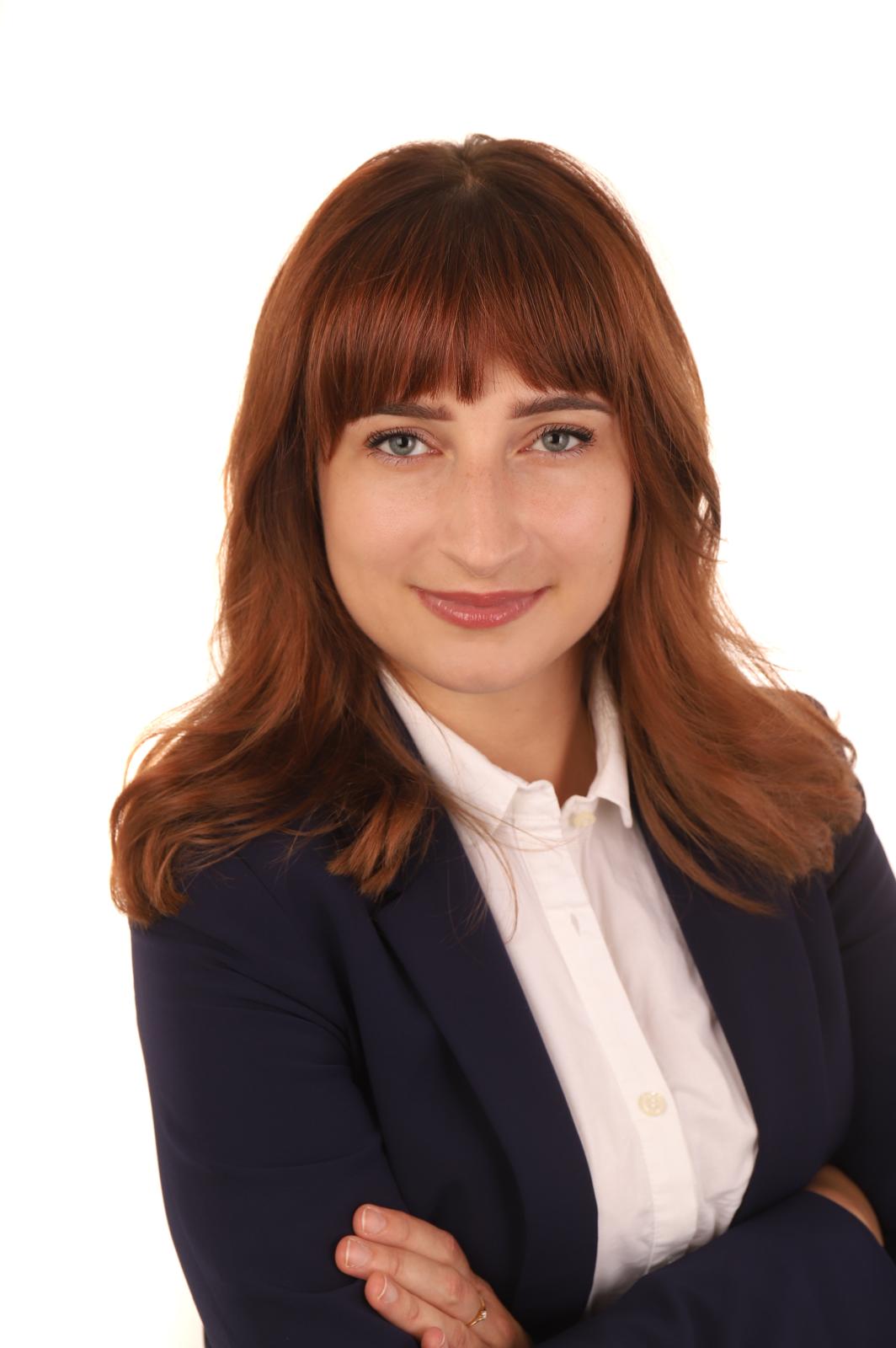
For some people, a career path unfolds through clear milestones and carefully planned steps. For others, it emerges gradually through exploration, curiosity, and a willingness to follow questions wherever they lead. Monika Mitka’s professional journey belongs firmly in the second category.
Long before she stepped into the world of global programs and project environments, her curiosity had already taken shape in another field entirely. She began her academic journey studying psychology, drawn to the deeper question of how people think, how they make decisions, and how individuals behave within larger systems. Even early on, she felt that understanding human behaviour required looking beyond a single discipline.
While studying psychology, she also explored marketing, communication, and linguistics. Each subject offered a different perspective on how people interpret information and interact with the world around them. Rather than choosing a single direction immediately, she allowed those interests to coexist, believing that each perspective added another piece to the larger puzzle.
This intellectual curiosity eventually led her beyond Poland. Through the Erasmus program she spent time studying at Ludwig Maximilian University in Munich. What initially began as an academic exchange soon became a much longer chapter of life abroad. She remained in Germany for five years, an experience that shaped not only her professional path but also her understanding of working across cultures and perspectives.
Those early years were not connected to technology or project delivery in the way her career would later become. Her first full time role was in a patent law office where she worked as a foreign language correspondent. The work required precision, communication, and an ability to navigate complex information. Later she moved into a marketing agency as an account executive, gaining further experience in coordination, client communication, and structured problem solving.
At the time, none of these roles appeared to point directly toward the technology and consulting environment she would eventually enter. Yet looking back, the underlying themes were already present. Each experience strengthened her ability to translate complexity into clarity and to work across different systems of knowledge.
“My professional journey hasn’t been a straight line,” she explains. “Looking back, the common thread has always been curiosity about how systems work and how people navigate them.”
Discovering the Intersection of People and Systems
The shift into the world of technology and project environments did not happen through a single decisive moment. Instead it developed gradually as Monika gained more professional experience and began to recognize where her strengths naturally converged.
Friends working in the IT sector initially sparked her interest. Yet the deeper attraction was not the technology itself. What intrigued her was the environment in which projects take place. Project management brought together elements she had already been exploring for years. It combined structure, coordination, communication, and decision making within complex organisations.
For someone with a background in psychology and linguistics, that environment offered something intellectually engaging. Projects are rarely just technical exercises. They involve multiple stakeholders with different priorities, different expectations, and often competing pressures.
Within that complexity, Monika began to see a pattern that fascinated her. Technical frameworks provide the structure for project delivery, but the real dynamics often unfold between people. Communication styles, leadership approaches, and organisational incentives can shape outcomes just as strongly as timelines or tools.
Her academic background in psychology allowed her to approach these environments from a slightly different perspective. Rather than focusing exclusively on processes and frameworks, she paid attention to behavioural patterns. She observed how teams communicated during stressful moments, how decisions were made under pressure, and how organisational structures influenced collaboration.
This perspective gradually became one of her strengths. In complex environments where technical details, data structures, and organisational hierarchies intersect, understanding human dynamics can make the difference between progress and stagnation.
She reflects on that realization with clarity.
“Projects are never only about plans or timelines. They are about people with different priorities, different ways of thinking, and different pressures. That is exactly what makes them so intellectually interesting.”
Over time she found herself increasingly drawn to roles where coordination and structure were essential. Project leadership, particularly in large and cross functional environments, offered a place where many of her interests could converge. Systems thinking, communication, behavioural insight, and structured execution all had a role to play.
What once looked like a series of unrelated professional experiences slowly revealed itself as a coherent path.
Learning to Belong in a New Environment
Despite the intellectual alignment she eventually discovered, moving into the technology and project environment was not entirely comfortable at the beginning. Like many professionals entering a new field, Monika faced moments of uncertainty.
The language of the industry was unfamiliar at first. Meetings were filled with technical terminology, frameworks, and acronyms that seemed to multiply endlessly. Many of her colleagues came from strongly technical backgrounds, and stepping into that environment required adjusting to a different professional culture.
In those early stages she sometimes questioned whether she truly belonged in the room. The experience is one many professionals recognise but rarely speak about openly. The feeling that at any moment someone might discover that you do not know everything yet.
Rather than withdrawing from that discomfort, she gradually learned to approach it with curiosity. She observed how experienced colleagues navigated challenges, asked questions whenever necessary, and continued expanding her knowledge step by step.
Over time an important realization emerged. No single person possesses complete expertise in complex environments. Projects evolve, technology evolves, and organisations evolve with them. What matters more than perfect knowledge is the willingness to keep learning.
This shift in perspective allowed her to find her voice more confidently in professional settings. Discussions that once felt intimidating gradually became opportunities to contribute insights drawn from her background in psychology and systems thinking.
Humour also found its way back into her professional interactions. Early in her career she had hesitated to use it, unsure how it might be perceived in a formal environment. With experience she discovered that a sense of humanity often strengthens collaboration rather than weakening it.
Through these experiences she also learned an important leadership lesson. High performance and human connection do not stand in opposition to one another. Teams perform best when both elements coexist.
The Real Challenges Behind Complex Projects
Working inside large organisations quickly revealed another truth about project environments. Many problems initially presented as technical challenges are rarely technical alone.
In practice, projects often take place within complex ecosystems. Different departments carry different priorities. Stakeholders interpret success in different ways. Communication structures may not always be clearly defined. Under those circumstances, misunderstandings can easily accumulate.
Monika became increasingly interested in identifying the deeper dynamics behind these situations. When a project stalls or encounters resistance, the cause often lies beneath the surface. Structural misalignment, unclear governance, or conflicting incentives may be shaping the behaviour of teams without anyone fully recognising it.
Rather than reacting immediately to visible problems, she learned to step back and examine the broader system in which the project operates. Observing patterns across communication, decision making, and organisational structure often reveals the real source of friction.
These insights shaped the way she approaches her work today. Understanding systems before attempting to fix them has become a guiding principle in her professional life.
Creating Clarity in Complex Organisations
Today Monika works as a Senior Consultant at Fusion Consulting, supporting organisations that operate across global teams and complex technical landscapes. Her work sits at the intersection of project leadership, data coordination, and stakeholder alignment.
Many of the environments she encounters involve large initiatives where multiple perspectives must come together. Business goals, technology systems, data governance, and operational constraints often intersect in ways that create significant complexity.
Her role is to help teams navigate that complexity with structure and clarity.
In practical terms this may involve improving decision processes, aligning expectations between stakeholders, or strengthening communication across cross functional teams. Sometimes the most valuable contribution is simply helping people understand each other’s perspectives more clearly.
The goal is not only to deliver successful projects but also to reduce unnecessary friction inside organisations. When communication improves and expectations become transparent, teams can move forward with far greater efficiency.
“The problems organisations face are often not technical at all,” she explains. “They come from unclear structures, misaligned expectations, or communication gaps. When those patterns are understood, progress becomes much easier.”
This approach reflects the unique combination of disciplines that shaped her journey. Psychology informs how she observes team behaviour. Linguistics supports her ability to communicate across cultures and hierarchies. Systems thinking allows her to identify structural patterns inside complex organisations.
Together they form a perspective that focuses on clarity rather than complexity.
Expanding the Conversation Around Data
Looking ahead, Monika sees another area where her work continues to evolve. Modern organisations generate enormous volumes of data, yet many still struggle to translate that information into meaningful decision making.
For her, the intersection between project leadership and data governance represents an important frontier. Understanding how data flows through an organisation and how it influences decision processes can significantly improve the way projects are managed and delivered.
She is currently deepening her expertise in areas such as data quality, governance structures, and the foundations that allow organisations to trust the information they rely on. By combining these insights with project management practices, she hopes to contribute to more transparent and predictable delivery environments.
At the same time she remains committed to continuing the broader professional conversation around leadership and systems thinking. Writing, sharing ideas, and engaging with other practitioners have become meaningful ways for her to reflect on her own work and learn from the perspectives of others.
For Monika, the future is less about reaching a final destination and more about continuing the process of learning and exploration that has guided her career so far.
Building a Path That Reflects How You Think
If there is one idea that consistently emerges from Monika Mitka’s journey, it is the value of embracing a path that may not always look conventional from the outside.
Her career did not follow a single predefined track. Instead it evolved through multiple disciplines, international experiences, and professional environments that gradually revealed how her interests connected.
The combination of psychology, communication, systems thinking, and project leadership may once have seemed unusual. Today it forms the foundation of her professional identity.
In complex organisations where technology, people, and data intersect, that interdisciplinary perspective has become a strength rather than a deviation.
Ultimately, her story reflects a quiet but powerful principle. The paths that initially appear uncertain often contain the most valuable insights.
Curiosity, patience, and a willingness to explore different perspectives can reveal patterns that only become visible with time. For Monika Mitka, those patterns continue to guide her work as she helps organisations navigate complexity with clarity, structure, and a deeply human understanding of the systems they inhabit.
For More Features
Be Featured in The Real Edit!
Every story has the power to shape how we see innovation, leadership, and purpose. If you’re a founder, creator, executive, or changemaker with a journey worth telling , we’d be honored to help you share it.
To inquire about being featured:
Email us at: info@realedit.site
Follow The Real Edit





No Comments