


This is for preview purpose only. It is unlisted and unindexed on the Internet
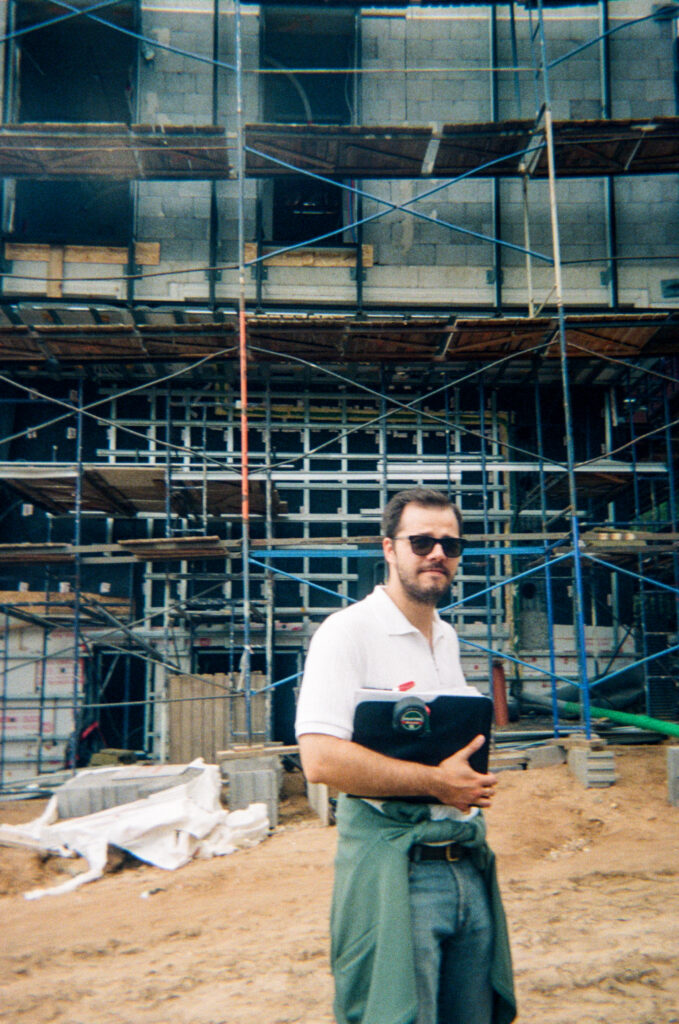
Meet Maxim
Maxim Meltzer is the Founder and CEO of I AM Design Studio in Minsk, Belarus. Raised in a family of architects, he now leads an international boutique studio that bridges bold architectural vision with strong operational support, helping creative professionals scale complex projects with clarity and structure.
The Weight and Wonder of Shaping Space
Architecture was never just a career option for Maxim Meltzer. It was part of the air he grew up breathing. Born into a family of architects, conversations about buildings, proportions, and the shaping of cities were not abstract ideas but part of everyday life. He understood early that architecture was not simply about structures. It was about responsibility.
He speaks about it without grandiosity. For him, shaping space means shaping experience. Every room, every line, every detail influences how someone feels when they wake up, work, rest, or gather. There is something deeply human in that realization, and it has guided him quietly from the beginning.
He does not describe himself as a genius. He does not claim to be the most visionary designer in the room. What drives him is something steadier. He wants to build systems that allow talented people to do their best work. He wants to create an environment where ideas do not collapse under operational pressure. That intention has become the foundation of I AM Design Studio.
Learning to Earn a Place
Maxim’s path into architecture was not immediate. He failed his entrance exams twice. For two years, three times a week, he traveled two hundred kilometers to study with private tutors. The distance was physical, but it was also emotional. Each attempt carried the quiet fear of disappointment and the stubborn hope that he would eventually break through.
He finally entered university on his third try.
That experience left a mark. It taught him that desire is not abstract. It is built through repetition, through early mornings, through continuing when the result is uncertain. The process hardened him in ways he did not fully understand at the time. It also softened him. He learned humility. He learned patience. He learned that talent without endurance is fragile.
In his senior years at university, he began working in architectural firms as an outsourced employee. He was eager, ambitious, and convinced that independence was the ultimate goal. Soon after graduating, he opened his first practice. There were small successes. There were also large failures.
Youth carries confidence, but it also carries blind spots. Maxim encountered both.
He found himself facing the reality that experience cannot be rushed. Reputation cannot be borrowed. Skill must be sharpened in the presence of complexity. Rather than stubbornly clinging to independence, he made a decision that would reshape his trajectory. He stepped back into employment.
When Everything Fell Apart
Joining an established team changed him. Over several years, he worked on high level projects with tight deadlines and enormous workloads. He moved from design into project management and team leadership. The pace was relentless. The responsibility was heavy. The learning was accelerated.
He often reflects that the growth he experienced during that period would have taken years to achieve alone. Pressure became his teacher. Complexity became his training ground.
Then, without warning, the company faced a financial crisis. Leadership changed. Departments dissolved. The team he had grown with began to scatter.
It was not simply a professional disruption. It was personal. He had invested himself deeply in the people and the projects. Maintaining morale during the crisis became a test of character. Watching something he helped build unravel forced him to confront a difficult truth.
He realized he no longer wanted to remain in employment where his capacity would be limited by instability and shifting decisions beyond his control. That moment became the quiet beginning of I AM Design Studio.
Looking back, he does not describe these collapses as isolated misfortunes. He sees them as reconstruction phases. He once shared,
“All of this broke me and then rebuilt me into a stronger version of myself.”
Failure did not leave him untouched. It changed his internal dialogue. During difficult periods, he would drink green tea, reflect on the distance he had already traveled, and ask himself whether fear was serving him or limiting him. Over time, fear lost its authority. Experience replaced it.
He stopped seeing failure as a verdict. He began seeing it as instruction.
Building the Back Office for Talent
When Maxim founded I AM Design Studio, he was not trying to prove himself as a star architect. He was trying to solve a problem he had witnessed repeatedly.
Many talented architects and designers, he observed, struggle not because of lack of creativity but because of operational overload. Managing clients, budgets, timelines, technical documentation, coordination, and execution can drain creative energy. The very systems meant to deliver a project often suffocate the vision behind it.
Maxim positioned himself differently. He did not want to compete for the spotlight. He wanted to stand behind it.
He explains,
“I do not consider myself a design genius, but I want to be a reliable support system for truly talented architects.”
That statement captures the heart of his studio. I AM Design Studio operates as a bridge between ambitious creative vision and rigorous technical execution. It functions as a structured back office that allows art directors and project creators to focus on what they do best while his team handles coordination, optimization, and operational depth.
With experience managing large scale private residences, urban planning concepts, and international collaborations, the studio blends architectural logic with technological efficiency. Advanced tools are integrated into workflows not for novelty but for precision and speed. The aim is clarity. The aim is reliability.
For Maxim, daily learning is non negotiable. He believes that thinking broadly and confronting complexity are habits that must be practiced. Each project demands understanding not only the structure but also the people behind it. Clients bring personal stories. Teams bring perspectives and ambitions. Leadership, in his view, requires the ability to perceive and respect those layers.
He speaks often about people. Inspiration, for him, does not come from aesthetics alone. It comes from individuals who love what they do. It comes from mentors and colleagues who challenge him to think more deeply. It comes from friends who have achieved success and embody discipline in their own lives.
The studio’s ambition is not limited to Belarus. Maxim and his partners are working toward expanding internationally, strengthening networks of experts who share a common philosophy. He wants I AM Design Studio to become a mark of quality trusted by both clients and creators. Not because it is loud, but because it is consistent.
Redefining Success
Ask Maxim about success, and he pauses. The question is not simple for him.
He does not measure it purely in financial terms or public recognition. For him, success is deeply personal. He believes it is the ability to pursue and develop in something that genuinely ignites you, especially if that pursuit improves the lives of others.
Architecture, at its core, affects how people live every day. It shapes their routines, their comfort, their productivity, their relationships. Maxim sees this responsibility clearly. Each project is more than a contract. It is an opportunity to influence daily experience.
His philosophy extends beyond work. Honesty and sincerity guide him. He sees little separation between personal values and professional conduct. Work is not an isolated compartment. It is a large part of his life. Therefore, it must align with who he is.
The habit of constant learning has become central to his identity. He believes that admitting ignorance is not weakness but strength. Fear of lacking knowledge is far more limiting than the absence of knowledge itself. Growth requires humility.
He encourages others to confront their fears directly and to accept mistakes as part of forward motion. In his own life, the biggest barrier was often internal hesitation rather than external circumstance. Once he stopped being afraid of failing again, momentum returned.
Looking Beyond the Horizon
The future of I AM Design Studio is rooted in expansion, but not at the expense of philosophy. Maxim aims to broaden his network of experts who share a commitment to quality and integrity. He wants to deepen the studio’s back office services, refine marketing strategies, and build partnerships with professionals who value both creativity and technical rigor.
He is also considering hosting seminars in the future. Not as a branding exercise, but as a way to share experience with those genuinely interested in the realities of architectural management and execution. Knowledge, in his view, grows when it is exchanged.
International collaboration remains a central goal. He envisions the studio participating in projects that impact communities and society at large. The ambition is steady and thoughtful rather than rushed. Scale, for Maxim, must be supported by structure.
He knows what instability feels like. He knows how quickly circumstances can shift. That awareness informs every strategic decision. Growth must be built on foundations that can endure pressure.
The Quiet Strength of Persistence
There is something steady about Maxim Meltzer. His story is not dramatic in a theatrical sense. It is dramatic in the quieter way that real life often is. It is marked by repeated attempts, collapses, rebuilding, reflection, and forward motion.
He failed entrance exams. He traveled long distances to study. He launched a practice that faltered. He built a career that dissolved during crisis. Each time, he stood up again.
His resilience is not loud. It is practical. It shows up in daily discipline, in learning habits, in his willingness to admit limits and expand beyond them. It shows up in his decision to support others rather than chase personal acclaim.
At its core, his work is about enabling potential. He understands what it feels like to be young and underestimated. He understands what it means to lose stability. He understands how much courage it takes to try again.
Architecture, for him, is not just the shaping of buildings. It is the shaping of possibility. And in building structures that support other creators, Maxim Meltzer continues to construct something perhaps even more enduring than walls. He is building systems of trust, resilience, and shared ambition that allow talent to stand taller than it could alone.
For More Features
Be Featured in The Real Edit!
Every story has the power to shape how we see innovation, leadership, and purpose. If you’re a founder, creator, executive, or changemaker with a journey worth telling , we’d be honored to help you share it.
To inquire about being featured:
Email us at: info@realedit.site
Follow The Real Edit






No Comments