

This is for preview purpose only. It is unlisted and unindexed on the Internet
The Quiet Tension Beneath Success
There is a particular kind of silence that comes with professional success. It is not the absence of noise, but the presence of something unresolved. For many, it shows up after years of doing everything right. A stable job, steady income, a clear path forward. And yet, something feels slightly out of place.
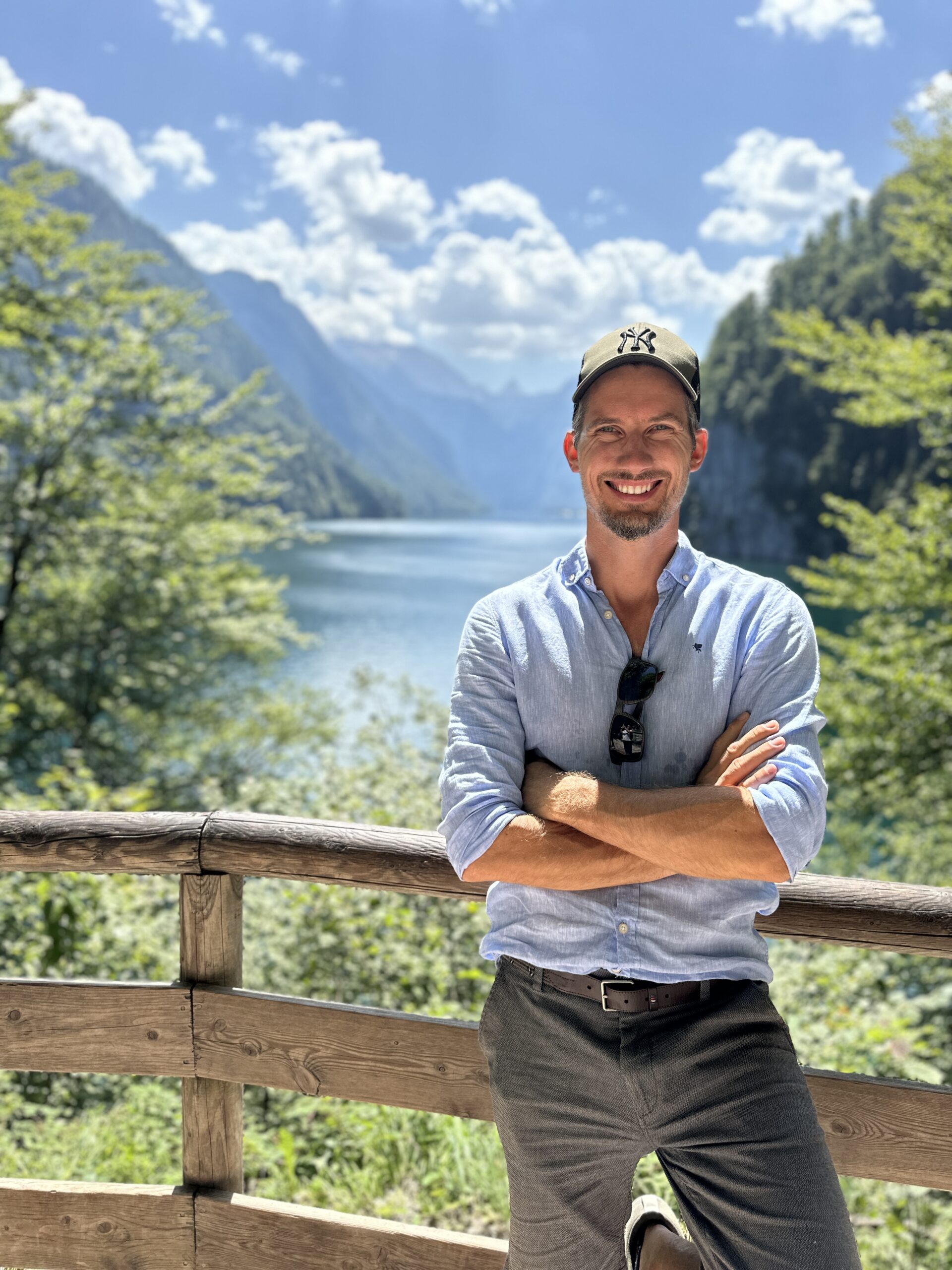
Kai Gausmann understands this silence intimately. Not as an abstract idea, but as something he has lived through and observed in hundreds of others. His work today is rooted in that space where people begin to question not just what they do, but why they continue doing it.
He does not approach this question with urgency or pressure. Instead, he meets it with curiosity. The kind that allows people to pause long enough to hear themselves again.
Learning by Living, Not by Design
Kai’s path into this work was not linear. In fact, it was shaped more by exploration than intention. He spent seven years at university, a period he describes less as formal education and more as experimentation. During that time, he moved through different roles and environments, working as a bartender, a night guard, a personal trainer, and a sports coach.
Each experience added something small but significant. Not necessarily skills that would appear on a resume, but insights into people, environments, and himself. It was a time defined by movement rather than direction.
In 2010, during a university workshop on success and motivation, something shifted. The facilitator left an impression that stayed with him long after the session ended. He recalls thinking, “What you’re doing here, I want to do something similar in the future.” At the time, it was more of a distant thought than a plan. He did not yet have the tools or understanding to act on it.
Still, the idea remained.
Reinvention as a Way of Life
When Kai formally entered the professional world in 2013, he did so with a mindset already shaped by change. His early career reflected that same pattern of reinvention. Within a few years, he moved from consulting sports associations to corporate consulting, and eventually into freelancing and building his own business.
These transitions were not always smooth. They were often driven by discomfort rather than clarity. At one point, he left a stable job without another opportunity lined up. It was not a calculated move in the traditional sense. It was a decision rooted in a need for flexibility and space.
Around that time, a conversation during a carpool ride left a lasting impact. A freelance consultant spoke openly about his lifestyle and income, offering a glimpse into a different way of working. That moment crystallized something for Kai. He began to question the structure he was operating within and whether it truly served him.
He later reflected on that realization with a sense of clarity, recognizing that if he was already responsible for bringing in work, the traditional employment model no longer made sense for him.
When Systems Break, So Do Assumptions
One of the more defining challenges in Kai’s journey came from a project that did not go as planned. The client relationship became strained, and over time, the situation began to affect the entire team. What stood out to him was not just the difficulty of the project itself, but the way leadership responded to it.
He observed how weak leadership can protect harmful behavior, allowing problems to persist rather than addressing them directly. It was a moment that reshaped his understanding of responsibility and accountability within organizations.
Instead of becoming disillusioned, he used the experience as a point of reflection. It reinforced his belief that real leadership requires honesty, even when it is uncomfortable. This idea would later become a core part of his own approach to coaching.
Losing Direction to Find It Again
The period between 2020 and 2023 marked another significant phase in Kai’s journey. After starting his own business, he faced a challenge that many solopreneurs encounter but rarely discuss openly. Despite having the freedom to build something of his own, he found himself drifting away from his inner direction.
In an effort to respond to market demands, he began shaping his work around what he believed people wanted, rather than what felt authentic to him. The result was a growing sense of misalignment.
At the same time, external factors added pressure. Economic uncertainty, global events, and a slowdown in opportunities began to take a toll on his mindset. He found himself focusing more on what was not working than on what was.
This period could have easily led to stagnation. Instead, it became a turning point. Rather than seeking new strategies, he returned to practices he already understood but had not fully integrated. Meditation, mindfulness, and daily reflection became part of his routine.
Through these practices, he began to shift his focus inward again. Not as an escape, but as a way to reconnect with clarity.
The Work of Returning to Yourself
Today, Kai’s work is centered on helping others navigate the same kind of internal conflict he once experienced. His clients are often individuals who have achieved a certain level of success but feel disconnected from it. They are not starting from zero. They are standing at a point where continuing on the same path no longer feels sustainable.
He does not position himself as someone who provides answers. Instead, he creates space for people to uncover their own.
His philosophy is grounded in a simple but demanding principle.
“Nobody else is responsible for what happens to you. It is just about how you react to it.”
This perspective shifts the focus away from external circumstances and places it firmly on personal responsibility.
At the same time, his approach is not about harsh accountability. It is balanced with empathy and an understanding that change is not always straightforward. He believes in being direct, but also in being kind.
Over the years, he has worked with more than 360 professionals, guiding them through different forms of transition. Some choose to leave their roles entirely, while others reshape their existing positions to better align with their values. The outcome is not defined by a specific path, but by a sense of clarity.
Helping Others See What They Already Know
One of the consistent themes in Kai’s work is the idea that people are not searching for something new. More often, they are trying to find the courage to act on what they already understand about themselves.
He expresses this belief in a way that challenges common assumptions about purpose.
“You are not looking for your purpose in life. You are looking for the courage to do what you always deep down knew that you would love to do.”
This perspective reframes the entire process. Instead of treating purpose as something to be discovered externally, it becomes something that is already present, waiting to be acknowledged.
His role, then, is not to introduce new ideas, but to help people remove the barriers that prevent them from acting on their own insights. These barriers often take the form of overthinking, fear of uncertainty, or attachment to security.
By addressing these patterns, he helps his clients move from hesitation to action in a way that feels grounded rather than rushed.
A Life Built Around Freedom and Ownership
Beyond his work with clients, Kai’s own life reflects the values he emphasizes. Freedom, autonomy, and ownership are not just concepts he teaches. They are principles he actively structures his life around.
His daily practices include meditation, journaling, and physical training, particularly martial arts. These routines are not separate from his professional work. They are part of the same system that supports clarity and discipline.
At the same time, he values simplicity. His definition of success is not tied to constant growth or expansion. It is connected to alignment. The ability to live in a way that feels consistent with his inner direction.
This perspective also shapes his long-term vision. Rather than focusing solely on scaling a business in the traditional sense, he is interested in expanding the reach of his work in a way that remains true to its core. Coaching at scale, for him, is not about volume. It is about impact.
Looking Ahead Without Losing Ground
As he continues to build his work, Kai remains focused on a question that has guided him from the beginning. How can more people access the clarity they need to make meaningful decisions about their lives?
The answer, for him, lies in combining structure with self-awareness. Creating processes that are clear and actionable, while still allowing space for individual reflection.
He is aware that the challenges his clients face are not going away. If anything, they are becoming more common as traditional career paths become less predictable. This only reinforces the importance of the work he is doing.
At the same time, he approaches the future without urgency. There is a sense of patience in the way he talks about growth. An understanding that meaningful change takes time, both for individuals and for the systems they operate within.
A Different Kind of Clarity
What stands out most about Kai Gausmann is not the number of times he has reinvented himself, but the way he has learned to return to a consistent center. Each transition, each challenge, each moment of doubt has contributed to a deeper understanding of what it means to live with intention.
His work is not about helping people escape their current reality. It is about helping them face it more honestly.
In a world that often encourages constant movement, he offers something quieter. The ability to pause, reflect, and choose a direction that feels true.
And in that space, clarity is no longer something to chase. It becomes something to recognize.
For More Features
Be Featured in The Real Edit!
Every story has the power to shape how we see innovation, leadership, and purpose. If you’re a founder, creator, executive, or changemaker with a journey worth telling , we’d be honored to help you share it.
To inquire about being featured:
Email us at: info@realedit.site
Follow The Real Edit




No Comments