


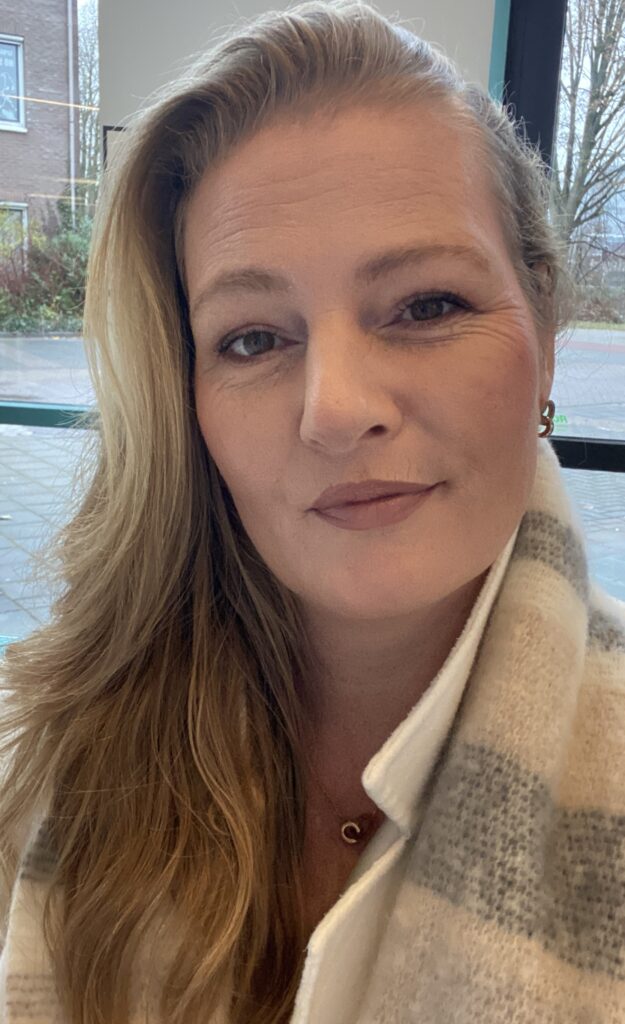
Meet Francis
Francis de Jong is a Netherlands-based consultant, coach, and founder of Bureau Petrichor. She works with giftedness and systems from a psychologically informed and psychologically contained perspective, in an explicitly non-clinical and non-therapeutic context. Her work supports gifted adults and organizations in navigating the often unseen layers of human complexity, helping translate inner intricacy into clarity, self-leadership, and sustainable impact. Bridging psychological theory, personal development, and organizational insight, Francis creates environments where nuanced thinking is recognized and valued rather than flattened. She is particularly attuned to the challenges gifted adults face when their way of thinking is misunderstood or underappreciated, and she approaches each individual and system she works with a thoughtful, reflective presence, helping align inner worlds with professional and personal demands
Her work is grounded in formal psychology coursework at propedeutic level, extensive self-study, engagement with scientific research and theory, and reflective practice, while remaining non-therapeutic.
When Depth Comes Before Language
Some people sense complexity long before they have words for it. For Francis de Jong, awareness arrived early, not as a talent to celebrate, but as a constant noticing. She perceived patterns in human behavior, subtle shifts in group dynamics, and emotional undercurrents that often passed unnoticed by others. This way of seeing did not announce itself as a gift. It simply existed, quietly shaping how she related to the world.
Long before she founded Bureau Petrichor, Francis learned that depth often asks for translation. Without context or recognition, it can feel excessive or misaligned. Over time, she would come to understand that this early sensitivity was not something to overcome, but something to work with. That realization would later form the backbone of her work.
Growing Into Complexity
Francis’s professional path did not begin with a clear destination. It unfolded through curiosity and careful observation. She moved naturally toward roles that involved communication, consulting, training, and coaching, drawn by the human questions beneath surface behavior. Why do people struggle in environments that appear functional? Why does intelligence sometimes lead to friction rather than ease? Why do capable professionals burn out not from lack of ability, but from sustained misalignment?
As her work developed, she began to recognize that her way of thinking had a name. Giftedness, not merely as high intelligence, but as a qualitatively different cognitive and emotional experience. This understanding reframed her past. What once felt like being too fast, too deep, or too sensitive slowly revealed itself as a distinct mode of perception.
Psychological theory offered Francis a language to bridge inner experience and external reality. It allowed her to translate complexity into frameworks that could be understood without flattening meaning. Through study, reflection, and application, she discovered how theory could serve humanity when applied with care, and how insight could become functional without becoming reductive.
When Adaptation Becomes Self Silencing
One of the most formative challenges in Francis’s journey was learning how to exist in environments that were not designed for her cognitive rhythm. Early in her work, she learned to adapt quickly. Sometimes too quickly. Over adaptation became a survival strategy. She adjusted her pace, softened her questions, and learned to mask nuance in order to belong.
This self silencing did not happen all at once. It accumulated slowly through repeated moments of mismatch. Meetings where complexity was unwelcome. Systems that rewarded speed over reflection. Cultures that preferred simplicity even when reality resisted it.
Eventually, the cost of this adaptation became visible. Cognitive masking required energy. Self erasure demanded effort. Francis realized that functioning well did not mean functioning fully. What looked like success from the outside often felt unsustainable on the inside.
The turning point came when she stopped asking how to fit herself into existing structures and began asking what alignment actually required. Rather than managing her giftedness, she started leading with it. This shift was not about claiming specialness. It was about honesty. About acknowledging that sustainable contribution requires coherence between how one thinks, feels, and works.
As Francis herself reflects,
“A defining moment was reframing my giftedness from something to manage into something to lead with.”
Designing Work That Matches the Mind
From this realization, Bureau Petrichor was born. Not as a brand driven by ambition, but as a response to a gap Francis knew intimately. Many gifted adults struggle not because they lack capacity, but because their inner complexity has no psychological container. Without understanding, depth turns inward. It becomes friction, burnout, or chronic dissatisfaction.
Francis’s work focuses on creating psychological alignment. She supports gifted adults in understanding their own internal architecture, not through labels alone, but through reflection, language, and self awareness. Her approach is both sharp and gentle. Analytical without being clinical. Compassionate without becoming vague.
At an organizational level, her work challenges systems to move beyond flattening complexity. Instead of managing giftedness as a risk, she invites leaders to recognize it as a form of intelligence that enriches decision making, culture, and long term sustainability.
What distinguishes her approach is restraint. She does not rush insight. She does not simplify for convenience. She works with people rather than on them, creating space where nuance can exist without apology.
Redefining Success Through Alignment
For Francis, success is not measured by scale or visibility. It is measured by psychological congruence. By the degree to which inner complexity and external expression are allowed to coexist without fragmentation.
She values coherence more than recognition. The quiet achievement of building a professional life that honors who she is, how she thinks, and how she works. This coherence, hard won and carefully maintained, is something she considers her most meaningful accomplishment.
In her work, the individuals, professionals, and organizations she works with often experience a subtle but profound shift. They begin to relate to themselves through understanding rather than expectation. They develop clearer boundaries, deeper self trust, and a renewed capacity for sustainable engagement. Not by becoming less complex, but by becoming more aligned.
Francis defines her leadership through depth, reflection, and presence. She believes that progress does not require urgency at the expense of integrity, and that meaningful impact often grows in spaces where time is respected.
As she articulates it,
“Success means working in a way that allows depth, autonomy, and meaningful contribution to coexist with well being.”
Depth as a Condition for the Future
Looking ahead, Francis is not interested in expansion for its own sake. Her vision is rooted in deepening rather than scaling. She aims to continue refining her work at the intersection of giftedness and systems, through psychologically informed and psychologically contained practice, translating insight into forms of leadership that are humane and sustainable.
She draws inspiration from thinkers who bridge theory with lived experience, particularly those who reframe giftedness beyond intelligence alone. Yet her deepest motivation lies less in individuals and more in moments where clarity, courage, and compassion quietly meet.
Francis is attentive to pace. She listens closely to internal signals and adjusts when needed. For her, grounding does not come from pushing harder, but from returning to alignment. Reflection is not an obstacle to productivity. It is a source of clarity.
Her future work will continue to create conditions where gifted cognition is not something to manage, but something to work with consciously. Where complexity is welcomed rather than reduced. Where leadership is defined not by performance, but by presence.
Living Without Simplifying the Self
At the heart of Francis de Jong’s work is a simple but demanding truth. People do not need to simplify themselves to be effective. Especially those who experience the world with depth and intensity.
Her journey reflects what becomes possible when inner complexity is met with understanding rather than resistance. When work is designed around alignment instead of endurance. When giftedness is allowed to inform leadership rather than distort it.
In a world that often rewards speed over sense making, Francis stands for something quieter and more enduring. The belief that sustainable impact begins when people are allowed to be whole.
For More Features
Be Featured in The Real Edit!
Every story has the power to shape how we see innovation, leadership, and purpose. If you’re a founder, creator, executive, or changemaker with a journey worth telling , we’d be honored to help you share it.
To inquire about being featured:
Email us at: info@realedit.site
Follow The Real Edit








No Comments