


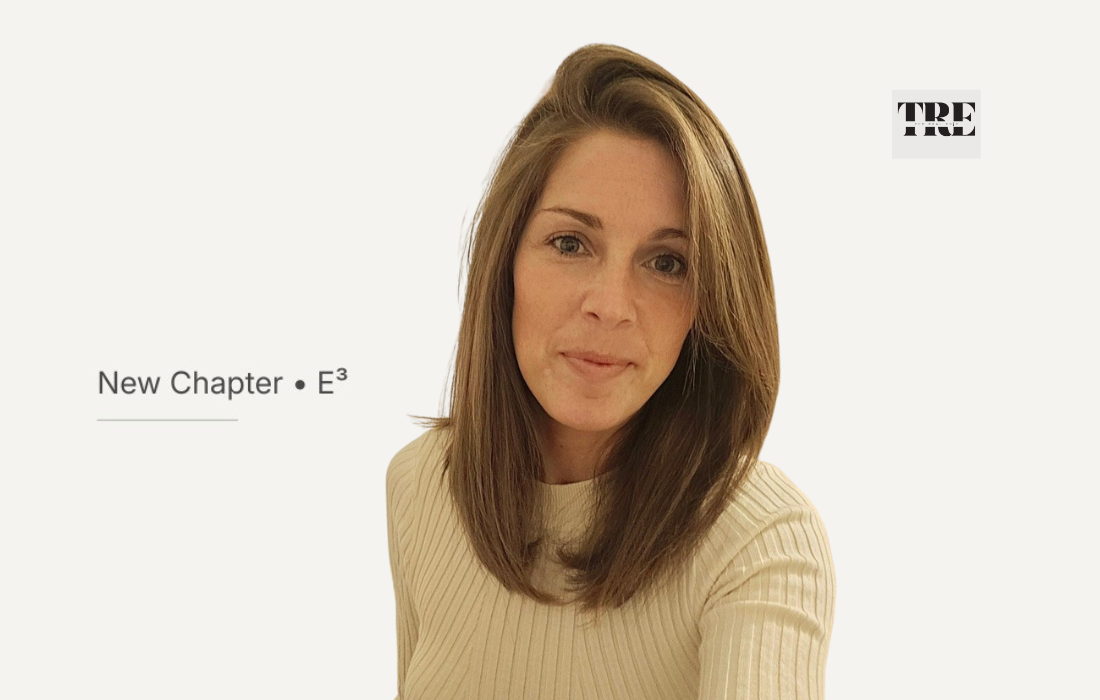
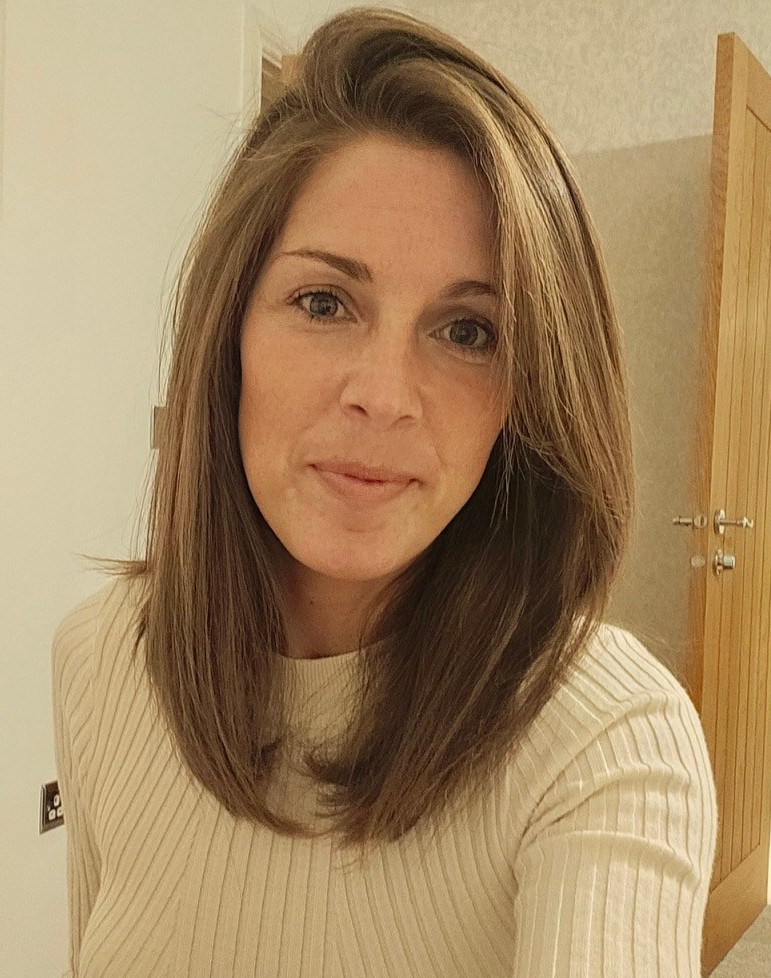
Meet Emily
Emily is the founder of New Chapter E³, based in Chelmsford, England. She works in leadership and performance diagnostics, supporting senior leaders and founders navigating growth, complexity, and responsibility. Drawing on her training as a CCR3 Practitioner, she helps leaders understand the behavioural patterns and emotional dynamics that shape how they lead under pressure.
But her work does not stop at the boardroom. Emily is equally passionate about helping everyday individuals understand the patterns shaping their relationships, decisions, and wellbeing, bringing the insights of CCR3 beyond corporate spaces and into daily life.
Beneath the Surface of Leadership
When Emily talks about leadership, she does not begin with strategy or ambition. She begins with pressure.
Over the years, she has sat with senior leaders who appear composed, capable, and decisive on the outside, yet carry a quiet heaviness within. She has learned to notice what others often miss: the tension in a voice, the subtle hesitations, the invisible strain that builds when responsibility grows faster than reflection.
Her work is grounded in a simple observation that has shaped her entire career.
“Leadership is not just about strategy or process, it is about how people feel under pressure.”
That insight has become the thread running through everything she does.
Learning to Notice the Invisible
Emily began her career in clinical and management settings. Early on, she realised that the most significant dynamics in any organisation were rarely written into job descriptions or organisational charts. They lived in the unseen patterns between people.
She became fascinated by the ways individuals adapt under stress. The coping mechanisms developed in childhood. The habits that once protected someone but later restricted them. The ways leaders push through exhaustion because they believe they must.
This curiosity led her to train as a CCR3 Practitioner, combining structured behavioural assessment with a nuanced understanding of emotional intelligence. The framework gave her language and clarity for what she had already sensed intuitively. It allowed her to map values, behaviours, and responses to pressure in a way that was both rigorous and deeply human.
She was not interested in labelling people. She wanted to help them see themselves more clearly.
“I wanted to help leaders see what is happening beneath the surface and provide a framework to navigate it with insight and intention.”
What she discovered was that many leaders interpret their stress as personal failure. They believe they should cope better, delegate better, endure more. Yet often, the weight they feel is not a weakness. It is the result of patterns and systems that once served them but no longer do.
When Patterns Become Heavy
A defining moment in Emily’s own understanding came when she recognised how much of the pressure leaders experience is shaped by adaptation. We learn to cope in certain ways. We become dependable, decisive, self sufficient. We anticipate risk. We take on more than we should because that is how we have always proven our worth.
Over time, those adaptations harden into habits.
In changing circumstances, what once helped can begin to hinder. The leader who built success through relentless involvement struggles to let go. The founder who survived uncertainty through control finds collaboration difficult. The executive who thrived on being the strongest in the room feels unable to admit doubt.
Emily describes the turning point not as a dramatic transformation, but as recognition. It is the moment when someone realises they can choose differently.
Small shifts in how decisions are made. A more thoughtful delegation. A conversation approached with curiosity rather than urgency. These adjustments may seem minor, yet they lighten the emotional load in profound ways.
Her work focuses on making those patterns visible. Once seen, they lose some of their power.
The Personal Ground Beneath the Professional
The sensitivity Emily brings to her work was not formed only in professional spaces. Some of the most formative lessons came through deeply personal experiences.
She navigated her own adoption. She supported her children through separation. She held her family together when their father suffered an unexpected stroke. These moments required resilience, but also reflection.
She began to notice her own patterns. The ways she adapted to protect others. The instinct to carry more than her share. The habits that had once allowed her to survive stress but were now exhausting her.
Learning to recognise which reactions to keep and which to soften was transformative. It required honesty and humility. It required asking for help.
Through that process, she discovered that reducing pressure does not always mean doing less. Sometimes it means thinking differently. Responding with intention instead of reflex.
Those lessons now sit quietly at the centre of her work with leaders. She understands that behaviour under pressure is not abstract theory. It is lived experience.
Building New Chapter E³
When Emily founded New Chapter E³, she wanted to create something that blended analytical rigour with emotional depth. She had seen enough performance frameworks that focused only on output. She wanted to offer something that addressed the human architecture beneath it.
Through leadership and performance diagnostics, she works with senior leaders, founders, and people led organisations. Her role is not to tell them who to be. It is to provide clarity.
Using structured assessment tools, she maps motivations, values, behavioural tendencies, and emotional responses. She looks at how individuals interact with their teams and the systems around them. Where friction appears. Where misalignment grows. Where energy is being lost.
The goal is not to add more tasks to already crowded diaries. It is to create space.
When leaders understand the patterns shaping their decisions, they begin to make adjustments that feel manageable rather than overwhelming. Teams align more naturally. Conversations become clearer. Pressure becomes something to navigate rather than endure.
Emily measures success not by dramatic reinventions but by subtle relief. A client who feels lighter after recognising they do not have to carry everything alone. A founder who delegates without guilt. A team that communicates with greater honesty.
These changes ripple outward. Organisations become steadier. Employees feel seen. Clients and patients benefit from leadership that is thoughtful rather than reactive.
For Emily, this is what sustainable performance looks like. Not relentless acceleration, but clarity paired with compassion.
Bringing CCR3 into Everyday Life
While much of her work focuses on leadership, Emily believes deeply that understanding our patterns should not be reserved for executives.
The way we respond to pressure shapes our parenting, our partnerships, our friendships, and our self-talk. Our behavioural adaptations show up in everyday conversations just as much as they do in boardrooms.
That belief led her to bring CCR3 insights to a wider audience through social platforms, where she shares reflections, pattern awareness tools, and practical guidance in accessible language.
Through Instagram and Facebook, she offers everyday pattern education, helping individuals recognise the habits they developed to cope, and gently question whether those habits still serve them.
Her aim is simple: to make self-awareness practical, not intimidating. Insight should not feel exclusive. It should feel empowering.
Inspired by Courage and Compassion
Emily often speaks of her grandmother with deep respect. A co founder of Amnesty International, she embodied courage rooted in empathy. Her life was shaped by conviction and compassion in equal measure.
One of the most personal acts of courage was placing Emily for adoption, believing it was the best decision for her future. That act was not abandonment but care expressed through difficult choice.
The example left a quiet imprint. Strength and kindness are not opposites. Leadership can be principled without losing humanity.
Emily carries this understanding into every room she enters. Authority does not require harshness. Influence does not require ego.
Honesty, kindness, and compassion are not soft traits in her world. They are foundational.
A Different Definition of Success
When asked what success means to her, Emily does not mention scale or revenue. She speaks about weight.
Success is helping others carry less of it. It is watching leaders make decisions that are both effective and humane. It is creating workplaces where emotional intelligence is practised rather than praised in theory.
She is also clear about the example she wants to set at home. She hopes her children see that empathy and understanding are the real currency of leadership and life.
In this way, her professional and personal definitions of success are intertwined. How she shows up matters as much as what she achieves.
Staying Grounded
The nature of Emily’s work requires presence. To hold space for leaders navigating complexity, she must remain regulated and clear herself.
She stays grounded in ordinary rituals. Time with her children and family. Conversations with friends. Moments with her partner and their dog. Running. Yin yoga. Practices that help calm the nervous system and restore perspective.
These rhythms are not indulgent. They are essential. They allow her to meet high stakes conversations with steadiness rather than urgency.
In a field where burnout is common, she models the sustainability she advocates.
Bringing Emotional Intelligence into Everyday Practice
Looking ahead, Emily’s vision is both simple and ambitious. She wants emotional intelligence to become an everyday practice within organisations. Not a workshop delivered once a year, but an embedded way of understanding people.
She believes that when leaders recognise their patterns and understand how they respond under pressure, work becomes more humane. Burnout reduces. Collaboration strengthens. Boundaries become clearer.
The impact extends beyond the office. Patterns do not confine themselves to boardrooms. The way we lead at work influences how we show up at home, in friendships, in community.
By helping leaders make small, intentional adjustments, she hopes to influence not just performance metrics but relationships and wellbeing.
Her advice to those navigating growth and responsibility is grounded in curiosity rather than judgement.
“Be curious about yourself and the patterns you carry. Many of the challenges we face are not because we are failing, but because our habits and adaptations no longer serve us.”
It is a reminder that growth does not always require reinvention. Often, it requires awareness.
Leading with Lightness
There is something quietly radical in Emily Ellis’s approach. In environments that reward endurance and constant expansion, she speaks about lightness. In cultures that celebrate decisive certainty, she encourages reflection.
Her work does not promise to remove complexity from leadership. Growth will always bring responsibility. Decisions will always carry consequence.
What she offers instead is clarity. The ability to see the unseen patterns shaping behaviour. The courage to adjust them. The permission to lead with empathy without sacrificing effectiveness.
In the end, her philosophy is simple. Leadership is not only about what we build. It is about how we carry it. And sometimes, the most powerful shift a leader can make is not adding more strength, but releasing what is no longer needed.
For More Features
Be Featured in The Real Edit!
Every story has the power to shape how we see innovation, leadership, and purpose. If you’re a founder, creator, executive, or changemaker with a journey worth telling , we’d be honored to help you share it.
To inquire about being featured:
Email us at: info@realedit.site
Follow The Real Edit





No Comments