


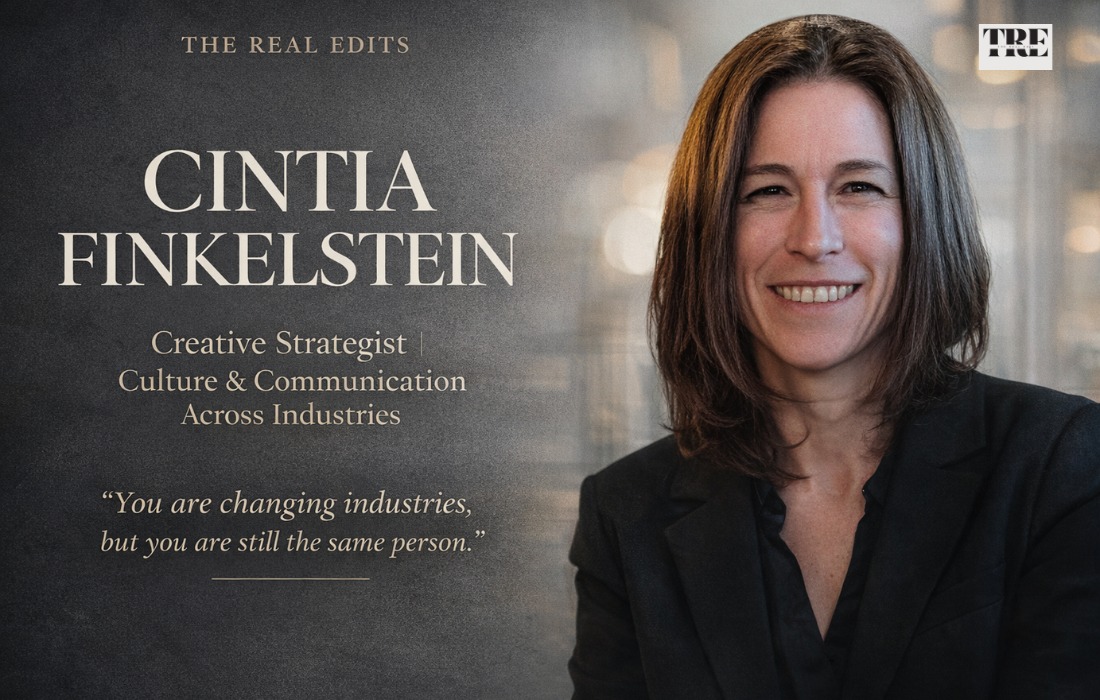

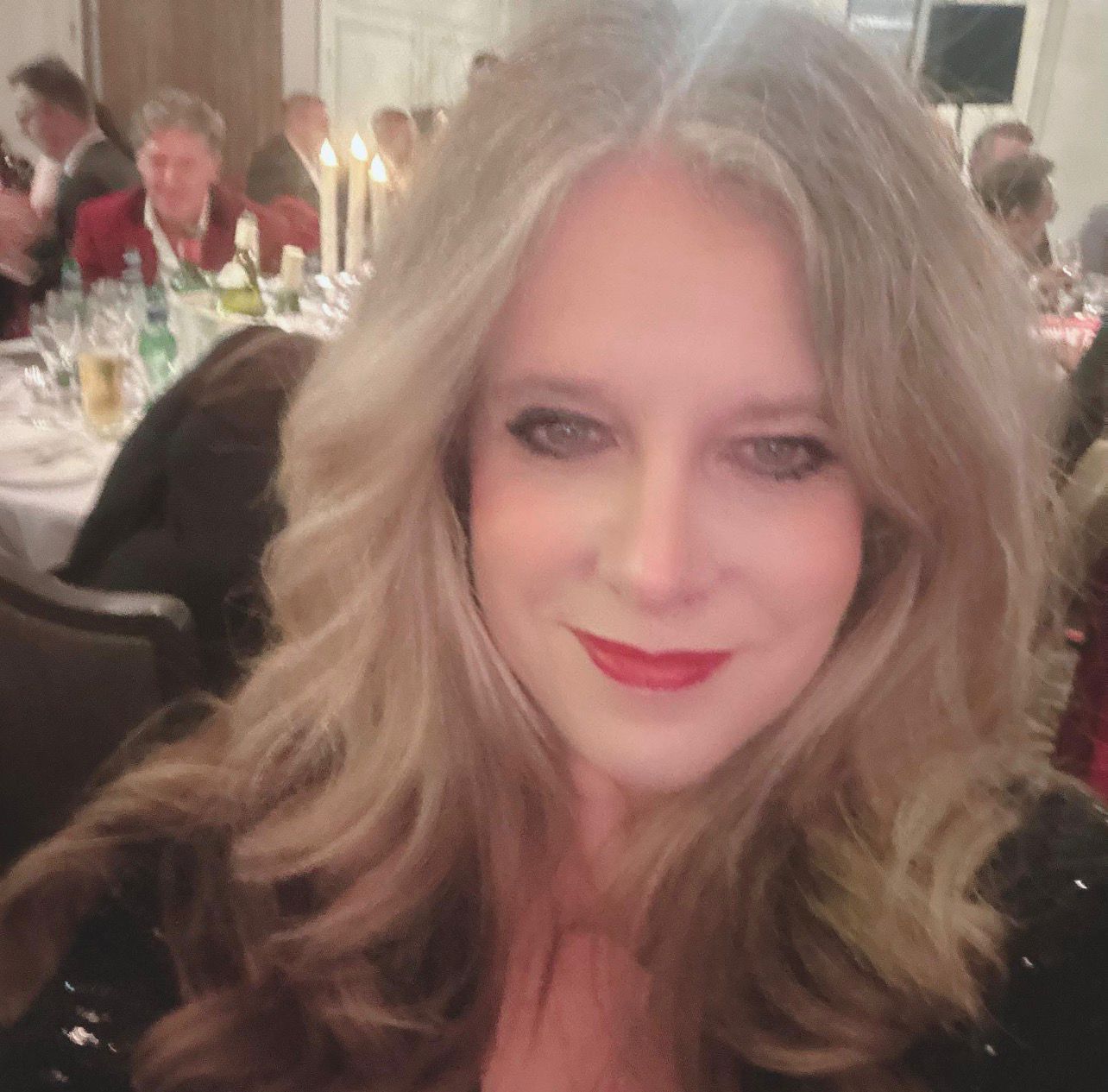
Meet Cintia
Cintia Finkelstein is a multidisciplinary communications and branding strategist whose career spans journalism, entertainment, public institutions, and real estate development. With a foundation in storytelling and a deep understanding of culture, she has built a reputation for shaping narratives that connect organizations, cities, and communities. From her early work in Argentina’s evolving media landscape to leading communication strategies across global and institutional projects, her approach blends creativity with strategic insight. Today, she continues to explore new frontiers, applying her expertise to sectors such as urban development and energy, guided by a belief in the power of storytelling to create meaning, trust, and lasting impact.
A Life Guided by Curiosity and Expression
For Cintia Finkelstein, creativity has never been limited to a single industry. It has been a way of seeing the world, a lens through which problems become stories and opportunities take shape through culture, design, and communication.
Her career reflects an unusual blend of journalism, entertainment, branding, and strategic communication. Yet beneath the varied professional experiences lies a consistent motivation. She has always been drawn to the power of ideas and narratives to shape how people understand institutions, cities, and the communities they inhabit.
Even today, after decades of work across multiple sectors, that sense of curiosity continues to guide her. She sees creativity not simply as artistic expression but as a tool for building meaning and connection.
She often returns to a belief that has quietly guided her professional life: the transformative power of culture and storytelling to shape identity and value.
Learning the Craft in Argentina’s Changing Media Landscape
Cintia’s professional story began while she was studying journalism. During her student years she joined Cuatro Cabezas, one of the most influential production companies in Argentina at the time. It was a period of remarkable transformation for the country’s audiovisual industry.
In the mid nineteen nineties, television production began shifting away from traditional broadcast networks. Independent production companies were emerging and experimenting with new formats that blended journalism, satire, cultural commentary, and entertainment. The result was a creative ecosystem that reshaped how audiences consumed television across Latin America.
Within this environment, Cintia found herself surrounded by creative experimentation and ambitious storytelling. The projects developed during those years eventually traveled far beyond Argentina, reaching international audiences and being adapted in countries such as Spain, Brazil, Israel, France, and Italy.
Over time she expanded her responsibilities within the company. She played a role in developing the international department and helped build the communications structure that supported the company’s growing global presence. Her work involved managing relationships across creative teams, production units, media outlets, and international partners.
The experience allowed her to develop a rare combination of editorial instinct and strategic thinking. She learned how stories move across cultures, how audiences interpret narratives differently, and how communication can shape the perception of a brand or project.
Her work in the entertainment industry eventually stretched across nearly two decades. During that time she witnessed the evolution of media from local programming to global cultural export.
One particularly memorable chapter came when she worked as press agent for Soda Stereo during their historic reunion tour Me Verás Volver. The band remains one of the most iconic names in Latin American pop music, and the tour attracted enormous attention across the continent.
Traveling with the band from Los Angeles to Argentina, she experienced the scale of cultural influence that music and media can have. It was a moment that reinforced her understanding of storytelling as something far larger than a marketing tool. Culture itself carries meaning, identity, and collective memory.
Alongside her media work, she also explored writing. She became co author of two books published by Editorial Sudamericana, part of the Penguin Random House group. Writing allowed her to reflect on the same themes that shaped her professional life: communication, culture, and the human stories behind institutions and public life.
A Personal Journey That Changed Everything
After nineteen years in the entertainment industry, the nature of her work began to change.
The company where she had built much of her career was first acquired by the Dutch company Eyeworks and later became part of Warner Bros. International. The acquisition opened new opportunities but also brought structural changes that gradually transformed the creative environment.
Projects became more corporate. Processes became more routine. The spirit of experimentation that had once defined the early years of the company began to fade.
Cintia noticed something important in herself during that period. She realized that the work no longer brought her the same sense of joy that had originally drawn her into the industry.
At the same time, she was navigating a deeply personal challenge that required enormous emotional resilience. She and her partner were trying to become parents, and the journey proved far more difficult than she had imagined.
It took ten fertility treatments before they finally succeeded.
Looking back, she describes that chapter as the most difficult challenge she had ever faced. It demanded perseverance, courage, and a willingness to continue even when outcomes remained uncertain.
The experience reshaped her understanding of patience and determination. It also placed her career decisions within a broader perspective. Professional achievements mattered, but family and personal meaning mattered more.
The emotional intensity of that period ultimately pushed her to reconsider what kind of work she wanted to do next.
Discovering New Territory
Leaving the entertainment industry after nearly two decades was not a decision made overnight. It required stepping into unfamiliar territory and trusting that her abilities would translate beyond the world she knew.
She began exploring opportunities in sectors that initially seemed far removed from television and media. One of those environments was the capital market, where she spent two years handling media relations at the Comisión Nacional de Valores, the regulatory body responsible for Argentina’s capital markets.
The experience introduced her to a new world of institutional communication and public policy. It also reinforced something she had begun to understand about her own skills.
Changing industries did not mean changing who she was.
At her core, she remained someone who solved problems through communication, strategy, and creative thinking. The context was different, but the underlying abilities were the same.
She explains this realization with a sense of clarity that only comes from lived experience.
“You realize that you are changing industries but you are still the same person, dedicated to solving problems, relying on creativity, intelligence, work ethic, and perseverance.”
From there she entered the world of real estate and urban development. She worked with Conway and Partners, a luxury real estate branding agency based in New York. The projects involved some of the most recognized names in architecture and development, including collaborations connected to Foster and Partners.
For Cintia, real estate was not simply about buildings or transactions. It was about place making and identity. Every development carries cultural meaning, social impact, and long term relationships with communities.
Her work in the sector included branding, communication strategies, and positioning for major projects in Argentina, including developments in Salta, Tucumán, Neuquén, and the province and city of Buenos Aires.
She became deeply interested in the intersection of storytelling and urban development. In her view, cities are narratives written through architecture, infrastructure, and the people who inhabit them.
Real estate, when approached thoughtfully, becomes part of that narrative.
Creative Leadership in an Unexpected Field
Today Cintia describes her professional approach as creative leadership. It is a philosophy shaped by decades of experience across industries that at first appear unrelated but share a common foundation.
Every organization, project, or city carries a story. The challenge lies in understanding that story and communicating it in a way that resonates with people.
Her work in branding and communication often centers on the idea that culture and design are not decorative elements. They are strategic tools that influence how institutions build trust and how communities connect with development.
This perspective has allowed her to work at the intersection of business strategy, cultural understanding, and public communication.
It also reflects her broader belief about the role of creativity in modern organizations. For her, innovation grows from authenticity and collaboration rather than from abstract strategy.
People remain the central source of growth.
She emphasizes the importance of networks and relationships, not in a transactional sense but as genuine partnerships that encourage learning and trust.
Throughout her career she has been fortunate to work alongside mentors and colleagues she deeply respects. Many of them encouraged her to trust her instincts and develop her own voice as a strategist and communicator.
These experiences shaped the leadership style she practices today.
She values listening as much as speaking. She values collaboration over hierarchy. And she believes that respect within a team creates stronger and more resilient organizations.
Redefining What Success Looks Like
For Cintia, success has gradually moved away from conventional career milestones.
Early in her career success often meant professional recognition and creative achievements. Over time the definition expanded to include the quality of everyday life and the relationships that give that life meaning.
She speaks about success in deeply personal terms. It includes the simple moments that often go unnoticed in professional conversations.
Success can mean helping her child with homework after a long day at work. It can mean walking the dog in the evening or discovering a new restaurant with friends. It can mean returning home to a space that feels peaceful and welcoming.
Professional respect also matters to her, but not in the form of fear or authority. What she values is being trusted by clients, respected by colleagues, and known as someone who listens carefully before speaking.
This perspective has influenced how she approaches leadership and teamwork.
She believes that a healthy balance between work and personal life is not a luxury but a necessity. Physical well being, emotional stability, and meaningful relationships create the conditions that allow people to do their best work.
Her outlook is also grounded in a sense of faith and spiritual perspective. She believes that life unfolds within a larger picture that people sometimes struggle to see, especially during difficult moments.
This belief helps her maintain resilience when facing uncertainty or change.
Looking Toward a New Frontier
At this stage in her career, Cintia is exploring a new professional chapter connected to the energy sector and the global transition toward new energy systems.
The industry brings together complex themes that align with her interests in storytelling and strategic communication. Natural resource development involves environmental considerations, community relations, global investment, and public perception.
Each of these dimensions requires thoughtful communication and cultural understanding.
She sees the sector as an opportunity to apply creative thinking in a space where narratives shape public trust and social acceptance. Large scale projects often require what is known as a social license to operate, meaning that communities must feel informed, respected, and included in the conversation.
In this context, communication becomes more than public relations. It becomes part of the infrastructure that connects companies, governments, and communities.
Cintia is particularly interested in how cultural assets and storytelling can help build those bridges.
The challenge is not simply technical or financial. It is human.
The Quiet Lessons of a Long Journey
Looking back across her career, Cintia does not divide her professional experiences into success and failure.
Instead she sees them as moments of learning that gradually shaped her understanding of leadership, creativity, and resilience.
She expresses this perspective with a sentence she often repeats to herself.
“Jobs or projects are not divided into successes and failures but into successes and learning experiences.”
That philosophy reflects the deeper rhythm of her life story.
She has moved across industries, navigated personal challenges, and redefined her path more than once. Each transition required courage and humility. Each chapter revealed new possibilities for growth.
Through it all she has remained guided by curiosity, creativity, and a strong sense of responsibility toward the people she works with and the communities affected by her work.
In an era marked by digital noise and constant stimulation, she believes it is more important than ever to reconnect with what is genuine and human.
Stories still matter. Relationships still matter. And creativity continues to shape how people understand the world around them.
For Cintia Finkelstein, that belief remains the quiet thread connecting every stage of her journey.
For More Features
Be Featured in The Real Edit!
Every story has the power to shape how we see innovation, leadership, and purpose. If you’re a founder, creator, executive, or changemaker with a journey worth telling , we’d be honored to help you share it.
To inquire about being featured:
Email us at: info@realedit.site
Follow The Real Edit



No Comments