
HomeChange MakersAlexandria Avona Driving Social Systems Change

Alexandria Avona Driving Social Systems Change

Connect on LinkedIn Visit Site Meet Alexandria Alexandria Avona is a social systems researcher, educator, and founder of We’re Solving
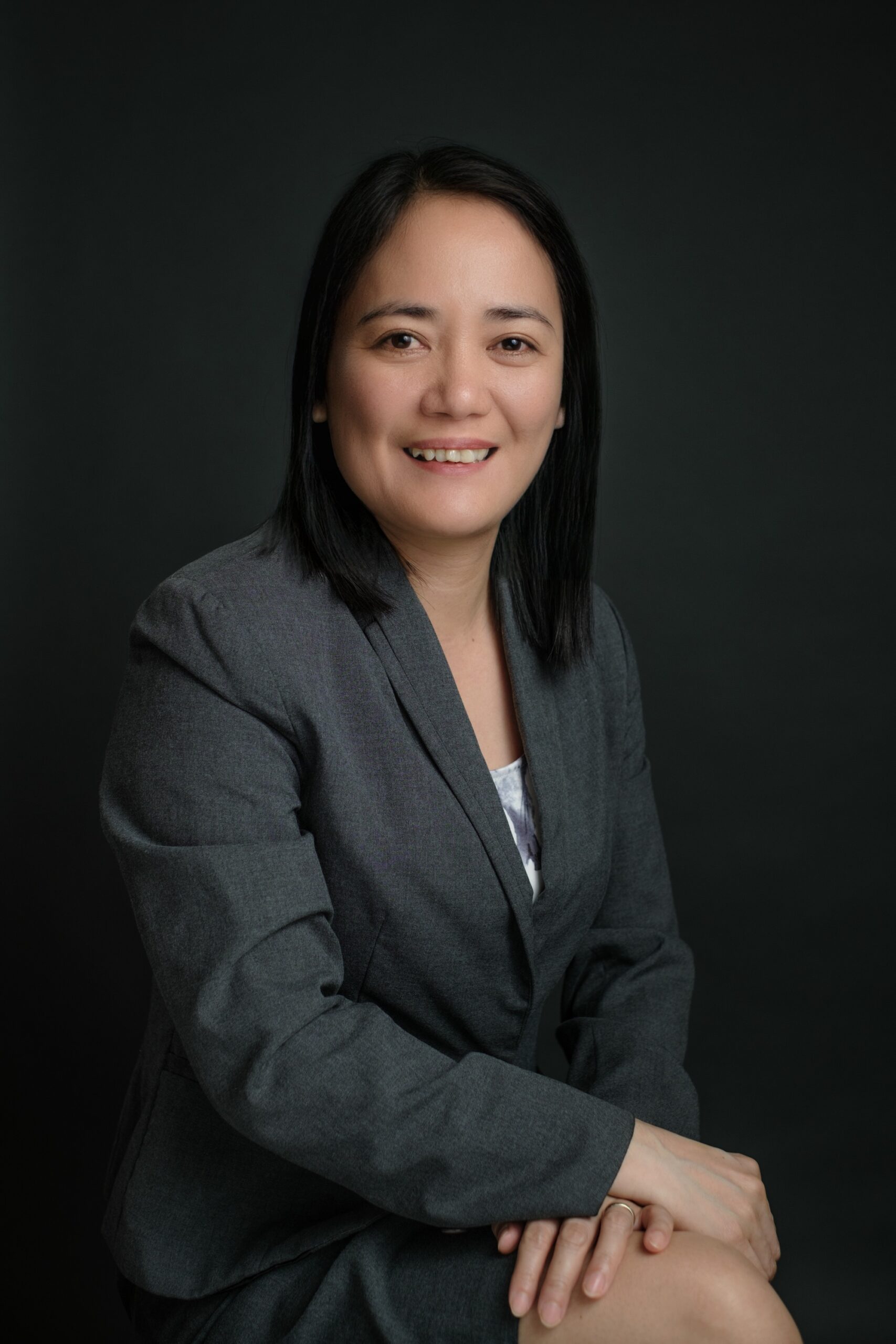
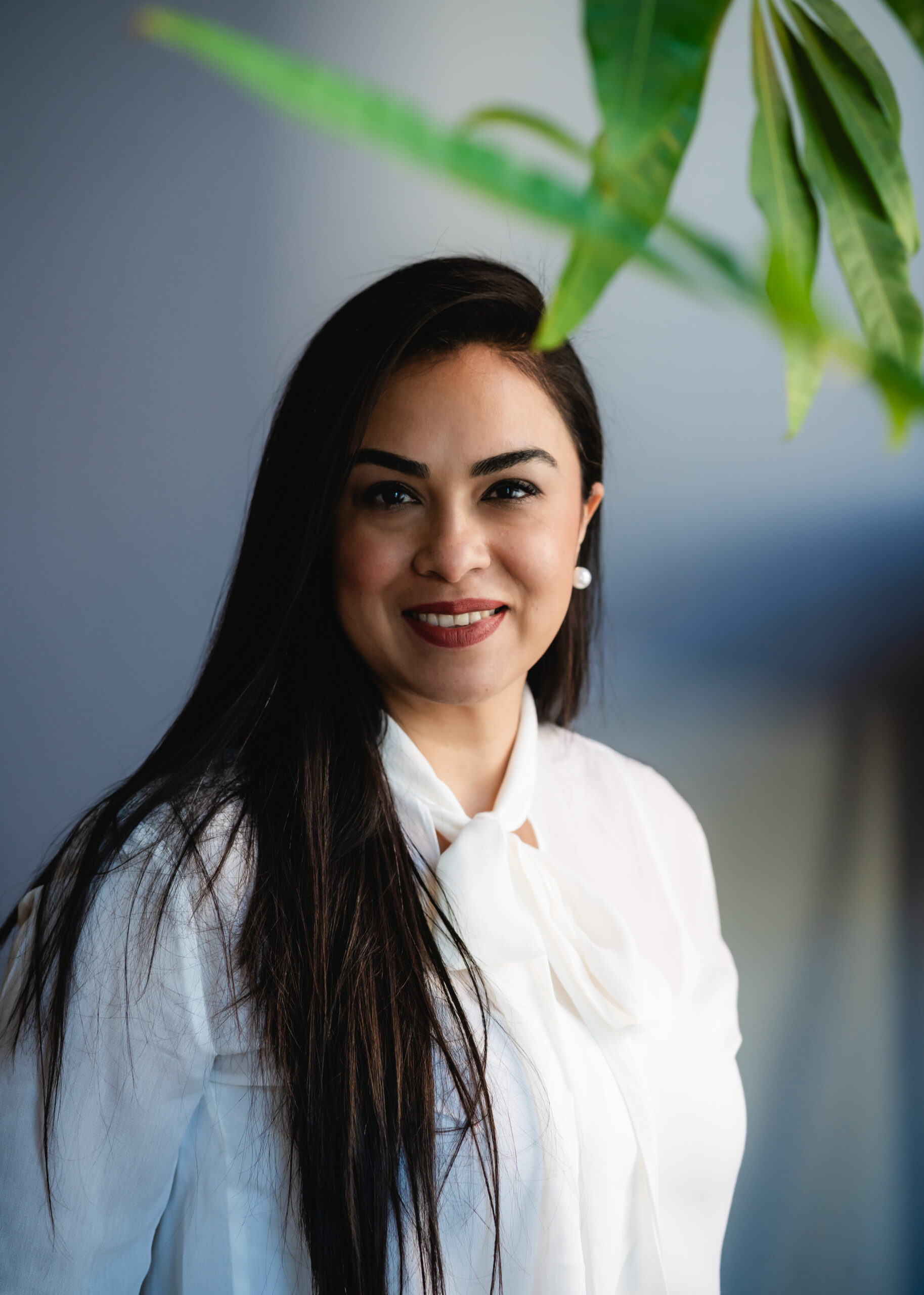
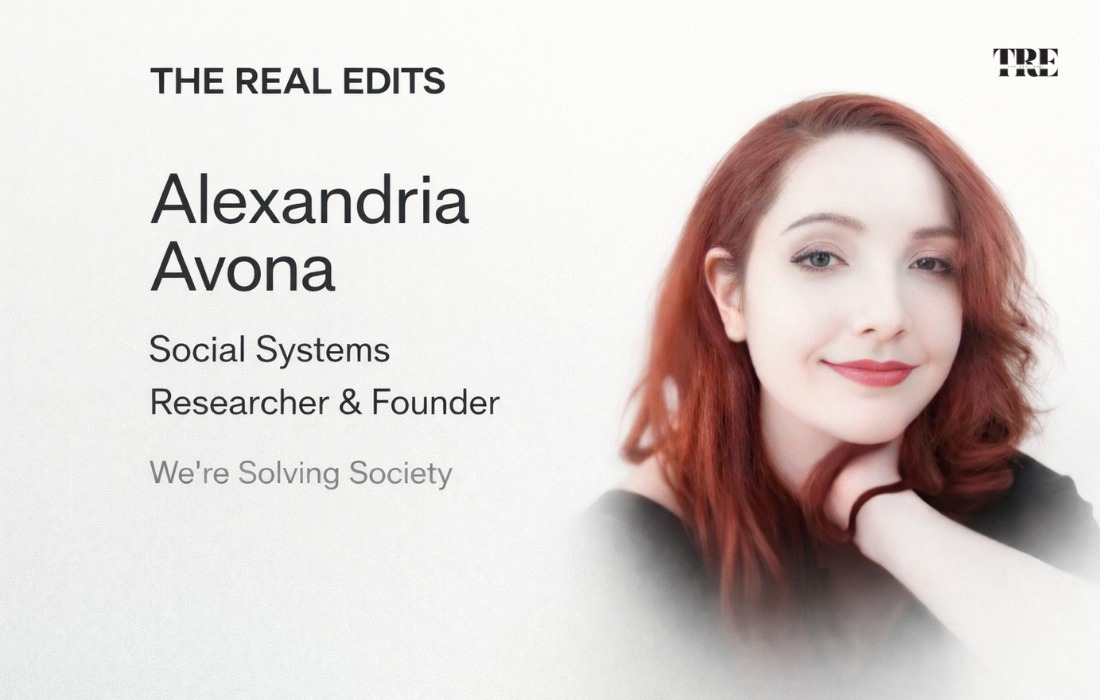
Alexandria Avona Driving Social Systems ChangeAlexandria Avona is a social systems researcher, educator, and founder of We’re Solving Society, an initiative focused on analyzing and addressing the structural forces that shape community well-being. Beginning her career as a mathematics teacher, she became increasingly interested in how factors such as housing instability, trauma, and economic inequality influence educational and social outcomes. Her work now centers on studying the social determinants of health, system accountability, and community empowerment through research-driven frameworks that help people better understand and navigate complex institutional systems. Influenced by thinkers such as Maryam Mirzakhani and Angela Merkel, Avona combines analytical reasoning with social advocacy to explore solutions to systemic challenges affecting communities worldwide.
WhatsApp Image 2026 03 16 at 7.05.14 PM

Alexandria Avona is a social systems researcher, educator, and founder of We’re Solving Society, an initiative focused on analyzing and addressing the structural forces that shape community well-being. Beginning her career as a mathematics teacher, she became increasingly interested in how factors such as housing instability, trauma, and economic inequality influence educational and social outcomes. Her work now centers on studying the social determinants of health, system accountability, and community empowerment through research-driven frameworks that help people better understand and navigate complex institutional systems. Influenced by thinkers such as Maryam Mirzakhani and Angela Merkel, Avona combines analytical reasoning with social advocacy to explore solutions to systemic challenges affecting communities worldwide.

Some careers grow slowly out of deliberate planning. Others begin with a moment of recognition that cannot be ignored.

For Alexandria Avona, that moment arrived during her early years as a mathematics teacher and tutor. She had expected to spend her days explaining equations, helping students move through numbers and formulas with greater confidence. Instead, she began hearing something far more complex. Students were quietly sharing stories about the circumstances shaping their lives. Housing insecurity, family instability, poverty, and emotional trauma were showing up in the classroom long before they appeared in any official record.

The academic struggles she saw were not simply academic. They were signals of deeper structural realities.

Those conversations became impossible to forget. Alexandria began to see education not as an isolated system but as a reflection of a much larger social framework. The challenges her students faced were connected to health, economic opportunity, justice systems, and access to support networks. Over time, she realized that addressing one issue required understanding the entire environment surrounding it.

Her work gradually shifted from teaching equations to studying systems.

Mathematics had always encouraged Alexandria to think in patterns. In a classroom, an equation represents a relationship between variables. Outside the classroom, she began to see similar relationships shaping human lives.

The struggles her students described were not random. They followed recognizable patterns connected to social determinants of health. These included factors such as housing stability, community safety, access to mental health resources, and institutional support structures.

What troubled her most was how rarely these underlying factors were acknowledged in meaningful ways.

Students were often expected to perform academically without the systems around them acknowledging the obstacles in their path. Schools could measure grades and attendance, but they were not always equipped to address the deeper conditions influencing those outcomes.

Alexandria began imagining a different model. Instead of forcing individuals to navigate fragmented support systems, what if there were ways to organize those systems more effectively? What if communities could identify the most urgent barriers and respond collectively?

Her thinking evolved into a framework rooted in triage and research. Just as emergency medicine identifies the most urgent cases first, Alexandria envisioned a model that would prioritize the most pressing social determinants affecting individuals and communities.

The idea was simple in principle but complex in practice. It required listening deeply to the people experiencing these challenges while also maintaining a rigorous research perspective.

This combination of empathy and analytical thinking would eventually shape the foundation of her organization.

Before founding her company, Alexandria spent time observing how institutions addressed social responsibility. She encountered passionate people doing meaningful work, yet she also noticed gaps between intention and effectiveness.

One experience in Seattle left a lasting impression on her.

After leaving a symphony performance one evening, she stepped outside and encountered the visible reality of poverty and substance abuse on the surrounding streets. The contrast between the cultural environment inside the concert hall and the hardship outside it was stark.

For Alexandria, the moment was not simply emotional. It raised questions about systems.

Research on social determinants of health had already demonstrated how environmental conditions influence long term outcomes. Yet many institutional responses appeared disconnected from the research itself. Programs existed, but they were often fragmented or constrained by bureaucratic limitations.

The disconnect was difficult to ignore.

Her observation did not come from a place of criticism alone. It was rooted in a belief that systems could work better if they were designed with more flexibility and transparency.

Before launching We’re Solving Society, Alexandria had already earned recognition in leadership roles. Colleagues frequently praised her ability to manage teams and deliver strong results. Promotions followed, and her professional path seemed stable.

Yet she began noticing a recurring tension.

Many organizations wanted measurable results but were less willing to empower the people capable of creating them. The structure of certain systems prioritized appearances of progress rather than genuine problem solving.

This environment ultimately pushed Alexandria toward a different decision.

Instead of continuing within established structures, she chose to build something of her own. Founding a company allowed her to pursue a research driven approach without compromising the principles she believed were necessary for real impact.

The transition was not easy. Building an organization from the ground up requires both resilience and clarity. For Alexandria, the decision was guided by the belief that communities needed tools to analyze their own systems and advocate for meaningful change.

Her company became a platform for that vision.

As We’re Solving Society began to take shape, Alexandria encountered another challenge that many social initiatives face. Funding structures often come with conditions that influence how organizations operate.

Some grants included restrictions that limited flexibility. Others were tied to priorities that did not align with the work she wanted to pursue.

These experiences led Alexandria to rethink the role of financial support in social initiatives. She became committed to working with donors who genuinely believed in the mission rather than viewing contributions primarily as tax advantages or symbolic gestures.

Flexible funding, in her view, allows organizations to respond to emerging realities rather than predetermined categories.

This perspective reflects her broader philosophy. Systems should be adaptable enough to address real conditions as they evolve.

Another challenge Alexandria has faced is one that many women in leadership positions recognize.

The path to authority is rarely neutral. Women who pursue analytical or executive roles often encounter scrutiny that goes far beyond professional evaluation.

Alexandria has experienced intense investigations into her background and qualifications, many of which she describes as excessive and driven by the scrutiny women still face when stepping into analytical and executive leadership roles.

Rather than discouraging her, those experiences strengthened her sense of purpose.

“I have seen how women in analytical and CEO positions are often encouraged to step aside,” she says. “But when systems need results, those same women are often asked to deliver what others could not.”

For Alexandria, the solution lies in mutual support among women navigating similar environments. Collaboration and shared resilience help create space for leadership that might otherwise be dismissed or overlooked.

Her organization now includes a focus on mitigating barriers faced by women working in analytical and executive fields.

Today, the work of We’re Solving Society continues to evolve.

At its core is a commitment to understanding the social determinants of health that shape individual lives and community outcomes. These determinants extend far beyond traditional healthcare systems.

They include workplace environments, justice systems, trauma experiences, economic stability, and institutional accountability.

Alexandria’s approach focuses on identifying root causes rather than addressing symptoms alone. Communities often experience the consequences of systemic failures without having access to the tools needed to analyze them.

By organizing research and encouraging critical thinking, she hopes to help people understand how broader systems influence their everyday realities.

Her projects explore issues ranging from workplace hostility and trauma to the complexities of human trafficking and institutional corruption. Some research also examines how psychological conditions intersect with social environments and policy decisions.

The scope of the work is wide, but the underlying philosophy remains consistent.

“Success to me means visibility and empowered communities that know what resources they have and know how to evaluate whether those systems are actually working,”

This emphasis on empowerment reflects her background as an educator. Just as students learn to interpret mathematical equations, communities can learn to interpret the structures shaping their lives.

Every leader carries influences that shape their worldview. For Alexandria, several figures stand out.

One of her strongest inspirations is mathematician Maryam Mirzakhani, the first woman to receive the prestigious Fields Medal. Mirzakhani’s achievements represented both intellectual brilliance and perseverance in the face of restrictive environments.

She also cites Angela Merkel as an inspiring example.

Her story resonated deeply with Alexandria, particularly the idea that rigorous thinking can reshape entire disciplines.

Alexandria also draws inspiration from professionals she encountered in more personal settings. A therapist in Seattle who emphasized the role of the nervous system in social health helped expand her understanding of trauma. A supervisor at the University of Arizona libraries demonstrated leadership rooted in integrity and dedication.

These influences reflect a pattern in Alexandria’s life. She values individuals who combine intellectual depth with ethical clarity.

Many of Alexandria’s current projects focus on areas where social systems intersect with global challenges.

One line of research examines corruption and human trafficking dynamics in Southeast Asia. Another explores how psychological factors within leadership structures can influence large scale political and economic outcomes.

These topics require careful analysis and often involve uncomfortable questions. Yet Alexandria believes that addressing complex problems requires confronting them directly rather than avoiding them.

Her work also includes efforts to bring greater recognition to complex post traumatic stress disorder within psychiatric frameworks. She sees this as part of a broader shift toward acknowledging how social environments shape mental health outcomes.

In each case, the goal is to bridge the gap between academic research and real world application.

Looking ahead, Alexandria envisions a future where communities possess stronger analytical tools for understanding the systems that affect them.

Rather than relying entirely on institutions to define problems and solutions, individuals would have access to frameworks that help them evaluate those institutions themselves.

Education plays a central role in this vision. Critical thinking, research literacy, and collaborative problem solving are essential skills for navigating modern societies.

Alexandria believes these capabilities can transform how communities interact with power structures.

Her long term goal is to expand the macrosystem perspective she often references. This perspective encourages people to look beyond individual experiences and examine the broader networks of influence surrounding them.

When individuals understand those networks, they are better equipped to advocate for effective solutions.

Throughout her journey, Alexandria Avona has remained guided by a simple but powerful question.

What is really happening beneath the surface of our systems?

Her career began with students sharing personal challenges that traditional educational frameworks could not fully explain. From that moment forward, she has pursued the deeper structures shaping human experience.

Today, through We’re Solving Society, she continues to explore those structures with a combination of analytical rigor and social commitment.

For Alexandria, the work is not about personal recognition or institutional prestige. It is about understanding the forces that shape communities and helping people navigate them with clarity.

In many ways, her path reflects the same principle she once taught in mathematics classrooms.

When you examine an equation carefully enough, the relationships between its variables begin to reveal themselves. And once those relationships are understood, new solutions become possible.

The Real Edits

Every story has the power to shape how we see innovation, leadership, and purpose. If you’re a founder, creator, executive, or changemaker with a journey worth telling , we’d be honored to help you share it.

To inquire about being featured:
Email us at: info@realedit.site

Follow The Real Edit



WhatsApp Image 2026 03 16 at 7.05.14 PM

Meet Alexandria

Alexandria Avona is a social systems researcher, educator, and founder of We’re Solving Society, an initiative focused on analyzing and addressing the structural forces that shape community well-being. Beginning her career as a mathematics teacher, she became increasingly interested in how factors such as housing instability, trauma, and economic inequality influence educational and social outcomes. Her work now centers on studying the social determinants of health, system accountability, and community empowerment through research-driven frameworks that help people better understand and navigate complex institutional systems. Influenced by thinkers such as Maryam Mirzakhani and Angela Merkel, Avona combines analytical reasoning with social advocacy to explore solutions to systemic challenges affecting communities worldwide.

A Quiet Determination Beneath the Work

Some careers grow slowly out of deliberate planning. Others begin with a moment of recognition that cannot be ignored.

For Alexandria Avona, that moment arrived during her early years as a mathematics teacher and tutor. She had expected to spend her days explaining equations, helping students move through numbers and formulas with greater confidence. Instead, she began hearing something far more complex. Students were quietly sharing stories about the circumstances shaping their lives. Housing insecurity, family instability, poverty, and emotional trauma were showing up in the classroom long before they appeared in any official record.

The academic struggles she saw were not simply academic. They were signals of deeper structural realities.

Those conversations became impossible to forget. Alexandria began to see education not as an isolated system but as a reflection of a much larger social framework. The challenges her students faced were connected to health, economic opportunity, justice systems, and access to support networks. Over time, she realized that addressing one issue required understanding the entire environment surrounding it.

Her work gradually shifted from teaching equations to studying systems.

From the Classroom to the Systems Behind It

Mathematics had always encouraged Alexandria to think in patterns. In a classroom, an equation represents a relationship between variables. Outside the classroom, she began to see similar relationships shaping human lives.

The struggles her students described were not random. They followed recognizable patterns connected to social determinants of health. These included factors such as housing stability, community safety, access to mental health resources, and institutional support structures.

What troubled her most was how rarely these underlying factors were acknowledged in meaningful ways.

Students were often expected to perform academically without the systems around them acknowledging the obstacles in their path. Schools could measure grades and attendance, but they were not always equipped to address the deeper conditions influencing those outcomes.

Alexandria began imagining a different model. Instead of forcing individuals to navigate fragmented support systems, what if there were ways to organize those systems more effectively? What if communities could identify the most urgent barriers and respond collectively?

Her thinking evolved into a framework rooted in triage and research. Just as emergency medicine identifies the most urgent cases first, Alexandria envisioned a model that would prioritize the most pressing social determinants affecting individuals and communities.

The idea was simple in principle but complex in practice. It required listening deeply to the people experiencing these challenges while also maintaining a rigorous research perspective.

This combination of empathy and analytical thinking would eventually shape the foundation of her organization.

Seeing the Gaps Between Systems

Before founding her company, Alexandria spent time observing how institutions addressed social responsibility. She encountered passionate people doing meaningful work, yet she also noticed gaps between intention and effectiveness.

One experience in Seattle left a lasting impression on her.

After leaving a symphony performance one evening, she stepped outside and encountered the visible reality of poverty and substance abuse on the surrounding streets. The contrast between the cultural environment inside the concert hall and the hardship outside it was stark.

For Alexandria, the moment was not simply emotional. It raised questions about systems.

Research on social determinants of health had already demonstrated how environmental conditions influence long term outcomes. Yet many institutional responses appeared disconnected from the research itself. Programs existed, but they were often fragmented or constrained by bureaucratic limitations.

The disconnect was difficult to ignore.

Her observation did not come from a place of criticism alone. It was rooted in a belief that systems could work better if they were designed with more flexibility and transparency.

Choosing an Independent Path

Before launching We’re Solving Society, Alexandria had already earned recognition in leadership roles. Colleagues frequently praised her ability to manage teams and deliver strong results. Promotions followed, and her professional path seemed stable.

Yet she began noticing a recurring tension.

Many organizations wanted measurable results but were less willing to empower the people capable of creating them. The structure of certain systems prioritized appearances of progress rather than genuine problem solving.

This environment ultimately pushed Alexandria toward a different decision.

Instead of continuing within established structures, she chose to build something of her own. Founding a company allowed her to pursue a research driven approach without compromising the principles she believed were necessary for real impact.

The transition was not easy. Building an organization from the ground up requires both resilience and clarity. For Alexandria, the decision was guided by the belief that communities needed tools to analyze their own systems and advocate for meaningful change.

Her company became a platform for that vision.

Rethinking Funding and Accountability

As We’re Solving Society began to take shape, Alexandria encountered another challenge that many social initiatives face. Funding structures often come with conditions that influence how organizations operate.

Some grants included restrictions that limited flexibility. Others were tied to priorities that did not align with the work she wanted to pursue.

These experiences led Alexandria to rethink the role of financial support in social initiatives. She became committed to working with donors who genuinely believed in the mission rather than viewing contributions primarily as tax advantages or symbolic gestures.

Flexible funding, in her view, allows organizations to respond to emerging realities rather than predetermined categories.

This perspective reflects her broader philosophy. Systems should be adaptable enough to address real conditions as they evolve.

Another challenge Alexandria has faced is one that many women in leadership positions recognize.

The path to authority is rarely neutral. Women who pursue analytical or executive roles often encounter scrutiny that goes far beyond professional evaluation.

Alexandria has experienced intense investigations into her background and qualifications, many of which she describes as excessive and driven by the scrutiny women still face when stepping into analytical and executive leadership roles.

Rather than discouraging her, those experiences strengthened her sense of purpose.

“I have seen how women in analytical and CEO positions are often encouraged to step aside,” she says. “But when systems need results, those same women are often asked to deliver what others could not.”

For Alexandria, the solution lies in mutual support among women navigating similar environments. Collaboration and shared resilience help create space for leadership that might otherwise be dismissed or overlooked.

Her organization now includes a focus on mitigating barriers faced by women working in analytical and executive fields.

The Work at the Center of Her Mission

Today, the work of We’re Solving Society continues to evolve.

At its core is a commitment to understanding the social determinants of health that shape individual lives and community outcomes. These determinants extend far beyond traditional healthcare systems.

They include workplace environments, justice systems, trauma experiences, economic stability, and institutional accountability.

Alexandria’s approach focuses on identifying root causes rather than addressing symptoms alone. Communities often experience the consequences of systemic failures without having access to the tools needed to analyze them.

By organizing research and encouraging critical thinking, she hopes to help people understand how broader systems influence their everyday realities.

Her projects explore issues ranging from workplace hostility and trauma to the complexities of human trafficking and institutional corruption. Some research also examines how psychological conditions intersect with social environments and policy decisions.

The scope of the work is wide, but the underlying philosophy remains consistent.

“Success to me means visibility and empowered communities that know what resources they have and know how to evaluate whether those systems are actually working,”

This emphasis on empowerment reflects her background as an educator. Just as students learn to interpret mathematical equations, communities can learn to interpret the structures shaping their lives.

Influences That Shaped Her Thinking

Every leader carries influences that shape their worldview. For Alexandria, several figures stand out.

One of her strongest inspirations is mathematician Maryam Mirzakhani, the first woman to receive the prestigious Fields Medal. Mirzakhani’s achievements represented both intellectual brilliance and perseverance in the face of restrictive environments.

She also cites Angela Merkel as an inspiring example.

Her story resonated deeply with Alexandria, particularly the idea that rigorous thinking can reshape entire disciplines.

Alexandria also draws inspiration from professionals she encountered in more personal settings. A therapist in Seattle who emphasized the role of the nervous system in social health helped expand her understanding of trauma. A supervisor at the University of Arizona libraries demonstrated leadership rooted in integrity and dedication.

These influences reflect a pattern in Alexandria’s life. She values individuals who combine intellectual depth with ethical clarity.

Research at the Edges of Complex Problems

Many of Alexandria’s current projects focus on areas where social systems intersect with global challenges.

One line of research examines corruption and human trafficking dynamics in Southeast Asia. Another explores how psychological factors within leadership structures can influence large scale political and economic outcomes.

These topics require careful analysis and often involve uncomfortable questions. Yet Alexandria believes that addressing complex problems requires confronting them directly rather than avoiding them.

Her work also includes efforts to bring greater recognition to complex post traumatic stress disorder within psychiatric frameworks. She sees this as part of a broader shift toward acknowledging how social environments shape mental health outcomes.

In each case, the goal is to bridge the gap between academic research and real world application.

A Future Built on Collective Understanding

Looking ahead, Alexandria envisions a future where communities possess stronger analytical tools for understanding the systems that affect them.

Rather than relying entirely on institutions to define problems and solutions, individuals would have access to frameworks that help them evaluate those institutions themselves.

Education plays a central role in this vision. Critical thinking, research literacy, and collaborative problem solving are essential skills for navigating modern societies.

Alexandria believes these capabilities can transform how communities interact with power structures.

Her long term goal is to expand the macrosystem perspective she often references. This perspective encourages people to look beyond individual experiences and examine the broader networks of influence surrounding them.

When individuals understand those networks, they are better equipped to advocate for effective solutions.

The Question Beneath the Work

Throughout her journey, Alexandria Avona has remained guided by a simple but powerful question.

What is really happening beneath the surface of our systems?

Her career began with students sharing personal challenges that traditional educational frameworks could not fully explain. From that moment forward, she has pursued the deeper structures shaping human experience.

Today, through We’re Solving Society, she continues to explore those structures with a combination of analytical rigor and social commitment.

For Alexandria, the work is not about personal recognition or institutional prestige. It is about understanding the forces that shape communities and helping people navigate them with clarity.

In many ways, her path reflects the same principle she once taught in mathematics classrooms.

When you examine an equation carefully enough, the relationships between its variables begin to reveal themselves. And once those relationships are understood, new solutions become possible.

The Real Edits

Every story has the power to shape how we see innovation, leadership, and purpose. If you’re a founder, creator, executive, or changemaker with a journey worth telling , we’d be honored to help you share it.

To inquire about being featured:
Email us at: info@realedit.site

Follow The Real Edit


No Comments