



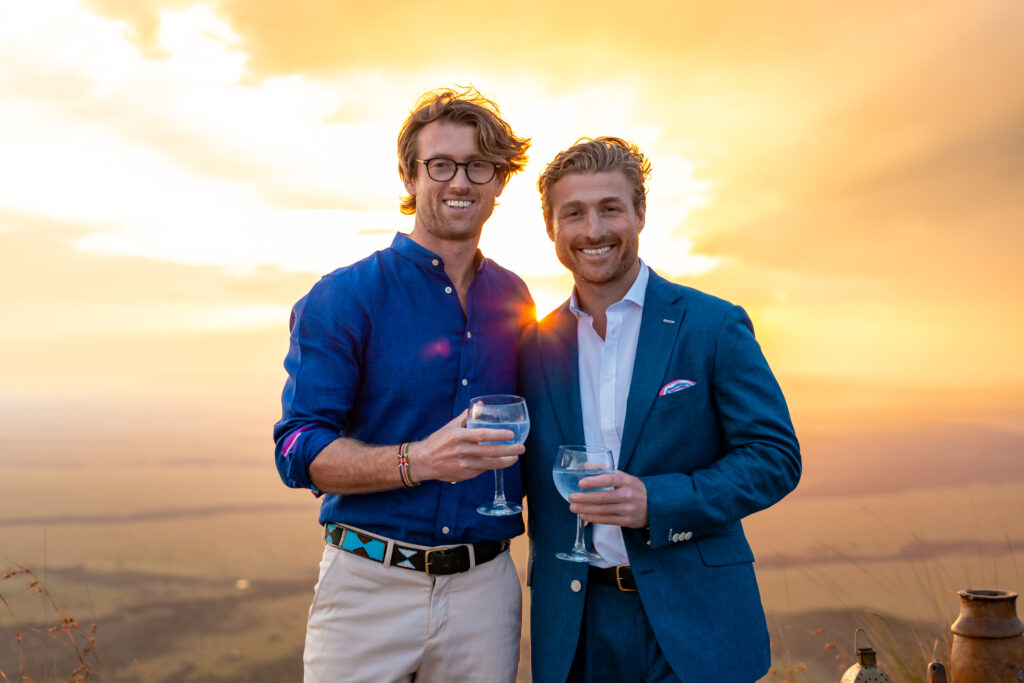
Meet Alastair
Alastair Scott is the Co Founder and Finance and Operations Director of KOY Clothing, a British menswear brand inspired by African heritage. Raised in Kenya and now based between the United Kingdom and Nairobi, he helped build a company that donates 20 percent of its profits to community projects across Africa, including long term water initiatives.
Where the Numbers Met Something Deeper
For many years, Alastair Scott lived in spreadsheets.
His early career was deliberate and disciplined. He qualified as an accountant, moved into a Financial Controller role in London, and spent six formative years learning how businesses truly function beneath the surface. He understood margins, forecasting, operational structure, and the quiet mechanics that determine whether a company survives.
It was, in his own words, “a fantastic training ground.” Finance sharpened his thinking. It taught him resilience and patience. It showed him how decisions ripple outward.
But eventually the numbers began to feel incomplete.
There was a growing sense that something was missing. Not because the work lacked challenge, but because it lacked ownership. He was helping shape other people’s visions. He wanted to build one of his own.
That desire was not rooted in ego. It was rooted in alignment.
“Success for me stopped being about progression up a corporate ladder and started being about impact.”
The shift was subtle at first. Then it became impossible to ignore.
Growing Up Between Two Worlds
To understand that shift, you have to go back to Kenya.
Alastair grew up surrounded by colour, community, and a cultural richness that never left him. Even after relocating to the United Kingdom, Kenya remained home in a way that is difficult to articulate. It shaped his sense of identity. It influenced what felt meaningful. It quietly informed his values.
In conversations with his brother Jimmy, that connection kept resurfacing. They would talk about fashion, about the contrast between classic British tailoring and the vibrancy of African textiles. They would imagine something that could honour both worlds without diluting either.
What began as late night conversations slowly became a serious proposition. Could they build a menswear brand that blended British heritage with African spirit? Could it be premium, timeless, and ethical? Could it give back in a way that was measurable rather than symbolic?
They were not looking to create a trend. They were looking to create something lasting.
Nine years ago, those conversations became action. They raised investment, left secure careers, and committed fully.
They have not looked back.
From Security to Significance
Entrepreneurship is often romanticised. Alastair does not romanticise it.
The early years of KOY Clothing were difficult. Years one and two brought heavy financial losses. From a finance background, he understood exactly what the numbers meant. But understanding risk intellectually and living it are two different experiences.
They had to learn everything in real time. Product development. Supply chains. Marketing. Retail negotiations. The practical realities of bringing an idea into the physical world.
It was humbling.
There were moments of doubt, moments where logic could have justified retreat. Yet the vision held.
“We were never chasing a quick win. We were building something long term.”
The difference between survival and collapse in those years was not brilliance. It was patience. It was perseverance. It was a shared belief that if they built carefully and ethically, the business would eventually stand on its own.
There were also harder conversations. In the early days, KOY faced accusations of cultural appropriation. For a brand inspired by African heritage, the scrutiny was painful. Kenya was not a distant aesthetic reference. It was home. It was family history. It was lived experience.
Rather than becoming defensive, Alastair and his brother chose reflection. They refined how they told their story. They strengthened partnerships on the ground in Kenya. They increased transparency around their charitable commitments. They made sure the narrative honoured the culture that inspired it.
That period shaped the brand more than any retail milestone. It forced clarity. It demanded integrity. It strengthened resilience.
Entrepreneurship, he learned, is less about boldness and more about steadiness.
Building a Brand That Gives Back
Today, KOY Clothing stands as a menswear brand that merges British tailoring with African detailing. Yet its identity goes far beyond fabric and fit.
From the beginning, 20 percent of profits have been directed toward projects in Africa focused on community and environmental sustainability. That commitment was not an afterthought added once profitability arrived. It was built into the structure from day one.
There have been moments of validation along the way. Securing early investment made the concept real. Partnering with major retailers such as John Lewis in the United Kingdom and expanding into the United States through Nordstrom and Macys confirmed commercial credibility.
But for Alastair, the most meaningful milestones have not taken place in showrooms.
They have taken place in rural Kenya.
In February 2026, KOY completed construction of a Sand Dam in Makueni County in partnership with the Africa Sand Dam Foundation. A Sand Dam is an environmentally sustainable structure that captures rainwater and sand during wet seasons, storing clean water that communities can access year round.
This particular project will provide clean water to more than 5,000 people for decades. It reduces the distance women and children must walk each day. It supports agriculture. It strengthens local resilience.
Customers did not simply receive updates by email. Some travelled to Kenya to help build it. They mixed cement. They worked alongside local families. They witnessed the transformation.
For Alastair, that moment crystallised what KOY is meant to be.
“I’m far more interested in being rich in terms of impact and life experiences than simply rich on paper.”
The clothing becomes a vehicle. The business becomes a platform. Growth becomes a multiplier of good.
Leadership, Integrity, and the Long View
Alastair speaks about leadership in simple terms. There is no dramatic language around disruption or domination. Instead, he returns to standards.
He believes nothing meaningful comes without effort. Success is not automatic. Opportunity is not owed. It is earned through consistency and integrity.
He tries to behave in the right way even when it is not the easiest option. He measures decisions not only by profitability but by whether they strengthen both the business and its mission.
When challenges arise, he zooms out. A delayed shipment. A difficult negotiation. A tough month. He asks whether the problem will matter in five years. That perspective removes emotion and restores clarity.
It is a discipline that echoes his father’s influence. His father spent more than four decades working in development projects across Africa, focused on sustainable impact rather than recognition. Growing up, Alastair witnessed what long term commitment looks like in practice.
That example quietly shaped KOY’s ethos. Impact must be tangible. It must respect local communities. It must endure.
Integrity compounds over time. So does trust.
Sustainability as the Real Milestone
There is one achievement Alastair returns to repeatedly, and it is not a retailer partnership or revenue figure.
It is sustainability.
In the early days, KOY relied on external funding. Today, the business supports itself. It funds charitable projects through its own performance. It stands independently.
That shift from survival mode to stability carries emotional weight. It proves that a purpose led model can work commercially. That donating 20 percent of profits is not an abstract ideal but a practical commitment.
For Alastair, success is alignment. It is improving his own life while also improving the lives of others. If the company can support his family and simultaneously provide clean water, jobs, and opportunity in Kenya, that is enough.
Profitability matters. Growth matters. But they are vehicles rather than destinations.
The stronger the business becomes, the more consistently it can fund water projects, support skilled makers in the supply chain, and preserve traditional craftsmanship such as the Maasai mamas who hand bead KOY belts.
Impact exists in layers. It begins in the workshop and extends to entire communities.
Thinking in Decades, Not Quarters
Looking ahead, the ambition is both simple and expansive.
Continue growing. Continue strengthening. Continue increasing impact.
Growth is not pursued for its own sake. It is pursued because scale amplifies purpose. A larger business can fund more projects. More projects mean deeper change. Deeper change inspires others to build responsibly.
Alastair thinks in decades rather than quarters. What once felt idealistic now feels possible. Contributing meaningfully to ending water poverty in specific regions no longer seems abstract when approached with patience and consistency.
The approach remains steady. Build carefully. Grow responsibly. Let impact compound.
In a world saturated with noise and cynicism, he holds onto a quieter belief. Most people are good. Most people want to help. They simply need opportunity.
When given structure and direction, goodwill multiplies.
The Measure of a Life
There is a certain calm in the way Alastair describes success. It is not defined by exits or headlines. It is defined by alignment.
To live well. To support family. To create something enduring. To leave communities stronger than you found them.
The clothing is tangible. The water flowing from a completed Sand Dam is tangible. The jobs supported through ethical production are tangible.
Standing in Kenya, watching clean water change daily life, makes the spreadsheets feel different.
In the end, Alastair Scott did not abandon finance. He repurposed it. He used discipline and structure to build something that reflects where he comes from and what he values.
Purpose, for him, is not loud. It is woven quietly through fabric, through community, through long term commitment.
And like integrity, it compounds.
For More Features
Be Featured in The Real Edit!
Every story has the power to shape how we see innovation, leadership, and purpose. If you’re a founder, creator, executive, or changemaker with a journey worth telling , we’d be honored to help you share it.
To inquire about being featured:
Email us at: info@realedit.site
Follow The Real Edit




No Comments