A Steady Drive Toward Something More
There is a particular kind of ambition that does not announce itself loudly. It does not chase visibility or recognition. Instead, it sits quietly beneath years of disciplined work, asking a simple but persistent question: does this actually matter to someone beyond the system that measures it?
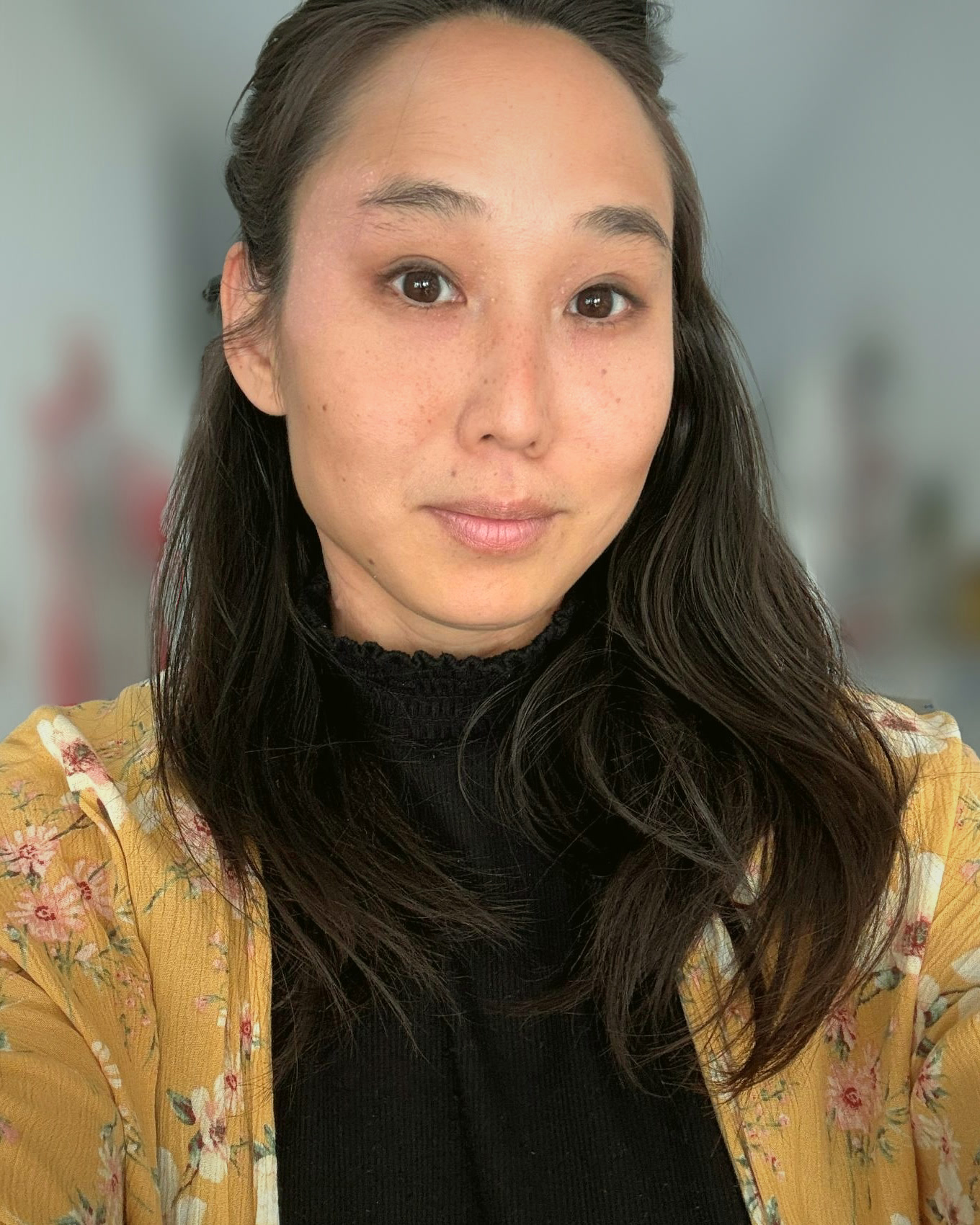
For Ida Grønborg, that question grew slowly over time. On paper, her early path was clear and accomplished. She moved through academic spaces with precision, building a career grounded in evidence, careful thinking, and scientific rigor. From Aarhus to Copenhagen, and through international study experiences in Australia and the United States, she followed a trajectory that many would consider both stable and successful.
But underneath the structure of academic achievement, something remained unresolved. The work was meaningful in theory, but distant in practice. The people it was meant to help felt far away.
A Foundation Built in Science
Ida’s early journey was deeply rooted in science. She trained as a biologist before specializing in human nutrition, drawn to the clarity and discipline that research demanded. It was a world where answers were built slowly, tested repeatedly, and only shared when certainty had been reached.
Her time as a research assistant and later as a PhD student at the National Food Institute at DTU placed her at the center of complex, collaborative work. She led a randomized controlled trial involving more than one hundred women, contributing to a broader European research effort on vitamin D. The work required coordination across countries, teams, and disciplines. It demanded patience, structure, and a commitment to detail.
There was satisfaction in that process. The results were published, presented, and recognized within academic circles. Yet the system itself had its own logic, one that did not always align with impact in the real world.
Reflecting on that time, she shares,
“I was doing research and being measured against other researchers on my publications, citations and not exactly how big of an impact my research would have out in the real world. It was not motivating.”
The realization did not come all at once. It surfaced gradually, through moments of quiet frustration and a growing awareness that much of the data she worked with never left the confines of academic storage. Valuable insights existed, but they often remained unused, disconnected from the lives they were meant to improve.
What began to take shape was not a rejection of science, but a desire to redirect it.
Stepping Into Uncertainty
The turning point came in 2020, when Ida joined the Biomedical Design Fellowship funded by the Novo Nordisk Foundation. It marked a shift not only in her environment, but in how she understood her role as a researcher.
For the first time, she was placed directly within clinical settings, observing patient experiences and working alongside healthcare professionals. The distance between research and reality began to close. Problems were no longer abstract. They were immediate, visible, and deeply human.
This experience challenged her in ways that academic training had not. It required speed where she had been taught caution. It demanded action where she had been trained to wait for certainty.
The transition was not easy. The skills that had once defined her competence now felt limiting in a different context. She had to unlearn habits that had taken years to build. She had to make decisions without complete information, test ideas before they felt ready, and accept that being wrong was part of the process rather than something to avoid.
Alongside this practical shift came a deeper internal one. Identity, especially when built over years of specialization, is not easily reshaped. Moving into entrepreneurship meant stepping into spaces where she was no longer the expert. It meant learning new languages of regulation, strategy, and finance in real time.
She describes this period with clarity and honesty.
“The biggest challenge has been unlearning the things that made me good at what I did before.”
What allowed her to move forward was not confidence in having all the answers, but a willingness to remain open. She began to see that the strength of her scientific background did not disappear in this new environment. Instead, it needed to coexist with adaptability, speed, and a different relationship to uncertainty.
Building Something That Reaches People
In early 2023, Ida co founded Cacto Health alongside Mads Skak. The company emerged directly from the insights gained during the fellowship, grounded in a specific and urgent need within women’s health.
At the center of their work is MyLymphCare, a home based device designed for early detection and monitoring of lymphedema. The condition affects a significant number of women following breast cancer treatment, often developing gradually until it becomes chronic and more difficult to manage.
The current healthcare approach tends to respond after the condition has already progressed. Ida and her team are working to change that narrative. Their focus is on early intervention, enabling women to monitor their condition at home and take action before it reaches a more severe stage.
This shift is not only clinical. It is deeply personal for the women affected. Early detection can mean preserving quality of life, reducing long term complications, and regaining a sense of control after an already difficult medical journey.
Three years into building the company, progress has been steady and meaningful. Initial funding has been secured, a multidisciplinary team has been formed, and the path toward regulatory approval and market entry is actively being navigated.
Yet for Ida, what matters just as much as the product itself is the way the company is being built.
A Different Kind of Culture
Inside Cacto Health, the culture reflects a set of deliberate choices. It is shaped by the belief that ambition and sustainability do not need to exist in opposition.
Every member of the team has a life beyond the company, including families and responsibilities that extend outside of work. Rather than treating these as constraints, they are acknowledged as part of the foundation on which the company operates.
There is also a strong emphasis on transparency and shared learning. Problems are not meant to be solved in isolation. Instead, they are brought into the open early, allowing for collective input and faster progress.
This approach mirrors the way the product itself was developed. Early prototypes were shared before they were complete, inviting feedback and iteration rather than waiting for perfection. That same principle now guides how the team works day to day.
The result is an environment where people are encouraged to engage fully, both professionally and personally, without feeling that one must come at the expense of the other.
Redefining What Progress Looks Like
As the company moves closer to bringing MyLymphCare to market, Ida’s focus remains clear. The immediate goal is to place the device in the hands of the women who need it.
To achieve this, the team is exploring multiple pathways. One involves working toward reimbursement through healthcare systems, beginning with Germany. This route offers long term scalability but requires navigating complex regulatory and institutional processes.
At the same time, they are pursuing more direct access through physiotherapy clinics that specialize in lymphedema care. This allows patients to benefit from the solution sooner, without waiting for broader system adoption.
Beyond these practical steps lies a larger vision. Ida hopes to contribute to a fundamental shift in how lymphedema is understood and treated. Instead of being seen as a condition to manage after it becomes chronic, it can be approached as something to monitor and prevent from the beginning.
This kind of change does not happen quickly. It requires alignment across clinical practice, policy, and patient awareness. But it is precisely this long term impact that gives the work its meaning.
Holding Onto What Matters
Throughout her journey, Ida has developed a clear sense of what success looks like. It is not defined solely by milestones or external recognition. Instead, it is grounded in two interconnected outcomes.
The first is tangible impact. A product that genuinely improves patient lives, preventing the progression of lymphedema through early detection.
The second is the way that outcome is achieved. Building a company that remains sustainable for the people within it, where individuals do not have to sacrifice their well being or personal lives in order to succeed.
These priorities are not always easy to balance, especially in the demanding environment of a medtech startup. But for Ida, they are not negotiable. They define the kind of leader she wants to be and the kind of organization she is committed to building.
A Perspective Shaped by Experience
Looking back, one of the most significant aspects of Ida’s journey is the absence she once felt. Early on, there were few visible examples of women moving from research into technology entrepreneurship. That lack of representation made it more difficult to imagine such a path.
Today, that landscape is beginning to change. The field of women’s health is gaining momentum, with more founders, investors, and advocates recognizing its importance. Ida now sees herself as part of a growing community rather than an exception.
This shift not only influences how she approaches her work, but also how she hopes others will see their own possibilities.
Closing Reflection
At its core, Ida Grønborg’s story is not about leaving science behind. It is about expanding what science can do when it is carried all the way through to the people it is meant to serve.
Her journey reflects a willingness to question established paths, to sit with uncertainty, and to rebuild her sense of expertise in a new context. It is a reminder that meaningful work often requires stepping beyond what feels familiar, even when that familiarity has been hard earned.
In the end, what drives her is not complexity or recognition, but something far more direct. The possibility that a woman, having already gone through cancer treatment, might avoid another lifelong condition because someone chose to act earlier.
That possibility is quiet, but it is enough.
For More Features
Be Featured in The Real Edit!
Every story has the power to shape how we see innovation, leadership, and purpose. If you’re a founder, creator, executive, or changemaker with a journey worth telling , we’d be honored to help you share it.
To inquire about being featured:
Email us at: info@realedit.site
Follow The Real Edit