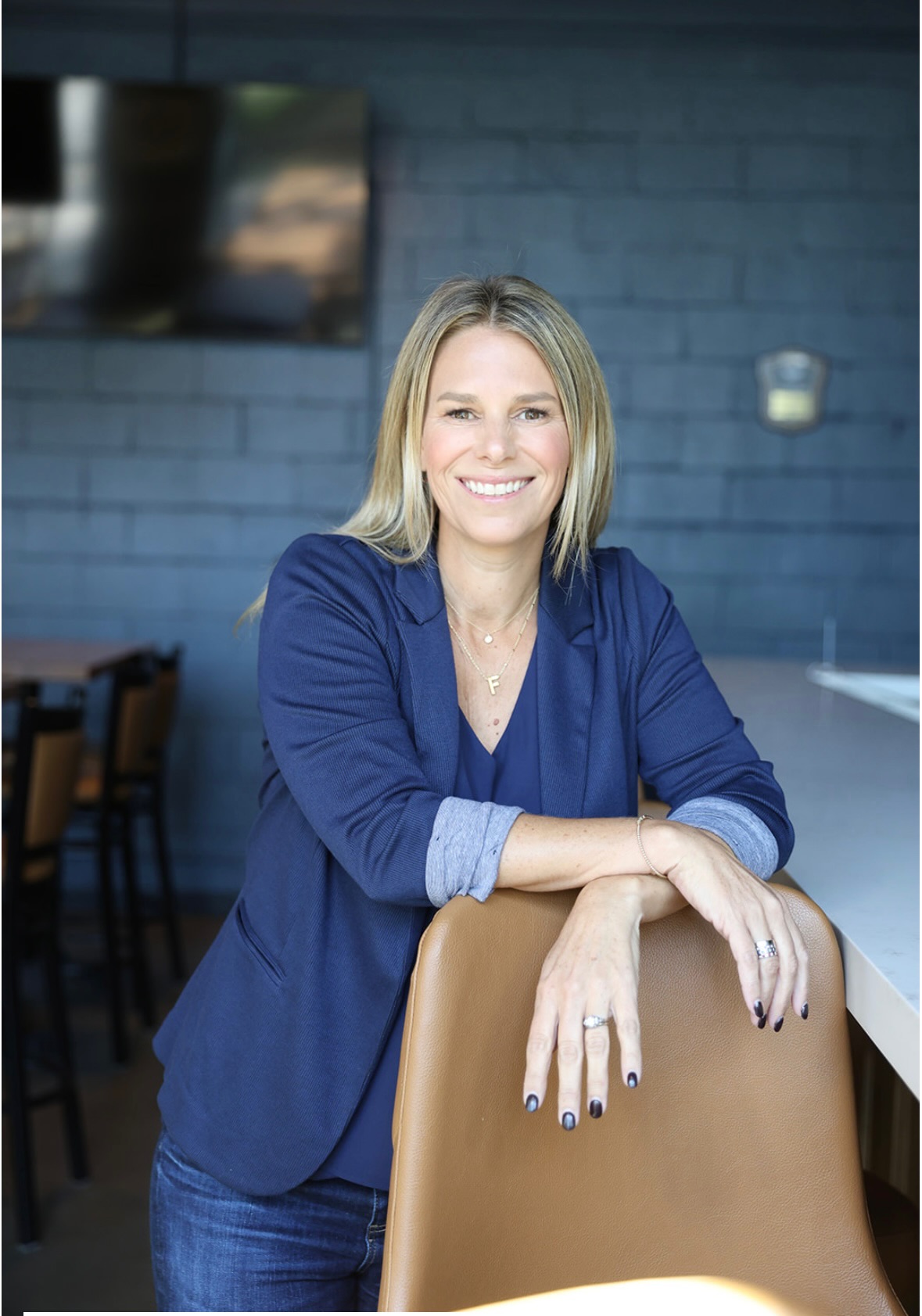
A Quiet Understanding Beneath the Work
There is a particular kind of clarity that does not arrive all at once. It builds slowly, almost imperceptibly, shaped by questions that refuse to leave. For Nasrin Mirelle, that clarity was never just about what people do, but why they do it, and more importantly, why they so often struggle to change even when they know exactly what needs to shift.
Her work today sits at the edge of that question. Not in theory, but in practice. Not in observation, but in experience. It is less about fixing behaviour and more about understanding the deeper systems that govern it. Beneath every decision, every hesitation, every moment of growth or retreat, she saw something consistent. The body had already decided.
That realization did not come from a single breakthrough. It came from years of paying attention.
Learning How People Learn, and Where It Falls Short
Nasrin’s early career began in Learning and Development, where she spent five years designing training programmes for organisations. Her role placed her at a unique intersection, blending instructional design, user experience, and cognitive psychology. The goal was always clear. Help people learn in ways that translate into real outcomes.
She approached this work with care and intention. It was never about delivering information for its own sake. It was about making sure that what people learned could actually be used in the moments that mattered. The kind of learning that changes how someone shows up, not just what they know.
Over time, though, something began to feel incomplete. She noticed a recurring pattern. People could understand something deeply. They could articulate it, explain it, even teach it. And yet, when faced with a real situation, they often reverted to old behaviours.
It was not a lack of intelligence or effort. It was something else entirely.
This gap became impossible to ignore. It led her deeper into the science of how humans actually change, drawing her into neuroscience and fields like predictive processing and memory reconsolidation. What she found there reframed everything she thought she knew.
Understanding, she realised, is not what produces change.
The Moment Theory Became Personal
The shift from intellectual understanding to lived belief is rarely abstract. It tends to show up in moments that feel personal, even uncomfortable. For Nasrin, that moment arrived during an early experiment with what would later become Premory.
She built a short simulation of herself in a pricing conversation, something that had always triggered a strong internal response. Despite her experience and expertise, there was a familiar tension that surfaced whenever she had to state her rate. A tightening in the chest. A subtle urge to soften her position. A quiet negotiation before the conversation had even begun.
Instead of trying to think her way through it, she did something different. She watched the simulation daily, allowing her nervous system to experience a version of herself that handled the situation with ease.
Reflecting on that moment, she shares,
“Before watching the scene, I couldn’t say my rate without my chest tightening. I watched it every morning for a week before my big client meeting. By the end, my nervous system had stopped fighting me.”
What changed was not her knowledge. It was her response. The body that once reacted with hesitation began to recognise a different possibility. One that felt familiar, even though it had never been lived before.
That experience marked a turning point. It moved the idea from something interesting to something undeniable.
Building Something That Did Not Exist Yet
Premory was not created to fit into an existing category. In many ways, it exists because the category itself had not yet been defined. Nasrin describes it as Future Memory Design, a methodology that uses AI-generated cinematic scenes to give people a direct, embodied experience of a future version of themselves.
The concept is simple in its articulation but complex in its implications. If the nervous system updates through experience rather than instruction, then the most effective way to create change is to provide that experience before the real moment arrives.
This approach required more than technical skill. It demanded a willingness to build without a roadmap. There were no established frameworks to follow, no clear benchmarks to measure against. Every conversation involved explaining not just what Premory does, but why it needs to exist in the first place.
Yet the challenge was not only external. As Nasrin continued to build, she began to notice that the obstacles she faced in the business often reflected something internal. Hesitations around visibility, decisions around pricing, moments of doubt. Each one pointed back to patterns that had yet to fully shift.
Rather than resisting this, she chose to work with it.
When the Work and the Self Grow Together
There is a particular honesty in building something that mirrors your own growth. It removes the distance between the personal and the professional. For Nasrin, this has become a defining aspect of her journey.
She does not separate the work she offers from the work she does on herself. Instead, the two evolve together. Every challenge becomes an opportunity to observe, understand, and update the patterns that surface.
This approach changes the nature of difficulty. Instead of something to push through, it becomes something to work with. A signal rather than a barrier. A reflection of what is ready to shift next.
It also shapes how she defines success. It is not measured solely by external outcomes, though those matter. It is grounded in alignment. In the ability to build something that supports both growth and sustainability, without compromising either.
A Different Kind of Change
At its core, Premory addresses a specific kind of gap. The one that exists between knowing who you want to become and actually being able to embody that version of yourself in real situations.
Many of the people Nasrin works with have already invested deeply in their growth. They have done the therapy, the coaching, the introspection. They understand their patterns and have developed the tools to manage them. And yet, when faced with certain moments, they find themselves responding in ways that feel familiar, even if they no longer align with who they want to be.
Premory offers something different. It provides the nervous system with direct, sensory evidence of a new possibility. Not as an idea, but as an experience.
When that experience is repeated and integrated, the system begins to recognise it as viable. The old pattern no longer holds the same weight. A new response becomes available, not through effort, but through familiarity.
The impact of this shift extends beyond individual moments. It influences how people show up in relationships, how they make decisions, and how they navigate environments that once felt intimidating.
In many ways, it changes the baseline.
Looking Ahead Without Losing the Core
As the technology behind Premory continues to evolve, so too do its potential applications. Nasrin sees its future extending into areas like education, organisational development, and even clinical settings. Anywhere that identity plays a role in how people move through a process, there is an opportunity to apply this work.
Yet even as the possibilities expand, the underlying principle remains constant. The nervous system updates through experience. That truth anchors everything she builds.
Her focus now is on refining the methodology, ensuring that it delivers change with precision and care. It is not about scaling quickly for the sake of growth. It is about maintaining the integrity of the experience and the impact it creates.
There is also a broader vision at play. A shift in how personal development itself is understood. Moving away from models that rely solely on reflection and insight, and towards approaches that engage the body as an active participant in change.
It is a subtle shift, but one that has the potential to reshape the field.
The Space Between Who You Are and Who You Could Be
At the heart of Nasrin’s work is a simple but powerful idea. The distance between where you are and where you want to be is often not as fixed as it feels. It is shaped by patterns that have been learned over time, many of them formed long before we had the awareness to question them.
These patterns can feel like identity. Like truth. But they are, in many cases, predictions. And predictions can change.
Her work is not about forcing that change. It is about making it possible. Creating the conditions in which the nervous system can recognise a new version of reality and begin to move towards it.
In doing so, she is not just building a company. She is contributing to a different understanding of human potential. One that is grounded in science, shaped by experience, and guided by a belief that change does not have to be as slow or as difficult as we have been taught to expect.
And perhaps that is what makes her work feel both innovative and deeply human at the same time. It does not promise transformation as an abstract idea. It offers it as something the body can finally believe.
For More Features
Be Featured in The Real Edit!
Every story has the power to shape how we see innovation, leadership, and purpose. If you’re a founder, creator, executive, or changemaker with a journey worth telling , we’d be honored to help you share it.
To inquire about being featured:
Email us at: info@realedit.site
Follow The Real Edit