Meet Amanda
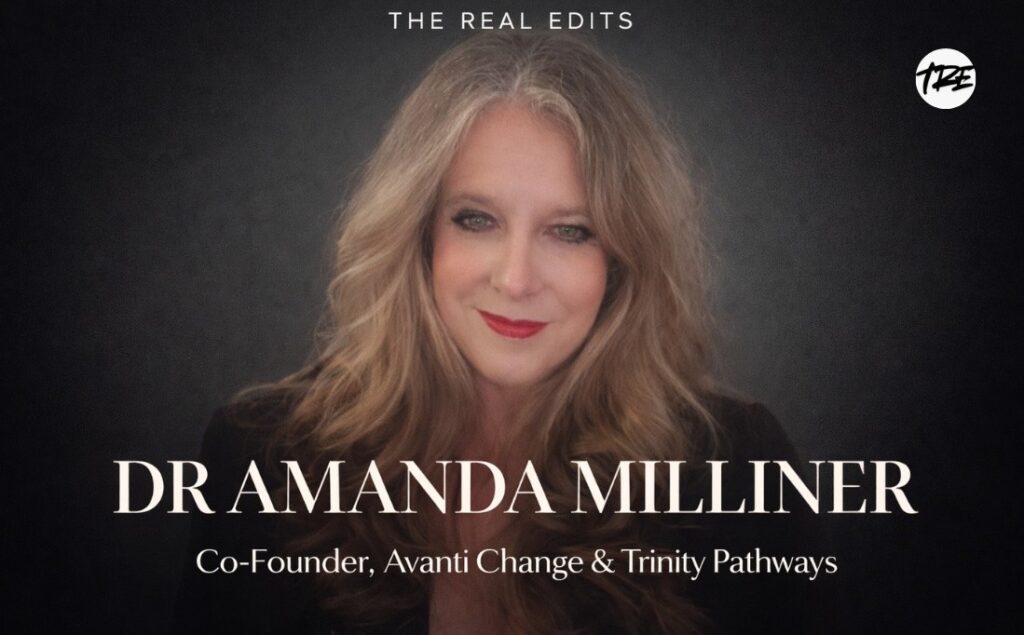
Dr Amanda Milliner is a leadership advisor, researcher, and co-founder of Avanti Change and Trinity Pathways. Her work sits at the intersection of organisational leadership and social impact, supporting senior leaders while also developing housing models for individuals experiencing homelessness. With a background shaped by years of working alongside executive teams and a doctorate focused on engaging vulnerable communities, she brings both practical and academic insight into how systems can better serve people.
A Leadership Philosophy Rooted in Humanity
Leadership, for Dr Amanda Milliner, has never been about titles, authority, or visibility. It has always been about responsibility. Responsibility for people. Responsibility for systems. And responsibility for ensuring that the environments created by organisations genuinely support the people who depend on them.
Across two organisations, Avanti Change and Trinity Pathways, Amanda works at the intersection of leadership, social systems, and housing. Her work moves between advising senior leadership teams and designing housing models that restore stability and dignity to individuals who have experienced instability.
Yet beneath the strategy, frameworks, and organisational work lies a much simpler motivation. Amanda has spent much of her career observing how systems affect people’s lives. Over time, that observation turned into a quiet but determined commitment to build something better.
“Culture and values are not abstract ideas,” she explains. “They shape real experiences for real people. When they are not lived properly inside organisations, the consequences can be felt in communities.”
This belief has become the thread connecting every chapter of her career.
A Path That Began with Leadership and Curiosity
Amanda’s early professional life placed her in rooms where important decisions were made. She worked closely with executive teams and boards across different sectors, helping organisations move forward.
These experiences offered her a rare view into leadership from the inside. She observed how decisions were made, how organisational cultures formed, and how values either translated into action or quietly faded into words on paper.
Those early years shaped her understanding of leadership in ways that would later guide her work. She learned that effective organisations were rarely defined by strategy alone. They were defined by the environments they created for the people within them.
Interestingly, Amanda’s academic journey did not begin alongside her career. It arrived later.
When her youngest child started school, she made a decision that would open an entirely new chapter in her life. She enrolled at university, stepping into academic life at a stage when many people believe such opportunities have already passed.
What followed was a decade of study and exploration that culminated in a Doctor of Philosophy. Her research focused on how organisations can better engage with vulnerable members of society to understand their needs.
The experience deepened her understanding of the systems she had already spent years observing in practice. It also reinforced her belief that change requires more than good intentions. It requires structures that genuinely listen to the people they serve.
Seeing the Gap Between Values and Reality
One of the most important realisations in Amanda’s career came while working with senior leadership teams.
Many organisations spoke confidently about culture and values. These principles appeared in mission statements, strategy documents, and office walls. Yet what Amanda began to notice was a disconnect between what organisations said they stood for and what people actually experienced.
That gap stayed with her.
“I began to see that culture and values were often treated as decorative ideas rather than structural ones,” she reflects. “But the truth is they shape people’s lives in very real ways.”
At the same time, Amanda spent significant time working within housing, homelessness, and temporary accommodation systems. This work exposed her to the daily realities faced by people navigating unstable housing situations.
For many individuals, temporary accommodation was anything but temporary. Families often remained in unstable environments for years while systems struggled to respond effectively.
Witnessing these realities had a profound effect on Amanda. It grounded her work in something deeper than policy or organisational design. It connected her leadership work to the human experiences unfolding within those systems.
Those years became a turning point. They sharpened her focus and clarified her purpose.
A Defining Challenge
Every leadership journey includes moments that test personal conviction. For Amanda, one of the most challenging moments arrived when she uncovered a serious compliance issue within an organisation she was working with.
Raising the concern was the right thing to do. But the consequences were far from easy.
Rather than being addressed constructively, the issue triggered a difficult and unsettling response. Amanda found herself facing significant personal and professional pressure during the aftermath.
The experience forced her to confront an uncomfortable truth about leadership. Standing for integrity can sometimes mean standing alone.
“One of the most difficult lessons in leadership is that doing the right thing does not always feel comfortable,” she says. “But remaining silent when people’s safety or dignity is at stake would have gone against everything I believe.”
The challenge tested her resilience and her sense of purpose. Yet it also strengthened something within her.
It reaffirmed her belief that systems must be designed to support transparency, accountability, and ethical leadership. It also reinforced her determination to create organisations where difficult truths could be spoken without fear.
What initially felt like a professional crisis eventually became a defining moment in shaping the direction of her work.
Founding Avanti Change
Several years after completing her doctoral work, Amanda co-founded Avanti Change alongside Dr Jonathan Huish.
Part of the decision was personal. She wanted the freedom to choose the organisations she worked with and ensure that those partnerships were aligned with her values.
But Avanti also reflected her deeper philosophy about leadership and organisational culture.
Through Avanti, Amanda works alongside senior leaders and executive teams across the world, supporting them through complex challenges and organisational transformation. Her work often involves helping leadership teams create cultures that allow people within organisations to thrive.
Over time, Avanti’s reach expanded significantly. Avanti has worked with more than 150 councils across the UK, frequently supporting cabinet level leadership teams and engaging with entire council organisations.
These partnerships place her in the centre of conversations about governance, community impact, and public sector leadership.
The work has become particularly significant as local authorities prepare for structural changes in governance. Amanda and her colleague Dr Jonathan Huish have been supporting several authorities as they navigate preparations for local government reorganisation.
For Amanda, this work is not simply about strategy. It is about helping organisations rediscover the human purpose behind the systems they manage.
Creating Trinity Pathways
While Avanti Change focuses on leadership and organisational systems, Amanda’s work with Trinity Pathways addresses one of society’s most pressing challenges: housing stability.
Trinity Pathways was founded with a clear mission. To create homes that offer safety, dignity, and a genuine pathway forward for individuals and families experiencing homelessness.
Across Wales, thousands of people currently live in temporary accommodation. Many remain there for two or three years, despite the label suggesting something far shorter.
Amanda found this contradiction impossible to ignore.
Through Trinity Pathways, she and her team are working to build what they describe as “welcome homes.” These are not simply temporary placements but environments designed to help individuals regain stability and rebuild their lives.
The organisation was launched with a significant portfolio of homes, an achievement Amanda describes as both exciting and surreal.
More importantly, Trinity represents the chance to build an organisation from the ground up with values embedded at every level.
The work is not limited to housing provision alone. Amanda is also developing a charitable foundation that will support the wider mission of reforming housing systems and supporting vulnerable communities.
For her, Trinity is more than an organisation. It is an attempt to challenge a system that has too often failed the people who rely on it.
Redefining Success
In many professional environments, success is measured through growth, scale, or recognition. Amanda views success differently.
For her, the most meaningful indicators are often the quiet ones.
Success might appear as a person finally feeling safe after years of instability. It might be a team finding confidence in their work. Or an organisation discovering how to operate with greater humanity.
“Success for me is about whether the systems we build create dignity, stability and safety for the people who depend on them,” she explains.
Integrity also plays a central role in her definition of success. Some of the most difficult moments in her career have reinforced the importance of staying aligned with personal values even when circumstances become challenging.
This perspective has shaped her leadership style. Amanda believes organisations should grow without losing their core purpose and that systems should continue serving people long after their founders step away.
Sustainability, both human and organisational, sits at the centre of that philosophy.
The Influence of Quiet Strength
When asked about role models, Amanda does not point to famous leaders or high profile figures. Instead, she speaks about her mother.
Her mother’s life was marked by resilience and quiet determination. Despite experiencing profound loss and significant health challenges, she maintained a remarkable ability to meet life with kindness and optimism.
In her later years, she made the bold decision to move to New Zealand in search of a new chapter.
That choice left a lasting impression on Amanda.
It demonstrated that reinvention is possible at any stage of life and that courage does not always need to be loud or visible to be powerful.
The example shaped Amanda’s understanding of strength and continues to influence her leadership today.
She also draws inspiration from colleagues, frontline teams and leaders who approach their work with compassion and integrity every day. These individuals, often working quietly behind the scenes, embody the kind of leadership she respects most.
Looking Ahead
As Amanda considers the future, her ambitions remain focused on deepening the impact of the work she has already begun.
For Trinity Pathways, the goal is to expand the organisation while protecting its culture and values. Growth must never come at the expense of dignity, safety, or humanity.
She also hopes to develop practical frameworks and tools that help organisations translate values into everyday practice. Too often, values remain theoretical concepts. Amanda wants to make them operational realities.
Another important priority is sustainability. The work she leads addresses complex social challenges, and maintaining personal balance is essential.
Spending time in nature and creating space for reflection and creativity are part of how she ensures that the work remains sustainable for the long term.
Ultimately, Amanda hopes to build systems and structures that continue supporting people long after her direct involvement ends.
The Quiet Work of Changing Systems
The work of systemic change rarely happens in dramatic moments. More often it unfolds quietly through persistence, integrity, and steady leadership.
Amanda’s journey reflects that kind of change. From boardrooms to housing systems, from academic research to frontline realities, her career has been shaped by a consistent belief that organisations can do better when they are built around humanity.
Her advice to emerging professionals reflects the same philosophy.
Values, she believes, are not obstacles to success. They are the foundation of meaningful leadership.
When organisations treat people with dignity, when systems are designed to support rather than overlook vulnerability, and when leaders act with integrity even in difficult moments, genuine transformation becomes possible.
And while the work may not always attract headlines, the impact can be profound. Sometimes it appears in the form of a safe home, a supported team, or a system that becomes just a little kinder than it was before.
For More Features
Be Featured in The Real Edit!
Every story has the power to shape how we see innovation, leadership, and purpose. If you’re a founder, creator, executive, or changemaker with a journey worth telling , we’d be honored to help you share it.
To inquire about being featured:
Email us at: info@realedit.site
Follow The Real Edit