This is for preview purpose only. It is unlisted and unindexed on the Internet
A Life Driven by Curiosity
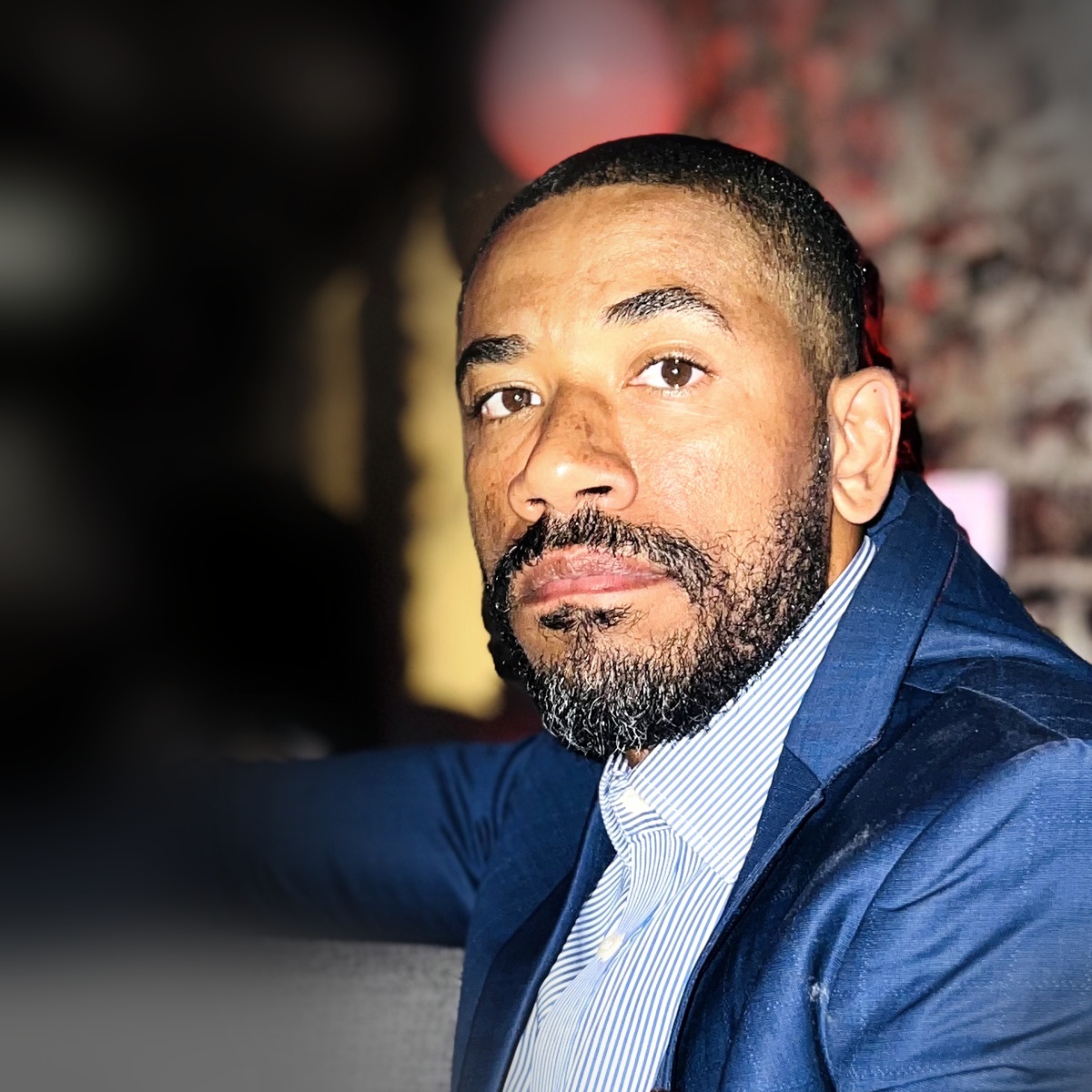
Long before he became a strategist, Frédéric Dahms was simply curious about how creative work was made.
Growing up in western Germany in the Ruhr area, he was drawn to sound, technology, and the invisible mechanics behind media. After finishing school, he moved to Berlin at the age of twenty to work as an audio visual media designer in a recording studio that produced commercial content. The environment exposed him to the world of advertising for the first time.
In the studio he saw how sound, visuals, and storytelling came together to shape the way a message reached people. What started as technical work quickly became something more meaningful. He found himself fascinated not just by production, but by the ideas that guided it.
Advertising was not simply about making something look good. It was about understanding how people think and why certain messages resonate. That realization sparked an obsession that would eventually shape his entire professional life.
He began studying campaigns, creative direction, and messaging strategies with the curiosity of someone trying to uncover a hidden system. What seemed magical at first began to reveal patterns. The work that stood out the most was rarely accidental. Behind every strong campaign there was thinking, structure, and careful intention.
This discovery planted an early seed. Creativity, he realized, was not always spontaneous inspiration. Often it was the result of understanding a deeper framework.
From Sound to Strategy
After some time in Berlin, Dahms returned to the Ruhr region to continue his education. He enrolled in a program that combined applied cognitive science and media studies, blending psychology with computer science.
The field appealed to his analytical side. Understanding how people process information and how systems operate offered a new lens through which to view communication.
While studying, he also began working in a small SEO company and taking freelance graphic design projects. The work was practical and immediate. Businesses needed clear visual communication and stronger digital presence, and his growing skill set allowed him to contribute.
For several years he balanced academic studies with hands on professional work. Eventually he made a difficult decision. Instead of finishing the program, he chose to return to his original passion for sound and enrolled at SAE in Bochum to become a certified recording engineer.
Completing that degree felt like closing a chapter. It was proof to himself that he could pursue a craft seriously and reach a professional level.
Yet the moment of achievement also brought an unexpected realization.
As he looked at the recording industry more closely, he saw that the financial path was uncertain. The creative work was fulfilling, but the opportunities for long term stability were limited. Meanwhile his design and branding projects were steadily bringing in clients without much effort in acquisition.
The direction of his career began to shift almost naturally.
The Decision to Build Something of His Own
Soon after finishing his degree, Dahms made a decision that would define the next phase of his life. He started his own advertising agency.
At the time he did not have a grand strategic plan. What he had was a growing understanding of creative communication and a belief that he could build something meaningful from it.
The early years of the agency were shaped by experimentation and persistence. Like many small creative businesses, it went through periods of growth and contraction. At certain points the team expanded to several employees. At other times he found himself working alone again.
The instability was not always easy. Running a business exposed him to both opportunity and pressure. Clients came and went. Projects succeeded and failed. Yet through all of it, Dahms began to refine the part of the work that interested him most.
Over time he moved further away from production and design and deeper into brand strategy.
He had come to understand that the most important decisions about communication happen long before any campaign is produced. The real challenge lies in defining who a company is, what it stands for, and how it should speak to the world.
The deeper he went into that work, the more he realized that strong branding is not decoration. It is the foundation for everything else.
Hardship and Perspective
The path toward clarity was not without difficulty. Like many entrepreneurs, Dahms faced personal and financial challenges that tested his resilience.
There were periods when circumstances became so severe that he struggled to find stability in basic aspects of life. Financial hardship, the loss of loved ones, broken relationships, and betrayals in business all left their mark.
Experiences like these tend to reshape a person’s understanding of success.
For Dahms, they brought perspective. When someone has experienced the lowest points, fear loses much of its power. Hardship does not necessarily disappear, but it becomes easier to navigate.
Reflecting on those years, he sees them not as failures but as part of a larger process of growth.
He explains his outlook simply:
“There were moments when life became extremely difficult. But those experiences made me stronger and taught me empathy. When you have seen the ground floor, there is little left to fear.”
The struggles also deepened his belief that persistence matters more than perfection. Life rarely follows a straight path, and meaningful work often emerges through unexpected turns.
A Leadership Role and an Unexpected Shift
After many years of running his agency, Dahms received several job offers that opened the door to a different kind of professional experience.
Eventually he joined a German software company of around seventy people as Head of Brand. In this role he became part of the leadership team and was responsible for the company’s strategic communication and brand development.
The position offered a new perspective on how organizations function internally. Instead of advising from the outside, he was now helping shape the brand from within while leading a team responsible for messaging and positioning.
For two years he worked closely with leadership and colleagues to refine the company’s identity and communication strategy.
Then the organization made a structural change.
The owner decided to reorganize the company using a cell structure model inspired by management thinker Nils Pfläging. In this system, traditional top down leadership roles were removed in favor of decentralized teams.
The shift meant that roles centered on ownership of the brand would no longer exist in the same way.
For Dahms, it was an unexpected transition. Once again he found himself at a crossroads.
Instead of immediately jumping into another role, he chose to step back.
A Year of Reflection and Creation
Taking a year away from day to day business responsibilities gave Dahms the space to reflect on everything he had learned over the previous decade.
He began asking deeper questions about the nature of brand strategy itself.
Traditional consulting methods often require months of work and large budgets. For many smaller companies, this makes professional brand strategy inaccessible.
Yet the underlying thinking behind strategy is often systematic. It relies on structured analysis, frameworks, and logical exploration of a company’s identity.
Dahms wondered whether technology could help accelerate this process while maintaining the depth of insight required.
His interest in artificial intelligence made the idea particularly compelling. Years earlier he had discovered early conversational programs like ELIZA and had been fascinated by the possibilities of machine learning. Over time he had continued studying the field through independent courses and research.
The intersection between strategy and AI became the focus of his attention.
During that year of exploration he began building a system designed to support and structure brand strategy development. The result was a framework he calls The Reactor.
Reimagining Brand Strategy
The Reactor represents Dahms’s attempt to rethink how brand strategy can be delivered.
Rather than relying solely on long consulting engagements, the system combines strategic frameworks with machine learning processes and adversarial logic. The goal is to generate deep strategic insights much faster than traditional approaches allow.
For Dahms, the motivation is not simply efficiency. It is accessibility.
Many small and medium sized companies operate without clear strategic positioning because they cannot afford traditional consulting fees. Yet these companies often have unique strengths that deserve to be articulated clearly.
Through INCEPTIK and the Reactor system, Dahms hopes to make high quality strategic thinking available to a much broader range of organizations.
He believes that when companies understand their true identity, communication becomes more honest and meaningful.
In his view, branding is not about manipulation or clever marketing tricks. It is about discovering what makes a company genuinely valuable.
As he explains,
“Branding is not a trick and it is not marketing. Every company is truly better at something. The challenge is discovering that unique strength and expressing it clearly.”
When that clarity exists, businesses no longer need to exaggerate or mislead in order to attract attention. Customers can make decisions based on trust and understanding.
A Different Definition of Success
Over the years Dahms’s understanding of success has changed significantly.
In his younger years he measured success through conventional markers such as financial achievement and external recognition. Those goals felt natural at the time, especially for someone building a business in a competitive creative industry.
But experience gradually reshaped that perspective.
Today he sees success less as a destination and more as a state of alignment. It is about being at peace with the present moment while continuing to learn and evolve.
This philosophy draws inspiration from Buddhist ideas about acceptance and awareness. Life is not something to conquer but something to experience fully.
That does not mean ambition disappears. Dahms still pushes himself to improve his craft and deepen his understanding of strategy. The difference is that growth is now driven by curiosity rather than pressure.
Work and life are not separate compartments for him. They are simply parts of the same ongoing journey.
The Discipline of Details
One principle continues to guide his work regardless of the project or client.
Details matter.
In design, strategy, and communication, small decisions accumulate into a larger impression. A single detail might seem insignificant on its own, but dozens of thoughtful decisions together create a sense of quality and intention.
Dahms often reflects on the famous observation by Charles Eames that details are not separate from design but actually form its essence.
For him, professionalism lies precisely in this level of care. The difference between average work and exceptional work often comes down to the discipline of paying attention to elements others overlook.
That mindset shapes both the strategic frameworks he develops and the way he collaborates with clients.
Looking Toward the Future
The next chapter of Dahms’s work revolves around expanding the reach and impact of INCEPTIK.
His goal is to help businesses discover what he calls their unique DNA. Every company has certain strengths, values, and capabilities that define it, even if those qualities are not immediately obvious.
When those elements are identified and expressed clearly, communication becomes simpler and more authentic.
For Dahms, the broader vision extends beyond individual companies. He believes that clearer branding can improve the relationship between businesses and the people they serve.
When organizations communicate honestly about what they do well, customers can make more informed choices. Trust becomes easier to build, and the need for exaggerated marketing decreases.
It is a small shift in practice that could have larger cultural effects.
Helping companies reach that clarity is the work he hopes to continue doing for many years to come.
A Quiet Commitment to Growth
Frédéric Dahms does not present himself as someone who has arrived at a final destination.
Instead he sees his life as an ongoing process of learning, experimenting, and refining his craft. Curiosity continues to guide him much the same way it did when he first stepped into a recording studio in Berlin years ago.
Each experience, whether difficult or rewarding, has contributed to a deeper understanding of people, communication, and purpose.
At its core his work is not only about branding or strategy. It is about helping organizations articulate who they truly are.
And in that process, he continues pursuing the same goal that has followed him throughout his career.
To keep evolving, to keep learning, and to keep doing work that feels honest and meaningful.
For More Features
Be Featured in The Real Edit!
Every story has the power to shape how we see innovation, leadership, and purpose. If you’re a founder, creator, executive, or changemaker with a journey worth telling , we’d be honored to help you share it.
To inquire about being featured:
Email us at: info@realedit.site
Follow The Real Edit