
This is for preview purpose only. It is unlisted and unindexed on the Internet
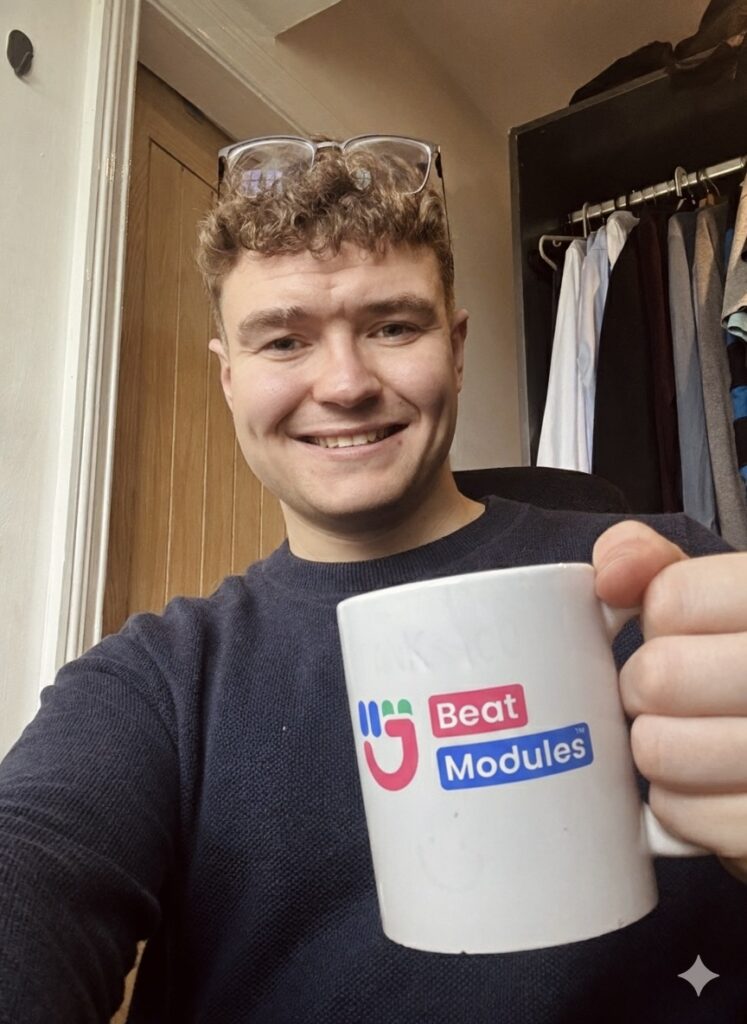
Meet Oliver
Oliver le Brun is the CEO and founder of Beat Modules, a UK based digital education platform focused on preventing health and social harm among young people. Trained in biomedical and cancer research, Oliver now works at the intersection of science, education, and technology, designing evidence led tools that help schools move from reactive intervention to early, skills based prevention.
There is a quiet steadiness to Oliver le Brun. He does not speak in slogans or sweeping claims. His work is grounded in observation, in time spent watching systems from the inside, and in lived experience that taught him how easily young people fall through gaps no one intends to leave open. What drives him is not disruption for its own sake, but a deep belief that many of the problems society struggles to fix later in life could have been softened, or even avoided, much earlier.
Before Beat Modules existed, before pilots and schools and funding conversations, Oliver was asking a simpler question. Why do we wait so long to help people?
Learning the Limits of Treatment
Oliver’s professional journey began in biomedical science, drawn by curiosity about how disease develops and how research translates into real outcomes. He trained in cancer biology and pharmacology, completing a Master’s in Research focused on chemotherapy toxicity models and translational health research. It was rigorous, demanding work, rooted in precision and patience. At the same time, he worked in healthcare and community facing roles, spending time with patients and systems outside the lab.
What stood out to him was not only the sophistication of modern medicine, but its timing. Too often, interventions arrived late, after patterns were entrenched and harm had accumulated. He saw how much effort went into managing consequences, while far less was invested in shaping healthier paths earlier on.
Alongside this academic route ran a more personal thread. As a young person, Oliver struggled to engage with traditional education. Living with dyslexia and ADHD, he experienced first hand how easily systems can misread disengagement as disinterest, rather than a signal that learning is not landing. Like many young people, he also navigated unhealthy behaviours that were common, visible, and rarely addressed in a way that felt meaningful.
These two perspectives, scientific and personal, began to converge. The question shifted from how to treat disease, to how to prevent the conditions that make it likely in the first place.
When Prevention Became the Point
The turning point was not a single moment, but a growing discomfort. Oliver became increasingly convinced that many adult health challenges are behavioural and social in origin, shaped by habits, confidence, communication, and decision making formed much earlier. Yet the tools used to support young people felt outdated, static, and disconnected from how they actually learn and interact.
As he reflected on his own experience, he recognised a gap between evidence and delivery. Research was clear on what supports behaviour change, but education systems were struggling to translate that into practice at scale. He began to imagine something different. A platform that was evidence based but also engaging. Serious about outcomes, but designed for real people rather than ideal users.
That idea took shape as Beat Modules. Not as a business plan first, but as a response to something that felt broken.
Validation came when Oliver won an innovation competition at the University of Liverpool. It was the first external signal that prevention focused digital education could be built differently, and that there was room to step away from a purely academic or clinical path. Early grant funding followed, along with a fellowship at the Civic Health Innovation Labs, where the idea was tested, challenged, and refined.
The most defining moments came later, in schools. Watching students engage with gamified, scenario based learning confirmed what he had suspected. When education feels relevant, young people do not disengage. They lean in.
Reflecting on that shift, Oliver says,
“I realised that many of the health challenges we treat in adulthood are behavioural and social in origin, but our prevention tools are outdated and poorly matched to how young people actually learn and interact today.”
Building While Learning
Founding a company while completing a cancer research degree brought its own pressures. Science trains you to move carefully, to question assumptions, and to avoid overreach. Startups demand decisiveness, speed, and comfort with incomplete information. Bridging those worlds required Oliver to unlearn as much as he learned.
Leadership did not come naturally at first. Managing a growing team without prior experience meant developing communication, trust, and clarity under pressure. Mistakes were inevitable. Progress came through mentorship, honest feedback, and surrounding himself with people whose strengths complemented his own.
There was also the challenge of balance. Long weeks became normal. Perfection had to give way to momentum. Over time, Oliver learned to focus on what was good enough to move forward, rather than waiting for certainty.
Despite the strain, he found meaning in the work. Building Beat Modules from concept to live pilots, securing early funding, assembling a multidisciplinary team, and achieving first paid school adoption became milestones that felt earned, not abstract.
Education That Sticks
At its core, Beat Modules is built around a simple idea. Awareness alone does not change behaviour. Skills do.
The platform uses interactive, gamified learning to help young people practise communication, boundary setting, decision making, and self reflection in realistic scenarios. Rather than one off lessons, it offers structured learning that builds confidence over time. For schools, this means moving wellbeing education beyond assemblies and worksheets. For teachers, it reduces pressure by providing tools that are engaging and measurable.
Beat the Vape, the platform’s first module, was inspired by Oliver’s own experience and the prevalence of vaping among young people. It combines behavioural science with real world relevance, meeting students where they are rather than lecturing from a distance. But vaping is only the beginning. The platform is expanding to address mental health, digital wellbeing, identity, and social pressures, all aligned with the PSHE curriculum and co designed with young people.
As Oliver puts it,
“My work focuses on education that genuinely sticks, not just awareness.”
What sets Beat Modules apart is not technology alone, but intent. The goal is not to impress, but to be useful. To give young people tools they can actually use, and systems something they can rely on.
Redefining Impact
Oliver defines success in human terms. Making a meaningful difference in young people’s lives by reducing preventable harm. Helping them build healthier pathways earlier. At the same time, he is motivated by the challenge of building an organisation that can sustain that impact at scale. For him, mission and structure must grow together.
His values shape how he leads. Integrity, curiosity, and a strong sense of duty guide decisions. Having struggled in traditional systems himself, he prioritises inclusivity and accessibility, and remains cautious of solutions that look impressive but lack substance.
Staying motivated means staying close to the problem. Regular conversations with teachers, students, and partners keep the work grounded. Outside of work, swimming, outdoor climbing, and time in nature help reset perspective. As the business matures, Oliver is intentionally building more sustainable routines, recognising that long term impact requires longevity, not burnout.
Looking Ahead
In the near future, Oliver’s focus is on scaling Beat Modules into a trusted prevention platform used by schools, councils, and youth organisations across the UK. Longer term, he hopes the work will inform national prevention strategies and travel beyond borders, helping education systems shift from reactive responses to earlier, more effective support.
The ambition is not to replace existing systems, but to strengthen them. To offer tools that align evidence with experience, and that respect the complexity of young people’s lives.
Asked what advice he would give to others, Oliver returns to the idea of action. You do not need a perfect plan. You need belief, persistence, and a willingness to learn. Problems worth solving rarely come with clear routes.
A Different Starting Point
Oliver le Brun’s story is not one of sudden insight or overnight success. It is a gradual reorientation. From treatment to prevention. From information to skills. From systems that react, to tools that prepare.
What makes his work compelling is its restraint. It does not promise to fix everything. It simply asks what might change if we started earlier, listened more closely, and designed with care.
In a world that often waits until harm is visible, Oliver is quietly building something that begins before the damage is done.
For More Features
Be Featured in The Real Edit!
Every story has the power to shape how we see innovation, leadership, and purpose. If you’re a founder, creator, executive, or changemaker with a journey worth telling , we’d be honored to help you share it.
To inquire about being featured:
Email us at: info@realedit.site
Follow The Real Edit