This is for preview purpose only. It is unlisted and unindexed on the Internet
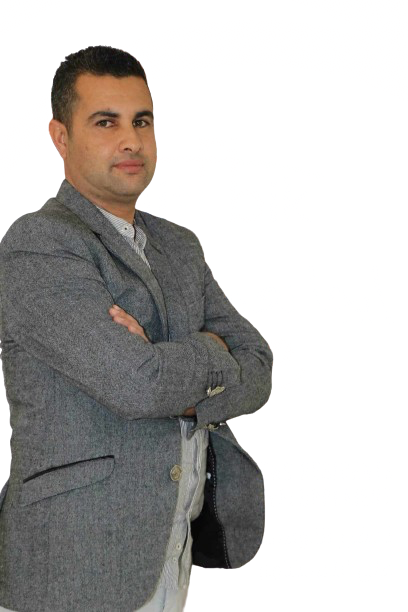
Meet Abdelhamid
Abdelhamid Chaoua is the CEO of CAREDIFY, a Tunisian digital health startup focused on improving cardiac care through clinically grounded technology. Based in Medenine, Tunisia, his work sits at the intersection of healthcare, AI, and patient centered innovation, shaped by personal experience and guided by a deep respect for clinical reality.
The Weight of a Personal Why
There is a quiet seriousness to the way Abdelhamid Chaoua speaks about healthcare. It does not come from ambition or recognition. It comes from proximity. From being close enough to illness to understand how easily care can fracture into confusion, delay, and missed signals. Long before CAREDIFY existed as a platform, the questions that would shape it were already present in his life. What happens when a heart condition is diagnosed too late. What happens when data exists but does not reach the right hands. What happens when patients and clinicians are left navigating uncertainty with incomplete tools.
For Abdelhamid, technology was never an abstract fascination. It was a possible response to something deeply human. A way to reduce risk, to offer clarity, to bring structure to moments that too often feel overwhelming. That quiet urgency became the thread that connected his early interests in medical electronics and computing to a much larger mission. Not to disrupt healthcare, but to support it in places where it most often breaks down.
Growing at the Crossroads of Technology and Care
Abdelhamid’s professional journey began where healthcare, technology, and entrepreneurship overlap. Early exposure to cardiovascular disease within his own family revealed how challenging it could be to monitor chronic conditions in real time. Care felt fragmented. Information arrived late. Decisions were reactive rather than preventive. These gaps were not theoretical. They were lived.
Instead of pushing him away from healthcare, those experiences drew him closer. He began exploring how digital systems could support earlier detection, better coordination, and more informed decision making. His background in medical electronics gave him a practical understanding of how devices interact with the body. Computing added another layer, offering ways to process and interpret complex data. Over time, these interests began to converge around a single question. How could technology be built in a way that respected clinical rigor while remaining accessible to real patients and practitioners.
The early stages of this work were quiet and experimental. Conceptual ideas. Technical sketches. Conversations with clinicians. Each step revealed how complex healthcare truly is. Innovation could not exist in isolation. It had to align with standards, regulations, and lived clinical workflows. This understanding would later define the way Abdelhamid approached product development.
When an Idea Became a Responsibility
The transition from concept to company marked a turning point. Creating CAREDIFY was not simply about launching a startup. It was about committing to a long process of validation, collaboration, and accountability. The platform was designed as a mobile and web solution focused on cardiac monitoring, risk prediction, and care coordination. But building it required far more than writing code.
Abdelhamid found himself immersed in product design decisions, hardware integration challenges, and regulatory frameworks. Each layer introduced new complexity. Healthcare demanded precision. AI required responsibility. Patient data required trust. There was no room for shortcuts.
Early support from national innovation programs helped validate both the problem and the approach. Grants and startup labels provided resources, but more importantly, they offered confirmation that the work addressed a real need. Still, recognition did not reduce the difficulty of execution. Regulatory compliance became a defining challenge. Understanding clinical standards and aligning with certifications such as ISO 13485 and CE marking required patience and humility. It also required close collaboration with medical professionals who could ground the technology in everyday practice.
This phase reshaped Abdelhamid’s role. He moved from builder to bridge. Between engineers and clinicians. Between innovation and compliance. Between ambition and restraint.
Learning to Lead Without Losing the Mission
As CAREDIFY grew, so did the scope of Abdelhamid’s responsibilities. Securing funding, coordinating teams, and navigating market realities became part of daily life. The challenge was not only technical. It was personal. Balancing long term vision with immediate constraints required discipline. Managing growth without losing purpose required constant reflection.
He adopted structured approaches to project management, breaking complex goals into achievable milestones. Delegation became essential. So did learning when to step back and listen. Leadership, he discovered, was less about direction and more about alignment. Keeping everyone focused on patient impact helped guide decisions when trade offs were inevitable.
Through international startup programs and regional recognition, CAREDIFY began positioning itself for broader reach across Tunisia and the MENA region. With that expansion came new questions. How to scale responsibly. How to adapt to different healthcare systems. How to maintain clinical credibility while growing.
Throughout these shifts, Abdelhamid remained anchored to a simple definition of success. As he puts it,
“For me, success is not measured by recognition or funding, but by whether the work genuinely improves people’s lives and strengthens the healthcare ecosystem around them.”
Building Technology That Serves, Not Replaces
Today, CAREDIFY operates as a clinically oriented digital health platform designed to empower patients, clinicians, and healthcare institutions. The platform is compatible with a wide range of portable and clinical ECG medical devices available on the market.
For individuals living with heart conditions, CAREDIFY enables proactive monitoring and AI-driven insights that support earlier detection of heart failure deterioration, prediction of heart failure risk, and improved management based on vital signs captured by portable ECG devices.
For healthcare institutions and clinicians, the platform integrates with various clinical ECG devices and provides structured access to actionable clinical data, enhancing communication, continuity of care, and evidence-based decision-making.
What truly distinguishes CAREDIFY is not simply the use of artificial intelligence, but how this technology is applied. Abdelhamid emphasizes evidence, security, and compliance. Innovation is meaningful only when it earns trust: data must be protected, insights must be interpretable, and digital tools must integrate seamlessly into existing care pathways rather than disrupt them.
Looking Ahead With Intention
The future Abdelhamid envisions is not defined by rapid expansion alone. In the near term, his focus remains on strengthening AI models, deepening clinical validation, and expanding deployment across the region. Collaboration with healthcare providers and research institutions is central to this effort. Adoption must be meaningful. Outcomes must be measurable.
In the mid term, he sees CAREDIFY becoming a reference platform for cardiac care and research. Integrating multimodal patient data in a secure environment could support preventive care, longitudinal studies, and improved reporting. Over the long term, Abdelhamid hopes to contribute to shaping the digital health ecosystem itself. Mentoring young innovators. Advocating for responsible AI. Supporting solutions that make personalized care accessible at scale.
His motivation remains rooted in the same place it began. As he often reminds others,
“Technology matters, but what truly defines impact is the lives you touch and the care you help make possible.”
A Quiet Commitment to Better Care
Abdelhamid Chaoua’s story is not one of disruption or spectacle. It is a story of sustained attention. Of listening closely to where systems fail and responding with care rather than speed. His work reflects a belief that healthcare innovation must be earned through rigor, empathy, and patience.
In a field often driven by urgency, his approach is measured. Purpose comes before growth. Trust comes before scale. The heart of his leadership lies not in ambition, but in responsibility. Responsibility to patients. To clinicians. To the fragile moments where technology and humanity meet.
And in that quiet space, meaningful change takes root.
For More Features
Be Featured in The Real Edit!
Every story has the power to shape how we see innovation, leadership, and purpose. If you’re a founder, creator, executive, or changemaker with a journey worth telling , we’d be honored to help you share it.
To inquire about being featured:
Email us at: info@realedit.site
Follow The Real Edit