This is for review purpose only. It is unlisted and unindexed on the Internet

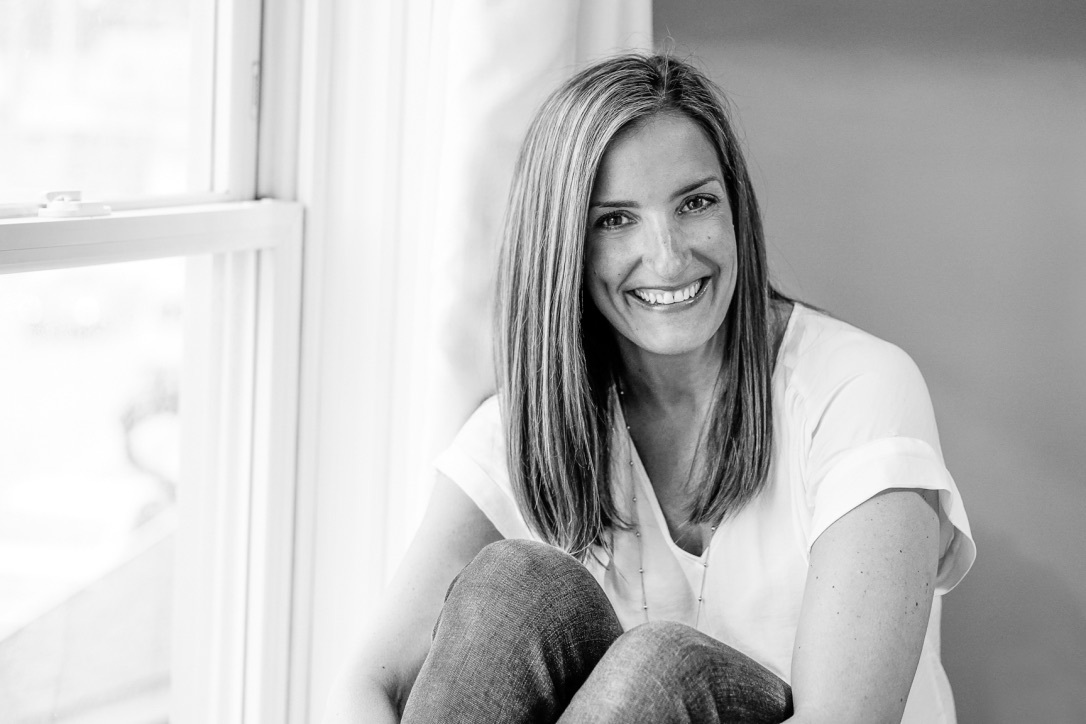
Meet Danielle
Danielle John is the Founder and Managing Director of The EmpowHER Project CIC, a trauma-informed, women-centred organisation based in Cardiff, Wales. Drawing on lived experience, professional leadership, and her academic grounding in Forensic Psychology, she designs and leads services that support women impacted by trauma, addiction, and the criminal justice system to rebuild identity, safety, and purpose beyond survival.
There is a quiet steadiness to the way Danielle John speaks about change. Not the urgency of someone trying to prove something, but the grounded presence of someone who has already survived what once felt impossible. Her work is not driven by ambition in the traditional sense. It is driven by memory of what it felt like to be misunderstood, processed, and managed rather than truly seen. Today, she stands on the other side of that experience, building spaces where women are met with understanding instead of judgement, and where healing is treated as something that happens in relationship, environment, and time.
Learning to Live Inside a Story She Didn’t Choose
Danielle’s early life was shaped by long-term trauma, violence, and instability experiences that followed her quietly but persistently into adulthood. Without the language or framework to understand what had happened to her, she internalised blame and shame, believing for many years that her struggles were evidence of personal failure rather than responses to harm.
That misunderstanding had consequences. For nearly two decades, her life moved in cycles of addiction, survival behaviours, and repeated involvement with the criminal justice system. Services came and went, each addressing the surface of her behaviour while missing the roots beneath it. She was assessed, sanctioned, stabilised but rarely understood.
What stayed with her was not just the harm of those systems, but the contrast between them and the rare moments when someone chose to see her as a whole person. Those moments were few, but they mattered. They planted a quiet, enduring question that would later shape her life’s work: What would support look like if it began with understanding rather than control?
The Moment Survival Shifted Into Meaning
Recovery did not arrive as a single breakthrough. It came gradually, through spaces that offered safety, peer support, and reflection. As Danielle moved out of survival mode, something fundamental changed in how she understood herself. She began to recognise patterns not of failure, but of trauma. Her behaviours, once sources of shame, started to make sense as adaptations to experiences she had never chosen.
She later reflected,
“One of the most defining turning points in my journey was realising that change did not come from being controlled or corrected, but from being understood.”
That insight reframed not just her past, but her future. It allowed compassion to replace self-blame, and possibility to replace inevitability.
Stepping into peer mentoring marked another profound shift. For the first time, her lived experience was not something to conceal or apologise for. It became a source of connection and purpose. Supporting women who stood where she had once stood revealed the quiet power of shared understanding — when used ethically, reflectively, and with care. Her past no longer felt like something she had survived despite; it felt like something that could be used for others.
Finding Language for What She Had Lived
Returning to education was both challenging and transformative. Studying Forensic Psychology gave Danielle the language she had lacked for most of her life words for trauma responses, attachment patterns, power, and behaviour. It allowed her to see her own story within a broader psychological and social context, connecting lived experience with evidence-based understanding.
This combination became central to her identity as a practitioner and leader. Lived experience alone, she knew, was not enough. It needed structure, ethics, and reflection. Psychology offered a framework that strengthened her advocacy and deepened her practice, enabling her to work not just with individuals, but within systems that shape women’s lives.
As her career evolved, she moved from one-to-one support into leadership, programme development, and strategic work across the criminal justice, substance use, and community sectors. Each step marked a widening circle of influence from supporting change at the point of crisis to shaping environments that made change more sustainable.
Building What Didn’t Exist Before
The EmpowHER Project CIC grew from a deeply personal understanding of what women need in order to heal. Co-founded with partners Kim Beard and Rachel Owen, EmpowHER was intentionally designed to be different. Trauma-informed. Psychologically safe. Rooted in lived experience. Focused on long-term identity change rather than short-term compliance.
The programmes Danielle leads are not about fixing women. They are about creating conditions where women can rediscover who they are beyond survival. Shame is gently dismantled. Confidence is rebuilt. Purpose begins to re-emerge not because someone demands it, but because the environment allows it.
Danielle measures impact not just in outcomes, but in internal shifts: how women speak about themselves, how they hold their stories, how they begin to imagine futures that once felt unreachable. That shift, she knows, is essential for lasting change because she has lived it herself.
Alongside her organisational work, Danielle has written and published three books Too Much for This World, Neurospicy and Nearly Functional, and Breaking the Cycle. Each explores trauma, identity, and recovery with honesty and accessibility, offering readers language for experiences that are often carried in silence.
Leadership Rooted in Compassion and Accountability
Danielle’s leadership style is shaped by values rather than hierarchy. Compassion sits at its centre not as softness, but as clarity. Integrity guides decisions, especially when working within systems that are slow or resistant to change. Accountability ensures that good intentions are always matched with ethical practice.
Psychological safety is non-negotiable. Danielle understands that women cannot heal or take risks unless they feel safe emotionally, physically, and relationally. That belief influences everything from programme design to team leadership, recognising safety not as an added benefit, but as the foundation upon which all growth depends.
Her work consistently challenges compliance-driven models of support. By centring lived experience alongside psychological understanding, she advocates for gender-responsive approaches that ask better questions not “What’s wrong with you?” but “What happened to you, and what do you need now?”
Living With, Not Against, Herself
Balance, Danielle admits, is not something she has mastered but it is something she approaches with honesty. Living with ADHD and autistic traits means emotional regulation requires intention. She no longer treats rest as a reward or weakness, but as a necessity.
Rather than pushing through exhaustion, she prioritises self-regulation: protecting her time, maintaining boundaries, and allowing space to reset. Purpose, not pressure, sustains her motivation. Small moments of impact ground her more than external recognition ever could.
Leadership, for her, is not about appearing invulnerable. It is about knowing herself well enough to step back when needed, without losing sight of the work that matters.
A Future Built to Last
Looking ahead, Danielle’s vision is both practical and deeply intentional. The next milestone for The EmpowHER Project is securing a permanent physical hub a calm, home-like space inspired by the Norwegian model of care. A place where women feel valued and protected the moment they walk through the door. Where environment itself becomes part of the healing process.
Beyond that, she is focused on embedding EmpowHER as a sustainable, replicable model without compromising its values. This includes working with commissioners, policymakers, and partners to influence how women’s services are designed and funded, ensuring understanding arrives earlier, not only at crisis point.
She continues to write, speak, and advocate not to centre herself, but to shift narratives around failure, recovery, and success. Her aim is not visibility for its own sake, but systemic change that lasts beyond her involvement.
Closing Reflection: Making Space for What Was Once Missing
Danielle defines success quietly. It is not found in titles or recognition, but in interruption of cycles, of harm, of silence. Success looks like women exhaling for the first time in years. Like shame giving way to choice. Like someone recognising their own worth without needing permission.
As she puts it, “Your past does not disqualify you from your future.” Her life and work stand as living proof of that belief not as a story of overcoming, but as a testament to what becomes possible when understanding replaces judgement, and when space is made for people to become more than their worst moments.
In creating those spaces for others, Danielle John has quietly reclaimed her own.
For More Features
Be Featured in The Real Edit!
Every story has the power to shape how we see innovation, leadership, and purpose. If you’re a founder, creator, executive, or changemaker with a journey worth telling , we’d be honored to help you share it.
To inquire about being featured:
Email us at: info@realedit.site
Follow The Real Edit