Meet Elsa
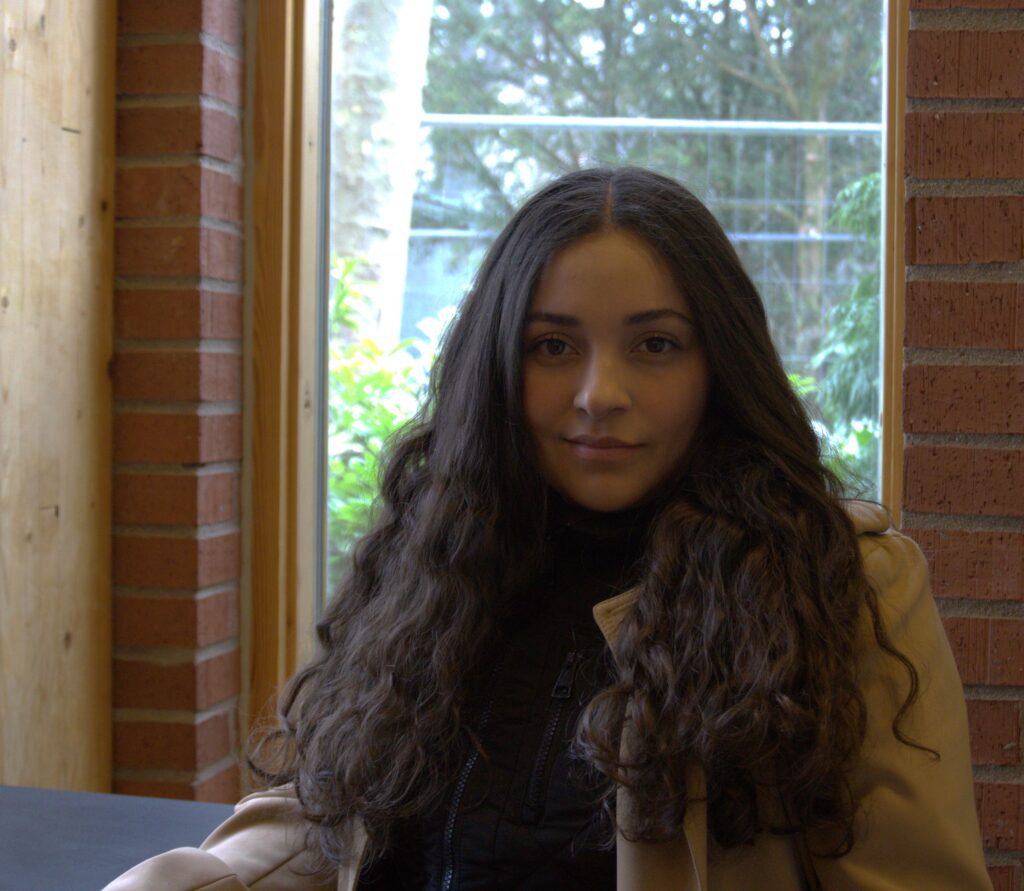
Elsa Karen Medina Portugal is the Co-Founder and CEO of Trinitek Group, based in Trelleborg, Sweden. Trained as a Biobusiness Engineer, she works at the intersection of systems thinking, sustainability, and circular infrastructure building practical solutions that reframe waste as a resource and efficiency as a form of care for people and the planet.
Elsa doesn’t speak about sustainability as an abstract goal. For her, it is something lived observed in fields, factories, production lines, and homes. She carries a calm intensity, the kind shaped by repetition rather than urgency. Her work is rooted in attention: to how systems behave, how people interact with resources, and how responsibility shows up in everyday decisions. What drives her is not scale for its own sake, but alignment between thought, action, and consequence.
Learning to Think in Systems
Engineering was never distant for Elsa; it was part of her inner architecture. Growing up with a father who was an electrical engineer, she absorbed early the idea that engineering is not only technical, but ethical, a way of thinking that holds weight and consequence. When she chose biobusiness engineering, it felt instinctive. Biology, chemistry, and genetics spoke to her curiosity, but it was their connection to regeneration and sustainability that anchored her path.
Her early career unfolded across Mexico, moving through agrochemicals, continuous improvement in small and medium enterprises, business analysis in agriculture, and strategic planning in the railroad industry. Each role added a layer. She learned how production meets demand, how inefficiencies quietly erode value, and how strategy must translate into reality on the ground. More importantly, she learned to listen to people, processes, and the often-unspoken truths inside complex systems.
When Foundations Break, and Rebuild
Two moments reshaped Elsa’s life irrevocably. The first was her move to Sweden, a quiet but decisive break. It was there she understood, with certainty, that she would never work for someone else again. The ideas she had carried for years needed structure, ownership, and execution.
The second was profound loss. The death of her father dismantled her internal world.
“He was the structural foundation of my inner world, she reflects. In his absence, she had to rebuild herself consciously, layer by layer. That reconstruction changed not only who she became, but how she leads less from certainty, more from presence and trust.“
Motherhood followed, far from family, in a country where her support system was small. It demanded a kind of strength she hadn’t needed before, quiet endurance, adaptability, and deep presence. Through partnership with her husband and love for her child, she accessed a resilience that had always been there, waiting.
Reframing What We Discard
Trinitek Group emerged from years of observation and lived experience. Elsa didn’t design solutions from a distance; she went into the field, asked questions, and stayed curious long enough to understand how people actually live with waste. She saw that waste is not a single category, it moves between organic and inorganic forms, shaped heavily by culture. A Mexican and a Swede, she noticed, relate to waste very differently. Both perspectives matter.
Today, Trinitek develops circular systems with tangible impact, particularly in waste management. Their work challenges the assumption that what is discarded is without value.
“What is often seen as undesirable or without value, we treat as a resource with potential,” Elsa explains. This reframing supports individuals, communities, and industries in building systems that create environmental value while remaining economically viable.
As the company prepares to launch its first major project, Elsa sees the work as a convergence of systems thinking, cultural insight, and disciplined execution. Watching ideas move from observation to reality is grounding, and quietly affirming.
Looking Forward, With Intention
In the near future, her focus is the launch of Relocate Future Waste, a project designed to help food producers recognize pre-waste not as loss, but as untapped value. By reintegrating these materials into circular systems, producers can improve efficiency, reduce environmental impact, and strengthen the resilience of their operations.
Elsa’s definition of success remains understated. It is not external recognition, but inner peace—the calm that follows aligned action. Responsibility and integrity guide her decisions: responsibility as the ability to respond consciously, integrity as living what one believes.
Closing Reflection
Elsa has rebuilt herself many times. Through that process, she discovered something enduring—a steady fire that doesn’t disappear under pressure. She meets adversity not as an obstacle, but as an invitation to deeper alignment. Grounded by faith, meditation, and disciplined reflection, she continues forward with consistency rather than haste.
Her work reminds us that systems, like people, do not need to be forced to change. They need to be understood deeply, patiently, and with care.
For More Features
Be Featured in The Real Edit!
Every story has the power to shape how we see innovation, leadership, and purpose. If you’re a founder, creator, executive, or changemaker with a journey worth telling , we’d be honored to help you share it.
To inquire about being featured:
Email us at: info@realedit.site
Follow The Real Edit