This is for review purpose only. It is unlisted and unindexed on the internet

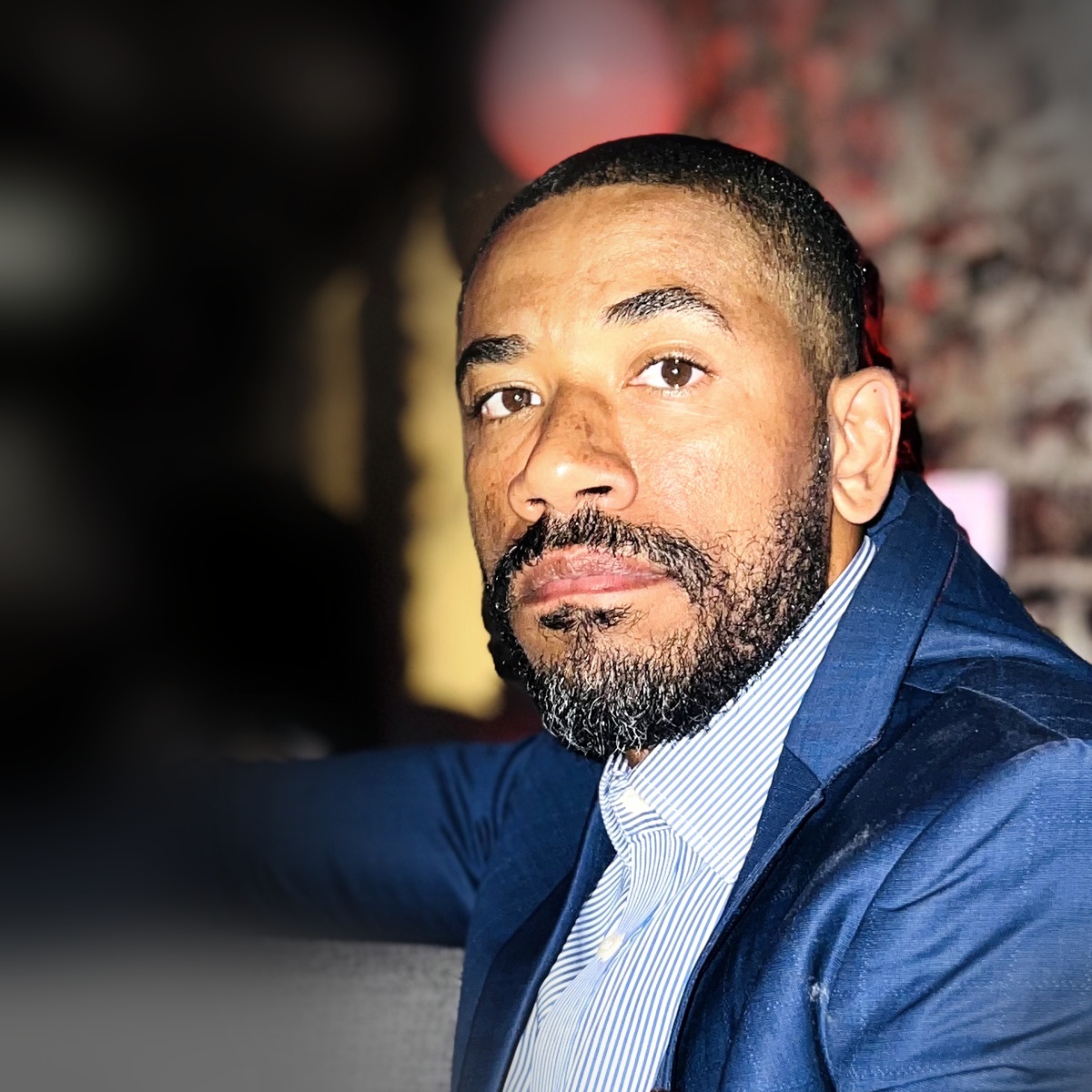
Meet Clayton Williams
Clayton Fraser Williams is a strategy advisor, academic, applied theorist based in Leiden, the Netherlands and the author of “What Strategy Is: 18 Fundamental Laws of Strategy“. He serves as an Adjunct Professor of Strategy & Applied Complexity Science at Regenesys, a Research Fellow and Visiting Professor at Rhodes University, and a Strategy Advisor to Invest-NL, the Dutch National Promotional Institute. His work sits at the intersection of practice and theory, focused on responsible strategy, capital allocation, and the science of decision-making in complex systems.
Clayton Williams does not speak like someone chasing authority. He speaks like someone careful with it. There is a quiet precision in how he frames ideas, a sense that every conclusion has been earned rather than claimed. For him, strategy is not performance or persuasion it is a form of responsibility. Something closer to stewardship than control.
He is also the author of the recently released international bestseller What Strategy Is: 18 Fundamental Laws of Strategy, the first work to offer a scientific theory of what strategy actually is, grounded in how complex systems behave rather than how leadership is often narrated.
Between the Kruger and the Boardroom
Williams grew up between two very different worlds. One was shaped by the Kruger National Park, where his mother studied nature conservation and brought him along into the field. The other was corporate, structured, and rigorous formed by dinner-table conversations influenced by leaders at Mondi, Sappi, Massmart, and Liberty.
Those environments did not compete with each other; they fused. Watching ecosystems respond to constraint taught him to see systems as living, adaptive, and interdependent. Watching executives navigate complexity taught him how power, capital, and decisions ripple outward.
“My mother studied nature conservation and involved me in her research, which gave me a lifelong habit of thinking in terms of living ecosystems interdependent, adaptive, and always responding to constraint.”
That lens never left him.
Early Responsibility and the Weight of It
At fifteen, Williams began flying. At nineteen, he was appointed CEO of the very flying school where he had trained. By twenty-one, he had completed a management buyout. These milestones sound extraordinary, but he does not describe them that way. Instead, he speaks about responsibility arriving early—and staying.
That early leadership pushed him into transformation work across aviation, forestry logistics, and outsourcing. What he learned was less about control and more about cultivation.
“I learned that strategy is less a plan than an organism that must be cultivated to execute,”
Strategy, in his experience, did not obey neat diagrams. It behaved more like weather.
Becoming Qualified for the Role
If there is a recurring emotional thread in Williams’ story, it is not confidence it is humility. He is frank about imposter syndrome, about feeling perpetually underqualified. He recalls a line from Jim Collins’ Good to Great, where Darwin Smith describes himself as simply “trying to become qualified for the job.”
“That always resonates with how I feel, I was just the kid from the Kruger Park who had big shoes to fill and was given all of these amazing opportunities. In every situation I was just trying to become qualified to do justice to them.”
Banking deepened that instinct. During his years at Nedbank, working on growth, value creation, and loyalty strategy, he encountered a level of analytical rigour that reshaped his thinking. Being accepted into an MBA program without an undergraduate degree was a turning point—less for the credential than for what it demanded of him. Working alongside Dr. Amy Jansen further refined his academic discipline, anchoring practice in proof.
Rejecting the Hero Myth
Williams is openly critical of how strategy is often framed today, as theatre, as charisma, as the domain of the heroic individual. “Strategy has become about the ‘hero’ leader,” he says, referencing the isiZulu phrase Buka Mina, look at me. To him, that framing is not just shallow; it is dangerous.
His response has been to pursue something quieter and harder: a falsifiable theory of strategy grounded in complexity science, thermodynamics, and information theory. Rather than leaving that work abstract or inaccessible, he articulated it through What Strategy Is, translating rigorous theory into eighteen fundamental laws that practitioners can test, challenge, and apply. He wants accountability where metaphor once stood. Science where performance used to be enough.
At Invest-NL, this thinking takes practical form—reshaping capital allocation toward long-term national priorities rather than short-term narratives. It is work that asks uncomfortable questions about risk, value, and consequence.
Bildung, Ubuntu, and Responsible Work
Two ideas guide how Williams moves through the world. One is Bildung the lifelong discipline of self-formation, of becoming more fit to think and act well. The other is Ubuntu the belief that a person becomes a person through other people.
Together, they shape his sense of purpose. “Rigour without vanity, ambition without extraction,” he says. It is a framework that resists both ego and inertia. He measures progress not by recognition, but by whether systems are left more humane, more capable, and more truthful than before.
Looking Forward, Carefully
Williams is skeptical of noise especially around “rapid change” and AI. He tells the story of Neptune’s discovery: a planet predicted through mathematics alone, “seen with the point of his pen.” For him, it is a reminder that thinking cannot be outsourced without cost.
“One of my core principles is intellectual sovereignty, Use powerful tools, but don’t surrender the work of understanding.”
His future vision is not about acceleration. It is about depth about protecting the slow, difficult work of reasoning in a world that increasingly avoids it.
Closing Reflection
When Williams speaks about success, there is no triumph in his voice. Only steadiness. He often thinks of his mother’s tenacity, of becoming someone she would be proud of. And perhaps that is the clearest way to understand him not as a man chasing influence, but as someone quietly committed to becoming better than he was yesterday, and to leaving the systems he touches more honest than he found them.
Read More Features
Be Featured in The Real Edit!
Every story has the power to shape how we see innovation, leadership, and purpose. If you’re a founder, creator, executive, or changemaker with a journey worth telling , we’d be honored to help you share it.
To inquire about being featured:
Email us at: info@realedit.site
Follow The Real Edit for