Meet Michael
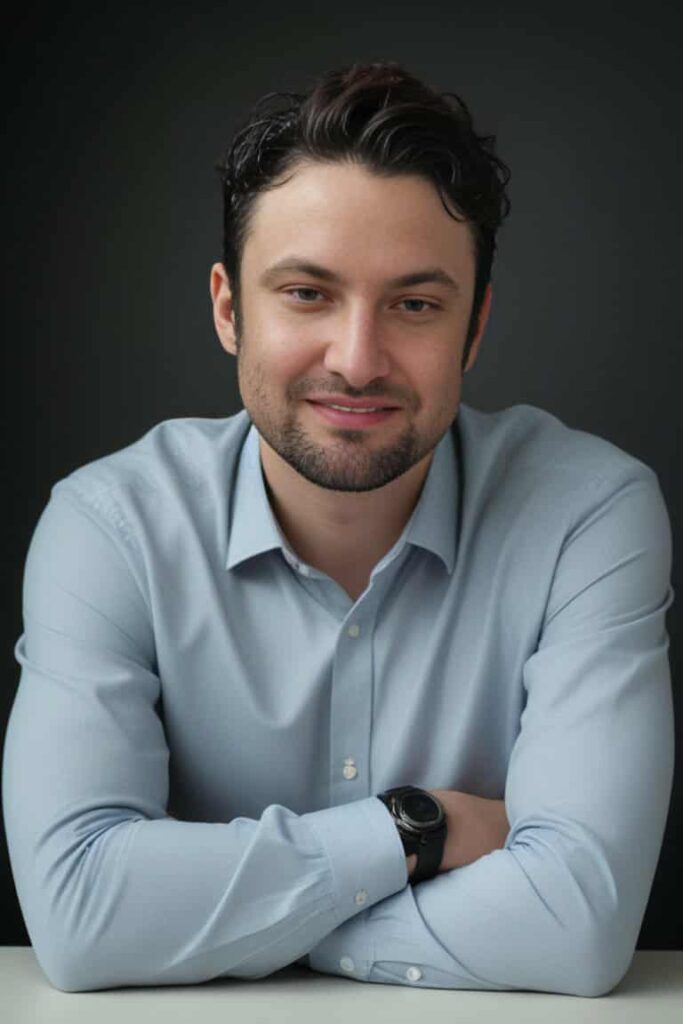
Meet Michael McNamara, a Melbourne-based founder who builds technology from a place of lived experience, empathy, and quiet resilience. Partially deaf and on the autism spectrum, he understands accessibility not as a concept but as a daily reality. His work at MM AI Technologies is grounded in one simple truth: technology should help people feel seen, connected, and capable of living fully.
For most people, accessibility is an abstract concept. For Michael McNamara, it is the landscape he walks through every day shaped by partial deafness, autism, and a lifetime of feeling out of place. His work didn’t begin with ambition or strategy, but with lived experience and an unwavering desire to ease the loneliness he has known too well.
Early Journey
Michael grew up in Melbourne navigating a world that rarely paused long enough to meet him where he was. Communication for others so natural often felt like a locked door.
“I’ve spent my whole life feeling like I don’t fit,” he says quietly. “And being autistic, communication and social interaction was a huge barrier for me.”
The challenges, though heavy, sharpened a kind of vision. Being partially deaf made him deeply aware of how sound shapes connection. Being autistic gave him pattern-recognition abilities that later helped him see problems others overlooked. He learned to notice gaps, barriers, moments where people slipped through the cracks because he had slipped through them himself.
Those early years planted a simple but powerful belief: technology should not just exist for people, but with people in mind. Especially those who are rarely centered.
The Turning Point
The shift came not in a boardroom or accelerator program, but in a family living room. Three months ago, Michael watched his niece sitting alone, quiet and defeated, because her friends couldn’t sign.
It wasn’t just sadness he saw it was recognition. He knew that feeling. “She looked so down and depressed,” he recalls. “Her friends couldn’t sign.” That moment cracked something open in him. It wasn’t enough to understand the problem. He needed to build the solution.
So he taught himself to code. He earned diplomas in mental health, community psychology, health support care, and family law, not for prestige, but for clarity. He started developing accessibility apps not with venture capital or glossy marketing, but with need, urgency, and lived truth as his guide. “Not perfect apps. Not apps with VC funding or million-dollar marketing budgets,” he says. “Just apps that work. Apps that help. Apps built by someone who understands because I LIVE it and needed them.”
The impact revealed itself in messages that arrived quietly but carried weight. One parent wrote:
“I’ve been trying to learn sign language for my daughter for two years… We had our first signed conversation yesterday. She cried. I cried.” Michael goes still when he talks about it.
“This. This is why I build,” he says. “All I want is to make a difference.”
Behind the resolve, there is fear — real and unvarnished. “Terrified I’m not good enough. Terrified people will think I’m a fraud. Terrified these apps won’t reach the people who need them.” But he keeps going, he says, because he can already imagine the smiles of people finally receiving the accessibility tools they needed all along. “Am I still terrified? Extremely,” he admits. “I use the fear to keep pushing forward.”
Their Work Today
Today, as founder and CEO of MM AI Technologies, Michael is building AI-powered accessibility tools shaped by his own experiences — apps that give people independence, support, communication, and a sense of belonging.
“One billion people have disabilities. Most technology ignores them. I’m done with that.”
His mission is simple but radical: bring accessibility to the center, and build it affordably for those who need it most.
His solutions are already supporting communities navigating hearing impairment, ADHD, social anxiety, and communication challenges. From SignBridge to CleanScan to SocialEase, each app is a response to a human story — many of them stories he has lived himself. “I’m most proud that I’ve seen real problems so many face each day and made a solution,” he says. “Knowing how many lives are going to benefit from my creations is the best feeling ever.”
Community partnerships with Deaf Australia, Vision Australia, and autism organizations reflect what he has always believed: change begins when you build with people, not for them.
Closing Reflection
When asked what success truly means, Michael doesn’t mention revenue, downloads, or global scaling. He thinks of his niece — smiling, signing, playing with her friends like she always should have been. He believes everyone deserves a fair, honest, equal chance.
“Autism isn’t a disadvantage It’s a superpower that enables us to see what others can’t or miss.”
His journey is a reminder that technology becomes meaningful not when it dazzles, but when it dissolves barriers. And that sometimes, the most powerful innovations begin quietly — in the hands of someone who knows what exclusion feels like, and chooses to build something better anyway.
Be Featured in The Real Edit!
Every story has the power to shape how we see innovation, leadership, and purpose. If you’re a founder, creator, executive, or changemaker with a journey worth telling , we’d be honored to help you share it.
To inquire about being featured:
Email us at: info@realedit.site
Follow The Real Edit for more stories: