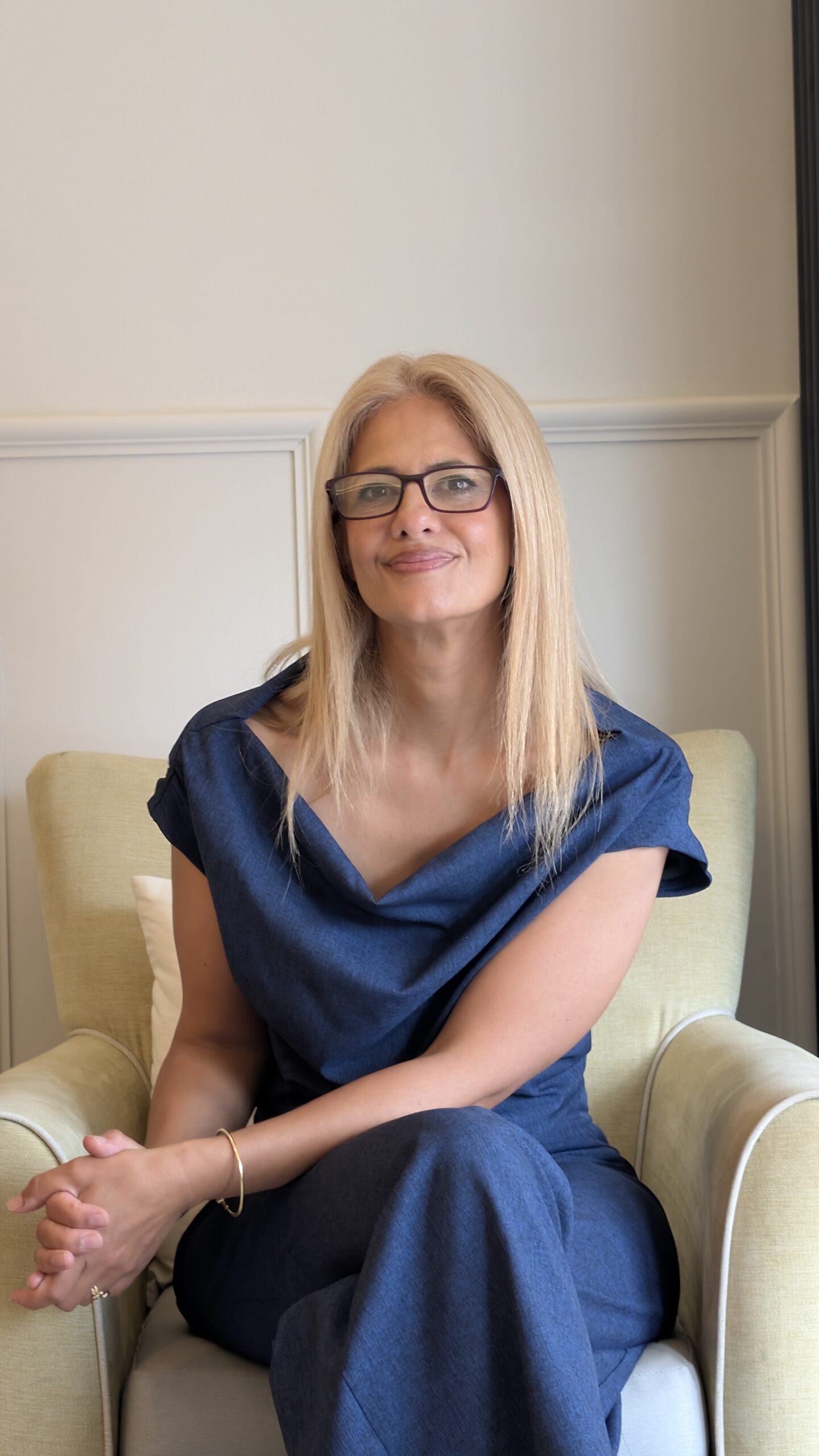
Meet Alexandra
Alexandra Terrey is the Founder and Head Coach of The Mentoring Effect, based in Brisbane, Queensland, Australia. Her work focuses on human performance, behavioural change, emotional and mental fitness, and helping business owners and leaders build the inner capacity to perform, lead, and live well.
A Life Built Through Starting Again
There is a particular kind of strength that comes from having to begin again. Alexandra Terrey knows that experience well. Over the past two decades, she has built businesses, sold them, moved across countries and Australian states, adapted to unfamiliar environments, faced periods of intense personal pressure, and continued to look for new ways to grow.
Her professional journey did not begin with a clear plan to become a coach. After university, she worked for Red Bull, where she began to recognise that traditional employment was not where she wanted to spend her life. She wanted to build something of her own, and while she was still relatively young, she took the first step into entrepreneurship.
That first business became an eight year chapter of her life before she eventually sold it. Rather than settling into familiarity after the exit, Alexandra moved to Thailand and opened another business. Three years later, she sold that business too and moved to the Bahamas, where she started yet another venture.
For Alexandra, business was never simply about owning a company. It became a way of exploring what she was capable of creating.
She was also discovering something about herself that would eventually change the direction of her work.
The Accidental Beginning of a Coaching Career
While living and working in the Bahamas, Alexandra’s business required considerable travel. During this period, she began working as a coach for a US based company. At first, coaching was not something she had deliberately pursued. It was simply part of a role she had taken on.
Yet something about it felt different.
She found that working with people came naturally to her. She enjoyed understanding what was happening beneath the surface, helping people move forward, and seeing the effect that meaningful support could have on their performance and experience.
The results reinforced that feeling. Customer satisfaction became one of the company’s most important measures, and Alexandra’s work produced strong results in that area.
What had started almost accidentally became something she could not ignore.
“I fell in love with coaching and human behaviour accidentally,”
she says, describing the period when her role first required her to become a coach. At the time, she did not even fully understand what coaching was. But the work connected with something that had been present in her all along: a curiosity about people, potential, growth, and what becomes possible when someone begins to see themselves differently.
Around the same period, Alexandra met her partner and began planning another major transition. Together, they decided to move to Australia.
They settled in Perth in Western Australia, where Alexandra continued to build businesses while gradually narrowing her focus. Over time, coaching and training became less like one part of her professional life and more like the central thread running through it.
Two years ago, she and her partner moved again, this time to Queensland. Alongside her coaching work, Alexandra continued to explore business and investment opportunities. Her entrepreneurial instinct had never disappeared. If she sees an opportunity, she is inclined to explore what might be possible.
But the deeper direction of her work had become clearer.
What Starting Over Taught Her
Alexandra’s story is not simply one of international movement and entrepreneurship. Behind those visible changes was a more personal process of learning how to adapt.
She has moved five times within Australia over the past decade and lived in five countries before that. Each move required her to rebuild. New places meant new networks, new relationships, new professional connections, and unfamiliar surroundings.
Starting again can be exciting, but it can also be lonely and demanding.
At the same time, Alexandra was navigating the pressures of building businesses and managing her own wellbeing. She experienced significant health challenges, emotional strain, anxiety, and the physical consequences of prolonged stress. One of the most difficult periods came while she was going through IVF, running a business, moving countries, and trying to manage the demands of a life that rarely seemed to slow down.
Eventually, her body and mind made the cost impossible to ignore.
She describes reaching a point where she was exhausted every day, unable to focus properly, constantly operating under stress, and struggling to take on more clients. Her business began to stagnate because she simply did not have the capacity to keep pushing in the same way.
The experience forced her to look at something she had previously been too busy to examine.
She began to notice how closely her external environment reflected what was happening internally. Her relationship, her health, her energy, and her business were not separate problems. They were connected.
That realisation changed how she approached her own life.
Rather than trying to work harder, she began focusing on her nervous system, mindset, emotions, physical wellbeing, and the patterns that were influencing her behaviour. She explored practices including breathwork, meditation, yoga, exercise, time in nature, and healthier nutrition.
The transformation was gradual, but meaningful. Alexandra says she recovered from 21 food allergies and regained her energy. Her husband also made significant changes, losing 16 kilograms and returning to sport and hobbies that brought him happiness.
The experience gave her something that business success alone could not provide: a deeper understanding of the relationship between internal capacity and external results.
It also became something she could eventually bring into her work with clients.
From Coaching People to Understanding Human Performance
Today, Alexandra’s work has evolved beyond what she considers traditional coaching.
Her focus is increasingly centred on human performance and behavioural change. She works with business owners and leaders who want to become clearer, more emotionally and mentally fit, and more capable of handling the demands placed on them.
The question underneath her work is relatively simple: what allows a person to function well when life becomes demanding?
For Alexandra, the answer is not found in one technique or one motivational idea. It involves the interaction between cognition, emotions, behaviour, physical wellbeing, relationships, and the choices people make repeatedly.
She is particularly interested in the gap between knowing and doing. A person can understand exactly what they need to change and still remain unable to act on that knowledge.
That is where her work becomes practical.
She wants insight to translate into behaviour, and behaviour to create results that can actually be observed in someone’s life or business.
Her philosophy is also rooted in the belief that human potential is larger than the patterns people often inherit or repeat. Someone’s current circumstances do not necessarily represent the limit of what they can become.
But Alexandra’s approach is not about chasing constant achievement. Her own experiences have taught her that external success becomes less meaningful when it comes at the expense of health, relationships, or a sense of self.
One of her guiding principles is that success should be sustainable. It should allow a person to create meaningful results while becoming more fulfilled, connected, capable, and alive in the process.
The Inner Advantage
Years of working with clients and businesses eventually led Alexandra to develop The Inner Advantage, a program that has become one of the most important parts of her work.
The program was not created overnight. It grew from years of observing clients, taking notes, measuring outcomes, recognising patterns, and trying to understand what prevented people from making decisions they already knew were right for them.
Alexandra became increasingly interested in the internal barriers that sit behind external problems.
Why does someone remain in a situation they know is not working?
Why can a capable leader struggle to make an important decision?
Why can someone have the knowledge and resources they need but still feel unable to move?
The Inner Advantage grew from these questions.
The program combines Alexandra’s experience in coaching, behavioural change, human performance, and personal development into a framework designed to help people strengthen their internal capacity and turn awareness into action.
For her, this is one of the most meaningful achievements of her career because it represents something she has been developing through years of real experience rather than theory alone.
Alongside the program, Alexandra has expanded into speaking, publishing, and podcasting. She published her book Limitless Soul, launched two podcast shows, and began speaking publicly.
That last step carried particular personal significance.
Alexandra once avoided microphones and felt extremely uncomfortable speaking in front of people. Learning to step toward something that once frightened her became another reminder that growth often happens through repeated exposure to what feels uncomfortable.
When Personal Change Becomes Collective Change
Alexandra’s work is ultimately connected to a broader belief about people and communities.
She believes healthier communities begin with people who are healthier, more aware, and more capable of managing themselves.
The effect of personal development does not stop with the individual.
When a leader becomes less reactive and more self aware, the people around them experience the difference. When someone learns to regulate their emotions and communicate more consciously, their relationships can change. When a person develops greater clarity and confidence, those qualities can influence their family, workplace, and wider community.
This is why Alexandra creates spaces through coaching, leadership programs, retreats, and facilitated experiences where people can slow down and have conversations that everyday life often leaves little room for.
She is interested in genuine connection rather than transactional interactions.
Her values reflect that approach. Integrity, empathy, generosity, excellence, and quality matter deeply to her. She also lives by principles such as taking responsibility for what can be influenced, choosing long term fulfilment over short term comfort, building relationships before transactions, and remaining curious enough to question one’s own beliefs.
These principles have been shaped by the people around her as much as by her professional experiences.
Her husband has taught her about patience, presence, and relaxation. Her father showed her the value of hard work and education, while her mother taught her to care for her body and find happiness in staying active. Mentors and friends have offered different lessons about leadership, kindness, generosity, communication, and growth.
Alexandra also draws inspiration from figures such as Tony Robbins, Dr Joe Dispenza, Michael A. Singer, and Richard Branson, each representing different qualities she values, from communication and facilitation to self awareness, personal change, curiosity, energy, and entrepreneurship.
Yet her approach remains grounded in her own experiences.
What’s Next – Bigger Vision
Alexandra now wants to take The Inner Advantage into its next stage of growth.
The methodology, including its diagnostics and measurable outcomes, has already been developed. The next phase is focused on bringing that established framework into the world of AI and technology, exploring how it can be leveraged through a dedicated app and a new venture designed to extend its reach and application.
The opportunity is to combine Alexandra’s experience in human performance, behavioural change, and coaching with technology that can make the methodology more accessible and scalable, while preserving the depth and human connection at the heart of the work.
She wants to build something that can grow while remaining connected to the human beings it is designed to serve.
Becoming the Person Who Can Create the Life You Want
Perhaps the clearest thread through Alexandra’s story is her belief that there is always another way forward.
She has had to test that belief repeatedly. She has moved countries without established networks, started businesses from scratch, sold companies, changed professional directions, faced health challenges, experienced periods of burnout, and navigated the emotional complexity of becoming a mother later in life.
At 48, she welcomed her baby boy through a surrogate program in Georgia, another chapter that brought its own challenges, adjustments, and lessons.
Her experiences have made her less interested in the idea of a perfect life and more interested in the capacity to meet life as it changes.
“Success is becoming the person capable of creating what matters to you, repeatedly and sustainably.”
That idea captures much of what Alexandra has learned. The goal is not simply to achieve something once. It is to develop the inner strength, awareness, health, relationships, and habits required to keep creating a meaningful life without losing yourself in the process.
Her advice to others comes from the same place. She encourages people not to hand their power over to external expectations, trends, or other people’s definitions of what they should become. Instead, she believes people need to learn to trust themselves, pause, listen, and make deliberate choices.
Her own journey suggests that growth rarely follows a straight line. Sometimes it looks like building a company. Sometimes it means leaving a country and beginning again. Sometimes it means admitting that the way you have been living is no longer sustainable.
And sometimes, the most important achievement is learning how to come back to yourself.
Alexandra continues to build, learn, question, and create. Her work is no longer simply about helping people perform better. It is about helping them become more capable of meeting their lives with clarity, resilience, awareness, and choice.
For someone who has spent much of her life starting again, perhaps that is the deeper lesson she carries forward: there is always another way to grow, provided you are willing to look within, begin where you are, and believe that the next chapter can be created.
For More Features
Be Featured in The Real Edit!
Every story has the power to shape how we see innovation, leadership, and purpose. If you’re a founder, creator, executive, or changemaker with a journey worth telling , we’d be honored to help you share it.
To inquire about being featured:
Email us at: info@realedit.site
Follow The Real Edit